- Published by:
- Department of Transport and Planning
Purpose
The purpose of the Freeway connection policy is to provide the Department of Transport and Planning’s position when assessing requests seeking connection to freeways, to support the integrity and function of freeways as part of the transport system.
The Policy informs decisions made under the Road Management Act 2004 and the Planning and Environment Act 1987 for:
- proposals seeking freeway access under the Road Management Act; and
- planning applications that involve freeway access under the Planning and Environment Act.
Proposals must meet the requirements of both Acts and this Policy to be supported by the Head, Transport for Victoria.
Function of a freeway
Freeways are intended to provide high speed, safe and efficient travel to enable mass movement between regions and ensure continuity of the national and regional primary road system.
To ensure this function is maintained, connection points to freeways should only be provided at Head, Transport for Victoria planned locations.
How to navigate this site and use this PolicyThis Policy includes checklists to assist you with its application. You can download the checklists from the right‑hand menu or via links on the relevant pages. |
Legislation relevant to the Freeway connection policy
This policy has been developed in accordance with Victoria’s transport and planning legislation.
Introduction
Head, Transport for Victoria has obligations under transport legislation to coordinate, manage and operate the State’s road system (including freeways). This includes approving any freeway connections. Head, Transport for Victoria is also a referral authority for related land use planning applications, such as applications relating to use of land alongside freeways and adjoining arterial roads.
Freeway access is not automatic and is subject to attaining Head, Transport for Victoria’s written consent and compliance with Head, Transport for Victoria’s access conditions.
Legislative compliance
The Freeway connection policy's key requirements, freeway connection principles and guidance, have been determined within the context of Victoria’s transport and planning statutes.
Transport Integration Act 2010(opens in a new window) is Victoria’s primary transport Act. It places an emphasis on multi-faceted assessment in decision-making which is a critical driver in achieving integrated transport and land use outcomes. The TIA also establishes and sets out the powers and functions of the Head, TfV.
Road Management Act 2004(opens in a new window) is transport legislation under the Transport Integration Act and establishes a coordinated management system for public roads that will promote safe and efficient state and local public road networks and the responsible use of Victorian roads, including freeways. Schedule 2, Clause 1 of the Road Management Act states that no road, private road, or access point is to be connected to a freeway without the written consent of the Head, Transport for Victoria.
Planning and Environment Act 1987(opens in a new window) establishes a framework for planning the use, development, and protection of land in Victoria. The Planning & Environment Act is interface legislation under the Transport Integration Act.
There are several planning processes covered by the Planning and Environment Act which may involve an application for freeway access.
Victoria Planning Provisions(opens in a new window) are a comprehensive set of planning provisions for Victoria. It is a statutory device to ensure that consistent provisions for various matters are maintained across Victoria and that the construction and layout of planning schemes are the same.
Appendix A sets out some of the key relevant sections and clauses from the principal legislation (and amendments) that apply to the Freeway Connection Policy.
To be noted when reading the Policy
To clarify the relationship between the Department of Transport and Planning and the Head, Transport for Victoria readers are advised to keep in mind the following important information when reading this policy.
- Department of Transport and Planning and Head, Transport for Victoria are separate legal entities.
- Head, Transport for Victoria is a road authority under the Road Management Act, and is responsible for the road management functions, powers and duties as conferred by the Road Management Act for freeways and arterial roads. Department of Transport and Planning is not listed as a road authority under the Road Management Act.
- Head, Transport for Victoria is a referral authority under the Planning and Environment Act.
- Department of Transport and Planning staff perform functions, powers and duties on behalf of Head, Transport for Victoria.
- Approved legal documents or notices which relate to Head, Transport for Victoria functions under the Road Management Act or the Planning and Environment Act and require execution or signature from the State should be signed by the entity Head of Head, Transport for Victoria or Department of Transport and Planning staff with appropriate authorisation or delegation from the entity Head of Head, Transport for Victoria.
The Planning and Environment Act affords duties and powers to Head, Transport for Victoria as a referral authority. A referral authority is a body or person specified in a planning scheme as a referral authority for specific kinds of applications. In particular, Head, Transport for Victoria is a determining referral authority for planning permit applications required under Clause 52.29 (Land adjacent to the Principal Road Network).
"The key purpose of the referral process is to give a person or body whose interests may be affected by a permit application the opportunity to provide advice to the responsible authority about whether a permit should be granted. If a determining referral authority objects, the responsible authority must refuse to grant a permit, and if a determining referral authority specifies conditions, those conditions must be included in any permit granted." (Referral and Notice Provisions, Planning Practice Note 54 August 2023, Department of Transport and Planning).
Applicability and scope of the Freeway connection policy
This section provides information about the applicability and scope of the Policy.
The Policy applies to land declared as freeway under Section 14 of the Road Management Act. This includes the freeway carriageway and the ramps connecting to the freeway, and related segments of road declared as freeway.
The Policy applies to roads declared as freeways.
Freeways are generally part of routes that are classified as M Routes. In many cases the entire length of an M route is not declared as freeway, such as the sections of an M route that pass through a town. Freeways are therefore a subset of M Routes.
Structure of the Policy
The Policy comprises two parts listed below. Each part provides Key Requirements and Principles which will be used when assessing proposals seeking access under these scenarios:
- Part A(opens in a new window) applies to freeways connections for general public use and can be triggered by access being sought to the freeway network (usually at a location where a road, private road or access point seeks connection to a freeway) as well as by proposals seeking access to the arterial or local road network that may impact on a freeway.
- Part B (opens in a new window)of the policy applies to proposals for new authorised access for emergency services, utilities, VicTrack and private land for both existing declared freeways and future freeways.
Planning processes
The Policy provides guidance to support planning processes and preparation of development proposals in the proximity of a freeway. It applies to the following planning processes under the Planning and Environment Act which involve applications for freeway access or that are in proximity to a freeway:
- Planning permit applications
- Planning scheme amendments
- Combined planning scheme amendment planning permit
While the Policy is not applicable to development of and amendments to Precinct Structure Plans and Activity Centre Structure Plans, the principles in the Policy may be of assistance during these processes, to identify preferable approaches when there is a need to change or establish freeway interchanges. The Policy will not apply to a planning scheme amendment to formalise and give the structure plan statutory weight at the end of a structure planning process but can apply to any subsequent planning scheme amendments.
Subsequent planning permit applications and planning scheme amendments associated with delivery of Precinct Structure Plans and Activity Centre Structure Plans may trigger the Policy, if they impact on freeways.
Additionally, while not covered by the Planning and Environment Act, any applications involving Commonwealth land should follow the process to the extent possible. The access proponent will still need to comply with the Road Management Act and obtain Head, Transport for Victoria's consent to access a Victorian freeway from adjacent Commonwealth land, including complying with Head, Transport for Victoria's access conditions.
Key definitions in the Freeway connection policy
The list below defines key terms used in the Policy.
| Term | Definition |
| Access or access point | Location where a road, private road or access point is connected to a freeway. |
| Access beneficiary | The utility, emergency service, provider of public transport, Government department (State or Federal), or landowner, that benefits from the authorised access point to the freeway. |
| Authorised access point | Points of access to a freeway reserve (including freeway carriageway or freeway ramps) at locations other than purpose-built interchanges or intersections. These points are authorised* for specific, limited, low volume, occasional use purposes only. Authorised access points are not for general public use or commercial purposes. The authorisation of these access points may be withdrawn by Head, Transport for Victoria at any time. Examples of existing authorised access points to declared freeways are shown in Appendix B. *Authorised as used in this policy refers to written consent from Head, Transport for Victoria to connect to a freeway. |
| Broader road network | The broader network consists of the adjacent interchanges and freeway, as well as any arterial roads and local roads that are likely to be impacted by the proposal. Note that the proponent must contact the relevant Department of Transport and Planning regional transport network planning team to discuss impacts of proposed sites and access locations on the road network. |
| Delegate | A person who can exercise another person’s functions and powers via a delegation. |
| Freeway | A freeway is a dual carriageway facility with no access for traffic between interchanges/intersections. Crossings of freeway carriageways at interchanges/intersections are primarily grade separated.
Note Road classification can be verified by checking Maps of Department of Transport and Planning Roads [add updated link here] |
| Freeway service centre | Land that has direct access to a freeway and is used to provide essential services and facilities that encourage drivers to stop and take an effective break in the interests of driver safety. Source: Victoria Planning Provisions, Ordinance, clause 73.03 Land Use Terms. A freeway service centre must provide facilities and services as outlined in Victoria Planning Provisions clause 53.05 (Freeway service centre). This clause also outlines what a freeway service centre must not include. |
| Grade separation | The separation of road, rail or other traffic so that crossing movements, which would otherwise conflict, are at different elevations Source: Austroads Glossary of Terms (2015 Edition). |
| Head, Transport for Victoria (Head, TfV) | Head, Transport for Victoria is a legal entity established under the Transport Integration Act 2010. Head, Transport for Victoria is a road authority for the purposes of the Road Management Act , and is responsible for the road management functions, powers and duties as conferred by the Road Management Act for freeways and arterial roads. Head, Transport for Victoria is a determining referral authority for the purposes of the Planning and Environment Act for any planning applications for land adjacent to the principal road network (clause 52.29 VPPs). The primary object of the Head, Transport for Victoria is to coordinate, provide, operate and maintain the public transport system and the road system. Source: Section 64B Transport Integration Act Object of the Head, Transport for Victoria. DTP staff perform functions, powers and duties on behalf of Head, Transport for Victoria. |
| Infrastructure | Infrastructure means road infrastructure and non-road infrastructure. Source: Section 3 Definitions of the Road Management Act. |
| Interchange | An interchange is a grade separation of two or more roads with one or more interconnecting carriageways. Source: Austroads Glossary of Terms (2015 Edition). For the purpose of this policy, an interchange includes existing at grade intersections on a freeway. |
| Interconnecting road network | The interconnecting road network for a freeway comprises:
|
| Non-road infrastructure | Non-road infrastructure refers to infrastructure in, on, under or over a road which is not road infrastructure. This can include, but is not limited to, gas pipes, water and sewerage pipes, cables, electricity poles and cables, bus shelters, roadside furniture and fences. Source: Section 3 Definitions of the Road Management Act. |
| Proponent | Person, organisation, or party seeking access to a freeway under the RMA or an applicant seeking access to the freeway through a relevant planning process under the Planning and Environment Act. |
| Public Road | A road is a public road if it is (including but not limited to)
Source: Section 17 Road Management Act What is a public road. |
| Ramp | A ramp includes:
Source: Austroads Glossary of Terms (2015 Edition). |
| Ramp terminal | The point on an interchange ramp at which it intersects with a surface road or street. Source: Austroads Glossary of Terms (2015 Edition). |
| Relevant planning process | A relevant planning process includes:
|
| Road | A road includes:
Source: Section 3 Definitions of the Road Management Act. |
| Road infrastructure | Road infrastructure includes:
Source: Section 3 Definitions of the Road Management Act. |
Freeway connections for general public use - Part A
Proposals from developers seeking access to a freeway for general public use will trigger Part A of the Freeway connection policy.
Part A of the Freeway connection policy can be triggered by access being sought to the freeway network for general public use (usually in the form of a location where a road, private road or access point is connected to a freeway) as well as by proposals seeking access to the arterial or local road network that impact on a freeway.
Direct access to freeway network
This policy will apply to proposals seeking:
- new connections of a road, private road, or access point to an existing freeway
- to modify or upgrade an existing freeway interchange or access point
- withdrawal of access (addressed in Part B(opens in a new window) of the Policy)
For proposals seeking freeway access via an authorised access point, refer to Part B(opens in a new window) of the Policy.
Indirect access to freeway network via the non-freeway network
This policy may be triggered by proposals seeking access to the arterial or local road network in the proximity of a freeway, where traffic generated by the development will have an appreciable impact on the freeway. The impact of indirect access proposals will be site specific and is determined by factors such as the distance from the freeway, likely volume of additional movements from the development and site-specific issues such as the layout of the road network. This impact must be considered and may be managed in accordance with the guidance in this policy.
The impact on the freeway of movements (both to and from the freeway carriageway) generated by the proposed access is to be considered. The impacts will be context and site specific and must be assessed in conjunction with statutory planners in the relevant Department of Transport and Planning region.
Audience
The audience for Part A of the Policy includes:
- Externally - parties seeking access to the freeway network such as developers and landowners. The policy can also be used by Victorian Infrastructure Delivery Authority to inform freeway connection considerations when preparing freeway-related business cases and project alternatives.
- Internally - Department of Transport and Planning areas including regions, transport planners, statutory planners, transport engineers and designers with a role in reviewing proposals submitted to the Department of Transport and Planning seeking freeway access, as well as instances where the Department of Transport and Planning may be seeking the provision of access to the freeway network.
Using Part A of the Policy
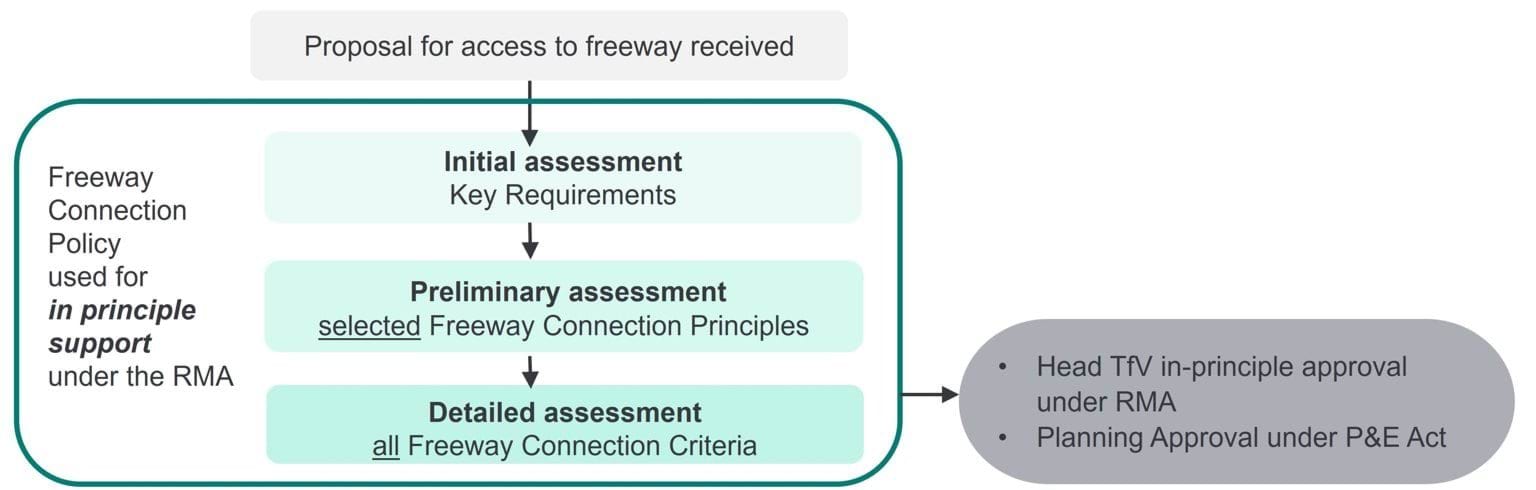
Proponents seeking access to a freeway must meet all the Key Requirements and the Freeway Connection Principles of this policy. Figure 1 shows the successive phases used to assess proposals, with the initial phases requiring assessment against only selected Freeway Connection Principles to avoid the need for proponents to undertake and provide more detailed analysis in support of their proposal if not warranted. This also avoids the need for detailed assessment by the Department of Transport and Planning if not warranted.
When the Key Requirements and Freeway Connection Principles of the Policy are met, the Department of Transport and Planning can provide in-principle support for access to a freeway under the Road Management Act. Following in-principle support under the Road Management Act, assessment under the Planning and Environment Act can occur.
Please refer to this page (opens in a new window)for more detail on the phases and the processes developed to assist the assessment.
Figure 1 Freeway Connection Policy
Freeway connections for authorised access points - Part B
Part B of the policy applies to proposals for new authorised access for particular limited purposes, low traffic volumes using the access, occasional use, and non-commercial purposes.
Context
In limited circumstances the Head, Transport for Victoria (and predecessor organisations such as VicRoads, Road Construction Authority and Country Roads Board) has authorised access to freeways at locations other than via purpose constructed road interchanges and service roads, provided the accesses can operate safely. Authorised access points are characterised by having a particular limited purpose, low traffic volumes utilising the access, occasional use, and being for non-commercial purposes. Examples of authorised access point use include use by emergency services, utilities and VicTrack.
Applicability
Authorised access points, if provided, are for specific authorised purposes (not for general public use), for irregular use, and low traffic volumes only. Access is authorised for a specified land use, and no other use. This means that where land use changes occur, the authorised access point will no longer be valid (this includes where land is proposed to be subdivided). Any regular use and or higher volume uses are to be considered under Part A of this policy.
This policy also applies to the operation of existing authorised access points, and proposals to withdraw existing authorised access points. The policy principles can be applied to assist in determining whether an existing authorised access point should be removed where a safety or operational issue has been identified.
Authorised access does not need to be created for:
- terminals, interchanges, intersections, pedestrian, bicycle and shared use paths constructed as part of a freeway project
- grade separations of freeways with public roads or railways
- pedestrian, bicycle and shared use paths constructed by or on behalf of the State, that are within a freeway reservation or are grade separated.
These uses are to be considered under Part A of this policy.
Road authorities do not require authorised access points themselves as the Road Management Act, or other relevant Acts (e.g. for toll roads) provide road authorities with the powers necessary to manage their road network.
A person must not connect an access point to a freeway without the written consent of the Head, Transport for Victoria (Schedule 2, Clause 1 Road Management Act).
Audience
This policy applies to any party seeking to create an authorised access point to a freeway (including freeways that are toll roads such as CityLink, EastLink, Peninsula Link etc subject to discussion with toll road operators) or considering the operation of an existing authorised access point.
Part B Notes
- Agreement of the Head, Transport for Victoria to proposed authorised access point(s) must not be assumed by any proponent, entity, or project. Any projects seeking to utilise authorised access arrangements are encouraged to contact the Department of Transport and Planning regarding potential authorised access points during the project development and scoping stage, and before concept designs are finalised.
- Authorised access points are not for general public use.
- Precedent on the network does not mean that access will be granted. Precedent refers to similar configuration or similar arrangements existing elsewhere on the freeway network.
- A person must not construct an access point to a freeway without the written consent of the Head, Transport for Victoria under the Road Management Act.
Roles, Responsibilities and References (Part A and Part B)
Roles and Responsibilities (Part A and Part B)
Proponents seeking access to a freeway must follow this Policy in order for their submissions to be considered by the Department of Transport and Planning.
Department of Transport and Planning staff will apply this policy when assessing proposals seeking access to a freeway.
Decisions made using this Policy must follow the appropriate Department of Transport and Planning governance and delegations from Head, Transport for Victoria.
References
The following key reference documents have been used (in consultation with key Department of Transport and Planning subject matter experts) to inform the development of this policy. Practitioners are encouraged to consult these documents for further information in relation to key concepts and terminology used throughout this policy.
References
Austroads Guide to Traffic Management Part 6: Intersections, Interchanges and Crossings Management (2020);
AGTM06-20_Part_6_Intersections_Interchanges_and_Crossings_Management 2020_ed4.0.pdf
https://austroads.gov.au/publications/traffic-management/agtm06
Austroads Guide to Road Design Part 4C: Interchanges
AGRD04C-23_Guide_to_Road_Design_Part_4C_Interchanges_Ed2.1.pdf
Austroads Glossary of Terms (2015 Edition), Austroads Publication No. AP-C87-15;
DTP Managed Roads
Planning and Environment Act 1987 (Ver 156; 5 June 2024)
Road Management Act 2004 (Ver 065; 1 July 2024)
Victoria Planning Provisions (3 May 2024)
- Applicable Department of Transport and Planning (VicRoads) Supplements to Guide to Road Design and Guide to Traffic Management, as referred to throughout the Policy and in the Checklists (see Attachments 1 to 4)
- Managed Motorway Design Guide – Volume 2 (October 2019)
Appendix A Legislative context
The principal legislation (and amendments) applying to the Freeway Connection Policy are set out in the below table:
Appendix B - Examples of existing authorised access points to declared freeways
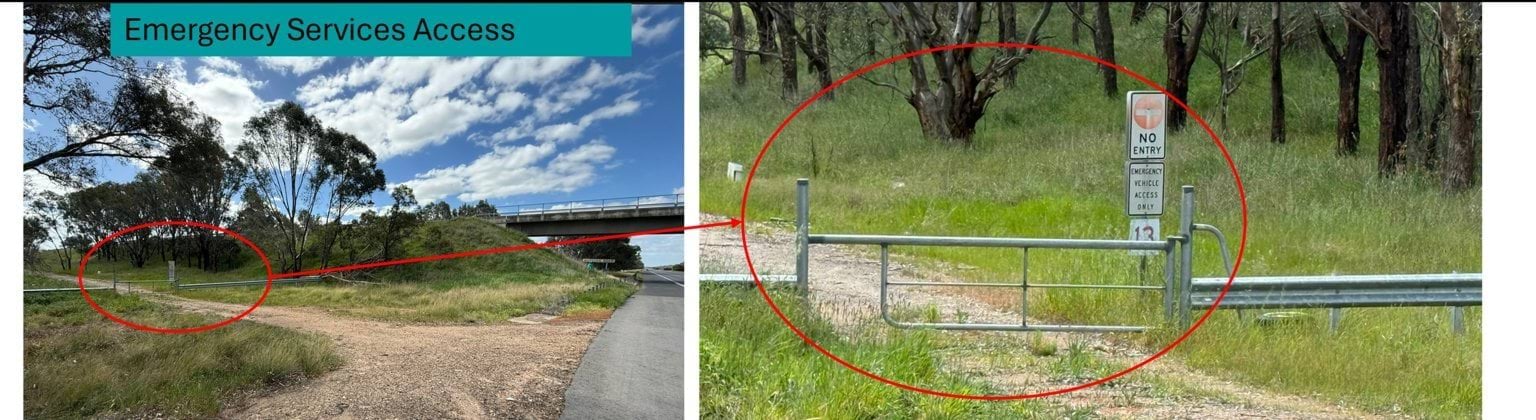
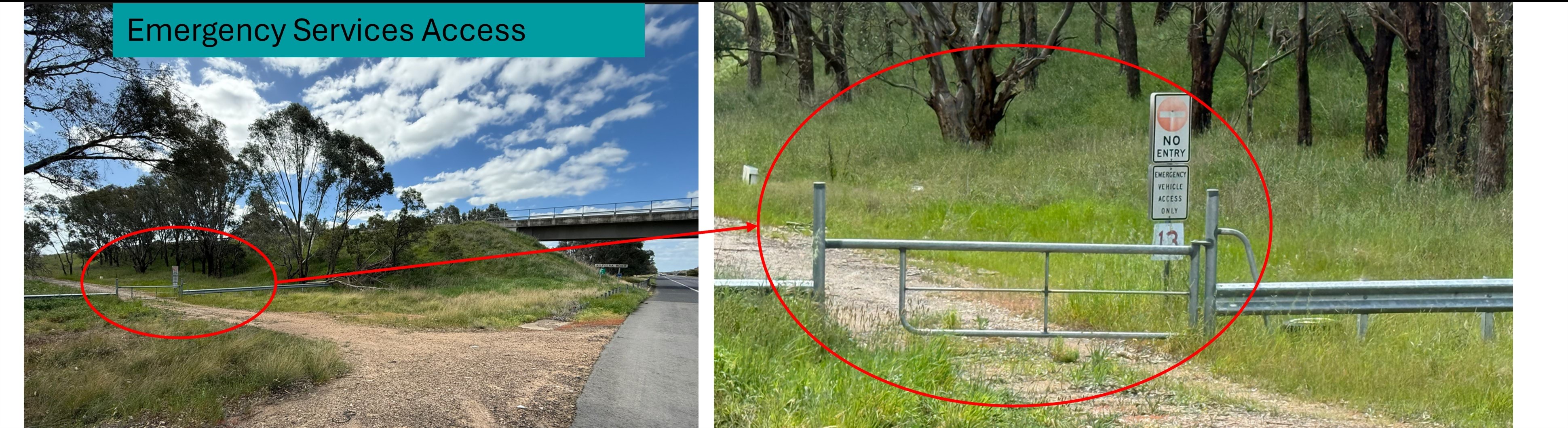
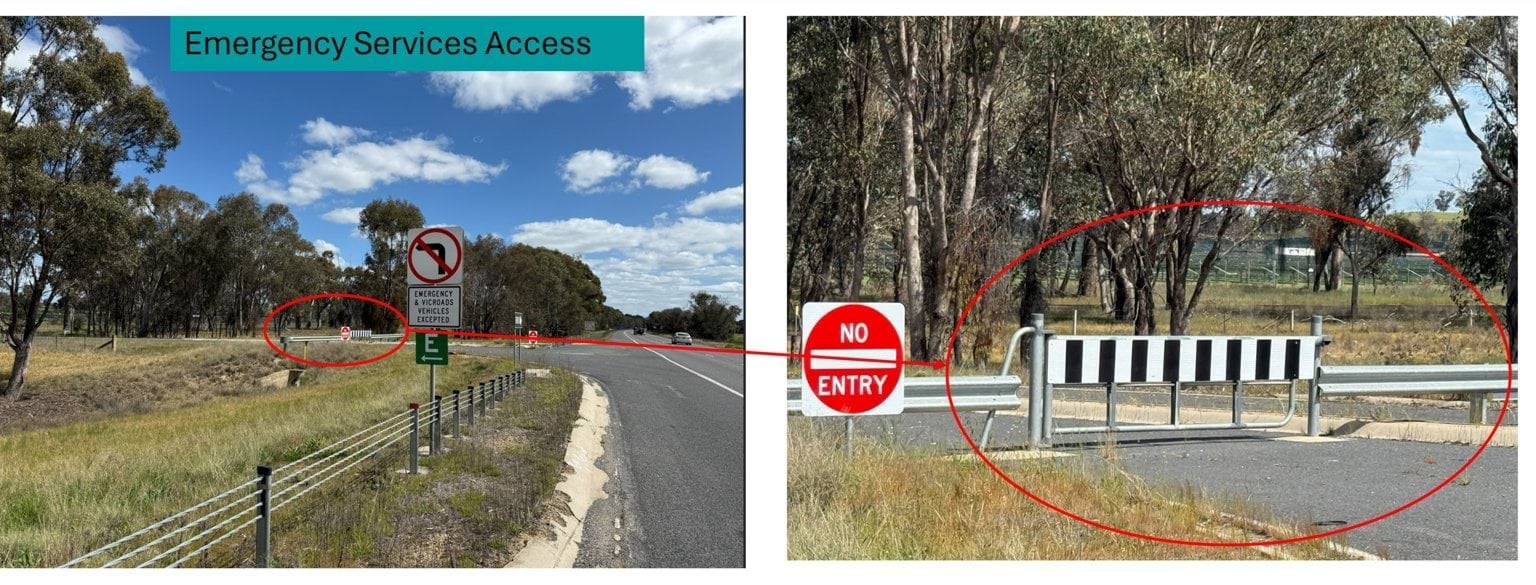
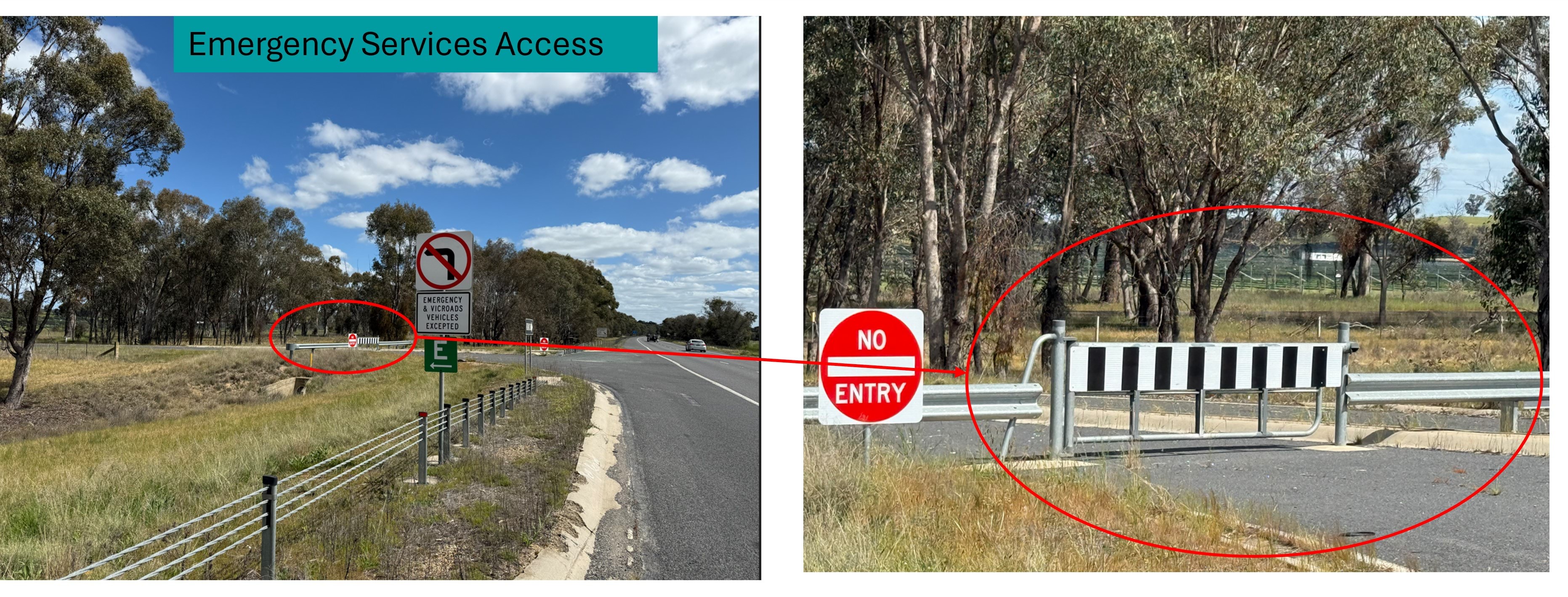
The following photographs provide examples of existing authorised access points to declared freeways. Authorised Access Points is covered in section 13.
Appendix E provides photographic examples of authorised access points to declared freeways
Example 1 - Image of emergency services access point to a declared freeway
Example 2 - Image of emergency services access point to a declared freeway
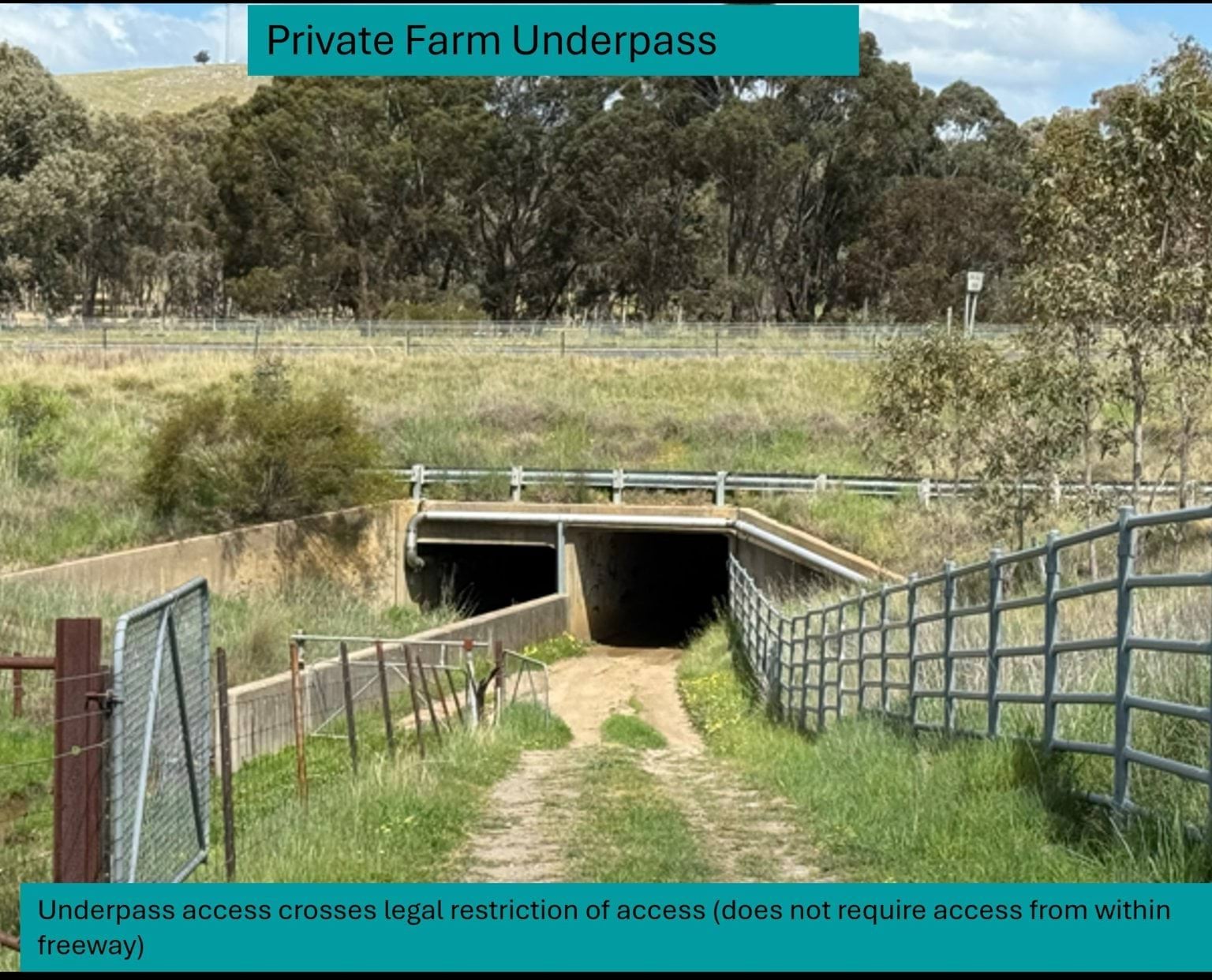
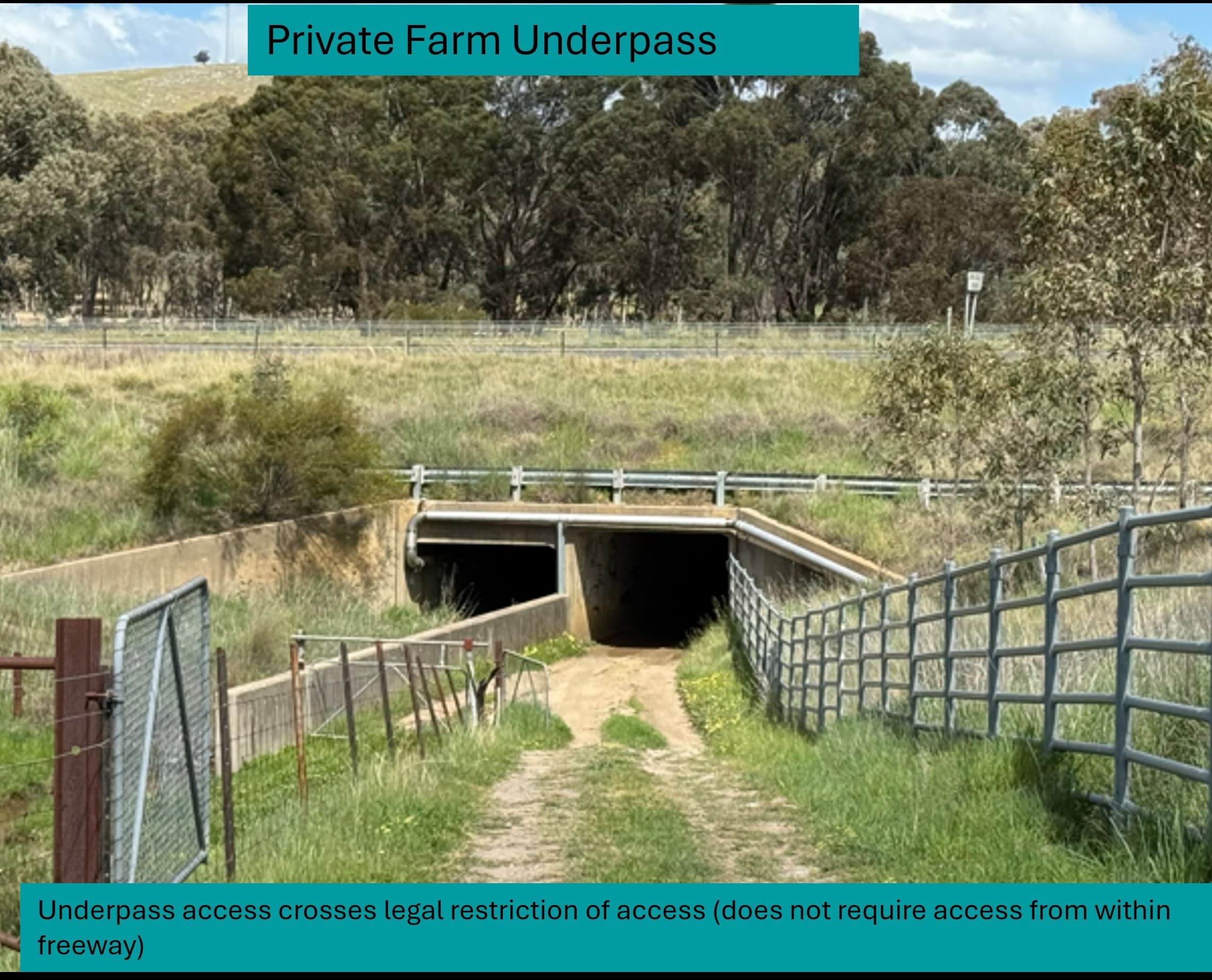
Example 3 - Image of a private farm underpass leading through a tunnel beneath a declared freeway
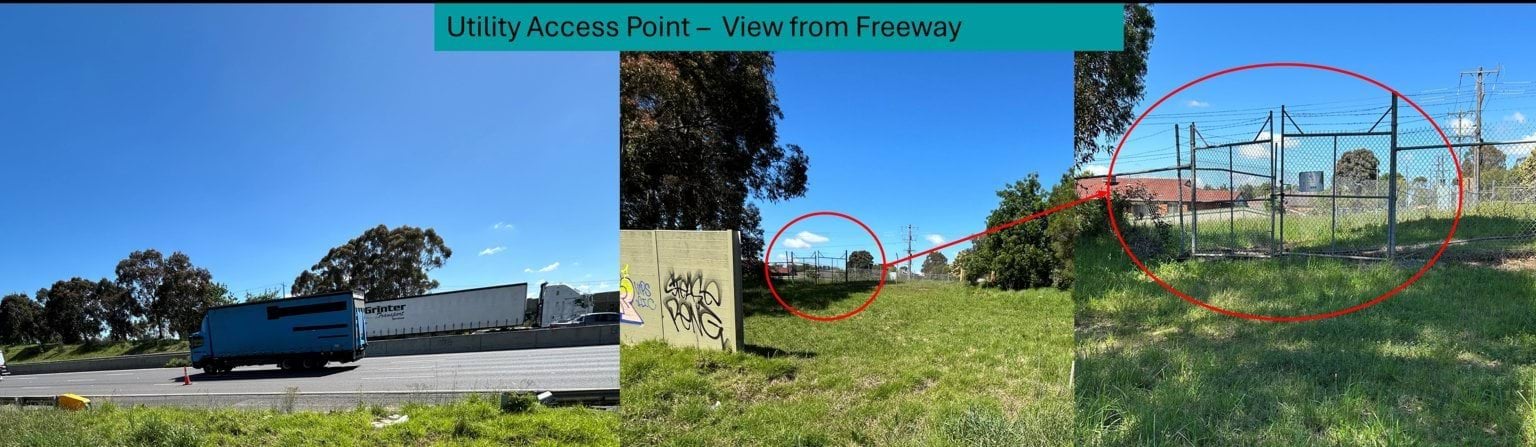
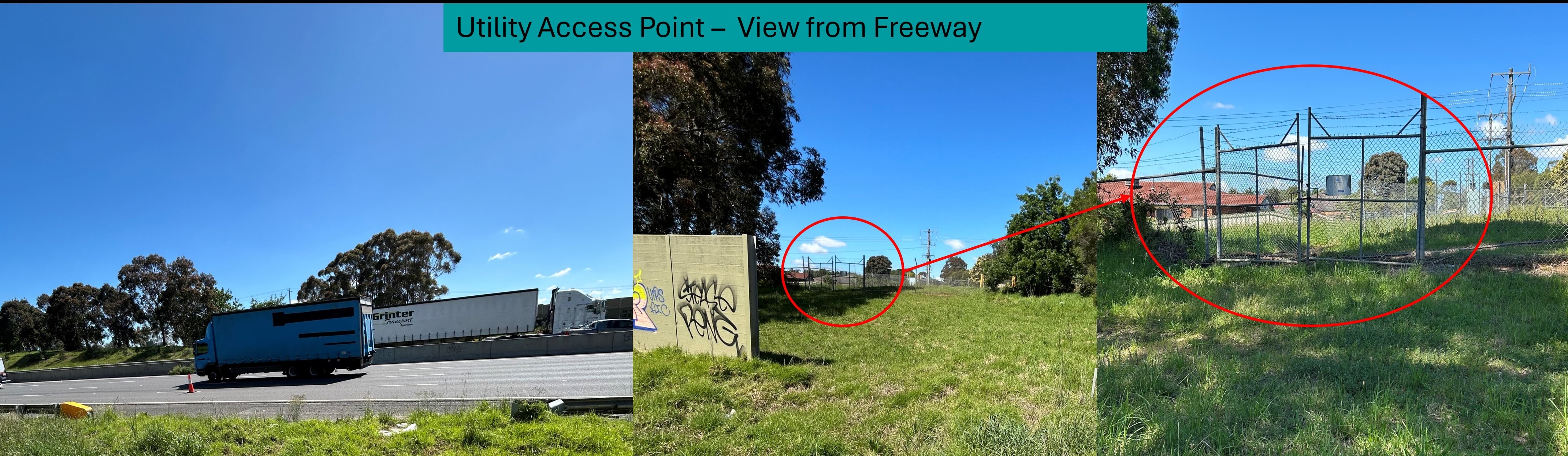
Example 4 - Image of utility services access point from a declared freeway
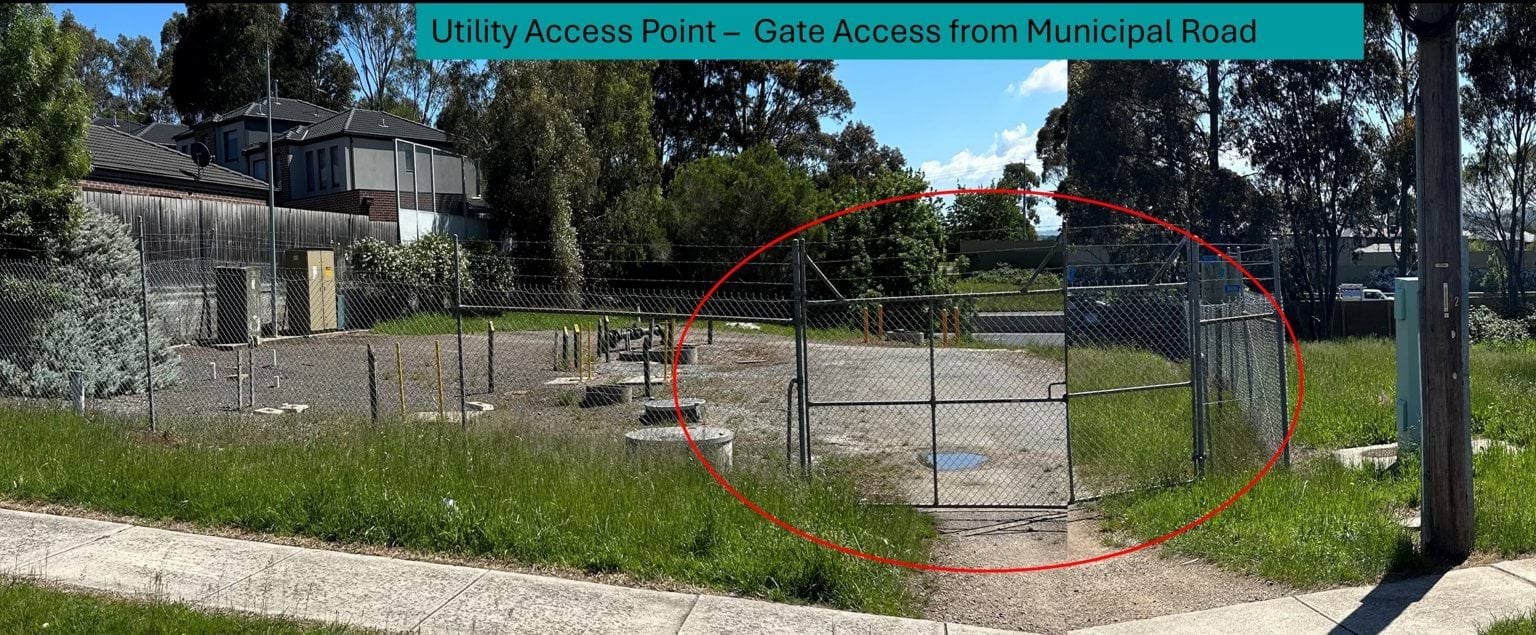
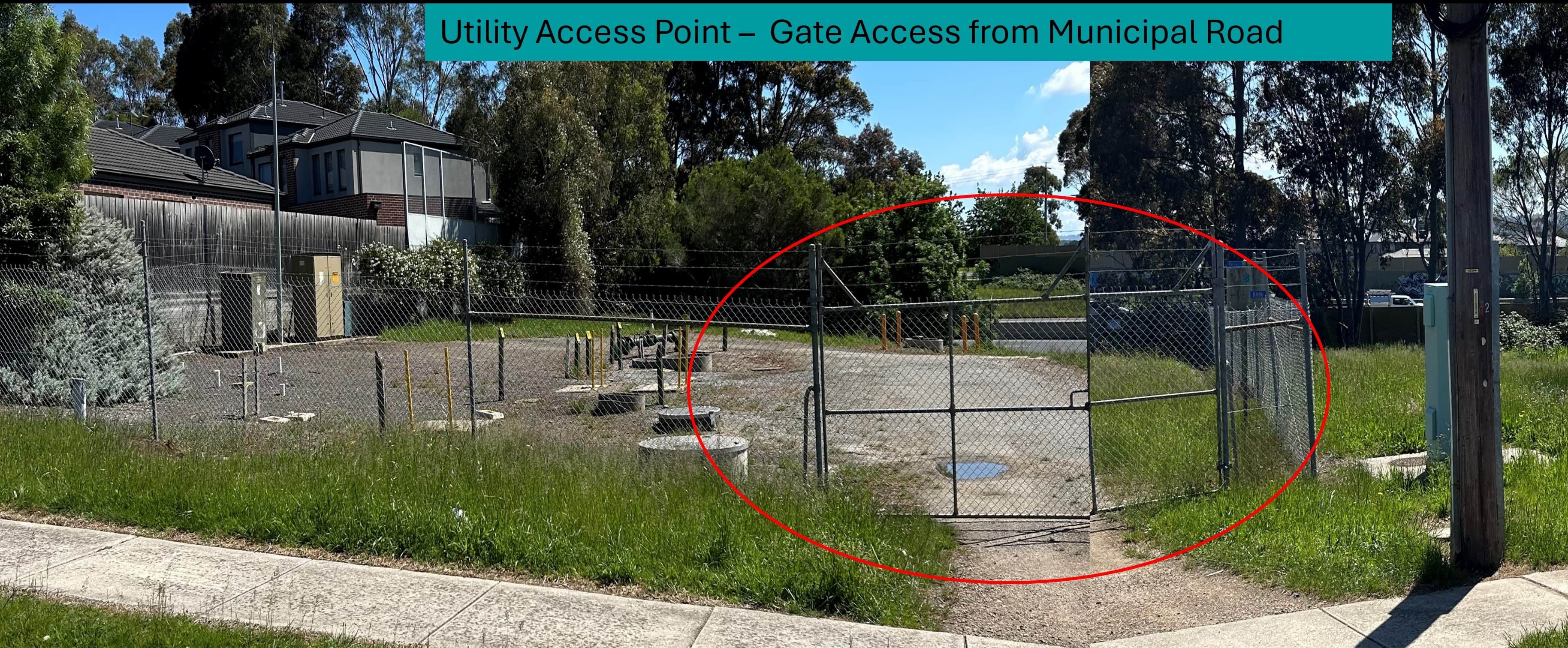
Example 5 - Image of utility services access point from a municipal road