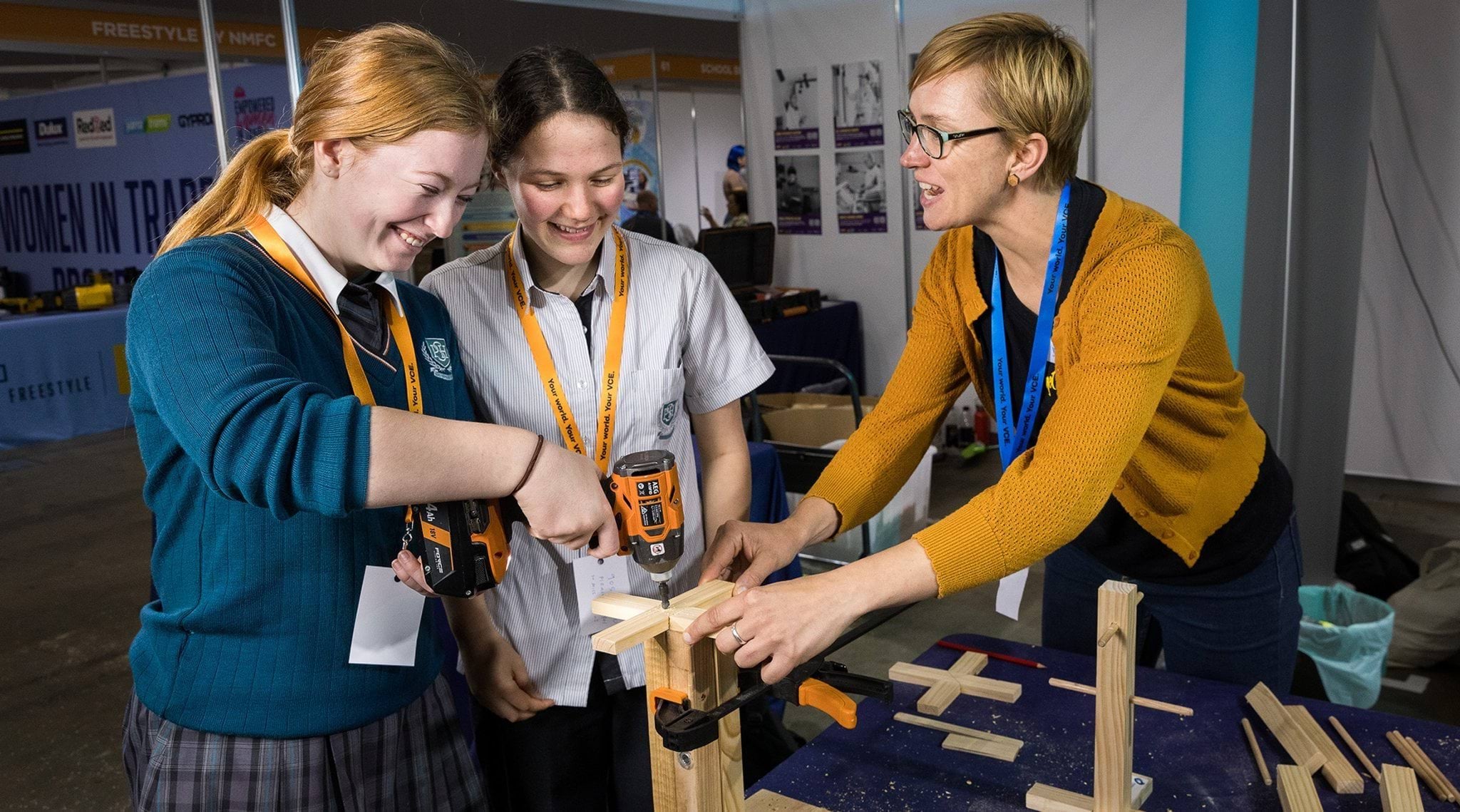
Student safety and wellbeing are very important in any work placement. Hosting a student can feel challenging, especially if it’s your first time. However, there are many supports and resources available to help.
This page is for employers. It helps them with hosting students. It includes work experience, workplace learning, and school-based apprenticeships as well as information for Structured Workplace Learning (SWL) as defined in Education and Training Reform Act (ETRA).
. It does not cover general workplace learning, industry or community tasters, Tech School programs, group career experiences, and career expos. These do not fall under work experience, SWL, or School Based Apprentice and Traineeship (SBAT’s).
It’s important to remember that students doing work-based learning:
- May be experiencing a workplace for the first time.
- They are still growing in three ways: physically, mentally, and emotionally. Because of this, some tasks may be too hard for them.
- Have fewer skills and less experience than adult workers. They might also not see some workplace risks.
- Might not feel confident to ask questions or speak up if they are unsure.
- They may forget about their own health and safety while trying to make a good impression.
Students must not be in situations that risk their health and safety. They also shouldn't take part in activities that endanger others.
Occupational health and safety obligations as an employer
As an employer, you have a duty as to the care and control of the student while the student is engaged at your workplace. You have a legal responsibility to provide and maintain a workplace that is without risks to health for everyone, including employees and contractors. This duty extends to students on a work-based learning placement. You need to comply with these obligations and take steps to support student safety and wellbeing during their placement.
You should look at your workplace and decide which activities can be done safely. Do not give students tasks that could put them at risk. Students must always be supervised by an experienced staff member. Students should be given tasks that are safe, interesting, and that help them learn more about your business.
If a student on placement is under 15, the supervisor must have a valid Working with Children Check.
What can you expect of the student?
Students do not have the same judgment or maturity as more experienced workers. As a host employer, you have the right to expect students to follow your workplace rules and procedures. However, you need to clearly explain these expectations first. Make sure you provide the information, instruction, and training they need. Don’t assume a student will already know what to do.
Workplace bullying, harassment, and discrimination
You must explain your workplace policy regarding bullying, harassment, and/or discrimination. Encourage the student to tell their employer, supervisor or teacher if they have concerns.
Occupational health and safety preparation
Students have received some preparation before starting their placement. Schools make sure all students complete one of the following before they begin:
- Safe@work: This program helps students learn about workplace health and safety before entering any job. It includes a general module for safe work practices. There are also extra modules for specific industries.
- A Job Well Done: This program helps students with disabilities. It teaches them about workplace health and safety. It also shows them how to be part of the working world.
Employers have a duty of care to provide a safe workplace for students on placement. This means the workplace must be free from risks to both physical and mental health.
Responsible employers regularly check for hazards and put safety measures in place. Everyone in the workplace should understand these safety rules. Warning signs must be easy to see, and students should know what they mean.
On the first day of placement, employers must give students a workplace induction. This includes explaining the hazards that exist. It also describes why safety controls are needed and how they work. Every student needs a nominated supervisor. This person oversees their work and offers support. They ensure the student's safety and health. They also focus on the student's development and education. Plus, they protect the student from unlawful discrimination, harassment, abuse, or exploitation.
Students should always talk to their supervisor if they have safety concerns. This includes not knowing how to use equipment or feeling unsure about a task. Safety should always come first for both the employer and the student.
Some industries and activities have additional requirements or restrictions for school students
For more info, go here: Work Experience: Student safety and wellbeing | VIC.GOV.AU | Policy and Advisory Library.
Please note: an employer is not permitted to employ more than one work experience student for every 3 employees at the workplace.
Child safety
- The Department of Education and Victorian Government schools must follow the Child Safe Standards. We suggest looking at the department’s child safety policy. Use the language in the Department of Education Child Safety and Wellbeing Policy to support your commitment to child safety.
- The Department of Education is committed to providing an environment where children and young people are safe and feel safe. To achieve this, they identify risks and take steps to reduce or remove them. This applies to both physical and online environments that children and young people use. Employers can keep students safe at work by doing the following:
- Choose a supervisor: pick someone (or a few people) to directly supervise the student during their work placement.
- Set clear behaviour rules: make sure the supervisor and other staff know what is and isn’t acceptable when working with students.
- Child Safety Policies: If your organisation is required to comply with the Child Safe Standards, you need to provide copies of relevant child safe policies to the principal when asked. If you don't need to follow the Child Safe Standards, you might get copies of the school’s policies on child safety and wellbeing.
- Talk about workplace rules: At the beginning of the placement, explain the workplace rules. Cover bullying, harassment, and discrimination. Also, discuss any other behaviour standards that apply.
- Discuss how to report problems: explain how the workplace handles complaints or concerns about behaviour. Encourage the student to report any worries to their supervisor, school principal, or another school staff member.
- Keep communication open: make sure the student can contact their school during the placement if needed.
- Allow school check-ins: make sure school staff can contact the student to see how things are going.
- Report issues quickly: if any problems come up at work, contact the school straight away.
What are some examples of potential risks to students on placement in a workplace?
- Unintentional/accidental harm
- Poor physical environment leading to injury
- Poor supervision
- High-risk activity
- Lack of risk mitigation strategies in place
- Psychological or emotional abuse
- Bullying by adults or other children
- Threatening language
- Intentional ignoring and isolating (either face-to-face, online or via other technology)
- Shaming, hazing
- Neglect
- Lack of supervision
- Not meeting the specific physical or cognitive needs of children
- Physical abuse
- Physical violence e.g. hitting, punching, kicking, pushing
- Cultural safety not upheld
- Lack of cultural respect
- Racial or cultural vilification or discrimination
- An environment that does not support the child to express their cultural identity
- Treating a student unfavourably because of their disability, age, gender, race, culture, vulnerability, sexuality, or ethnicity.
- Grooming
- Grooming is when a person engages in predatory conduct to prepare a child or young person for sexual activity at a later time.
- There are a wide range of behavioural indicators that may indicate a child is being groomed.
- For more information see: Child sexual exploitation and grooming | schools.vic.gov.au
- Sexual abuse
- Sexual abuse, assault and exploitation (face to face or online)
- Inappropriate touching or overly familiar or inappropriate behaviour towards a student
- Inappropriate conversations (either face-to-face, online or via other technology)
- Crossing professional boundaries e.g. contact with any student outside of school hours
- Other potential risks
- School staff and employers not aware of signs of abuse
- Students not informed about how to raise concerns
- Families not informed about child safety risks in workplace environments and how to raise concerns
What are some examples of behaviours which are acceptable and unacceptable when students are on placement?
The Department of Education’s Child Safety Code of Conduct lists what behaviours are okay and what aren’t. These include:
- Acceptable behaviours
- Treating everyone in the workplace, including students with respect
- Promoting the cultural safety, participation and empowerment of
- Aboriginal students,
- students with culturally and/or linguistically diverse backgrounds,
- students with a disability,
- international students,
- students who are unable to live at home and
- lesbian, gay, bisexual, transgender and intersex (LQBTIQ+) students
- Listening and responding to the views and concerns of students. This is particularly important if they are telling you that they have been harmed or abused, or that they are worried about their safety.
- Reporting any allegations of child abuse or other child safety concerns to the school principal and, if needed, the police
- Unacceptable behaviours
- Ignore or disregard any concerns, suspicions or disclosures of child abuse or harm
- Show behaviours or talk with students in ways that seem inappropriate. These actions don’t match the workplace learning context.
- Discuss intimate topics or use sexualised language with students
- Use inappropriate language in the presence of students
- Treat a student unfairly. This can be because of their disability, age, gender, race, culture, vulnerability, sexuality, or ethnicity.
- Turn a blind eye to behaviours by other adults towards students that appear to be overly familiar or inappropriate
- Contact a student directly using personal channels like social media, email, or texting. However, only do this if it relates to the student’s work or if there’s a safety issue or urgent matter.
- Work with students whilst under the influence of alcohol or illegal drugs
- Consume alcohol or drugs at the workplace in the presence of students
For further information
- Work Experience: Student safety and wellbeing | VIC.GOV.AU | Policy and Advisory Library
- School-Based Apprenticeships and Traineeships: Child safety and duty of care | VIC.GOV.AU | Policy and Advisory Library
- Structured Workplace Learning: Student safety and wellbeing | VIC.GOV.AU | Policy and Advisory Library
- CCYP | Child Safe Standards
- Work Experience Guidelines for Employers
- Child Safe Standards and workplace learning
Updated