Montague is the current focus of development activity and it’s transformation is well underway. The precinct’s strong existing public transport links, recent investment in community infrastructure, and its proximity to the CBD and the vibrant neighbourhood of South Melbourne are supporting the renewal of the mixed-use precincts, with new development celebrating its significant cultural and built heritage and network of gritty streets and laneways.
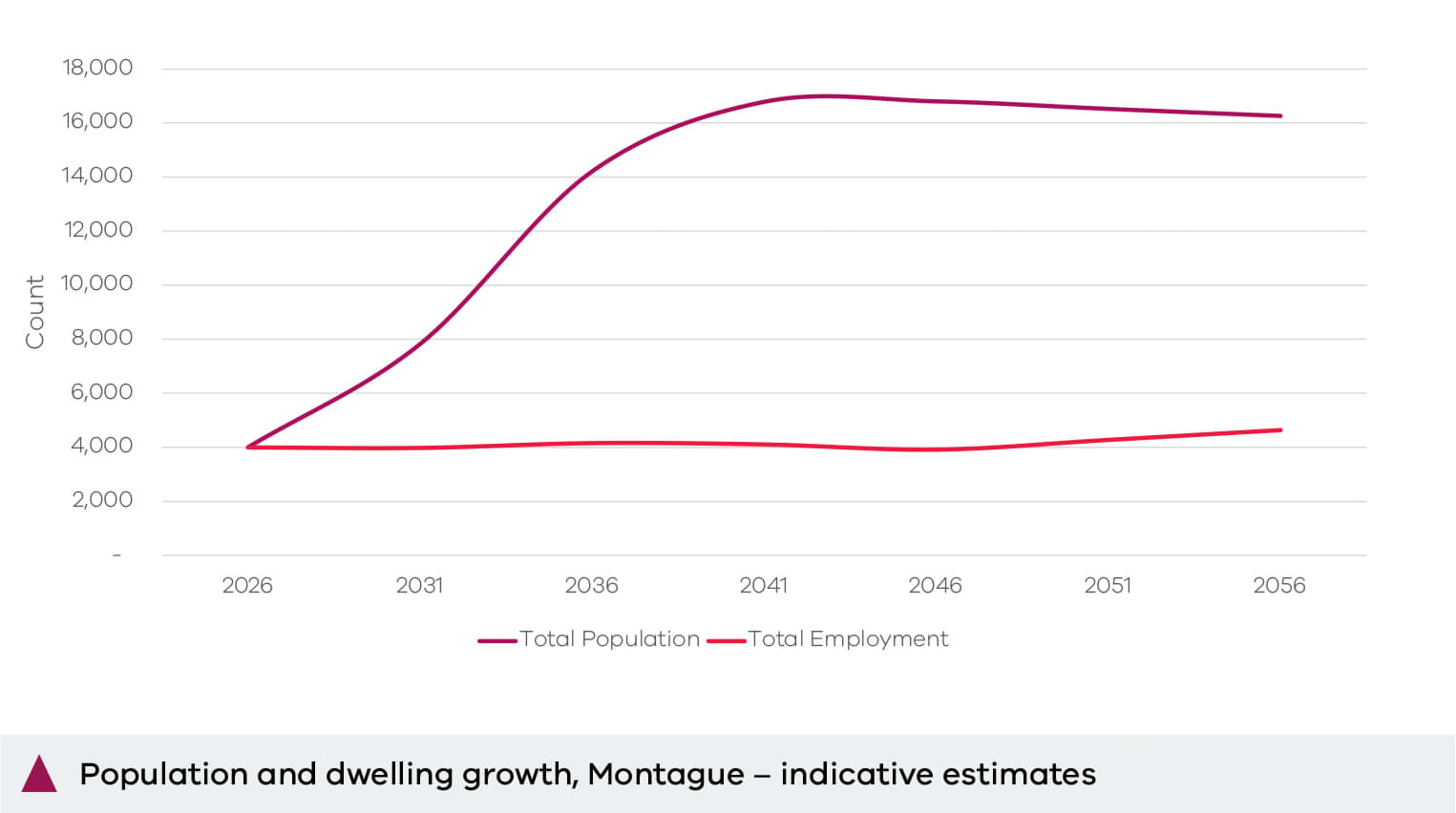
Employment is expected to remain relatively stable as land uses change across Montague. 4,000 jobs are anticipated to be in the precinct by the 2050s.
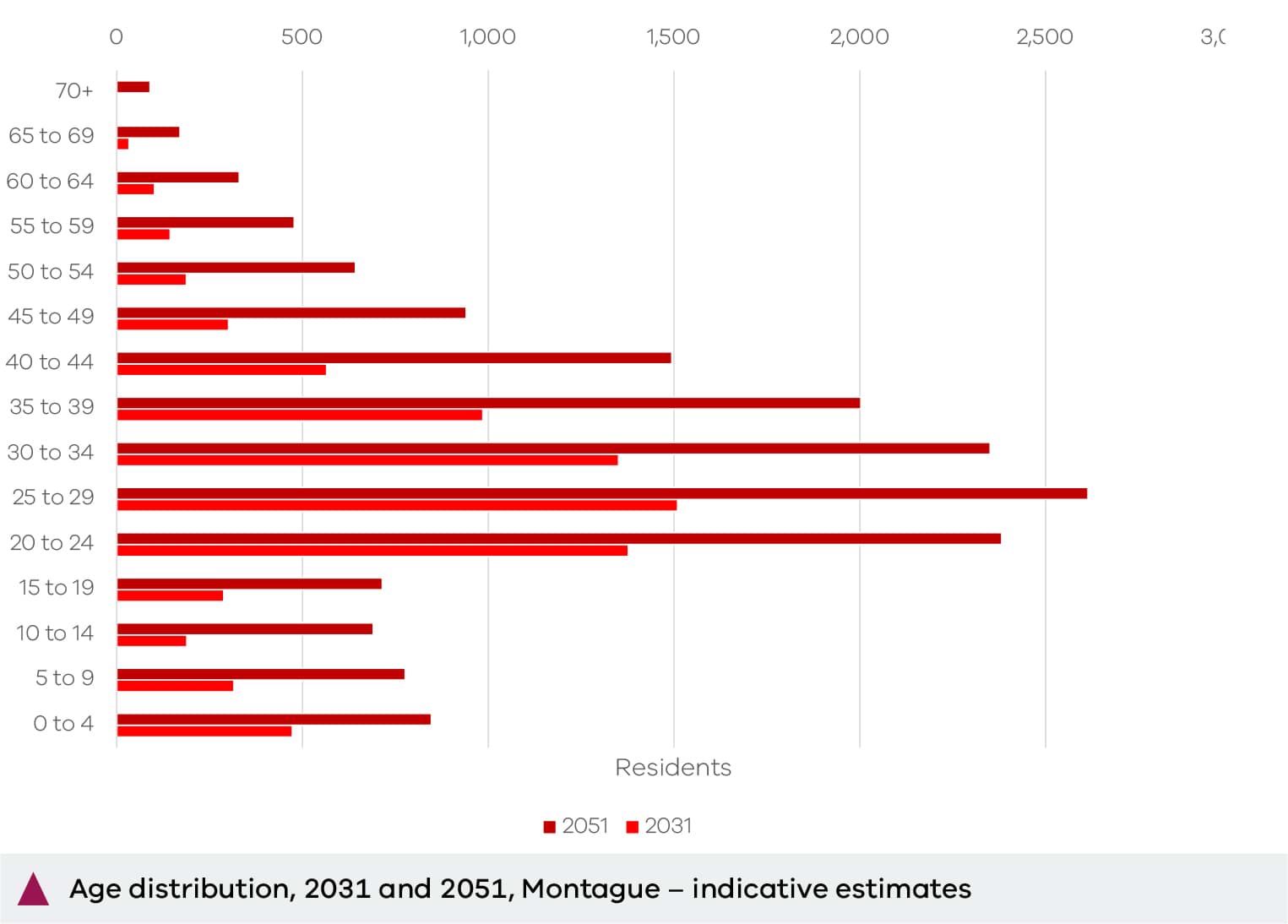
Analysis of ABS Census data and population estimates shows that Montague’s population is, and will continue to be comprised of younger residents calling the precinct home for a shorter period of time. This reflects its proximity to the city and function as an outgrowth of existing development in Southbank.
By 2056, Montague’s estimated 16,000 residents are expected to live across 8,000 households. It is likely that Montague will be home to smaller, younger households who are more likely to move elsewhere over time and be replaced by similar cohorts. The population accordingly does not age in place and remains young throughout the projection period.
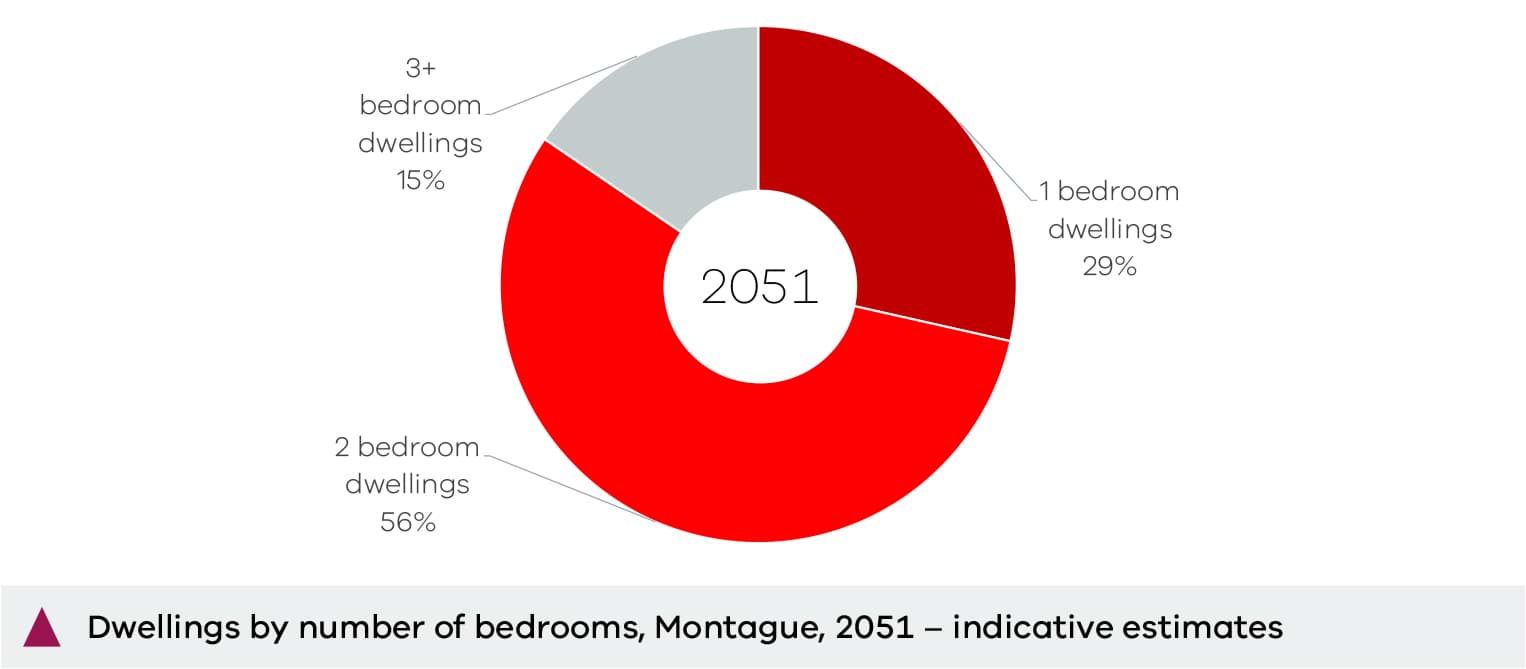
Growth in one and two-bedroom dwellings is anticipated to exceed growth in dwellings with three or more bedrooms, reflecting demand from smaller households predominately without children.
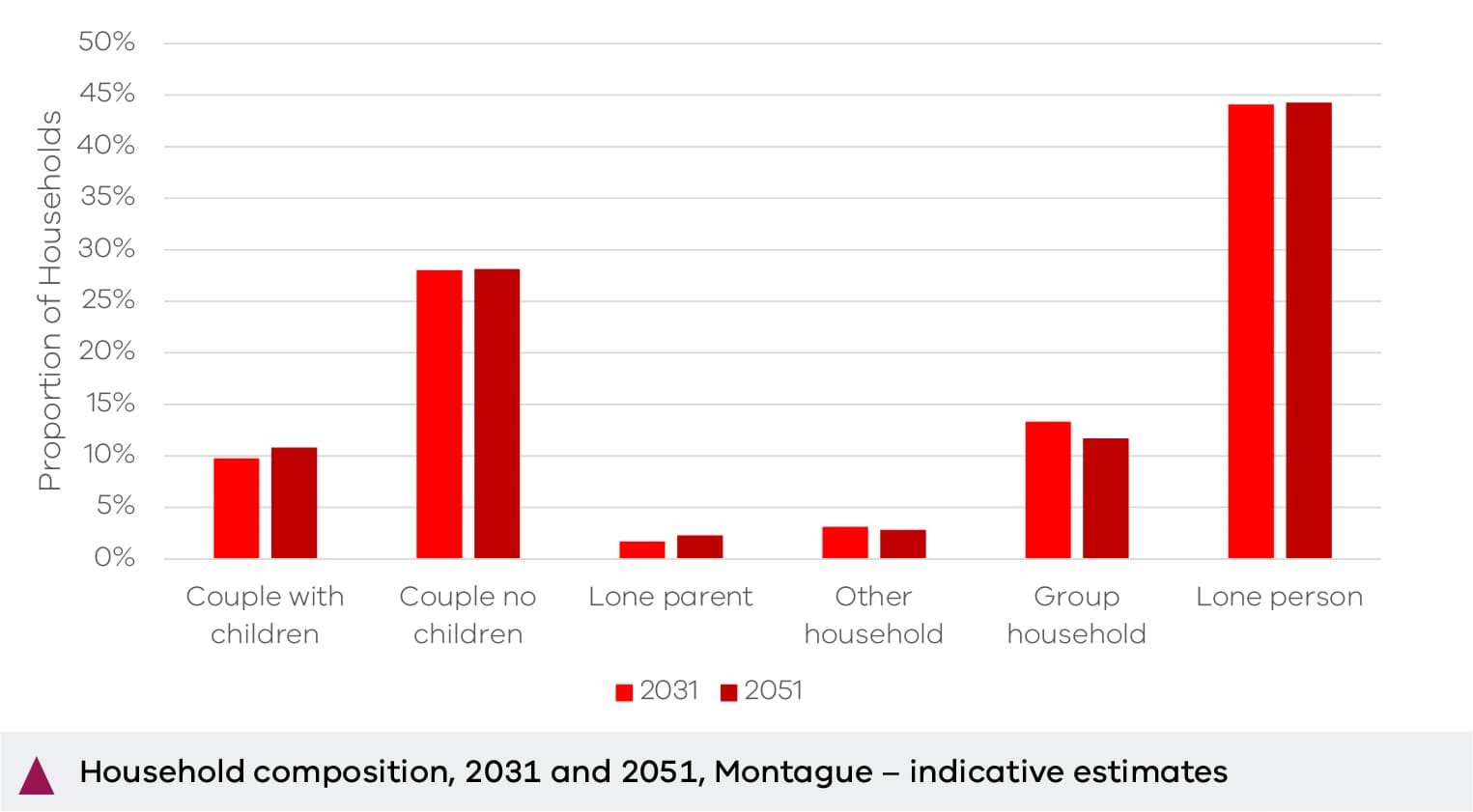
While lone person households are expected to continue to be the dominant household type, by 2051, the indicative estimates show one in seven households as being families with children.
Industry Change, Montague
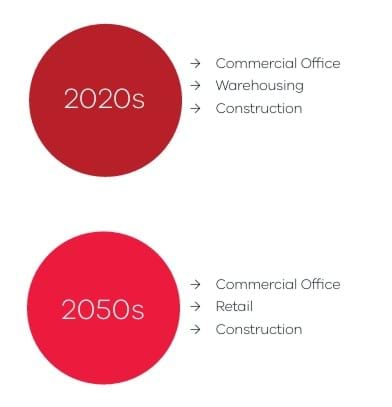
As seen across Melbourne’s inner-city, former industrial buildings are anticipated to be repurposed for use in the creative industries, with new tenants capitalising on Fishermans Bend’s proximity to inner-city and CBD creative economy clusters.
As the precinct evolves into a mixed-use neighbourhood, new opportunities for retail and entertainment employment will emerge.
Updated