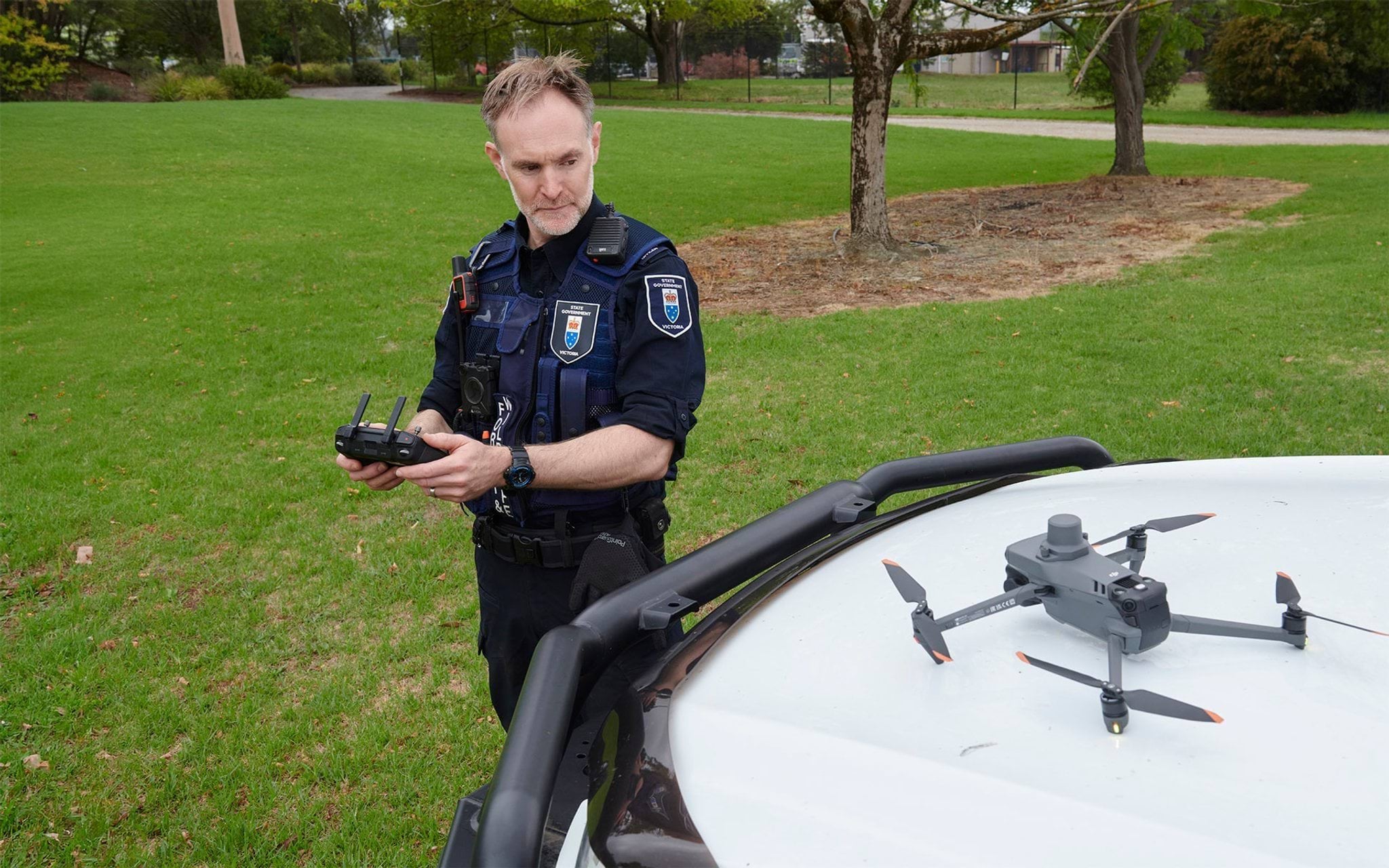
We are committed to delivering on our regulatory responsibilities. By focusing on what matters most, we can design more proactive and preventative approaches to ensure that all Victorians can enjoy State forests and the remarkable biodiversity within them.
- Illegal fires on public land
- Illegal take of firewood
- Cruelty to wildlife
- Protection of threatened species
- Illegal vehicle use
Illegal fires on public land
Bushfires are one of Victoria’s most serious natural hazards. Illegal fires on public land can put lives at risk, damage parks and forests, harm wildlife and their habitat, and place pressure on emergency services. That’s why preventing and responding to illegal fires remains one of our regulatory priorities for 2025–2027.
2 offenders successfully prosecuted.
Bushfire risk increases over summer (November to April), especially in high visitation areas such as the Grampians, alpine regions and Cape Otway. Reports of illegal fires on public land increased over the peak period, reflecting increased patrol activity by our authorised officers during high-risk days and busy school holiday periods, which improved detection rates.
Our work combines education with compliance. We run targeted patrols during high-risk periods, deliver community education, and use data to identify hotspots needing extra attention. We work closely with Forest Fire Management Victoria, Parks Victoria and Traditional Owners, and partner with Victoria Police in known high-risk areas for deliberate ignitions.
Help keep people, wildlife, and public land safe
Before you light a fire:
- check if fires are allowed where you are
- follow any restrictions
- never leave a campfire unattended
- fully extinguish fires with water until the coals are cold to the touch.
Preventing illegal music events during high fire risk periods
Working closely with Victoria Police, Conservation Regulator Authorised Officers intercepted two unauthorised music events in regional Victoria during January 2026. One event, held in bushland near Ballan, attracted an estimated 1,000 attendees and presented significant safety, public amenity, and fire risks. A second event planned near Glenluce, south of Castlemaine, was cancelled after Authorised Officers warned organisers of potential enforcement action, including prosecution and seizure of equipment.
Events of this scale require permits under the Forests Act 1958, along with comprehensive safety, environmental and traffic management planning. Unauthorised events typically operate without adequate fire safety measures, emergency access or evacuation planning, placing attendees, surrounding communities and emergency services at risk. The Conservation Regulator can seize equipment and pursue court action, with penalties for serious offences including substantial fines and imprisonment.
Illegal events in State forests pose serious risks during periods of elevated fire danger, particularly when emergency services are already stretched by response and recovery efforts. By intervening early and holding organisers accountable, we help reduce risk to people, protect forests and wildlife, and ensure emergency resources remain available where they are needed most.
Enforcement in action – Fines for Dandenong North man
On 1 April 2025, a 41-year old man was convicted and fined $5,000 in the Mansfield Magistrates’ Court after lighting a fire on Boxing Day 2024 on a Total Fire Ban day at Blue Gum Campground, within Delatite Arm Reserve, on Lake Eildon.
The Magistrate remarked on the man’s “blatant disregard” for the Total Fire Ban and the seriousness of potential consequences, describing the man’s attitude to the fire restrictions as “appalling”. Under total fire ban conditions, lighting fires in the open air is illegal as it puts lives, property, and the environment at serious risk.
The outcome reinforces the importance of Victoria’s fire restrictions and our ongoing work with the Country Fire Authority and Forest Fire Management Victoria. Together, we are helping to ensure fire safety rules are followed and that individuals are held accountable when they breach the law, supporting safer communities during high risk fire periods.
Illegal take of firewood
Illegal firewood collection continues to cause widespread harm in Victoria’s forests, damaging vital wildlife habitat, and putting biodiversity and cultural heritage at risk.
When tree and logs are taken unlawfully from public land, the loss goes far beyond the physical material – these elements support entire ecosystems, offering food, nesting sites and protection for our native species. Illegal collection can also threaten Aboriginal cultural heritage, including scarred trees and other significant sites that hold deep cultural value. It can cause public safety risks and disrupt legitimate firewood markets.
Some of the most affected areas are the river red gum ecosystems along the Murray, Goulburn, and Loddon Rivers. Ongoing monitoring has revealed patterns of habitat removal in these regions, impacting species such as the superb parrot, Murray cod and winged peppercress.
Each year, an estimated 9,200 trees are illegally felled in Victoria’s parks, forests and reserves, underscoring the scale of the challenge.
We are determined to disrupt illegal operators who remove commercial quantities of firewood from public land and sell it to unsuspecting buyers. To tackle this issue, our approach balances community education, targeted enforcement and partnership with local agencies. We continue strengthening surveillance in high‑risk zones, running joint operations and sharing clear information about legal firewood collection.
Legal firewood collection
Victorians can continue to collect firewood legally during the designated autumn and spring seasons, but only for personal use and only from approved collection areas. Before collecting, the public is encouraged to visit the Forest Fire Management Victoria website for up‑to‑date maps and permitted locations.
Visit Sourcing firewood(opens in a new window)
Report suspicious firewood activity
Call Crime Stoppers 1800 333 000
Visit Crime Stoppers(opens in a new window)
Taskforce Ironbark
Taskforce Ironbark was established in 2023 to deliver coordinated patrols, intelligence gathering and public awareness campaigns, supporting our efforts to reduce firewood theft and protect critical habitats.
In its first year of operation the taskforce focused on building the intelligence, systems and partnerships needed to support a coordinated regulatory response. In its second year, this groundwork enabled a shift to more targeted, intelligence‑led operations, with officers working alongside partner agencies to detect, investigate and disrupt organised, commercial illegal activity, execute search warrants, seize equipment and bring offenders before the courts – demonstrating a stronger, more visible enforcement presence and a clear crackdown on illegal operators.
Members of the public are encouraged to report suspicious firewood activity by calling Crime Stoppers on 1800 333 000, with reports able to be made anonymously. More information about sourcing firewood legally is available online.
Reedy Lake
An incident that underscored this commitment to decisive action of Taskforce Ironbark occurred at Reedy Lake Wildlife Reserve, northwest of Nagambie, where targeted patrols led to the interception of a Melton man on two separate occasions in a single day for alleged illegal firewood offences.
During the first interception, Conservation Regulator Authorised Officers observed the man actively cutting a recently felled dead river red gum tree on the dry lakebed. He admitted to felling and processing the tree for firewood.
As a result, officers advised that infringement notices would be issued for unlawful tree felling in a Wildlife Reserve, operating a vehicle off road on public land, and the illegal cutting and removal of timber from public land.
He was directed to unload the timber and warned that any further offending could result in the seizure of equipment. Later that same evening, the offender returned to the reserve under the cover of darkness. With assistance from Victoria Police, Conservation Regulator Authorised Officers intercepted his vehicle towing a tandem trailer loaded with freshly-cut river red gum timber. On this occasion, officers seized the trailer, the timber and a chainsaw. Investigations are ongoing, and the man is expected to face court over alleged firewood related offences. River red gum trees – whether living or dead – play a vital role in Victoria’s ecosystems and are protected under law. Dead, standing river red gums provide critical roosting and nesting habitat for some of the state’s most threatened species, including the white bellied sea eagle. Illegal removal of this timber can have long-lasting impacts on wildlife and the health of riverine environments.
Visit Sourcing firewood(opens in a new window)
Report suspicious firewood activity
Call Crime Stoppers 1800 333 000
Visit Crime Stoppers(opens in a new window)
Disrupting organised illegal harvesting of native vegetation
Operation Europium demonstrates how intelligence‑led enforcement can disrupt organised illegal activity and protect sensitive environments.
Commencing in 2023, the investigation targeted a suspected long‑term operation involving the illegal harvesting of native tea tree from the Otways that was sold on as fencing stakes for tens of thousands of dollars. Tea tree habitats in the Otways provide critical shelter and food for native wildlife including birds such as the vulnerable rufous bristlebird, and small mammals and reptiles that rely on the dense vegetation.
Through targeted surveillance and intelligence- gathering, including the use of tracking devices, Authorised Officers identified multiple harvest sites and gained critical insight into how the operation was being conducted. This work culminated in charges being laid in May 2024 and the matter was heard in court in 2026.
The court found that 2 offenders had illegally cleared native vegetation across several protected areas in the Otways and sold more than 13,000 tea tree stakes for approximately $30,000. The investigation also resulted in the seizure of vehicles, equipment and stock prepared for sale. In sentencing, the Magistrate described the offending as serious environmental crime, noting the deliberate and organised nature of the activity and the damage caused to wildlife habitat.
Enforcement in action – Otway Forest Park tree felling
In August 2025, Conservation Regulator Authorised Officers detected a vehicle parked on an illegal track deep within the Otway Forest Park.
What followed revealed the illegal felling of 4 messmate trees, including hollow-bearing trees critical to wildlife survival. In total, 31 logs had been cut and loaded, causing direct and lasting damage to a protected forest ecosystem.
The offender pleaded guilty in the Geelong Magistrates Court in April 2026 to multiple charges, including cutting trees in a State forest, damaging wildlife habitat and using a vehicle off-road. The court imposed a $10,000 fine with conviction, reflecting the seriousness of the conduct and the broader environmental harm caused.
The felled trees included hollow‑bearing logs that provide critical habitat for native wildlife within the Otway Forest Park, including the gang gang cockatoo and swamp antechinus which are threatened species.
Magistrate Franz Holzer highlighted aggravating factors including the use of an illegal track and attempts to conceal the tree cuts, noting that without an early guilty plea, a jail sentence would have been likely. The sentencing sent a clear message: personal convenience is never an excuse for environmental harm, and breaches of forest laws will be taken seriously by the courts.
Enforcement in action – Wandong night-time firewood thieves
A 41 year old Diamond Creek man appeared in the Seymour Magistrates’ Court on Thursday 11 December 2025, where he pleaded guilty to 3 charges relating to the illegal felling and taking of timber from public land for sale on the black market. He was fined $4,500.
In the early hours of Monday 14 July 2025, Conservation Regulator Authorised Officers, with assistance from Victoria Police, intercepted the man and another alleged offender loading freshly cut timber into a trailer in bushland near Wandong, southeast of Broadford.
Officers located an operation illuminated by portable flood lighting. Trees in the area had been pre-marked with reflective spray paint to enable finding in the darkness, and equipment included two chainsaws, felling wedges and wood splitters. A recently-felled native tree was located nearby, with a stump approximately half a metre in diameter surrounded by more than 90 pieces of cut and split timber.
The man told officers he was collecting firewood to heat his home; however, analysis of his phone activity indicated he was selling commercial firewood through social media.
The interception followed an investigation into the illegal removal of a large number of trees from Wandong Regional Park and Mount Disappointment State Forest.
In sentencing, Magistrate Vaughan said the court must “take a dim view” of such offending, noting it causes “irreparable damage to nature and the environment”.
Enforcement in action – Grampians firewood thief convicted
A multi-agency operation focused on state forests north of Ballarat was launched after intelligence and community reporting pointed to a network of offenders involved in the unlawful cutting, removal and sale of native timber.
Led by the Conservation Regulator and supported by Parks Victoria, Victoria Police and Forest Fire Management Victoria, over the course of 13 months the operation used targeted patrols and surveillance technology to detect illegal activity.
These efforts resulted in multiple enforcement outcomes, including court‑imposed fines, the issuing of 14 infringement notices totalling more than $12,000, and the seizure of equipment used in offending. Investigations connected to the operation remain ongoing.
In one case at the Ballarat Magistrates’ Court, a 36‑year‑old Ballarat man was fined $2,000 for offences relating to the illegal cutting and taking of timber from the Creswick and Glen Park State Forests. Conservation Regulator Authorised Officers intercepted the man in August last year after observing him and a co‑offender collecting firewood outside designated firewood collection areas. During the interception, officers seized a trailer loaded with mixed native hardwood, along with two chainsaws and a wood splitter, collectively valued at more than $5,000.
Cruelty to wildlife
Cruelty to wildlife causes harm to individual animals and can have wider impacts on wildlife populations.
We investigate reports of harm, taking enforcement action, and working with partners and the community to promote respectful and lawful treatment of wildlife.
Cruelty to wildlife can occur in the wild or in captive settings. To help prevent cruelty in wildlife keeping, we have developed how-to-comply guides to provide wildlife licence holders with information about their obligations and why they exist. The Private Wildlife Licence Guide and Wildlife Controller Licence Guide were finalised in 2025–2026, and 5 how to comply guides are now available for licence holders (See Key publications).
We also published the Living with wildlife webpage, which outlines reasonable precautions to avoid wildlife harm, including disturbance.
In 2025–2026, we investigated 20 reports of wildlife cruelty, laid 20 charges following an investigation into the deaths of wombats in Venus Bay and continued work to prevent wildlife trafficking.
Visit Private Wildlife Licence Guide
Visit Wildlife Controller Licence Guide
Visit Living with wildlife
Enforcement in action – South east Victoria wombat killings
In July 2025, a South Gippsland man was charged with 20 offences under the Wildlife Act 1975 and the Prevention of Cruelty to Animals Act 1986 following an investigation into the deaths of 9 wombats at Venus Bay. The charges relate to alleged conduct that was a senseless and deliberate act of animal cruelty.
The charges followed an extensive investigation by the Conservation Regulator and Victoria Police into the deaths, which occurred in February 2025. All wildlife in Victoria is protected by law, and it is illegal to hunt, take, destroy, injure or interfere with wildlife without authorisation.
This case highlights our role in investigating and prosecuting serious acts of wildlife cruelty, particularly where deliberate harm is alleged.
This case is currently before the courts. It also reinforces the importance of community reporting in supporting investigations and protecting Victoria’s native animals. The Conservation Regulator encourages anyone with information about wildlife cruelty to report it to Crime Stoppers Victoria in 1800 333 000, with reports able to be made anonymously.
Report cruelty to wildlife
Call Crime Stoppers 1800 333 000
Visit Crime Stoppers(opens in a new window)
Enforcement in action – $9,000 in fines for wildlife crimes
A Conservation Regulator investigation this year has highlighted the serious consequences of illegal wildlife activity, with a Melbourne man fined $9,000 following prosecution in the Dandenong Magistrates’ Court.
The 30-year-old pleaded guilty to 10 offences under the Crimes Act 1958, Wildlife Act 1975, Wildlife Regulations 2024 and the Prevention of Cruelty to Animals Act 1986, including illegal wildlife trade, fraud and animal cruelty. He was fined without conviction.
The offences occurred between December 2023 and September 2024, during which the man falsely claimed to hold an advanced wildlife licence to acquire approximately 50 reptiles from across Victoria and interstate.
Investigators found he used 3 licences – one belonging to another person and 2 fraudulent – to obtain species including blue-tongued lizards, Boyd’s forest dragons, central netted dragons, desert skinks and a monitor lizard.
In June 2025, Authorised Officers executed a search warrant at a commercial premises in Springvale, where they discovered reptiles being kept in poor conditions, lacking appropriate ultraviolet lighting and temperature controls essential for their welfare. Officers also found an albino olive python suffering from significant burns that had not received proper veterinary care.
The animal was seized and treated.
In sentencing, the Magistrate highlighted the offender’s disregard for Victoria’s wildlife licensing laws and reinforced that anyone keeping animals has a clear responsibility to provide appropriate care.
The case formed part of Operation Pike, a major multi-agency investigation into the illegal import, export and trade of wildlife in Victoria, led by the Conservation Regulator with support from Victoria Police and the Australian Government’s Department of Climate Change, Energy, the Environment and Water.
Addressing wildlife trafficking and illegal trade
Wildlife trafficking is a serious form of cruelty that causes significant harm to individual animals and poses broader risks to biodiversity, biosecurity and community confidence in wildlife protection. Animals involved in illegal trade are often subjected to poor handling, transport and confinement, resulting in injury, distress or death.
We play a key role in investigating and responding to wildlife trafficking in Victoria, including the illegal taking, keeping, buying or selling of native wildlife, as well as involvement in the trade of exotic species.
The Conservation Regulator targets wildlife trafficking through intelligence-led investigations, strategic partnerships and enforcement action. We have recorded a 254 per cent increase in wildlife-related crime reports over the past 5 years, highlighting both the scale of the issue and increasing community awareness of wildlife crime.
Intelligence-led action against organised wildlife crime
Conservation Regulator officers played a significant role in disrupting organised wildlife trafficking networks through our operations. Intelligence gathered has identified individuals involved in the unlawful possession, breeding and trade of native wildlife, including threatened species.
Investigations highlighted risks to species such as red-tailed black cockatoos, lace monitors and Murray–Darling carpet pythons, where illegal collection and trade can remove animals from breeding populations and undermine conservation efforts.
Operation Django exposed extensive links between offenders involved in trafficking native wildlife, exotic animals and prohibited fish species. Intelligence generated through the operation supported investigations across Victoria and interstate jurisdictions, identifying emerging trafficking trends.
Building on this intelligence, Operation Candy focused on identifying and prioritising individuals involved in organised native wildlife offending. The operation strengthened intelligence-sharing arrangements with partner agencies and improved the Conservation Regulator’s understanding of wildlife crime networks, enabling future compliance and enforcement efforts to be more targeted and effective.
Working with partners to disrupt trafficking networks
Investigations into wildlife trafficking are often complex, requiring close collaboration with partner agencies such as Victoria Police, Agriculture Victoria, Crime Stoppers Victoria and the Commonwealth Department of Climate Change, Energy, the Environment and Water. These partnerships support the detection, investigation and prosecution of offences, and help disrupt illegal networks involved in the capture and trade of wildlife. We are working more closely than ever with national and state agencies to disrupt the illegal trafficking of both protected native species and exotic pest animals.
Community reporting
Community reporting plays a critical role in identifying wildlife trafficking and supporting enforcement action. Information from the public has contributed to investigations into illegal wildlife trade, including cases involving cruelty, unlawful possession and attempts to traffic animals across borders. We continue to encourage Victorians to report suspected wildlife crime, recognising that early information can help prevent further harm and support successful outcomes.
Report cruelty to wildlife
Call Crime Stoppers 1800 333 000
Visit Crime Stoppers(opens in a new window)
Protection of threatened species
Our regulatory priority, protection of threatened species, encompasses our efforts to prevent or deter illegal or inappropriate activities contributing to the decline of plant and animal species listed under the Flora and Fauna Guarantee Act 1988.
Illegal activities can cause serious and lasting harm to species that are already vulnerable, as well as to the habitats they rely on. We identify key, illegal threatening processes within our regulatory remit and develop strategies to reduce risk to threatened species and biodiversity. Our work includes monitoring compliance with the law, investigating suspected breaches, and taking enforcement action. We also place strong emphasis on prevention, working with partners and the community to raise awareness of legal responsibilities and support actions that help protect threatened species now and into the future.
We prioritise investigating offences where threatened species are impacted, such as illegal take of timber in areas of high biodiversity value. Examples of work this year include laying charges against people caught disturbing habitat of threatened species, monitoring and enforcing dog exclusion zones to protect hooded plovers and education and engagement via Victoria’s Net Swap pilot program.
4 offenders successfully prosecuted
Grey-headed flying-fox netting entanglements partnership
Work has continued this year to address the dangers that illegal household fruit tree netting poses to wildlife, including the threatened grey-headed flying-fox.
Since September 2021, it has been illegal to use or sell household fruit tree netting with a mesh size greater than 5mm x 5mm, however many households remain unaware that the netting they are using is unsafe and unlawful. Larger mesh netting is more likely to entangle wildlife, including the threatened grey headed flying fox, a species that plays a critical role in pollination and seed dispersal.
Led by the Conservation Regulator, in partnership with RSPCA Victoria, Zoos Victoria, Wildlife Victoria and Animal Welfare Victoria, we ran a Net Swap pilot program from November 2025 to March 2026 across five municipalities, offering residents in the Boroondara, Brimbank, Manningham, Merri-bek and Yarra council areas the opportunity to exchange illegal fruit tree netting for a legal alternative.
The program has resulted in 614 illegal nets being surrendered and recycled, and 359 legal nets distributed, helping to create a safer environment for wildlife across Victoria. The surrendered illegal nets were transported to a textile recycler, in turn, diverting over 450 kilograms of netting from landfill. Collected netting have been recycled to make high-quality materials used in manufacturing. The program will be expanded in 2026–2027.
A webpage has been created to educate the public about this issue and how they can take action.
- 614 illegal nets surrendered
- 359 legal nets swapped
- 450kg textiles diverted from landfill
- 1.57t greenhouse gases prevented
Visit Fruit tree netting guide
Operation Save Our Hoodies
Our partnership with BirdLife Australia and Parks Victoria through Operation Save Our Hoodies (SoHo) continued for a fifth year in 2025–2026, focusing on protecting the threatened hooded plover during its critical summer breeding season. The program combines education, on‑ground monitoring and enforcement to help reduce risks to nesting birds and their chicks along Victoria’s coastline.
Hooded plovers nest directly on open beaches, making their eggs and chicks extremely vulnerable to disturbance. Environmental pressures such as king tides, extreme heat and coastal erosion continue to pose challenges, alongside human‑related risks including people unknowingly disturbing nests and dogs chasing, injuring or killing flightless chicks. Recent dog attacks on hooded plover chicks highlighted how quickly these risks can result in devastating outcomes for the species.
Throughout the 2025–2026 breeding season, Operation SoHo patrols were conducted along the Victorian coast to educate beach‑goers and enforce rules around nesting sites. These efforts contributed to at least 37 hooded plover chicks successfully fledging, offering an important boost to these threatened birds.
Encouragingly, most beach‑goers did the right thing, with fewer infringements issued compared to previous seasons. Increased awareness, clear signage and respectful behaviour helped create safer conditions for nesting birds during this sensitive period.
How the community can help
Everyone has a role to play in protecting hooded plovers. Simple actions can make a big difference, including:
- following signage and respecting fenced or roped‑off nesting areas
- keeping dogs on leads during breeding season
- giving birds and chicks plenty of space
- reporting suspected wildlife crime to Crime Stoppers on 1800 333 000.
By working together, we can help give hooded plovers the best possible chance to survive and thrive along Victoria’s coast.
Report wildlife crime
Call Crime Stoppers 1800 333 000
Visit Crime Stoppers(opens in a new window)
Illegal vehicle use
We continued ongoing efforts to address the environmental and safety impacts of illegal off-road vehicle use in Victoria’s forests, through a combination of community engagement and targeted compliance.
Programs such as Operation Trail Safe, delivered with partners including the Transport Accident Commission (TAC), provided opportunities to connect directly with riders and drivers while promoting safe, responsible vehicle use.
With more than 30,000 kilometres of formed roads and tracks available for legal access, a key focus was reinforcing the message that staying on designated routes protects sensitive habitats, reduces environmental damage and improves safety. Through education, enforcement and collaboration, we worked to help keep Victoria’s forests healthy, resilient and accessible for future generations.
$11,750 court penalties for offences prosecuted
Education in action – Ride for Tomorrow trail bike booklet
In July 2025, we released an information booklet about trail bike riding to provide guidance on safe, legal and responsible riding, including information about licence and registration requirements, protective equipment, and rider training.
The booklet promotes environmentally responsible behaviour by encouraging riders to stay on formed roads and tracks, protect sensitive areas, and share public land respectfully with other users.
Visit Ride for tomorrow
Updated