CFA: Timely delivery of major programs and projects
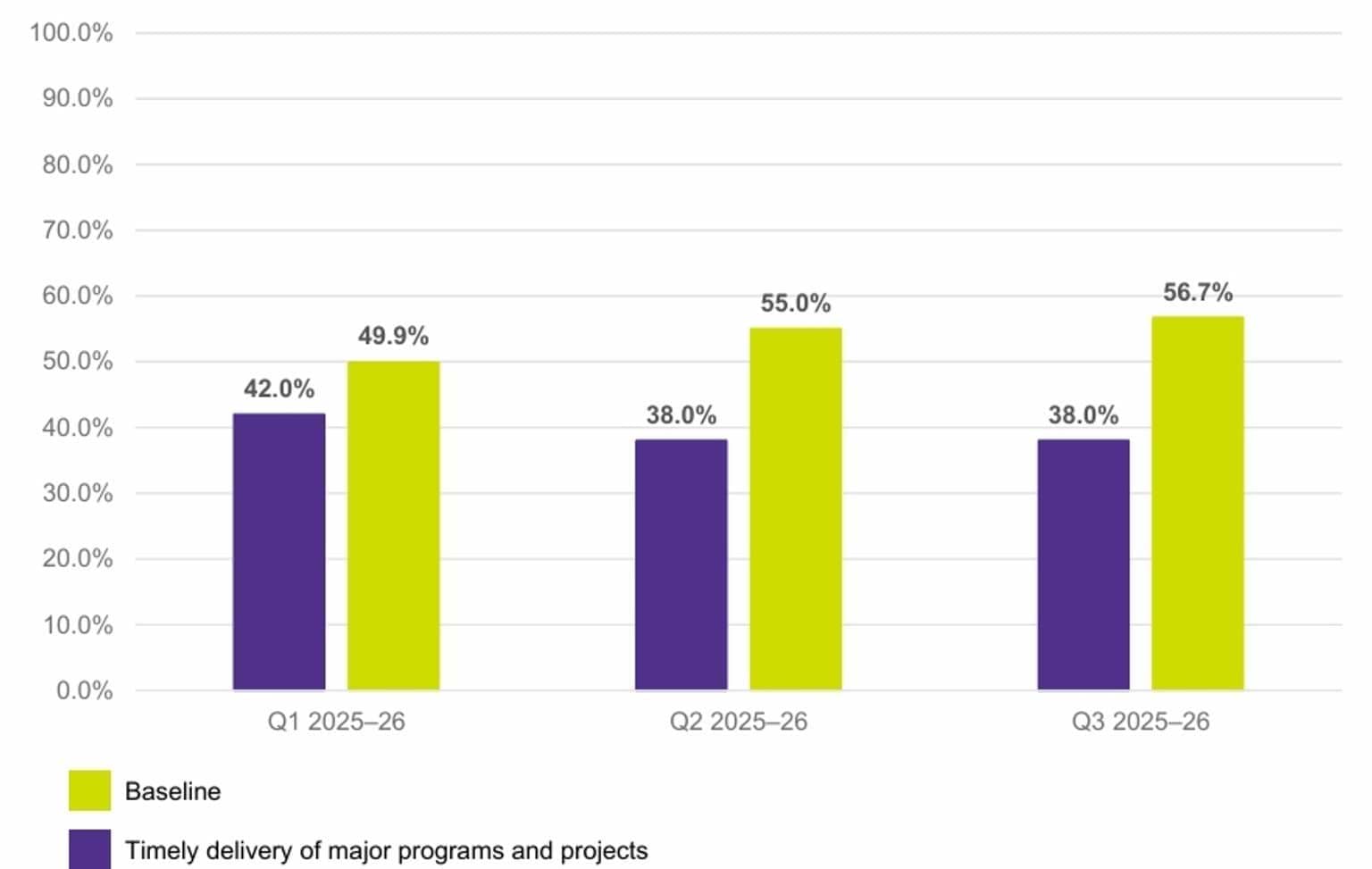
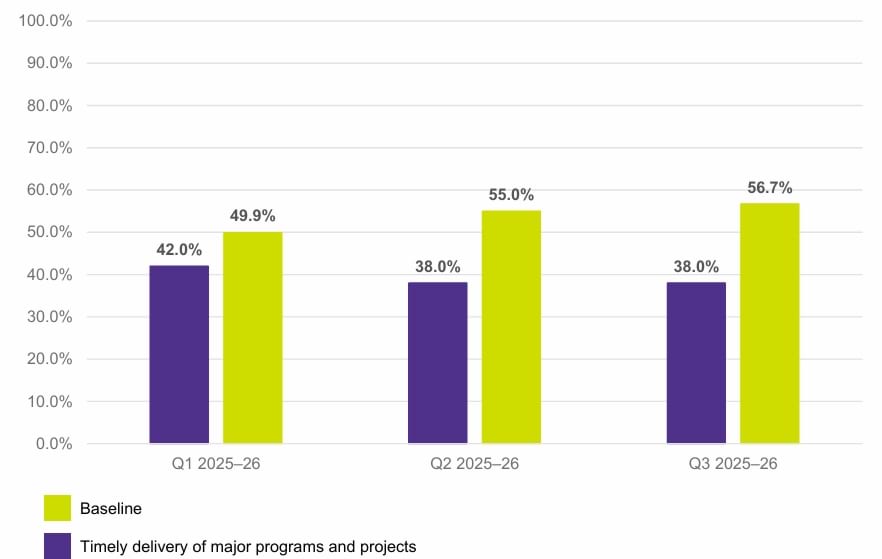
CFA reported 38% of major programs and projects as having an overall status of ‘on track’ at the end of Q3 2025–26, against a quarterly baseline of 56.7%. This is the third reporting period in which the results were below the baseline. CFA clarified that in Q3, project schedules and delivery timelines were impacted by significant fire activity, requiring the reprioritisation of resources and subsequently, the need to adjust timeframes across several projects. CFA have advised the FSIM that a planned review of CFA Project Management Framework is progressing and on track for completion this year. This will inform a roadmap to improve project maturity, delivery consistency, and governance across CFA projects.
Figure 7: Timely delivery of major programs and projects
FRV: Percentage of response to structure fire incidents within 7.7 minutes (target 90%)
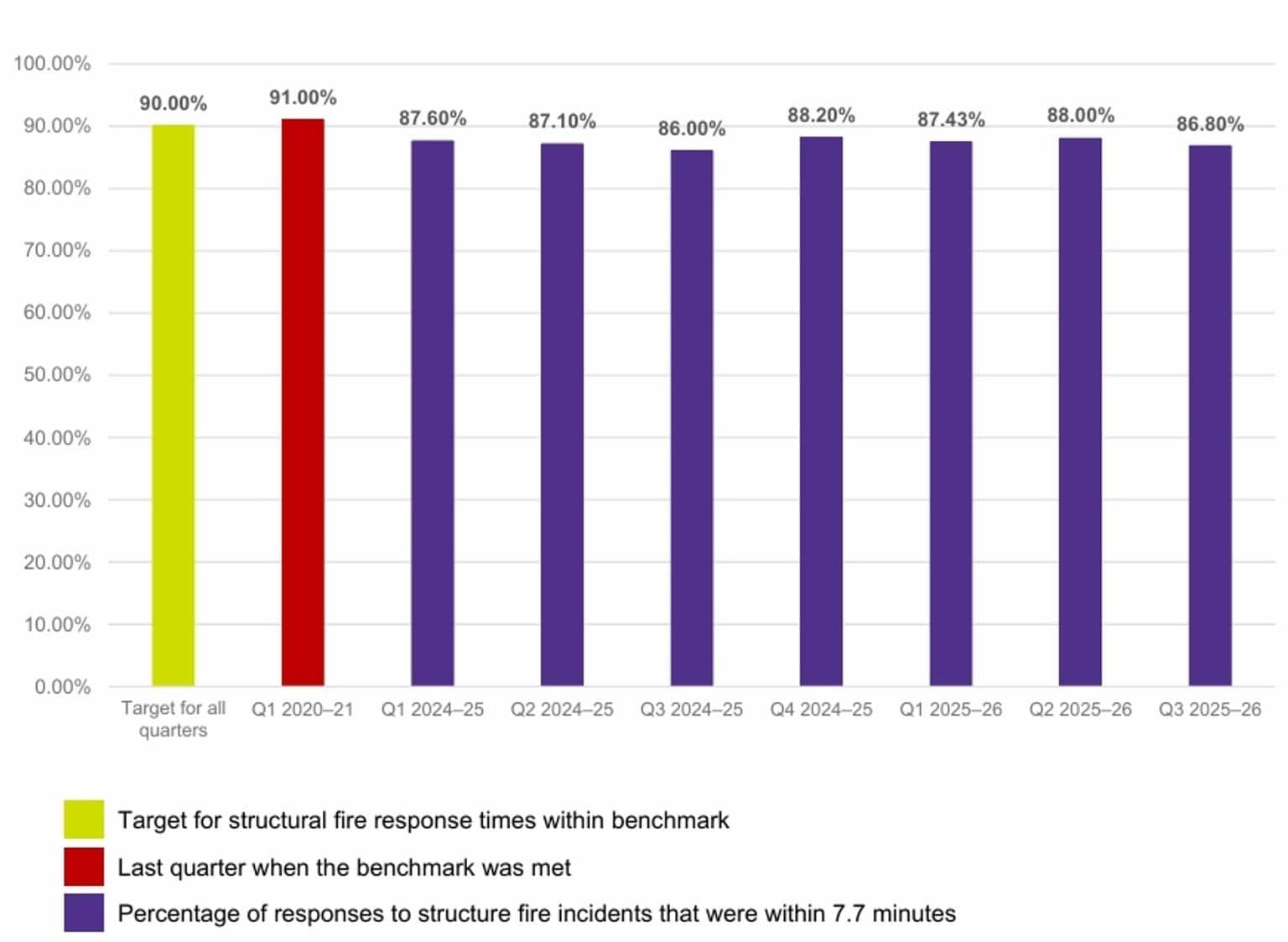
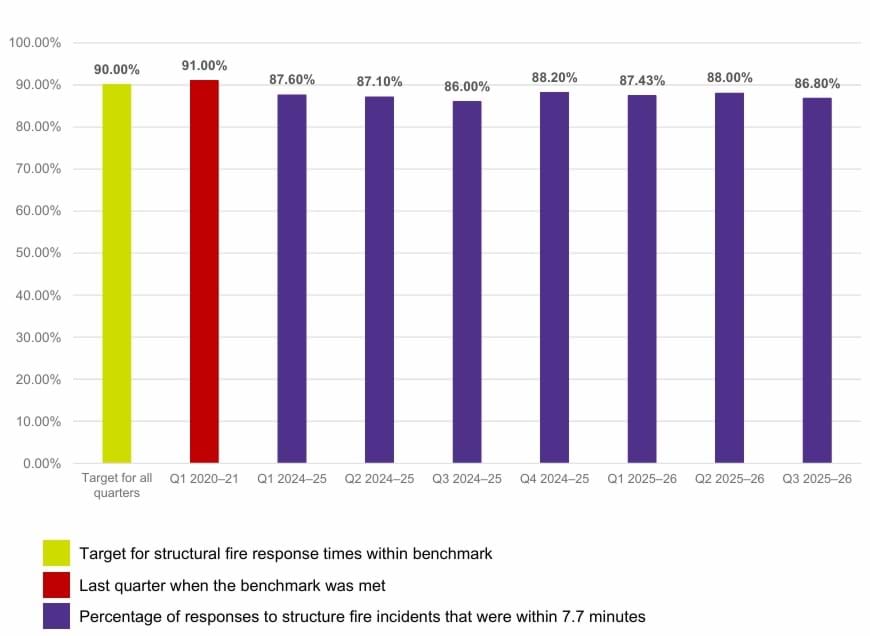
FRV’s result for this measure in Q3 2025–26 represents the 22nd consecutive quarter where the benchmark target of 90% has not been met. Q1 2020–21 was the last quarter this benchmark was achieved (indicated in red in Figure 8). The Q3 2025–26 result of 86.8% was a 1.2% decrease on the Q2 2025–26 result of 88%.
The FSIM has repeatedly identified FRV’s continuing underperformance against this measure. This issue has persisted for too long, and as a risk to community safety, necessitates action by FRV to address the issues. As such, the FSIM has asked FRV to identify what is being done to rectify or address this ongoing inability to meet or exceed the benchmarked target.
FRV explained there are a number of factors contributing to this result, including sustained growth in the number of incidents that FRV attend (7% per annum on average for the last 3 years), and this growth has reduced availability and places additional strain on the current system, making it harder for FRV to meet the 90% target.
Population growth within Victoria has also increased traffic congestion on the road network and has resulted in a greater number of people residing in areas beyond a 6.2-minute drive time from the existing network.
FRV has advised it is investigating possible initiatives to enhance response times, including reviewing turnout times, noting response time performance is dependent on a range of factors. While increasing the number of stations (expanding coverage) and/or increasing the number of primary appliances (improving availability within existing coverage areas) could contribute to reducing the response times, these options would require significant capital investment, and it would be important to target investment to the areas of greatest need.
Figure 8: Percentage of response to structure fire incidents within 7.7 minutes
Updated