Board membership matters
The board is to consist of no fewer than 8 and no more than 12 members, including a chairperson and a deputy chairperson. Members are appointed by the Governor in Council on the recommendation of the Minister for Skills and Training.
Members of the board reflect the breadth and diversity of adult education in the community, and provide links to government, industry and community sector activity.
On 31 October 2025, the term of Mr Grogan ended.
On 30 September 2025, the terms of Ms Lewis and Ms Ngweso ended. Each was reappointed from 1 October 2025 in an advisory role and reappointed as a board member from 8 October to 31 December 2025. On 1 January 2026, Ms Lewis and Ms Ngweso were reappointed to the board for a term ending 30 June 2026.
On 30 June 2026, Ms Lewis and Ms Ngweso were each reappointed to the board for a 12-month term from 1 July 2026 to 30 June 2027.
On 1 April 2026, the term of Dr De Fazio ended.
On 14 April 2026, Mr Maddock was appointed Acting Chairperson.
Adult, Community and Further Education Board members 2025–26
Audit and Risk Committee membership and roles
In accordance with legislative requirements, the board has an Audit and Risk Committee to oversee:
- risk management
- financial management, performance and sustainability reporting
- compliance with legislation, regulations and standards
- external audit
- internal audit.
In 2025–26, the independent members on this committee were:
- Ms Lisa Tripodi, Chairperson
- Ms Kathryn Munro, Deputy Chairperson
- Dr Teresa De Fazio (term ended 1 April 2026)
- Ms Margaret Lewis
- Mr John Maddock
- Ms Natasha Ngweso
- Mr David Wild.
Representation on panels, advisory groups and working groups
Board members represent the board on advisory and working groups and panels, such as:
- Victorian Learn Local Awards judging panels
- Victorian Training Awards judging panels
- Learn Local Conference working group.
Members of the board also facilitate communication between regional councils of ACFE and the board as part of their role as a regional champion of one of 4 regional councils of ACFE.
Representation on other bodies
The Chairperson of the board is a member of other bodies, such as the Senior Secondary Certificate Reform Reference Group, the Marrung Central Governance Committee and the Koorie Skills Working Group.
Regional councils of ACFE
Until 13 April 2026, 8 regional councils of ACFE established under the ETR Act were in place.
Councils were established for the following regional and rural areas:
- Barwon South-Western
- Gippsland
- Grampians
- Hume
- Loddon Mallee.
Three councils were established for the following metropolitan areas:
- Eastern Metropolitan
- North-Western Metropolitan
- Southern Metropolitan.
On 13 April 2026, the number of regional councils was reduced from 8 to 4:
- Western Regional Victoria, covering the Mallee, Wimmera Southern Mallee, Great South Coast, Central Highlands, Barwon and western portion of Loddon Campaspe
- Eastern Regional Victoria, covering all of Gippsland
- Central and Northern Regional Victoria, covering the eastern portion of Loddon Campaspe, Goulburn and Ovens Murray
- Metropolitan Melbourne, covering all of metropolitan Melbourne.
As of 30 June 2026, member appointments to new regional councils are in progress.
The work of regional councils is supported by departmental staff.
Role of regional councils
The board and regional councils work together to fulfil the board’s mission.
Regional councils draw on expertise and local knowledge about adult education to advise the board on the needs of adult education across their regions. Regional councils play a key role in:
- providing advice and local intelligence to the board
- promoting and advocating for Learn Local and ACFE
- fostering collaboration and partnerships between Learn Local providers and key regional stakeholders.
Regional councils assist the board to meet its objectives by:
- developing processes that enable learners and providers to advise them and the board of ACFE needs in their region
- providing advice and preparing reports for the board
- providing information and contributing to planning for ACFE in the region
- advising the board on the effectiveness of activities in their region, including activities funded by the board
- supporting and promoting ACFE in the region, networks of providers, and diversity and flexibility in ACFE provision
- participating in recommending statewide priorities and policies to the board.
Regional councils may consult with learners, providers and other education and training organisations in their regions, including local TAFEs.
Composition of regional councils
Each regional council consists of no fewer than 5 and no more than 9 members, including an elected chairperson and elected deputy chairperson. Members are appointed by the Minister for Skills and Training. Regional councils may co-opt 2 additional people for up to 12 months.
Members are appointed to ensure that regional council members:
- have knowledge, skills and experience in the place-based education and training system
- reflect community diversity
- have knowledge and experience of governance responsibilities
- have knowledge and experience of issues affecting the local industry and the broader local community.
2025–26 membership of regional councils until 13 April 2026
Department services
Under the ETR Act, the General Manager of the board is responsible for implementing the board’s policies and decisions. The General Manager of the board is an executive of the department within the meaning of the Public Administration Act 2004 (Vic). During 2025–26, the role of General Manager was filled by Ms Laura Lo Bianco-Smith, Executive Director of the Adult, Community and Further Education, Pathways and Workforce branch in the department.
The General Manager is supported by a range of services provided by the department.
The department supports Learn Local providers across Victoria to meet the Victorian Government’s goals and targets for community-based adult learning. It provides advice about the place-based education and training system, supports the board to build organisational capacity and administers the board’s grant programs.
Organisational structure
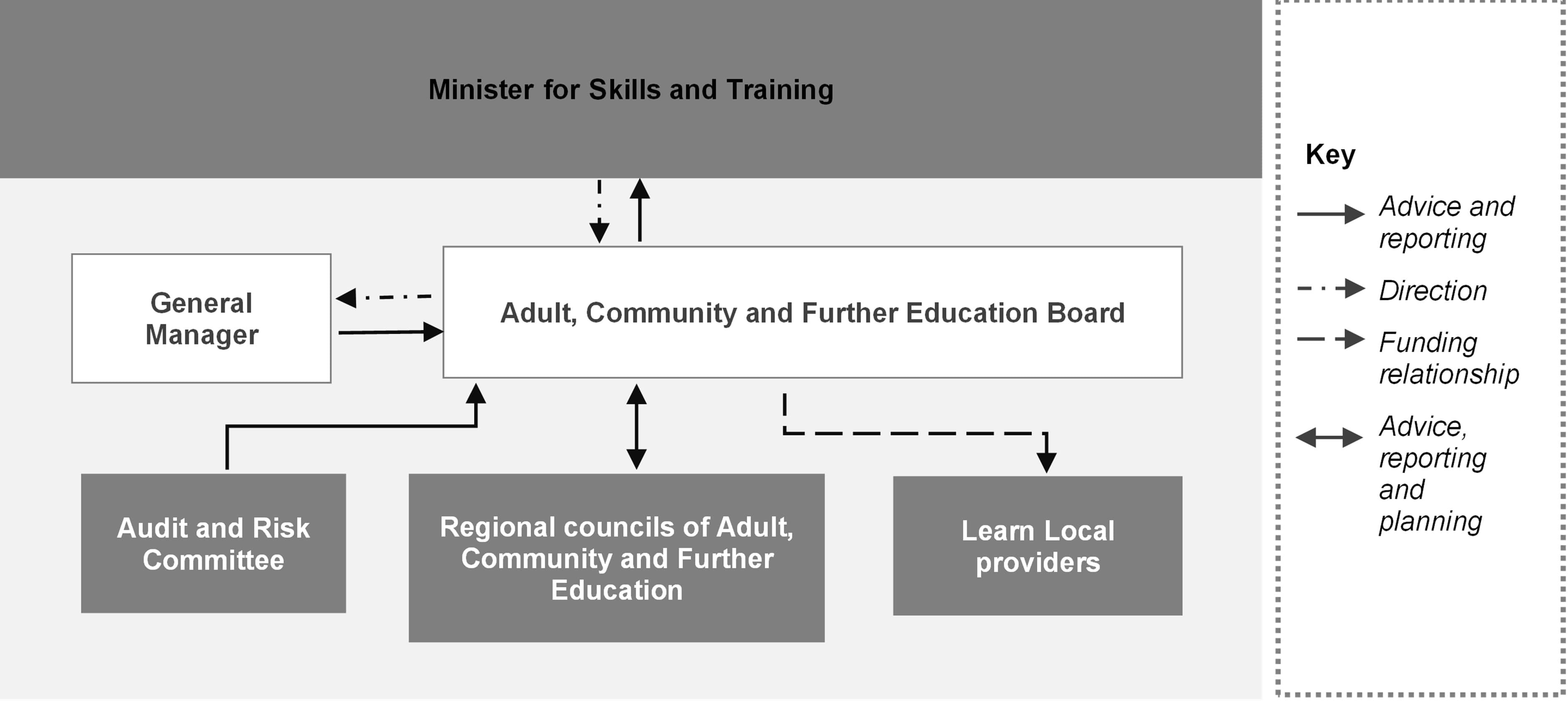
Figure 1 charts the legislative relationships, governance and accountabilities of the board as at 30 June 2026.
Figure 1: ACFE Board organisational chart, 30 June 2026
Occupational health and safety, incident management and employment and conduct principles
The board does not employ staff.
Information about people and workforce is provided in the department’s annual report for 2025–26 at a whole-of-department level.
Workforce data
Public sector values and employment principles, comparative workforce data, workforce inclusion policies and executive officer data
The board does not employ staff.
Information about people and workforce is provided in the department’s annual report for 2025–26 at a whole-of-department level.
Other disclosures
Updated