- Published by:
- Department of Education
- Date:
- 3 June 2026
The Early Childhood Update e-newsletter is sent to early childhood teachers and workers, but is open to anyone interested in best practice in early years education and evidence-based teaching approaches. Subscribe here to receive the e-newsletter(opens in a new window).
Make a play for happier, healthier childhoods
June brings a reminder of the importance of play – and our sector’s achievements in giving Victorian children more access to play-based learning.
Dear early childhood education professionals
Next Thursday 11 June marks UN International Day of Play(opens in a new window). This year’s theme is ‘Protect play, protect childhood’. It is a reminder that play is integral to happy and healthy childhoods.
To mark the occasion, the department will host a free event, A Day of Play: Shaping Their Start in Victoria, at the State Library next Wednesday 10 June. Children and families are invited to join in interactive play experiences and discover how play helps shape the start of a child’s life.
Through play, children engage with the people, places and objects around them. It builds creativity, resilience and social skills. It also helps develop positive attitudes to learning. It fosters persistence, curiosity and imagination. As outlined in the Victorian Early Years Learning and Development Framework(opens in a new window), play-based learning is central to developing children's cognitive skills and wellbeing.
In Victoria, our reforms are having an impact. Thanks to the commitment and dedication of the sector, we are helping more children get the best start to their learning. Children are accessing more hours of kindergarten in the 2 years before school. This is reflected in our participation rates. In 2025, Three-Year-Old Kinder enrolments grew to 73,300 children, with participation rising to 92.2 per cent. This is up from 90.1 per cent the year before. Services also delivered an average 14.4 hours per week (up from an average 13.8 hours per week in 2024).
More than 79,000 children were enrolled in Four-Year-Old Kinder, and significantly, we had 4,240 First Nations children enrolled in kindergarten in 2025. This is the highest number ever, and a 14 per cent increase on 2024. Last month’s state budget reaffirms the Victorian Government’s commitment to this important work.
This success is a credit to all the professionals in the sector. Children are gaining significant learning and developmental benefits from this increased participation.
In this edition, we share the latest updates on 2026 kindergarten attendance data collection. Collecting this data provides valuable insights into how we can best support attendance. This helps Victorian children get the full benefits of an early childhood education.
Also in this edition, you can learn how to strengthen culturally safe and inclusive practice for First Nations families at your service through a series of professional development opportunities. First Nations community and departmental stakeholders designed the online learning modules which provide practical guidance and activities.
Children’s Week 2026 runs from Saturday 24 October to Sunday 1 November. Applications are open for grants towards the cost of an event or activity. Up to $700 is available for councils and up to $1,000 for eligible not-for-profit organisations across Victoria. For more information and details on how to apply, visit Children’s Week 2026 Grants program(opens in a new window).
With the long weekend approaching, I hope you’re able to take some time to rest and rejuvenate. I wish you all the best for the month ahead.
Bronwen FitzGerald
Deputy Secretary
Early Childhood Education
Kindergarten attendance data collection update
All sessional services must report attendance data to the department in 2026.
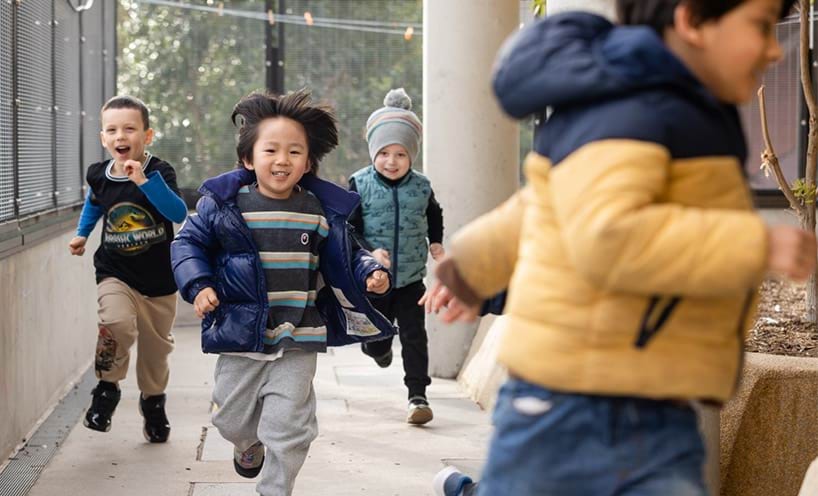
The department is now collecting attendance data from sessional kindergarten services. Term 2 attendance data is essential for national reporting under the Preschool Reform Agreement.
Most of the sector is now successfully reporting attendance data. Remaining sessional services need to start digital reporting to the department by the end of Term 2.
Collecting attendance data will provide insights into how we can better support kindergarten attendance. This will help ensure all Victorian children can receive the full benefits of a quality early childhood education.
Reporting options for sessional services in 2026
How your service currently records attendance data determines how you will report attendance.
Services using third-party Kindergarten Management Software (KMS) integrated with Arrival
If your service uses one of the following third-party KMS providers - Kidsoft, EnrolNow, Xplor, Qikkids, Xap or OWNA - your attendance data will be sent directly to the department.
Services should follow their KMS provider’s instructions and ensure data is submitted weekly.
Services using third-party KMS not integrated with Arrival
The department is continuing to work with some third-party KMS providers to integrate them with Arrival. The department intends to integrate further providers, however the department expects that it will not be possible to integrate all third-party KMS providers. Advice has been provided to relevant sessional providers regarding the requirements for Term 2, 2026 data collection.
Services using Arrival sign-in/sign-out (SISO)
Services using Arrival SISO need to review and confirm attendance data in Arrival to ensure it is accurate. Services should do this on a weekly basis.
Services using paper-based methods or desktop tools
Options for these services include:
- adopt the Arrival SISO function (see below for links to further information)
- engage a third-party KMS provider that is integrated with Arrival (visit the Arrival website for a list of integrated providers)
- use the Arrival bulk upload attendance function. Further advice on this reporting option will be provided by the department through an email to relevant providers in the second half of June.
Long day care services that offer sessional programs
Long day care (LDC) services already reporting attendance through the Child Care Subsidy System (CCSS) are not required to report attendance through Arrival.
The department will work with LDC service providers that also offer sessional programs to find the best way to collect attendance data for children in sessional programs that are not recorded in the CCSS.
Arrival guidance and support
For information and resources to help with the Arrival SISO transition, visit Arrival: Information for sessional services.
For technical support, please contact the Arrival Helpdesk:
- phone: 1800 614 810 Monday to Friday: 9 am to 5 pm
- email: arrival.helpdesk@education.vic.gov.au
Find out more
For all other queries please contact your local Early Childhood Improvement Branch.
Inaugural Early Childhood Regulator appointed
The new head of Victoria’s Early Childhood Regulatory Authority starts on 1 July 2026 and will regulate more than 5,000 early childhood education and care services.
Wendy Steendam AM APM has been appointed as Early Childhood Regulator, the head of the Victorian Early Childhood Regulatory Authority (VECRA).
Ms Steendam has more than 4 decades of public sector experience, including significant leadership roles.
Most recently she served as Deputy Commissioner of Victoria Police, a position she held for 11 years.
Ms Steendam will oversee the approval and regulation of more than 5,000 early childhood education and care services. These services operate under the National Quality Framework and Victorian Children’s Services Act.
Ms Steendam is also:
- a Member of the Order of Australia for her sustained service to the community
- an Australian Police Medal recipient for her leadership across public safety and enforcement
- on the Victorian Honour Roll of Women for her work protecting vulnerable communities.
Ms Steendam starts on Wednesday 1 July 2026. She replaces Adam Fennessy PSM, who has led the critical early stages of VECRA’s establishment. Mr Fennessy’s interim appointment ends on Tuesday 30 June 2026.
About the regulatory authority
Established on Thursday 1 January 2026, VECRA is Victoria’s new early childhood education and care regulator. It operates independently of the Department of Education, as recommended by the Rapid Child Safety Review.
Find out more
To learn more, visit Victorian Early Childhood Regulatory Authority.
Additional year of funded kindergarten
An additional year of funded kindergarten can support children who are eligible. Learn more about the process and eligibility.
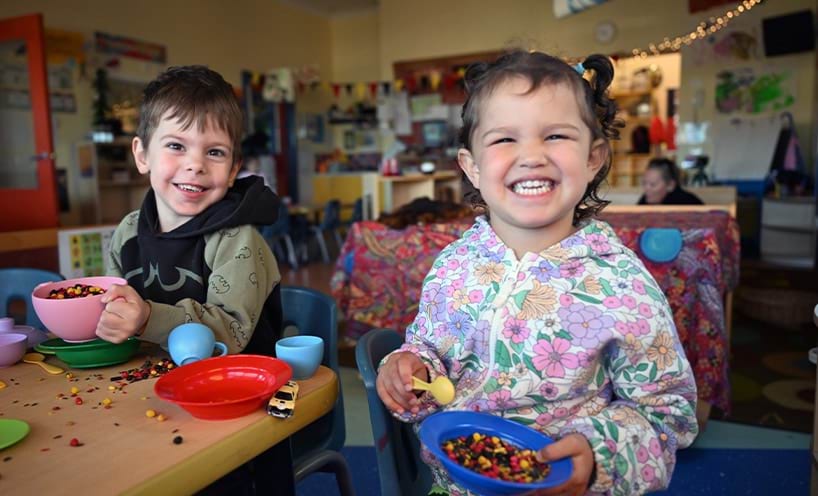
An extra year of funded kindergarten can be considered under certain circumstances for children at your service.
This applies when a child shows delays in at least 2 learning and development outcome areas in the Victorian Early Years Learning and Development Framework (VEYLDF) and when:
- the kinder program is found to be the most appropriate learning program
- the child will achieve better outcomes at 3-Year-Old Kinder than if they transition to 4-Year-Old Kinder the following year, or the child will achieve better outcomes at 4-Year-Old Kinder than if they attend school.
Process
During Term 2, early childhood teachers should be assessing children’s abilities, interests and skills against the VEYLDF outcomes. Teachers are encouraged to use the Early Years Assessment and Learning Tool to support these assessments.
If a teacher’s assessment of the child’s learning in Term 2 indicates delays in at least 2 of the VEYLDF outcomes and a second year is being considered, the process for assessing whether a child is eligible requires their early childhood teacher to:
- complete a Term 3 plan for learning and development (DOCX, 67.3 KB) before the beginning of Term 3
- discuss an additional year with the child’s family and other early childhood professionals (if appropriate) by the end of Term 3 (see Additional Year Discussion form (DOCX, 62.6 KB))
- complete a Declaration of eligibility for an additional year of kinder (DOCX, 64.8KB), by 30 November
- complete an Additional year statement (DOCX, 110 KB) during Term 4.
If a child turns 6 during an extra year of funded kindergarten, families need to apply for an exemption from school. It is the family’s responsibility to apply for a school exemption by Sunday 1 November 2026.
If the department does not approve a school exemption request, the child will not be eligible for an extra year of funded kindergarten.
Find out more
For more information, please see Additional year of funded kindergarten or Pre-Prep from 2026 and Going to kindergarten if your child is 6 years old.
Helping children become confident road users
Learn about a program that promotes road safety education in the early years.
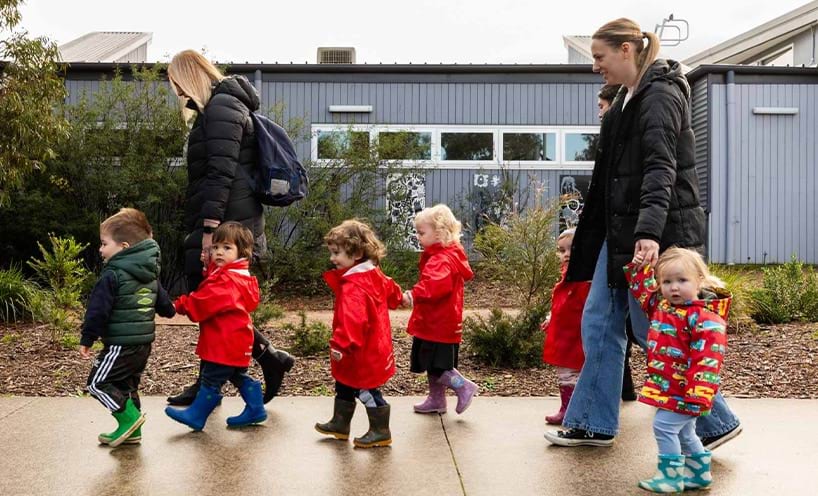
Children are active, curious and developing the skills they need to stay safe around cars.
The Starting Out Safely program helps early childhood services make road safety part of their daily practice. Developed for early childhood settings, the program has practical and evidence-informed resources.
Embedding road safety education early can make a lasting difference. It helps children to build awareness, confidence, and to learn safety habits.
About the program
The program encourages educators to adopt a holistic approach to road safety. It links learning experiences to children’s everyday environments and routines. This can include:
- talking about how to safely cross the road
- modelling safe behaviour on excursions
- discussing the importance of holding an adult’s hand near roads
- helping families reinforce messages at home.
Resources align with the curriculum and are easy to use in early childhood settings. Designed to support play-based learning, the materials can be adapted to suit different ages, stages, and local contexts. This helps educators introduce road safety in meaningful, engaging and age-appropriate ways.
The program also recognises that road safety is a shared responsibility. Services can help create consistent messages for families across home and learning environments.
Find out more
To learn more about Starting Out Safely and access free resources, visit Starting Out Safely.
Early Years Assessment Learning Tool 2026 intake open
Apply any time until 18 September 2026 to access the tool and learn how to best support each child’s learning.
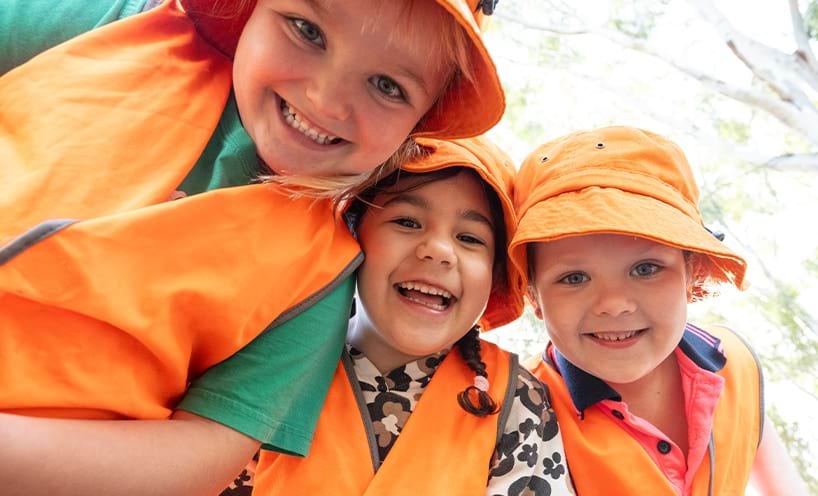
Applications are now open for services to access the Early Years Assessment and Learning Tool (EYALT).
The EYALT is an online tool that supports early childhood teachers to assess children’s learning and development against the Victorian Kindergarten Learning Progressions (PDF, 2.1 MB). It helps improve teachers’ understanding of each child’s strengths, interests and abilities, and how to support their learning.
The EYALT is a useful resource for all early childhood professionals, new and experienced.
How to apply
Providers can apply until Friday 18 September 2026 through the EYALT Application Form.
Applications will be processed in scheduled intake groups. These align with the onboarding cycles for Term 3 and Term 4.
Please refer to the funding guidelines for more information: Early Years Assessment and Learning Tool – funding guidelines 2026.
All services new to EYALT in 2026 can receive grant funding. This will assist with actions such as attending to EYALT professional learning and setting up the tool.
Professional learning
This year's professional learning program builds on previous success. It has tailored sessions and includes:
- Introductory sessions: designed for educators and early childhood services new to EYALT, which provide foundational knowledge and practical guidance
- Early Years Assessment and Learning Tool (EYALT) eLearn modules on the Early Childhood Hub
- Victorian Kindergarten Learning Progressions eLearn module on the Early Childhood Hub.
All services that register to use EYALT can attend. All sessions are online only.
Early registration is encouraged to secure your spot. Register for introductory sessions at EYALT virtual professional learning.
Find out more
For more information, visit Early Years Assessment and Learning Tool.
Bringing Change Together: First Nations professional learning
Learn how to strengthen culturally safe and inclusive practice at your service.
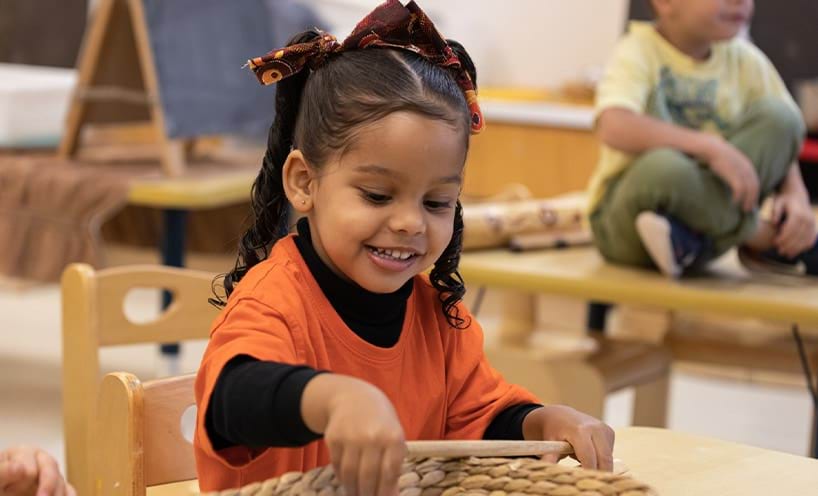
As part of the Marrung: Aboriginal Education Plan 2016-2026, the Bringing Change Together: First Nations Learning Suite helps early childhood professionals strengthen culturally safe and inclusive practice.
The modules were co-designed with First Nations community and focus on themes identified in the Strengthening Aboriginal Self-Determination in Education Campfire Conversations (PDF, 20.5 MB).
The suite of facilitated online one-hour professional learning modules will provide practical guidance and reflective activities to support strengthening culturally safe practice and inclusive learning environments.
Staff can register for the modules individually or as part of a whole-service approach. After finishing, participants will receive a certificate.
Download the Bringing Change Together First Nations Learning Suite (PDF, 576 KB) flyer to display at your service and please promote the modules with staff.
Upcoming modules
Reviewing and selecting appropriate resources
Learn strategies for reviewing and selecting resources that prioritise First Nations authorship and are culturally relevant and accurate.
- Date: Thursday 4 June 2026
- Time: 3:45 pm to 4:45 pm
- Platform: Arc
- Cost: free.
Culturally Safe and Inclusive Language
Build confidence to use culturally safe language that recognises diversity of identity and avoids bias or deficit framing.
- Date: Wednesday 17 June 2026
- Time: 3:45 pm to 4:45 pm
- Platform: Arc
- Cost: free.
Possum Skin Statements
Learn how the Possum Skin statements can guide your practice in centring youth voices, reflecting on culture and supporting self-determination.
- Date: Thursday 25 June 2026
- Time: 3:45 pm to 4:45 pm
- Platform: Arc
- Cost: free.
Register through Arc Events at the Bringing Change Together: First Nations Learning Suite.
Importance of the learning suite
The professional learning helps early childhood professionals demonstrate Child Safe Standards 1 and 5.
Child Safe Standard 1 requires education and care services to ensure First Nation children and young people feel safe, respected and valued.
Child Safe Standard 5 focuses on creating environments where all children and young people feel welcome regardless of their background, characteristics or beliefs.
Find out more
Further department guidance for early childhood professionals is available at:
Strong partnerships improve kindergarten access and outcomes
How a council in Melbourne’s west used a grant to support families to register and enrol in kindergarten.
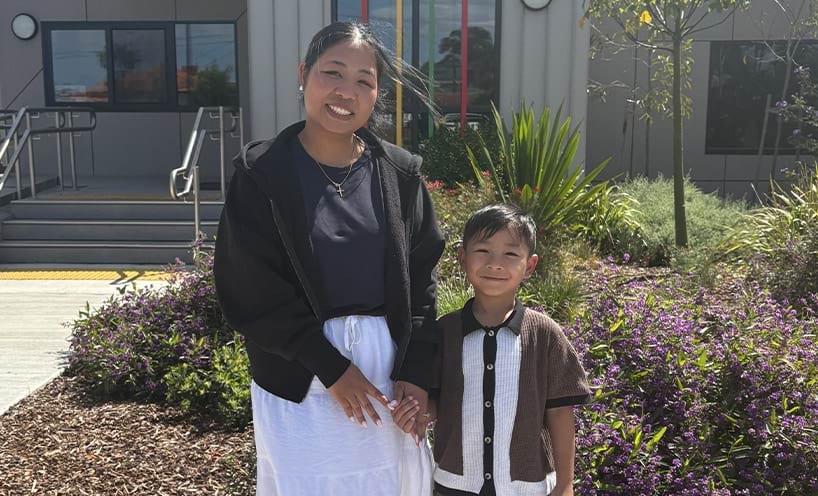
The Brimbank City Council local government area (LGA) is one of the most diverse in Victoria. Almost half of the people living there were born overseas and more than 55 per cent speak a language other than English at home, with more than 160 languages spoken.
In February 2025, the council received a Central Registration and Enrolment Scheme (CRES) grant. The grant helps councils support families likely to face barriers to kindergarten enrolment.
The council used the grant to redesign how they connect with families. Instead of standalone activities, they took a joint approach. They used data, community sessions and partnerships to improve access and prepare families for the Best Start, Best Life reforms.
Targeted support
Engagement with families whose children were eligible for more hours of 4-Year-Old Kinder (Pre-Prep) in 2026 was a top priority. The council made direct contact with families to ensure they were aware of their entitlements and how to enrol.
They also worked with local kindergarten service providers to run 2 drop-in enrolment support sessions. These provided one-on-one support to families to complete enrolments.
To help strengthen early years partnerships between services in the area, the council ran an equitable enrolment workshop. Representatives from all 36 kindergartens across the LGA took part. Services shared information, discussed challenges and planned how to best support families.
The grant also meant the council could reinstate their Long Day Care Managers Forum. This gave managers at funded integrated kindergarten programs a chance to connect and share ideas.
Increased confidence for families
Rakhi Khanna, the council’s Early Years Programs, Planning and Partnerships Coordinator, said the grant was a great success.
‘The grant enabled Brimbank to go beyond the business as usual of CRES,’ Rakhi said.
‘We could proactively plan, implement and deliver initiatives that directly supported families. It also allowed us to strengthen partnerships with early years services.’
Rakhi said community feedback was positive.
‘It led to reduced confusion and increased confidence for families. The approach has influenced several services to independently offer enrolment support sessions at their kindergartens’.
Find out more
For more information on the Central Registration Enrolment Scheme, refer to Kindergarten Central Registration and Enrolment.
Kinder for defence communities creates stability for children in a changing environment
From navigating the defence force context to embracing wildlife, One Tree Puckapunyal Kindergarten is a unique setting.
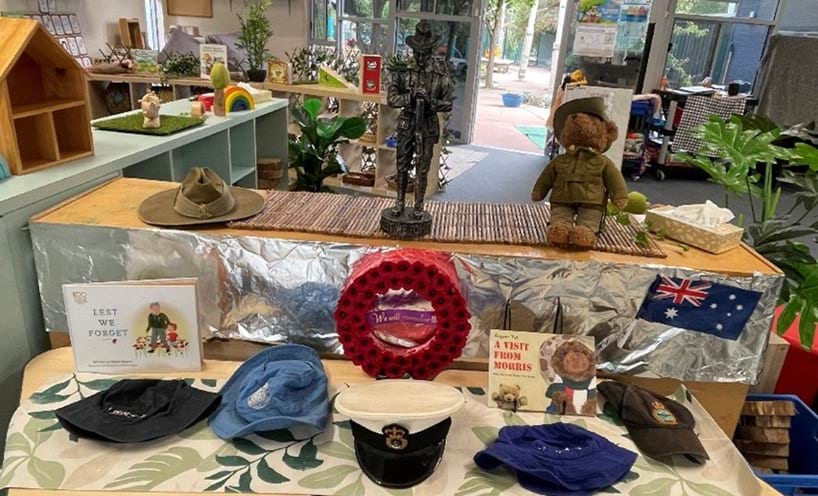
One Tree Puckapunyal Kindergarten is in the Puckapunyal Military Area. Australian Defence Force (ADF) families make up most of its kindergarten community.
The Puckapunyal Military Area first became a training area during the First World War. Today the base acts as an armour, artillery, and transport training school. The kindergarten has been operating for 7 years and is licensed for 45 children.
‘No 2 days are the same’
Lead Teacher and Nominated Supervisor Jaclyn Reid says the job comes with challenges and remarkable opportunities.
‘The children all understand which area their parent is in. This comes out in their play and conversations.’
Jaclyn said they can hear the artillery practice, and the children for the most part aren’t scared.
‘It will often spark a conversation. “That’s my dad, he is out on the range today”. They are all aware of what their parents might be up to. No 2 days are the same.’
Building an identity
While there are restrictions that come with being on a military base, Jaclyn acknowledged the many perks. They include the flora and fauna.
‘We often have native animals, such as emus and their chicks, stroll past our yard. Kangaroos and their joeys will hop by. Once during bush kinder I had an echidna sit on my foot for 25 minutes! It was an incredible learning opportunity for the children.’
Jaclyn said they have included ‘building our ecological identity’ into their Quality Improvement Plan.
‘We want to create an authentic base for learning and extend on our connection to country. We embed this in our program.’
Respecting safety
Jaclyn acknowledged that military concepts are a part of the children’s lives.
‘We allow the children to explore concepts that they are seeing on base and are hearing at home. We don’t discourage “weapon play” but we will at times guide it and we do have rules.’
‘It’s a valuable opportunity to talk about safety. This is another example of how some children understand the enormity of the responsibility their parents have.’
Creating a community
It’s important for the kinder staff to understand the transient nature of military life. All staff have completed the ADF Awareness program.
'We have heard of situations where families are notified within 2 weeks they will be moving. They don’t always get the opportunity to have a proper good-bye. It can also be very isolating for some as they leave behind their friends and family.
‘When families open up to us and have those conversations, we make sure we listen and are a safe space for them to tell us how they are feeling.
‘We appreciate that they, the children, didn’t get a choice to live this life, and with that comes a deep respect for looking at the world through their lens.
‘My co-educators and I are huge advocates for our children and their families. I see it as a privilege to be able to give back to them.’
Share your team’s stories
If you have a story that you’d like to share about your team or an early childhood professional at your service, please let us know.
You can contact the department’s communications team by email: ec.portfolio.communications@education.vic.gov.au