Expansion after compulsory education (1873 onwards)
Compulsory, secular, free education was introduced in Victoria in 1873 with the new Education Act. With it came increased student enrolment and a need for schools.
At the start of 1873, the new Education Department took control of 453 State schools that had previously been run by the Board of Education. Another 590 schools were privately owned or run by churches.
In 1873, 250 sites were chosen for new schools. Another 265 sites were announced in the Government Gazette in 1874.
Because parents no longer had to pay school fees or contribute to building costs, school attendance increased quickly. The average number of students attending school rose from 66,000 in December 1872 to 100,000 in March 1873. By the end of the year, more than 200,000 students were enrolled.
By 1874, the Department owned 531 school buildings. It also leased 457 buildings and managed another 125 specially funded schools.
Henry Bastow and early school design
To meet the rising demand for schools, the Department employed its own staff of architects and building inspectors.
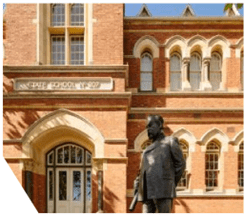
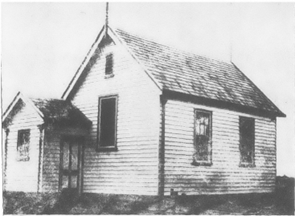
Henry Robert Bastow was appointed the Department's Architect and Surveyor in 1873. Over the next five years, he designed and built 615 schools across Victoria. He did so by creating templates for standard school designs that could be adapted to suit different locations and needs.
Most of these designs were influenced by the Gothic style of architecture.
 |
 |
School building under the Public Works Department
In 1882, the Department's Architects Branch transferred to the Public Works Department (PWD).
Bastow remained in charge of education buildings but now worked for the PWD.
During this period, the Education Department worked with the PWD to build and maintain schools. The Education Department decided where schools would be built and how large they would be. The PWD then managed the construction process, including hiring and paying contractors.
The situation remained unchanged until 1987 when the Public Works Department was abolished.
Post-war pressure on schools
The end of World War 2 brought a combination of events that put immense pressure on the need for and availability of schools in Victoria. There was a:
- ‘baby boom’
- large increase in immigration
- start of children enrolling at primary school at 5 years of age
- large increase of children continuing on into high schools and technical schools
- shortage of building materials.
The rise of standard school buildings
Light Timber Construction schools
In the early 1950s, the Director of Education, Sir Alan Hollick Ramsay, proposed using a standard design for all schools. The Chief Architect of the Public Works Department then developed the Light Timber Construction (LTC) school design.
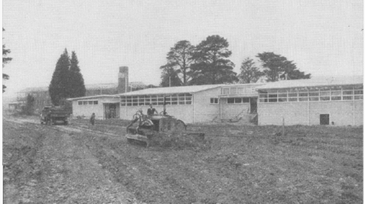
The LTCs were built with timber frames and usually clad with concrete blocks. Later versions were clad in brick. The buildings had long central corridors with classrooms on either side. The lack of insulation meant the buildings were hot in summer and cold in winter.
Despite their problems, the LTC design provided a cheap and efficient way to build schools quickly. Hundreds of these schools were built between 1954 and 1977.
There are still many left in Victoria despite gradual demolition and upgrades.
Portable and prefabricated schools
After World War II, there were not enough school buildings to meet growing demand. One solution was prefabricated buildings, which could be built quickly and moved when needed.
Prefabricated buildings had been used in Victoria since the early days of the colony, especially during the gold rush. Many early rural schools were simple buildings that could be moved to a new location when they were no longer needed.
After the war, their use increased significantly. The Bristol Aircraft Company in England used leftover aluminium from aircraft production to make relocatable Bristol Buildings. Hundreds were imported to Victoria between 1948 and the mid 1950s.
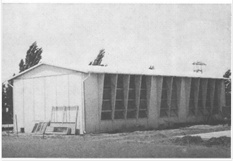
The use of portables started again in 1960 with portable buildings built by local companies. One company, AV Jennings, built 929 of these from 1960 to 1970.
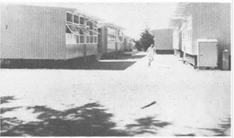
LTCs, Bristol buildings and other portables can still be found in Victorian schools today.
School buildings and land today
The Victorian School Building Authority (VSBA) manages land for Victorian government schools. It buys land for new schools and helps meet changing demand across the state.
To learn more about how school land and buildings are managed today, visit the VSBA website.
Updated