STC’s role in delivery of the North East Link
The North East Link is the largest investment in a road project in Victoria’s history. It will complete the missing link in Melbourne’s orbital freeway network between an upgraded Eastern Freeway and the M80 Ring Road. The new road will improve traffic flow, reduce travel times, remove non-local traffic from local roads and increase reliability for road users with up to 135,000 vehicles using the motorway daily.
The Program will be delivered across multiple packages. The north-south section from the M80 Ring Road interchange to the Eastern Freeway will be tolled (Central Package) by the North East Link State Tolling Corporation (STC).
The State established STC to pay for, own, operate and collect tolls from the North East Link for a concession period of 50 years. STC and the State jointly entered an Availability Public Private Partnership (PPP) to contract a private sector party (Spark North East Link Pty Limited or Project Co) to design, construct, finance, operate and maintain the North East Link for a period of 25 years. STC has engaged Major Road Projects Victoria (MRPV), a division of the Victorian Infrastructure Delivery Authority (VIDA) (an administrative office in relation to the Department of Transport and Planning (DTP)) as its delivery agent to manage the PPP contracts on its behalf during the construction phase of the Central Package.
Figure 1.1 provides a highly simplified overview of STC’s position in relation to other key transport bodies.
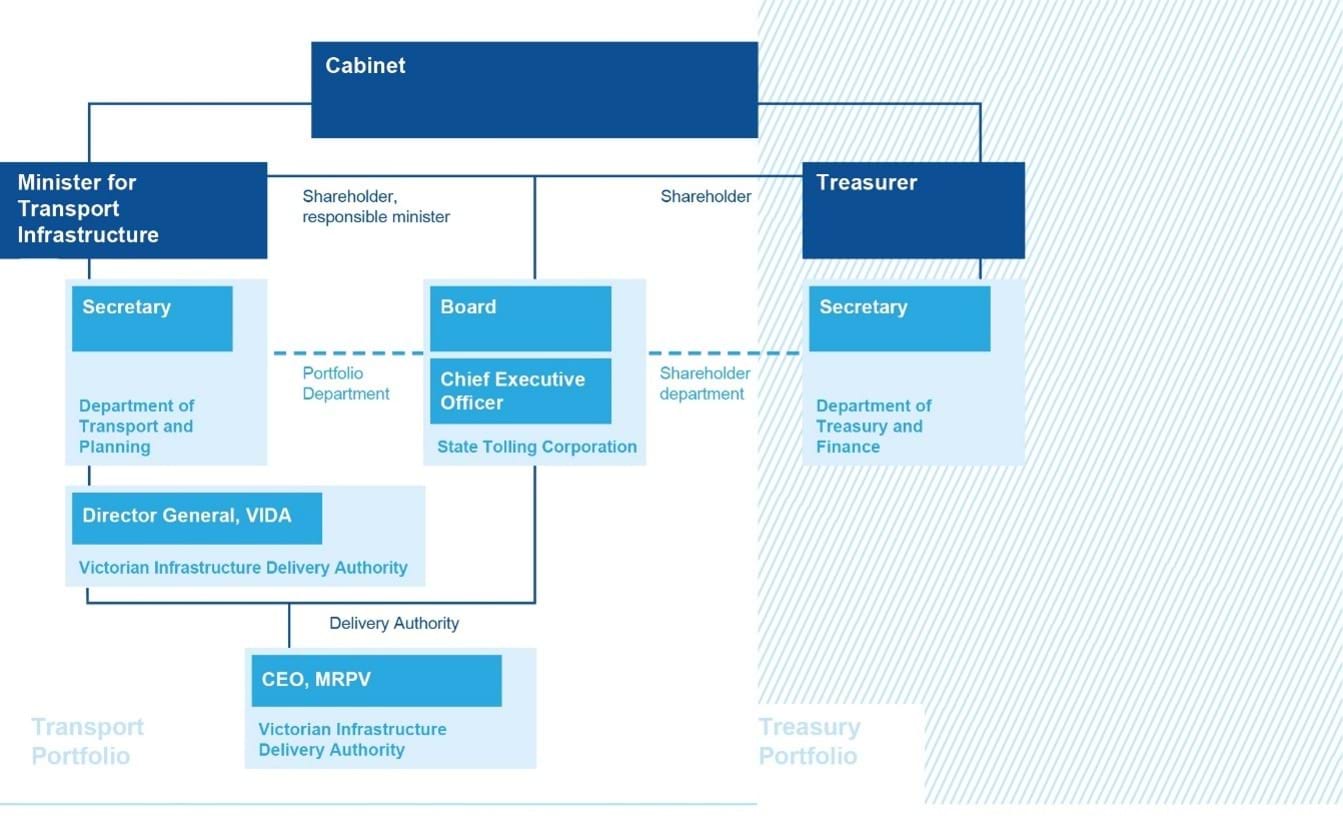
Figure 1.2 provides an overview of the commercial and contractual structure for the Central Package of the North East Link, and STC’s role within it.
STC will manage the PPP contracts directly when construction is completed.
Vision, purpose, mission and values
STC is established under the North East Link Act 2020 (Vic) (NEL Act). STC’s vision, purpose and values are designed to enable the organisation to fulfil our mandate as the commercial owner and operator of the North East Link, while also supporting DTP’s broader strategy for the network and upholding the values of the Victorian Public Sector (VPS).
Vision
| Entity/Statute | Vision statement |
|---|---|
| Department of Transport and Planning (DTP)1 | We create thriving places and connected communities |
| Transport Integration Act 2010 (TIA)2 | Recognise the aspirations of Victorians for an integrated and sustainable transport system that contributes to an inclusive, prosperous, and environmentally responsible state |
| North East Link State Tolling Corporation (STC) | A commercially orientated Government owned toll road owner and manager that supports DTP’s wider vision of creating thriving places and connected communities. |
STC’s vision describes its role as a key enabler to achieve the Government’s overarching vision for the Victorian transport system that aligns with the direction of DTP and the TIA. It focuses on developing key elements of the system – such as simplicity and connection – for which STC has greater control and licence to influence in its role as a toll road owner-operator and an enabler for transport policy implementation
Purpose
STC's purpose captures the State’s overall policy intent in creating STC. By contributing to the value and legacy of the North East Link, STC supports DTP’s purpose of creating simple, safe, and connected journeys.
| Entity | Purpose statement |
|---|---|
| Department of Transport and Planning (DTP) | Ensuring Victoria’s transport network and land use is safe, sustainable and integrated. |
| State Tolling Corporation (STC) | Protect and enhance the value and legacy of the North East Link while exploring ways to unlock shared value with the State. |
Values
STC acknowledges and abides by the seven VPS core values outlined in the Public Administration Act 2004. In addition, STC has adopted four key values unique to the organisation.
- Excellence
- Integity
- Respect
- Collaboration
Organisational structure and governance
STC's Ministers
Minister for Transport Infrastructure
Pursuant to a declaration by the Premier under the NEL Act, the Minister for Transport Infrastructure is the responsible minister (Minister) for STC during the delivery phase of the North East Link, responsible for providing policy oversight of STC. The Minister is one of two shareholders who hold the shareholding of STC on behalf of the Crown.
The Hon. Danny Pearson MP is currently the Minister for Transport Infrastructure and therefore STC’s Minister. Minister Pearson is also the Assistant Treasurer, Minister for WorkSafe and the TAC, and Minister for the Suburban Rail Loop.
Treasurer of Victoria
The Treasurer is the second shareholder minister and is responsible for financial outcomes of STC. The Treasurer also has certain approval rights and obligations relating to tolling aspects of STC.
Tim Pallas was appointed as the Treasurer of Victoria in December 2014. He is also the Minister for Industrial Relations and Minister for Economic Growth.
STC's Board of Directors
Brad Vann
Mr Vann was appointed to the Board on 15 August 2022 as Chair.
Mr Vann is an industry leading adviser on the delivery and long-term management of infrastructure, having worked with governments and businesses on some of Australia’s largest and most complex projects for over 35 years.
Mr Vann has also been involved in a range of projects in the Asia-Pacific. He is the Independent Chair of the IFM Australian Infrastructure Fund Investor Advisory Committee. IFM is a pioneer and leader in infrastructure investing on behalf of institutional investors globally, managing $113 billion in infrastructure.
Mr Vann was a partner at Clayton Utz before retiring in 2020.
Aneetha De Silva
Ms de Silva was appointed to the Board on 15 August 2022 as Deputy Chair.
Ms de Silva is a senior executive with 25 years of infrastructure experience across the government and private sectors in Australia, South Africa and the Asia Pacific. She has expertise as an advisor, developer and manager of large infrastructure assets and services, especially in road and rail transport, telecommunications and property.
Ms de Silva is also currently a member of the boards of LaunchVic and MAP Co, and Chair of Roads Australia. She has extensive experience in complex commercial and stakeholder environments.
Leilani Few
Ms Frew was appointed to the Board on 15 August 2022 as Director.
Ms Frew has over 30 years of commercial and financial experience in the infrastructure, energy and utilities sectors, with 20 years of experience in governance of major infrastructure investments. In 2015, Ms Frew was a member of the inaugural Board of the Sydney Motorway Corporation, the New South Wales Government owned corporation responsible for managing the WestConnex toll road in Sydney and was Chair of the WestConnex sale in 2017. Ms Frew’s senior executive roles, in both the public and private sectors, have covered all aspects of operational and major projects, particularly finance, capital markets, strategy, risk, mergers and acquisitions. Ms Frew possesses a highly valued combination of strategic, commercial and leadership experience.
Ms Frew was appointed as Chair of the Audit and Risk Committee of the STC Board on 23 March 2023.
Ms Frew is currently the Deputy Secretary, Financial and Commercial, Te Tai Ohanga - The Treasury, New Zealand.
Chief Executive Officer, An Nguyen
Ms Nguyen was appointed the inaugural Chief Executive Officer (CEO) of STC on 19 June 2023 after undertaking the role of acting Managing Director for STC since the entity’s inception.
Ms Nguyen is an experienced infrastructure leader, with close to two decades of solid and broad expertise in strategic leadership and innovation, major project structuring and delivery, complex commercial and funding models, and a strong policy focus gained within the Victorian Department of Treasury and Finance (DTF).
She has been widely recognised for her contribution and achievement within the global infrastructure industry and Victorian public service: she was awarded the Infrastructure Partnerships Australia’s National Woman in Infrastructure in 2017, the Partnerships Bulletin’s Individual Contribution of the Year PPP Award 2018 and the prestigious Public Service Medal in the Australia Day Honours List 2021 for outstanding public service in infrastructure delivery.
Legislative environment
The primary legislation governing STC is the NEL Act, which defines its specific objectives, functions and powers regarding the North East Link toll road. STC must also address specific elements of other legislative instruments.
North East Link Act 2020
The NEL Act covers a range of matters related to the delivery and operation of the North East Link. Key features relevant to STC include:
- Establishing STC as a public entity that is separate from the State.
- Providing STC’s functions and powers to:
- Manage access as well as operate and maintain the North East Link toll road;
- Fix and collect tolls for the use of the North East Link toll road (in accordance with the NEL Act and the North East Link Tolling Agreement);
- Optimise the value of, or return from, its infrastructure and other assets;
- Procure, deliver, and operate the North East Link tolling system;
- Be the primary funding entity for the delivery, operation, and maintenance of the North East Link toll road;
- Engage in activities in relation to the delivery of the North East Link; and
- Engage in other activities connected with the North East Link toll road, and charge fees for those activities.
- Providing requirements for STC’s Board of Directors, appointment of a CEO and employment of key personnel.
- Providing STC’s initial equity capital.
- Providing for the tabling and amendment of the North East Link Tolling Agreement.
Other legislation relevant to the operation of STC
Transport Integration Act 2010
The TIA is the overarching transport legislation in Victoria and sets a vision for an integrated and sustainable transport system that contributes to an inclusive, prosperous and environmentally responsible State. To achieve this vision, the TIA requires that decisions affecting the transport system be made within the same integrated decision-making framework, consisting of six transport system objectives and seven decision-making principles.
Road Management Act 2004
The Road Management Act 2004 (RMA) establishes a coordinated management system for public roads, promoting safe and efficient State and local road networks and responsible road use. Before the road opens, STC will be designated as the Responsible (Prescribed) Road Authority under the RMA for the NEL with powers, rights and obligations as specified under the RMA.
Major Transport Projects Facilitation Act 2009 and Environment Effects Act 1978
The Major Transport Projects Facilitation Act 2009 (MTPFA) provides a single process for assessment, approvals, and delivery of major transport projects in Victoria. However, the North East Link is declared under the MTPFA for use of delivery powers only.
Planning approvals for the delivery of the North East Link were obtained through an Environment Effects Statement Process under the Environment Effects Act 1978. The approvals are conditional on compliance with environmental performance requirements (EPRs) as part of the review process. During the Plan Period, compliance with the EPRs is primarily the responsibility of MRPV.
Other legislative reporting and governance requirements
In addition, as a Government Business Enterprise (GBE) and, in particular a Public Non Financial Corporation (PNFC), STC is subject to various legislative instruments which will form the basis of activities required to be carried out by STC, including (among others) the:
- Public Administration Act 2004 (PAA) – establishes the general governance framework for the VPS, including public entities. As a “public entity” for the purposes of the PAA, STC and its Board of Directors are subject to various duties under Part 5 of the PAA;
- Financial Management Act 1994 (FMA) – establishes the financial accountability framework for STC. As a “public body” for the purposes of the FMA, STC is bound by directions of the Minister for Finance given under the FMA (Standing Directions 2018); and
- Borrowing and Investment Powers Act 1987 (BIP Act) – provides for the borrowing and investment powers of certain statutory bodies. By virtue of amendments effected to the BIP Act by the NEL Act, certain borrowing and investment powers under the BIP Act are conferred on STC
Role of the Board
Under section 21 of the NEL Act, STC must have a Board of Directors comprising no fewer than three and no more than nine Directors, including a Chair and Deputy Chair. The Governor in Council appoints Directors for periods not exceeding three years.
The Board is responsible for leading STC’s governance, setting strategic vision and objectives, overseeing key strategic and operational activities, and establishing committees as required.
As at 30 June 2024, the STC Board is comprised of three Directors. Attendance by Directors at Board meetings held during the reporting period is detailed below.
| Board member | Eligible to attend | Attended |
|---|---|---|
| Brad Vann | 10 | 10 |
| Aneetha de Silva | 10 | 9 |
| Leilani Frew | 10 | 9 |
Directors’ fees are fully disclosed in Note 9.1. There have been no related party transactions with Directors and their related entities Committees of the ‘Board’
The Audit and Risk Committee
The STC Board has established the Audit and Risk Committee to oversee and advise on matters of risk, accountability and internal control affecting the operations of STC, as set out in STC’s Risk Management Framework.
As at 30 June 2024, the Audit and Risk Committee is comprised of the three Board Directors.
Attendance by Directors at the Audit and Risk Committee meetings held during the reporting period is detailed below.
| Committee member | Eligible to attend | Attended |
|---|---|---|
| Brad Vann | 6 | 6 |
| Aneetha de Silva | 6 | 5 |
| Leilani Frew | 6 | 5 |
- DTP Strategic Plan 2023-27
- Victorian legislation; Transport Integration Act 2010
Updated