CFA: Maintain high levels of community trust in the CFA
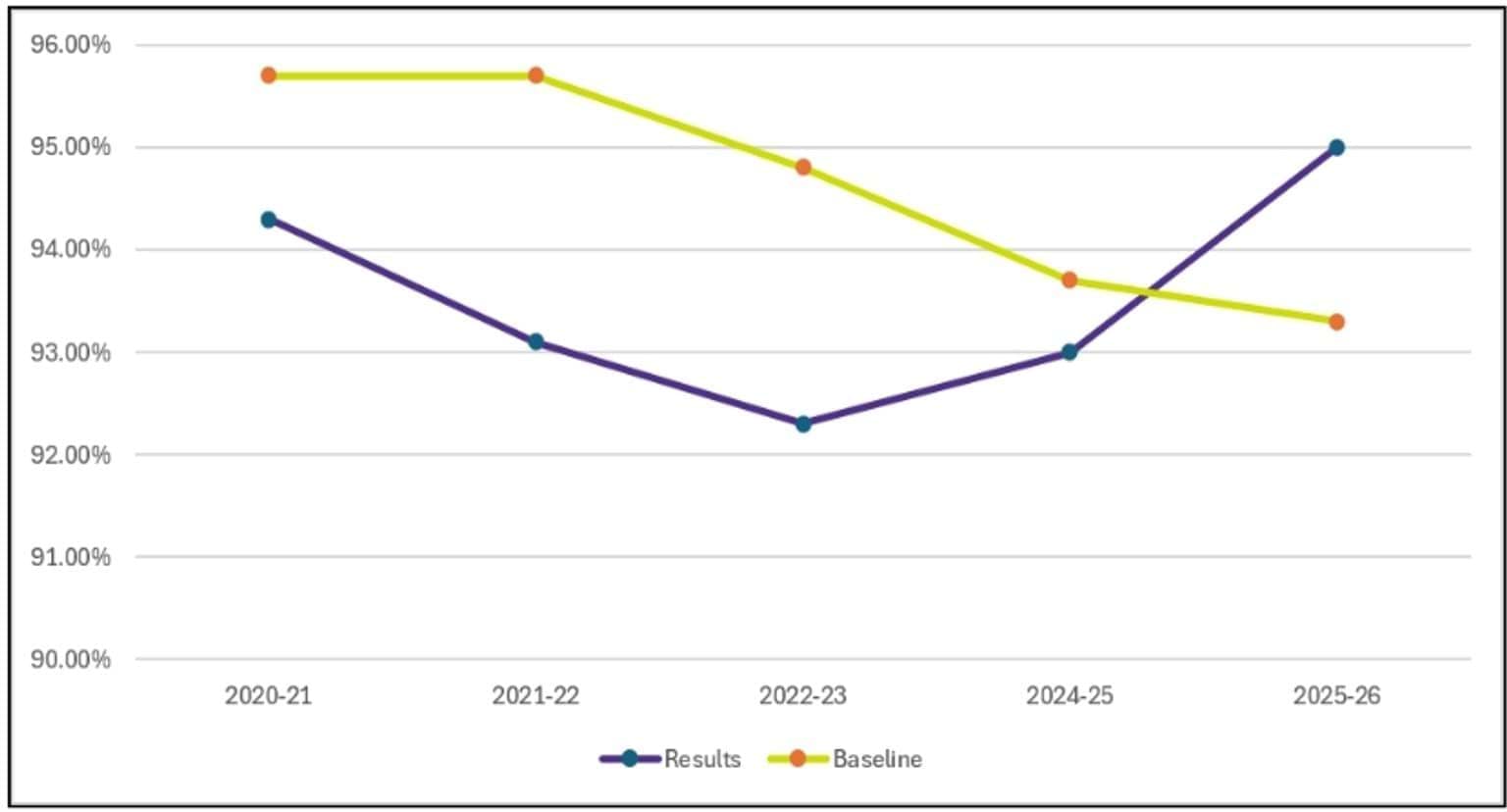
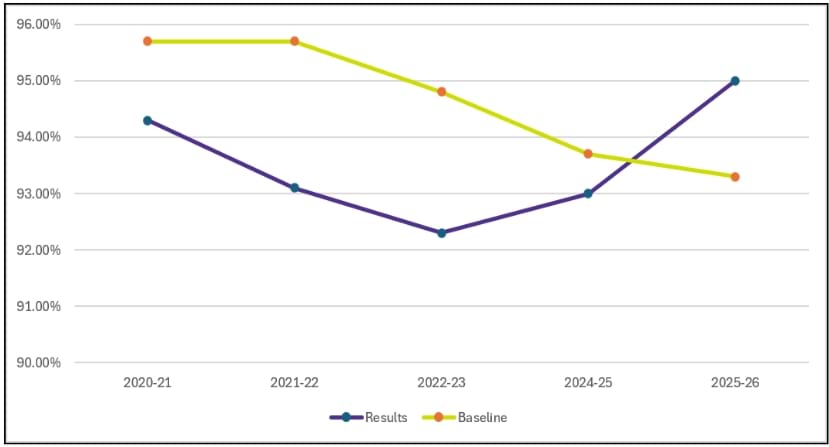
The 2025-26 result for CFA’s indicator of maintaining high levels of community trust in the CFA is the highest result since the fire services reform commenced in 2020-21. Of the 1,088 respondents to the Annual Post Season survey, 95% indicated a high level of trust in the fire services provided by CFA.
The survey is conducted at the end of the bushfire season to understand the attitudes and preparedness of households living in bushfire risk locations in Victoria. CFA advised that potential respondents invited to participate in the survey are limited to people who live in houses that are either within 1 kilometre of the nearest bushland and/or live on a small acreage or on a large farm. The sample included residents from the West, North West, North East, South West and South East, in proportions similar to the population.
The severity of the 2025-26 bushfire seasons and results of this indicator highlights the important connection between CFA and people living in bushfire prone areas.
Figure 1: Maintain high levels of community trust in the CFA
CFA: Decrease in median time spent suppressing structure fires (time spent on scene of accident)
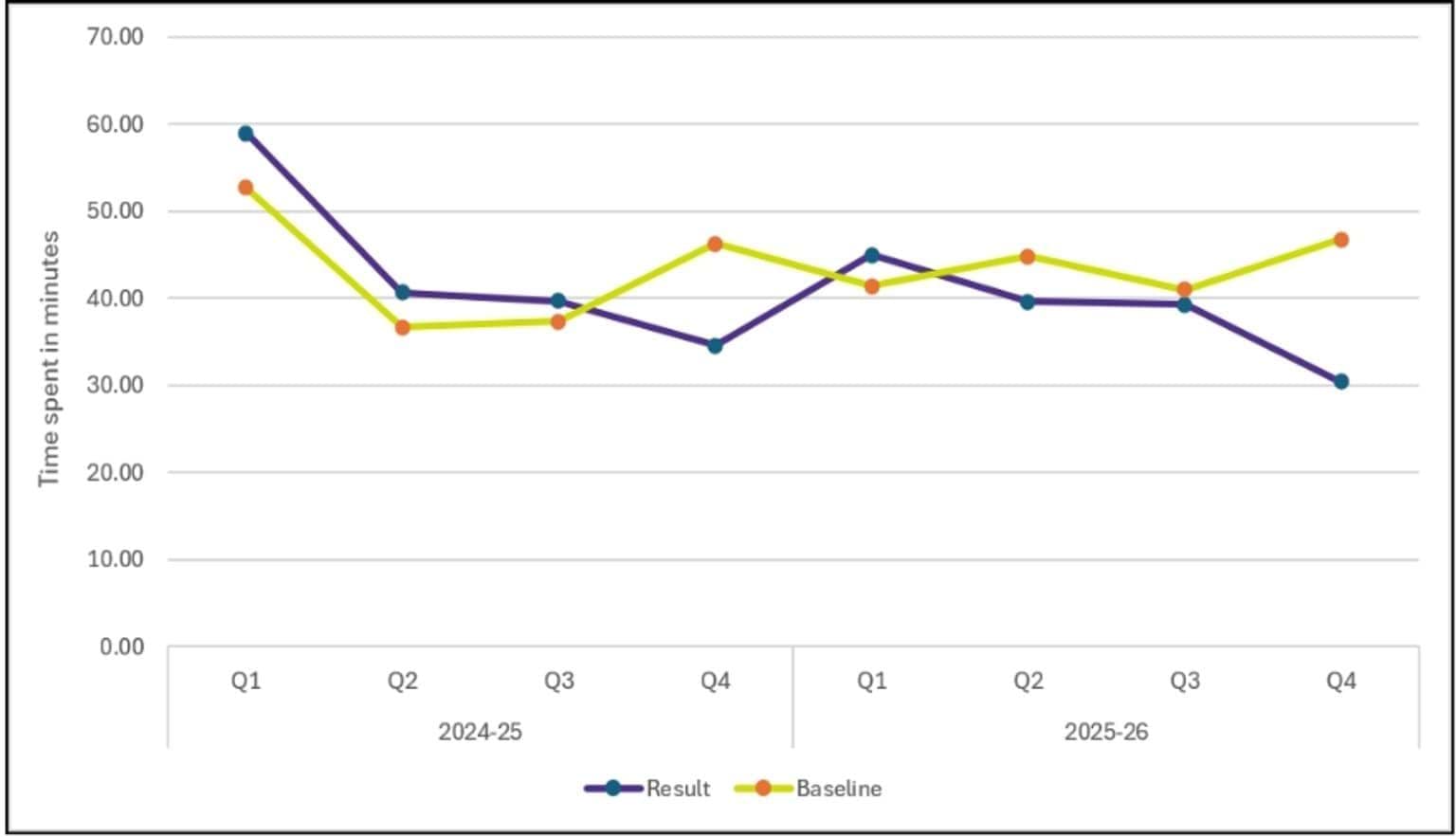
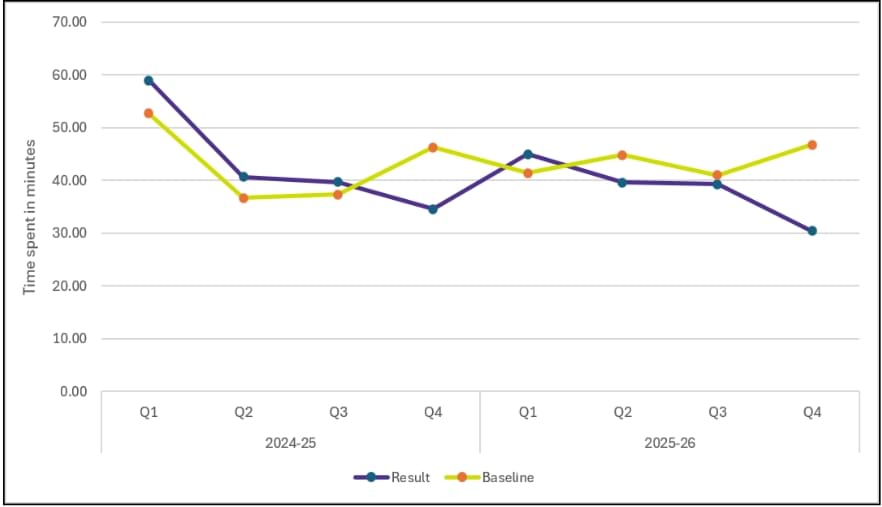
CFA reported a result of 30 minutes and 25 seconds for the indicator of median time spent suppressing structure fires (time spent on scene of accident). This result is the lowest median time for 2025-26 and is over 16 minutes below the Q4 baseline of 46 minutes and 45 seconds.
CFA advised that a possible explanation for this result was the greater proportion of structure fires that occurred in hazard classes 2 and 3, compared with the typical distribution. These hazard classes are medium to low urban areas and include residential structures, commercial centres, industrial and high-density community services. The location of these fires in proximity to CFA stations likely enabled CFA vehicles to arrive on scene quickly, which maximised the opportunity to contain fires before they developed.
Figure 2: Decrease in median time spent suppressing structure fires (time spent on scene of accident)
FRV: Percentage of FRV capital projects on time
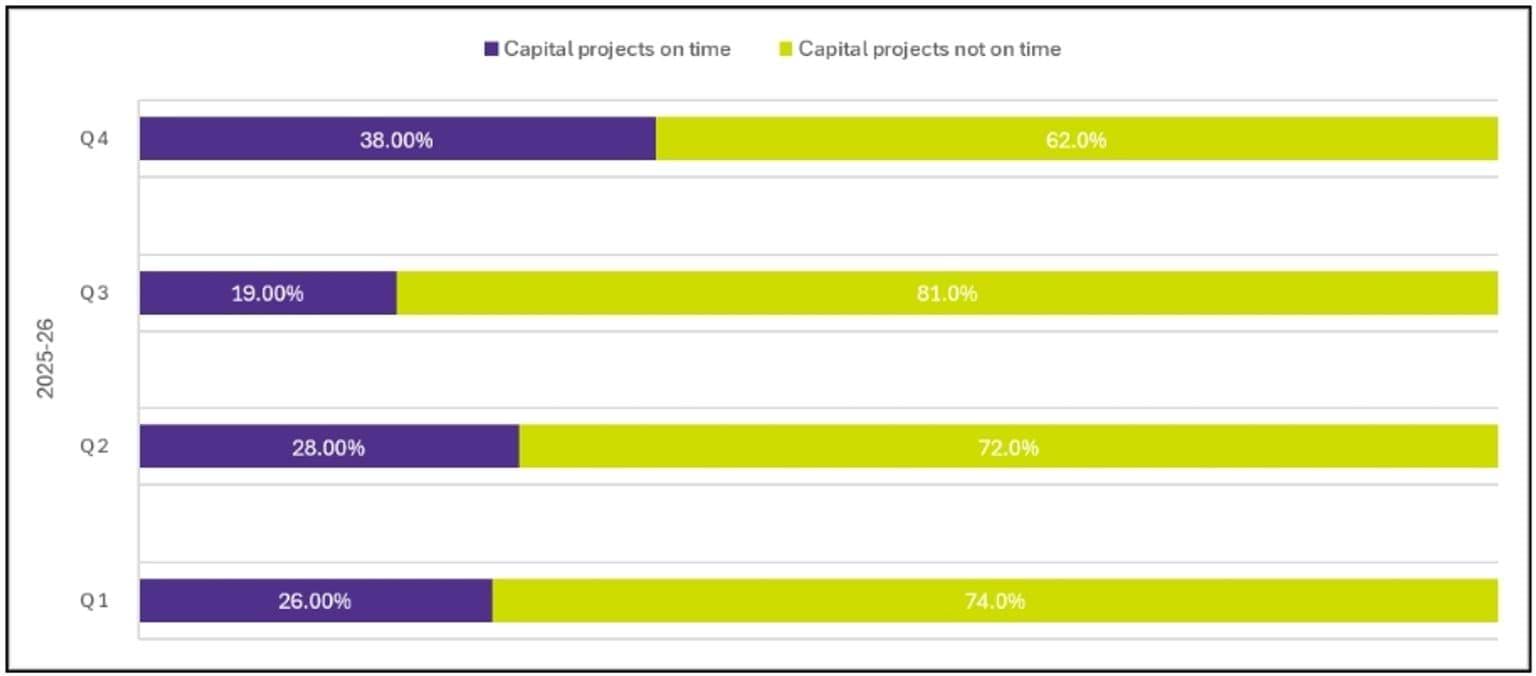
FRV’s result of 38% for capital projects on time is the highest for 2025-26 and a significant increase on the Q3 result of 19%. FRV notes the increase can be attributed to a more accurate assessment of project status following additional review and commentary from project stakeholders since the Capital Program Evaluation in Q3. Several projects that were previously reported as delayed were subsequently identified as either progressing as planned, on hold, closed, or affected by reporting limitations associated with industrial action.
While FRV’s objective is to deliver all capital projects on time, the outcome of 80% of projects delivered in accordance with their approved schedules is considered by FRV as realistic.
Figure 3: Percentage of FRV capital projects on time
FRV: Number of community members attending fire education program sessions delivered by FRV
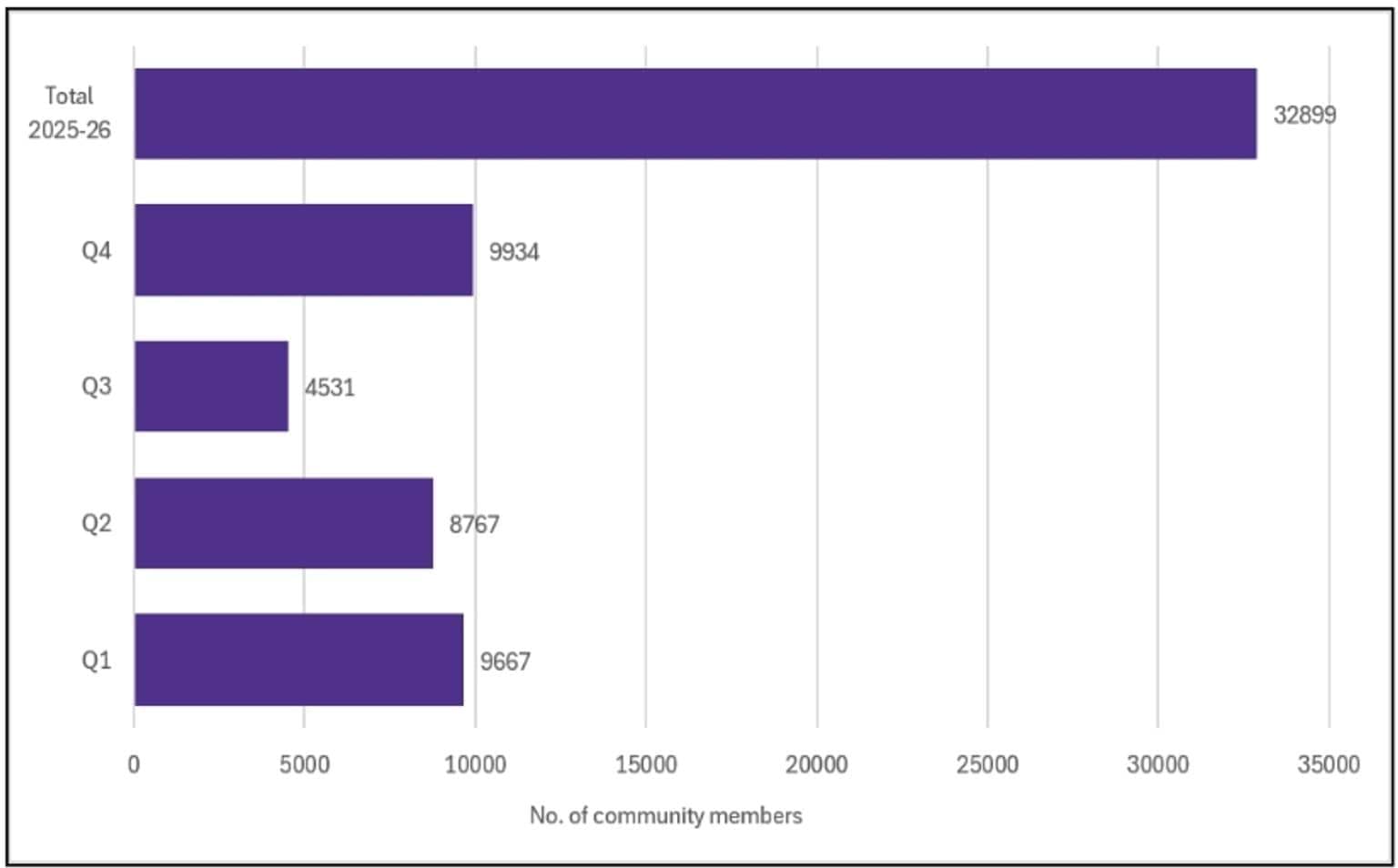
FRV reported that 9,934 community members attended fire education program sessions during Q4. The largest component of FRV’s fire education program is the Fire Ed school program, which is mostly delivered during terms 2 & 3. FRV advised this is why participant numbers in fire education programs are typically higher in Q4 and Q1. The FSIM commends FRV on achieving this result.
The programs that comprise this measure include:
- Fire Ed – age-appropriate fire safety messaging for primary and special development schools
- Senior Fire Safety – delivered to seniors’ groups by retired firefighters
- Fire lighting Consequence Awareness Program (FireCAP) – behaviour change program for young people involved in fire lighting.
- Fit 2 Drive – FRV deliver a case study session to year 11 students about smart choices as a driver and passenger.
Figure 4: Number of community members attending fire education program sessions delivered by FRV
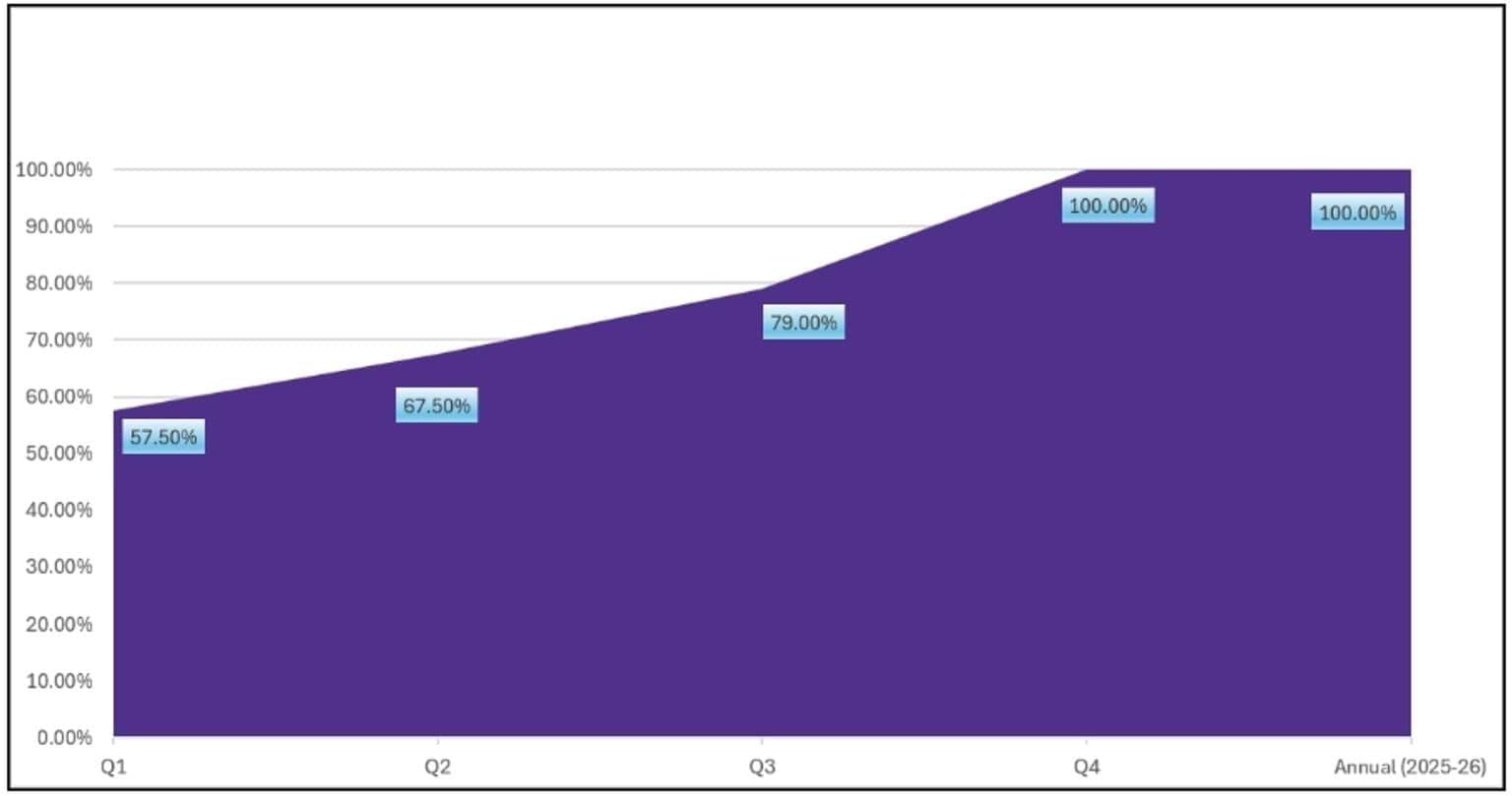
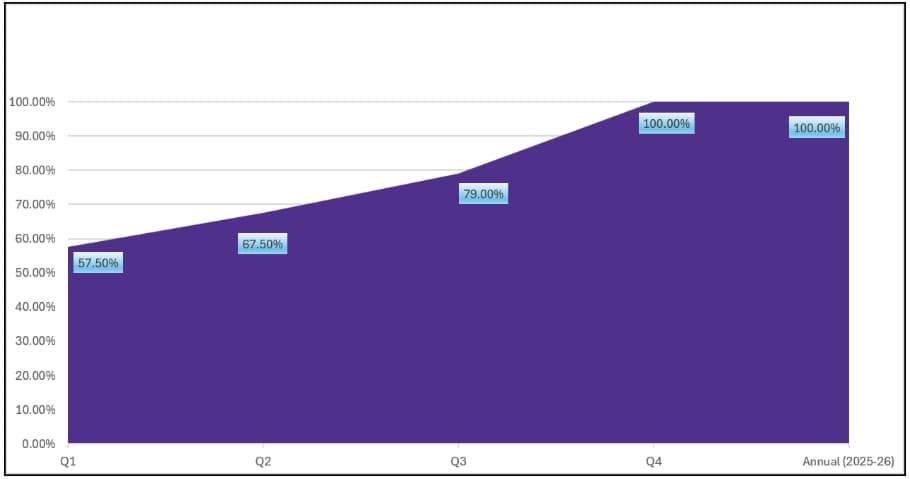
FRV: Percentage of command personnel who undertake annual command skills maintenance scenario training
FRV reported that 33 Commanders and ACFOs undertook the annual command skills maintenance scenario training during this reporting period, resulting in 100% of ACFOs and Commanders completing this training for the 2025-26 financial year.
FRV advised that the Incident Command Simulation Program involves immersive, scenario-based training, where the pressures and complexities of real-world incidents are created. Participants focus on incident development, consequence management, resource allocation, decision-making, command and control and recovery operations.
Figure 5: Percentage of command personnel who undertake annual command skills maintenance scenario training
Updated