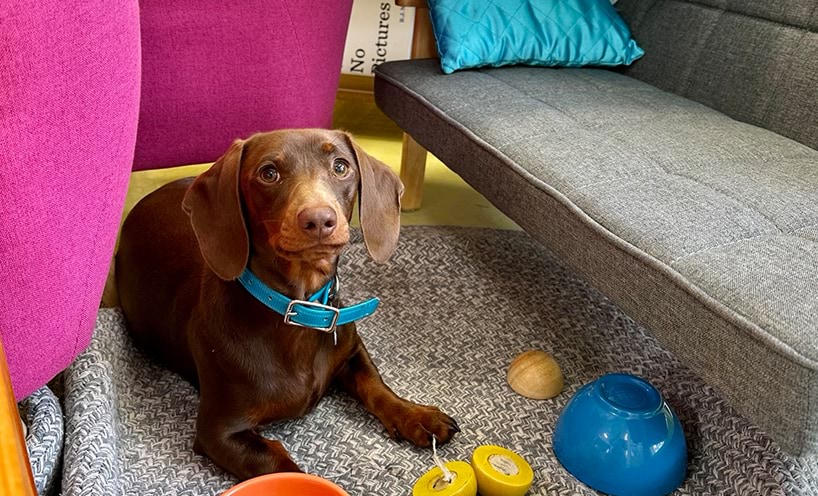
At Civic Kindergarten in Middle Park, a dog named Frank is making a big impact on children’s learning and development.
When early childhood teacher and service director Natalie Armany began talking about her new family member, the children at the service became curious about Frank. They asked questions, looked at photos and enjoyed hearing stories about him.
As their interest grew, educators explored how Frank could safely visit the service and support children’s learning.
Frank has been visiting several days each week for the past 3 years.
Supporting children’s wellbeing, learning and development
Frank’s presence has supported children in many ways.
For some, especially those feeling anxious or upset when they arrive at kindergarten, Frank is a familiar part of their arrival. He helps them shift their focus away from saying goodbye to their parents and redirect it toward a positive, exciting interaction.
‘They often greet Frank, pat him or sit quietly beside him as they settle,’ Natalie said.
‘The children find comfort with Frank and have been able to successfully start their kindergarten day with more ease.’
Frank helps the children to build a sense of belonging and supports their entry into the learning environment.
He is also a part of everyday learning. Children read stories to him, draw pictures of him and include him in play, especially their tea parties. These interactions help children engage with planned learning experiences that build their confidence and social skills and support them to become effective communicators.
Frank’s presence also helps children learn how to interact safely and respectfully with animals.
Frank’s impact on children’s sense of belonging developed through kindergarten years is evident in how many children from previous years visit the kindergarten to say hi and spend time with him.
Planning for success
Introducing a dog into an early childhood service requires careful planning.
Before Frank began visiting, Natalie explored this idea with her kindergarten teaching team, Kindergarten Improvement Advisor and the service’s Committee of Management.
‘We discussed the possibilities that could come with children having access to a dog in the learning environment,’ Natalie said. ‘We explored learning dispositions such as curiosity and confidence, and how these positively support children’s learning.’
They also consulted parents and carers, who were very supportive.
The service completed a risk assessment before Frank’s visits began. The team considered potential scenarios that could arise and identified strategies to minimize any risks.
One scenario they considered was children not knowing how to safely interact with a dog.
‘We manage this by talking to the children about how to approach Frank, respect his space and recognise when he might need a break,’ Natalie said.
‘We go through these expectations as a group at the beginning of the year and continue to reinforce them throughout the year.’
Natalie and the teaching team review the risk assessment each year to ensure the ongoing safety of the children and Frank.
‘We discuss whether changes are needed, identify any new risks, and consider the learning and positive outcomes that have taken place,’ she said.
Once reviewed, Natalie discusses changes with the Committee of Management before they sign it off for the year.
Frank continues to be a much-loved part of the Civic Kindergarten community today.
Share stories from your service
If you have a story that you’d like to share about your service or an early childhood professional at your service, please let us know.
You can contact the department’s communications team by email: ec.portfolio.communications@education.vic.gov.au
Updated