- Published by:
- Department of Education
- Date:
- 6 May 2026
The Early Childhood Update e-newsletter is sent to early childhood teachers and workers, but is open to anyone interested in best practice in early years education and evidence-based teaching approaches. Subscribe here to receive the e-newsletter(opens in a new window).
May brings a month of opportunities
From the State Budget to National Reconciliation Week, there are important items on the agenda in May.
Dear early childhood education professionals
The 2026/27 Victorian State Budget has been handed down and, as shared with you yesterday, $548.3 million has been allocated to continue transforming early childhood education in Victoria.
The investments from this year’s Budget include:
- a $498.2 million package to support the continued delivery of new and expanded early learning facilities across the state
- $26.2 million to support the Victorian Early Childhood Regulatory Authority
- $9.8 million to deliver Building Blocks Improvement and Inclusion grants
- $7.4 million to continue delivery of Kinder Kits
- $3.6 million to continue providing free access for more than 7,000 children in Four-Year-Old Kindergarten to a learning program in up to 20 languages
- $3.2 million to continue early childhood intervention services for children with a disability of developmental delay.
In another positive step to improve children’s safety, the department has partnered with Early Childhood Australia to expand its professional support program. Free webinars and live learning sessions begin this month. They’re a great chance for early childhood professionals to build on their skills. The sessions will arm participants with the latest evidence and best practice to support a child-safe culture.
Also in the professional development space, the Respectful Relationships initiative is back for 2026. Online training will take place in June. This important initiative supports educators to create cultures of respect and equality. It helps professionals to achieve this while supporting children to build healthy relationships, resilience and confidence.
National Reconciliation Week begins this month (27 May to 3 June). This year’s theme is All In, which calls for Australians to commit wholeheartedly to reconciliation, every single day. Across the sector in Victoria, there are many great examples of work being done to strengthen culturally safe environments, inclusion and participation for First Nations children and families. In this edition, you can read how a self-determination workshop helped services in Melbourne’s Bayside region.
Across the state, First Nations children continue to be prioritised with more hours of Four-Year-Old Kinder. This year, Victorian children who identify as Aboriginal or Torres Strait Islander will be able to access up to 25 hours of kinder programs each week, no matter where they live.
Finally, I’m pleased to announce that nominations are now open for the 2026 Victorian Early Years Awards. Now in their 21st year, the awards recognise the outstanding work across the sector to improve children's health, learning, development and wellbeing. If you know a person or a team who deserve recognition, make sure you nominate them.
Wishing you all the best for the month ahead.
Bronwen FitzGerald
Deputy Secretary
Early Childhood Education
Victorian Early Years Awards are back for 2026
The Victorian Early Years Awards acknowledge the amazing work in the early years sector. Nominate by 29 May 2026.
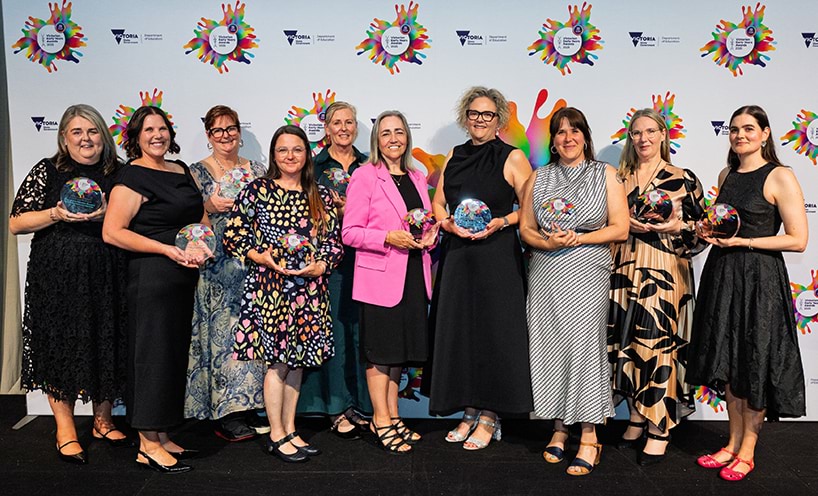
The Victorian Early Years Awards (VEYA) celebrate and recognise the entire early years sector. From allied health and Maternal and Child Health services, through to community playgroups and early childhood education and care professionals, the VEYA highlight efforts and contributions to improve Victorian children’s lives.
Winners are recognised as the best in Victoria for their category and receive a grant of $15,000. This can be used for professional development, or to support their nominated initiative.
Nominations are now open and close at 5pm on Friday 29 May 2026.
Award categories
The 9 VEYA focus on the following themes:
- improving engagement in early learning
- supporting parents and carers in their role as their child’s first teacher
- building collaborative community partnerships
- improving child health and wellbeing
- supporting continuity of early learning through successful transitions
- recognising an early childhood teacher who demonstrates exemplary practice in early childhood education
- significant improvement in learning and teaching practices
- recognising the importance of Aboriginal inclusion and perspectives in ensuring all services are accessible to Koorie children and families
- recognising an early childhood educator who makes a vital contribution to early childhood services and children’s learning outcomes.
How to nominate
Anyone can nominate someone for a VEYA, and you can even nominate yourself!
You can nominate organisations including early childhood services, local government services, community organisations, health services, disability services and more.
Read the nomination guide which includes important information about:
- category eligibility
- selection criteria
- the nomination process
- free nomination writing support
- resources and more.
To begin your application, visit Victorian Early Years Awards 2026 platform.
Support to write your nomination
Writing a strong application can be hard. We offer support to help you prepare a high-quality application.
Use our writing tips
You can find practical advice on the VEYA webpage. Read the ‘Tips for writing a great application’ section or download a copy of the tipsheet.
Join a free webinar
Join our free interactive webinar on Tuesday 12 May 2026 and learn how to make your application stand out.
During the webinar, you will learn how to:
- write clear responses to each selection criteria
- use strong examples to show the impact of their work
- structure your application using a simple framework
- avoid common mistakes and improve your draft.
Webinar details
- Date: Tuesday 12 May 2026
- Time: 4:15 pm to 5:15 pm
- Platform: online
- Cost: free.
To register, complete the Application writing workshop registration form.
Please note that this session will not be recorded.
Get feedback on your application
We have a professional writer to help you prepare the best application.
Once you have a draft with responses to each selection criteria, they can review it and give you feedback.
This service is free and easy to use. Send your draft in a Word document, with your application ID by Wednesday 27 May 2026 to early.years.awards@education.vic.gov.au.
Find out more
For more information, refer to the VEYA website Victorian Early Years Awards.
To read about our previous finalists and winners, refer to Victorian Early Years Awards winners.
For further enquiries, contact the VEYA team by email: early.years.awards@education.vic.gov.au
Celebrating 100 kinders on school sites
The program has reached a major milestone with the opening of its 100th kindergarten at a government school.
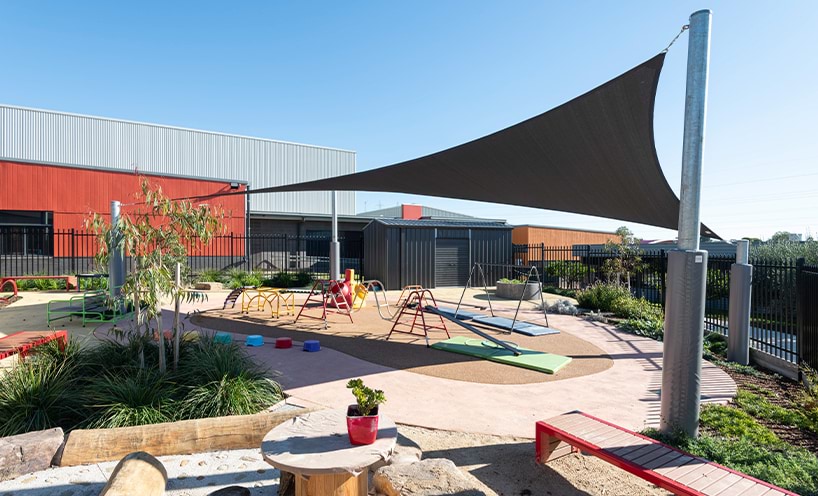
The Kindergartens on school sites(opens in a new window) (KOSS) program has reached a major milestone this year with the opening of the 100th kindergarten on a school site.
In total, the program has built 213 new kinder rooms, which have created an additional 12,586 places for local families. Locating kindergartens on school sites makes drop-offs more convenient and provides a smoother transition for children to primary school.
The first KOSS kindergarten opened in 2019. By the end of 2026, there will be 104 new and expanded kindergartens on school sites. Another 27 kindergartens have been confirmed to open on government school sites in 2027 or 2028.
Nurturing positive transitions
Gordon Kindergarten is one of the most recent to open its doors as part of the program, opening in Term 1, 2026. Located at Gordon Primary School, around 20km from Ballarat, the kindergarten is run by the Ballarat and District Aboriginal Co-operative (BADAC). BADAC is Victoria’s first Aboriginal Community-Controlled Organisation to operate a KOSS.
Gordon Kindergarten is the first early education centre in the area. With 2 primary schools nearby, the need for it was clear.
Kindergarten Manager Bridget Buttacavoli spoke of the benefits.
‘Families only have to navigate one central drop off instead of previously having to travel to neighbouring areas and have responded favourably to operation hours that mirror school times,’ Bridget said.
‘A KOSS helps to nurture positive and successful transitions into formal schooling, making what can sometimes be a big leap, more of a seamless and somewhat integrated approach.’
Building a community
Collaborating has been exciting for both the kindergarten and school, having already shared community events.
‘Families love being part of their child's learning journey, with many opportunities to engage with the program, and connect with other local families,’ Bridget said.
‘That ‘community feel’ is already there, practices are being embedded, and partnerships formed with our families, the school, and the wider community.’
Planning for the future
The KOSS program is delivered by the Victorian School Building Authority (VSBA). Kindergartens and new primary schools are delivered together, with every new primary school built with a kinder at or next to it.
The needs of each area are different, so the VSBA works closely with local government to plan new kindergartens.
This work helps ensure growing communities have access to local early learning programs now and in the future.
Find out more
For more information, refer to Kinders at schools(opens in a new window).
Free Kinder Shapes Young Lives
Learn more about the new campaign to promote the benefits of early childhood education.
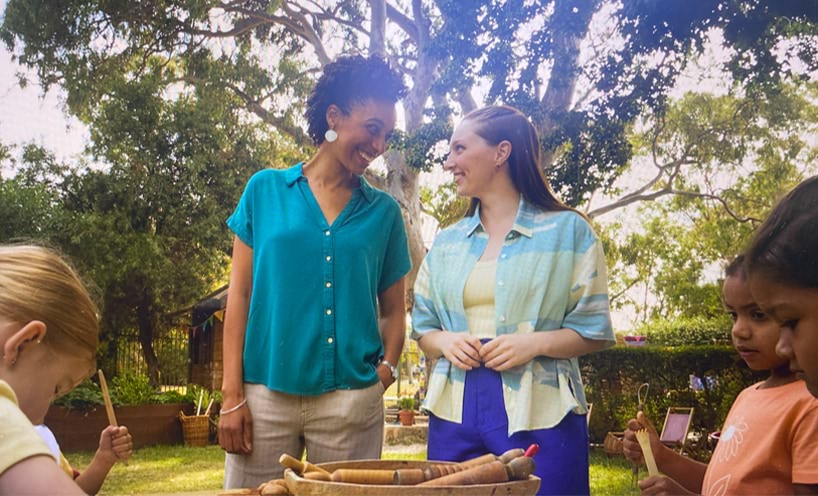
The department has launched a brand new advertising campaign, Free Kinder Shapes Young Lives. It marks a major milestone in promoting the benefits of kinder for families – and to bolster the workforce.
The campaign aims to increase awareness, and drive enrolment and participation in funded kindergarten programs, while also strengthening interest in early childhood careers.
The campaign highlights the immediate and lasting impact of kindergarten on children and families, while also positioning early childhood as a rewarding career by showcasing the meaningful, everyday impact early childhood teachers and educators have on children and their families.
Creative elements
From its inception, this campaign has been shaped by the sector. The department partnered closely with subject matter experts to ensure that the campaign feels authentic, grounded in practice, and reflective of the professionalism of the sector.
The campaign centres on familiar shapes, reimagined to convey a deeper meaning – how early childhood education shapes the lives of children. Importantly, each shape is aligned with different benefits of quality early childhood education.
You will see the campaign on digital and social media, in newspapers, radio and large and small billboards across Victoria, including in non-English (translated) channels. If you see it out and about, feel free to take a snap and share with us via Instagram @earlychildhoodvic or by email: ec.portfolio.communications@education.vic.gov.au
Communication toolkits will be shared with stakeholders and service providers in the coming weeks to support your own local marketing activity.
Spread the word
Find out more
To learn more about the campaign, visit Free Kinder Shapes Young Lives.
Strengthening the School Readiness Funding Menu
Learn about the next phase of improvements to streamline the Menu.
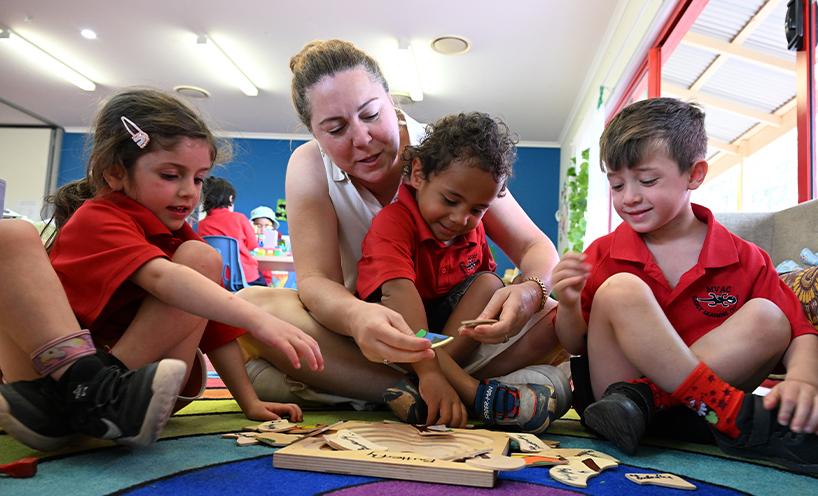
As Victoria continues to transform early childhood education through the Best Start, Best Life reforms, we are continuing improvements to School Readiness Funding (SRF).
There are 4 key areas of reform:
- reviewing and refining the SRF priority outcome areas definitions
- extending the SRF cycle to a 2-year cycle
- strengthening the SRF Menu
- continuing to streamline planning and administration.
So far, the department has delivered the redefined priority outcome areas and the 2-year SRF cycle which commenced in 2025. We thank services for their engagement during the transition.
Improving the SRF Menu
We are continuing to strengthen the SRF Menu with evidence-informed programs and supports. Further action is now being taken to:
- ensure Menu items are high quality and accessible
- reduce the Menu size to improve user experience and make it easier for kindergarten services to find the right support
- ensure supports are targeted to educators and families
- avoid duplication and ensure alignment with other programs offering support to services.
What has changed
We have completed a comprehensive analysis of SRF implementation since 2019, including all Menu items. In response to feedback from services about reducing the size of the Menu to support better decision making, a small number of items which are not commonly used are being removed. Services who have these items on their current SRF plan can continue to access them, however they will not be available for inclusion in SRF plans going forward.
Please see the table below outlining the removed items.
Items removed from the SRF Menu (as of 23 March 2026)
| Menu Item | Provider |
| ACF Bringing Up Great Kids | Australian Childhood Foundation |
| Billy Sparrow Wellbeing Support Reflective Practice | Billy Sparrow Pty Ltd |
| Brain Power: How our understanding of brain states can support social and emotional development | Play Therapy Melbourne |
| Circle of Security Parenting (COS-P) | Circle of Security International |
| Classroom Assessment Scoring System (CLASS) | University of Melbourne |
| Connect Up | Meli Bethany Community Support |
| Family Partnership Model | Centre for Community Child Health |
| Father Inclusive Practice Guide | Department of Social Services (Commonwealth Government) (item has been discontinued by provider) |
| fkaCS Improving Service Orientation and Engagement Kit | fka Children’s Services (fkaCS) |
| Gender Glorious Professional Development | Body Safety Australia LTD |
| Hanen: I'm Ready! Program for Building Early Literacy in the Home | Jo Bristow - Australasian Representative for Hanen |
| Language, Literacy and Critical Thinking Workshop and Toolkit | Raising Literacy Australia Inc |
| Movement Environment Rating Scale (MOVERS) | Early Start, University of Wollongong |
| Nurture in Nature | Nurture in Nature Australia |
| Sustained Shared Thinking and Emotional Wellbeing (SSTEW) Scale | Early Start, University of Wollongong |
| Taking Small BYTES – digital literacy experiences | FUSE (item has been discontinued by provider) |
| The Early Childhood Environment Rating Scale Extension (ECERS-E) | Visit online booksellers to buy ECERS-E manual |
| The Early Childhood Environment Rating Scale Revised (ECERS-R) | Visit online booksellers to buy the ECERS-R manual |
| The Gender Expansion | Gender Inclusion Consulting |
| The Supporting Engagement and Participation Seminar Series | Noah’s Ark Training |
| Working in Partnership | Centre for Community Child Health |
| Working with LGBTIQA+ families | Ethical Interactions |
How this affects services
If a Menu item is removed but has been previously approved in a kindergarten’s 2025-2026 SRF plan, the provider will still be able to offer the item to those kindergartens until the end of 2026.
Flexible Funding arrangements remain unchanged. Kindergartens may be able to use their funding to access any removed items. This is subject to eligibility and approval.
Looking forward: the next stages of SRF Menu reform
We will provide further advice in advance of the 2027-2028 SRF planning process of the new Menu items available for services to include in their plans in September/Term 3, 2026.
Find out more
For further enquiries, please contact your Early Childhood Improvement Branch.
Child safety training and resources
Build your skills to support a child-safe culture and respond to child safety risks.
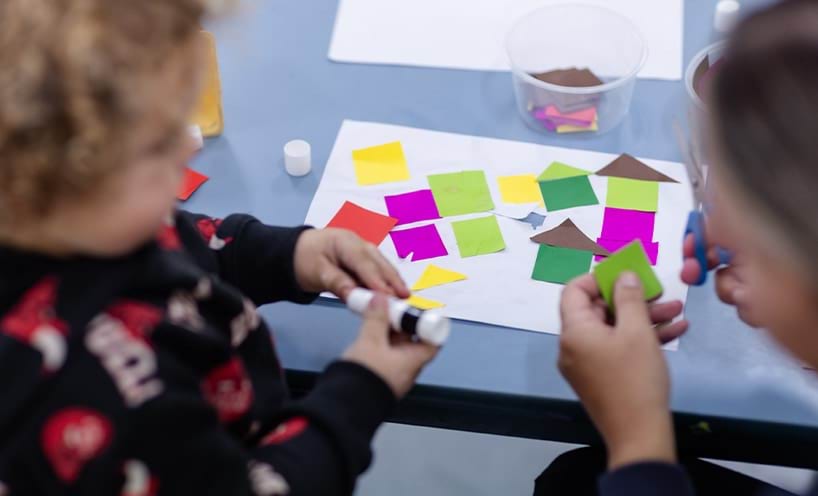
The department has partnered with Early Childhood Australia to expand its Children’s Safety and Safeguarding research-informed resources for early childhood professionals.
Free webinars, live online learning sessions, in-person events and fact sheets will be rolled out to support early childhood educators, teachers and service leaders. These resources will provide the latest evidence and best practice on child safety and safeguarding.
The resources complement PROTECT and national mandatory training. They provide practical tools and a chance to discuss child safety issues.
About the training
The live webinars will run during May and June, and cover topics including:
- child-safe recruitment and onboarding (Tuesday 12 May)
- staffing and rostering for consistent supervision (Wednesday 20 May)
- learning environment safety audits (Tuesday 26 May)
- grooming and sexual abuse prevention (Tuesday 2 June)
- trauma-informed safeguarding (Tuesday 9 June)
- responding to concerns raised by educators and families (Wednesday 17 June).
Victorian educators and leaders who sign up for webinars will then be invited to enrol for the live online learning and in-person events to further unpack these topics. These sessions will be held from mid-June to August.
Find out more
For more information about the program and to register for a webinar, refer to the Early Childhood Australia webpage: Strengthening Child Safeguarding in Early Childhood.
Respectful Relationships training for early childhood professionals
Strengthen your skills to help children build resilience, confidence, and respectful relationships.
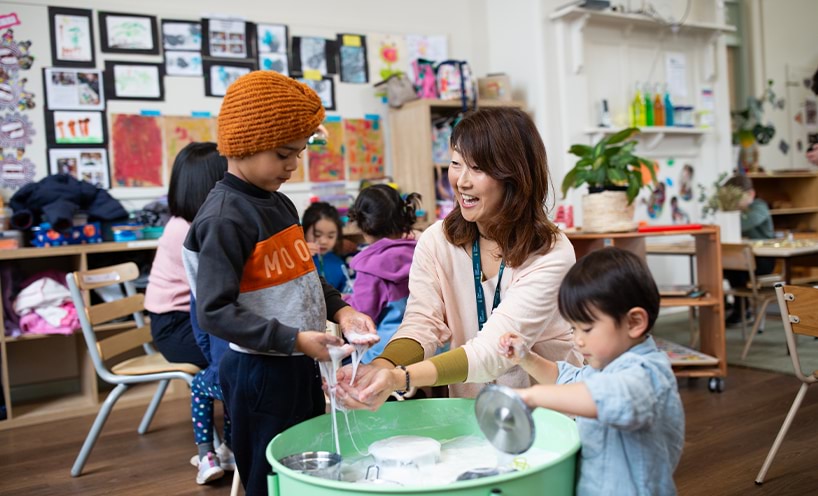
The Respectful Relationships initiative is offering free training for early childhood professionals in government-funded kindergartens.
The online training will run in June 2026. It will help early childhood professionals:
- promote respectful relationships, positive attitudes, and behaviours through their teaching
- enable children to build healthy relationships, resilience, and confidence
- understand the role of gender equality in the prevention of family violence
- learn practical strategies for promoting gender equality in their teaching
- recognise and respond to family violence and build support networks.
About the training
World-leading experts from Monash University helped design the training. It aligns with the Victorian Early Years Learning and Development Framework and the National Quality Standard.
The department will help cover the cost to replace staff who attend this training.
You can find the training on the School Readiness Funding Menu. You can also use the Menu to arrange replacement staff or more support.
- Dates: from 1 to 23 June 2026
- Format: online (one full-day workshop, and a 2-hour, self-paced learning module)
- Cost: free.
Find out more
For more information, refer to the Respectful Relationships in early childhood webpage.
Develop and strengthen leadership skills
Expressions of interest are now open for the Term 3 Victorian Educational Leadership Program. Registrations close 19 May 2026.
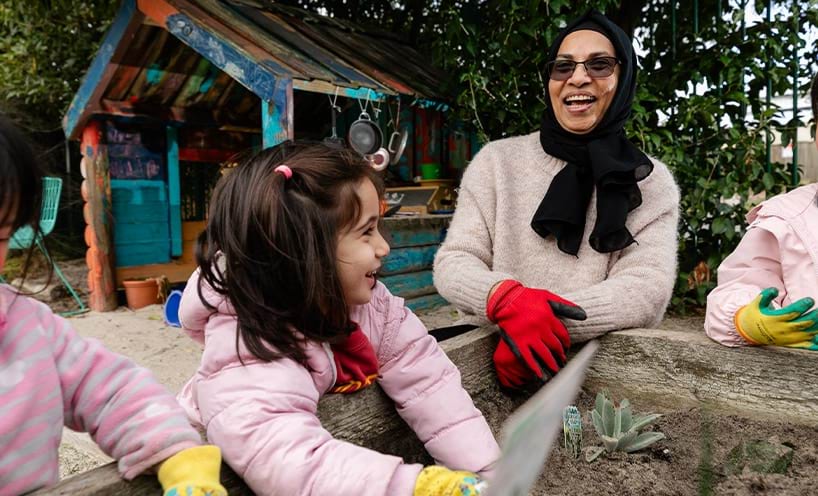
Expressions of interest are open for the Victorian Educational Leadership Program (VELP). VELP gives leaders the chance to develop their pedagogical leadership and change management skills. VELP is free and delivered online by the Queensland University of Technology.
Educational leaders can register now for the following micro-credential courses:
- VELP Foundations is for new educational leaders with 1 to 2 years’ experience. Learn about leadership, change management theory, team teaching, observation and assessment.
- VELP Advanced is for experienced educational leaders with 2+ years’ experience. Learn about advanced leadership models, effective team teaching, and reflective practice in teams.
The courses will support educational leaders to:
- understand, identify, drive and implement quality practice
- use data and evidence to support practice change
- understand and implement strategies to support children’s continuity of early learning.
Application details
Duration
The course takes 50 hours over 10 weeks comprising:
- 1.5 hours of synchronous contact learning per week (15 hours total)
- 3.5 hours of independent learning per week (35 hours total).
Cost
This program is free with a backfill contribution to Approved Providers funded through the Victorian Department of Education. This supports the release of educational leaders to complete the program.
How to apply
- Speak to your manager or Approved Provider to get their support to participate in the program. Ask them to sign the letter of support to attach to your EOI.
- Complete the online Expression of Interest form and nominate Term 3, 2026 to undertake the program.
Note: If you applied earlier this year, your application remains current and you do not need to apply again.
Application dates
Expressions of interest have been extended and close at 11:59pm Tuesday 19 May 2026.
Offers for Term 3 2026 cohort will be sent out on Friday 22 May 2026.
Find out more
Visit Victorian Educational Leadership Program for more details.
Strengthening self-determination to support First Nations children and families
How a workshop helped services in Melbourne’s Bayside region learn to create culturally safe environments.
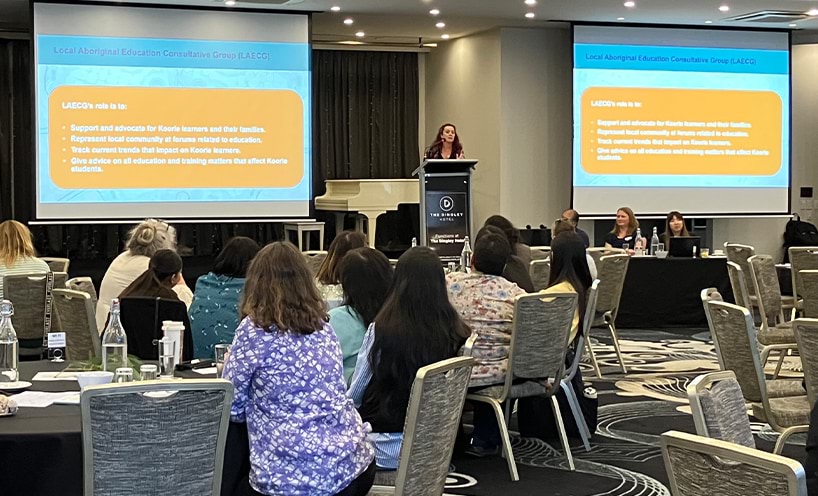
In late March 2026, more than 50 participants from funded early childhood services across the Bayside Peninsula Area attended a 'Continuum of Self-determination in early childhood' session.
The Koorie Education Workforce (KEW) and Early Childhood Improvement Branch (ECIB) developed and co-facilitated the session. It gave services the chance to reflect on their practice and how they can strengthen Aboriginal self-determination in their kindergarten program.
Using the themes from the Strengthening Aboriginal Self-Determination Education campfire conversations, participants explored what Aboriginal self-determination is and why it is important.
The session introduced participants to the concept of a continuum towards Aboriginal self-determination. They explored where their service was on the continuum and how they can move to the next level. Participants learned about the barriers they may need to overcome.
Influencing positive change through collaboration
Guest speaker Kylie Bell, Local Aboriginal Education Consultative Group chair, highlighted how strong partnerships between services, families and community can better support Aboriginal children and improve outcomes.
Kylie shared how local advisory groups and regional collaboration help to elevate community voices and inform planning. She also outlined how they influence change across early childhood and education systems.
She emphasised the importance of connecting with Aboriginal Community-Controlled Organisations and culture. She said this can create a more inclusive, respectful, and culturally responsive environment.
Building knowledge and confidence
Feedback from participants was overwhelmingly positive. After the session, 77% of services rated their Aboriginal self-determination knowledge as good or great. That was a big improvement compared with just 14% before the session.
Most services placed themselves at the 'Inform', 'Consult' or 'Collaborate' levels on the continuum. One attendee commented: ‘we were afraid and we are not afraid anymore’ in relation to creating a culturally safe environment.
Looking ahead
Throughout 2026, the KEW and ECIB are delivering the Koorie Engagement and Participation in Early Years (KEPEY) professional development program.
KEPEY aims to strengthen funded kindergarten teacher and educator knowledge and confidence in creating culturally safe environments. They will also learn how to provide an inclusive curriculum for Aboriginal and Torres Strait Islander children and families.
The KEW and ECIB will continue to run termly yarning circles. These are a chance for early childhood staff to come together for a yarn.
Share your team’s stories
If you have a story that you’d like to share about your team or an early childhood professional at your service, please let us know. We would love to talk to them about what drives them in their work and explore the impact they have. You can contact the department’s communications team by email: ec.portfolio.communications@education.vic.gov.au
Financial support helps educator launch her career
How support to study helped Lubna Kabir upskill and grow professionally.
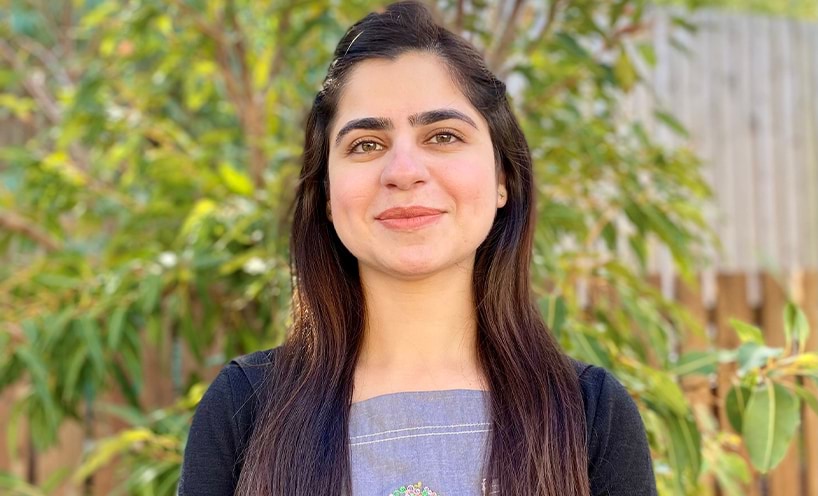
Applications are open year round for the Early Childhood Scholarships Program. The program provides flexible financial support to help people study.
Passion turns to motivation
In 2019, Lubna Kabir moved from Pakistan to Australia, where she continued her career as an early childhood educator, with Launchpad Early Learning Centre in Lower Plenty.
‘I love working with children and supporting their learning and development. It is truly my passion,’ she said.
After many years working as an educator, Lubna wanted to build her knowledge and strengthen her skills. In April 2025, she received financial support through the Certificate III Upskill Support Program and commenced her Diploma studies through the VICSEG New Futures Early Childhood Tertiary Partnerships (ECTP) program. Lubna said it was a ‘good incentive’.
‘The scholarship motivated me to enrol in the Diploma. The staged release of funding helped me stay motivated and kept me on track.’
‘The financial support helped cover fuel and other study-related expenses, making it easier to balance work and study.’
Supporting development
The VICSEG New Futures course provides a supported pathway for migrants, refugee and asylum seeker communities to upskill to Diploma qualifications. Additional supports such as academic mentors, language supports, travel allowances and access to childcare may be provided under the ECTP program. These support students to complete their qualifications.
Lubna also explains how direct support from her bicultural mentor and course trainer was ‘amazing’ and helped her to remain engaged.
‘I also found the face-to-face classes very positive, as I made friends from different backgrounds and improved my English skills through classroom discussions.’
Spreading the word
Completing her Diploma gave Lubna a much better understanding of quality improvement in early learning education and care programs.
‘I gained more practical knowledge and I’m now able to contribute my views and insight to my service’s Quality Improvement Plan’ she said.
Lubna encourages other educators to consider applying for support through the ECTP program.
‘It is a great opportunity for professional growth. I have already encouraged my colleagues to consider it,’ Lubna said.
How to apply
Certificate III-qualified educators who want to upskill to become Diploma qualified can apply for up to $7,000 in funding. This supports educators with studying and transitioning into Diploma roles.
To view the eligibility criteria and apply for financial support under the Early Childhood Scholarships program, refer to the early childhood scholarships and incentives application portal.
If you are looking for options to upskill to a Diploma with more support, refer to the Early Childhood Tertiary Partnerships program webpage. The program offers tailored courses with a range of benefits to support you while you study.
Find out more
For further enquiries about the Early Childhood Scholarships Program, contact BUSY At Work (who administers the program on behalf of the department):
- phone: 1300 161 396
- email: ec.financial.support@education.vic.gov.au