These are legal requirements that apply to all wildlife licence holders, as specified in the Wildlife Regulations 2024.
Wildlife welfare and care
Transportation
Wildlife Regulations 2024, Reg 122(1-3) |
Objective
To ensure wildlife are transported in appropriate enclosures that prevent injury, stress and disease.
How to comply
Transport can be a particularly stressful and high-risk time for most wildlife species. Your transportation must meet the needs of the species being transported. The comfort and wellbeing of all animals should be monitored at minimum every two hours during transport.
Wildlife must be restrained during transport to prevent injury to the wildlife and to people. This may be achieved, for example, by use of an appropriately sized animal crate constructed of sufficiently robust material to prevent escape (for example, coated metal or rigid plastic).
Animals should be in a fit state before being transported. Sick or injured animals should not be transported except for veterinary care, with precautions taken to minimise further stress or injury. A person who is transporting sick, injured or abandoned wildlife to a vet or a wildlife rehabilitator does not need to meet these requirements.
Any equipment used to transport wildlife must be clearly and securely labelled with the details of the licence holder including the licence number.
When transporting wild-caught reptiles:
- Care must be taken to avoid exposure of reptiles to extreme temperatures or changes in temperature during transport.
- Reptiles must not be fed during transport.
- Transport containers must not be placed in direct sunlight, water, or draughts.
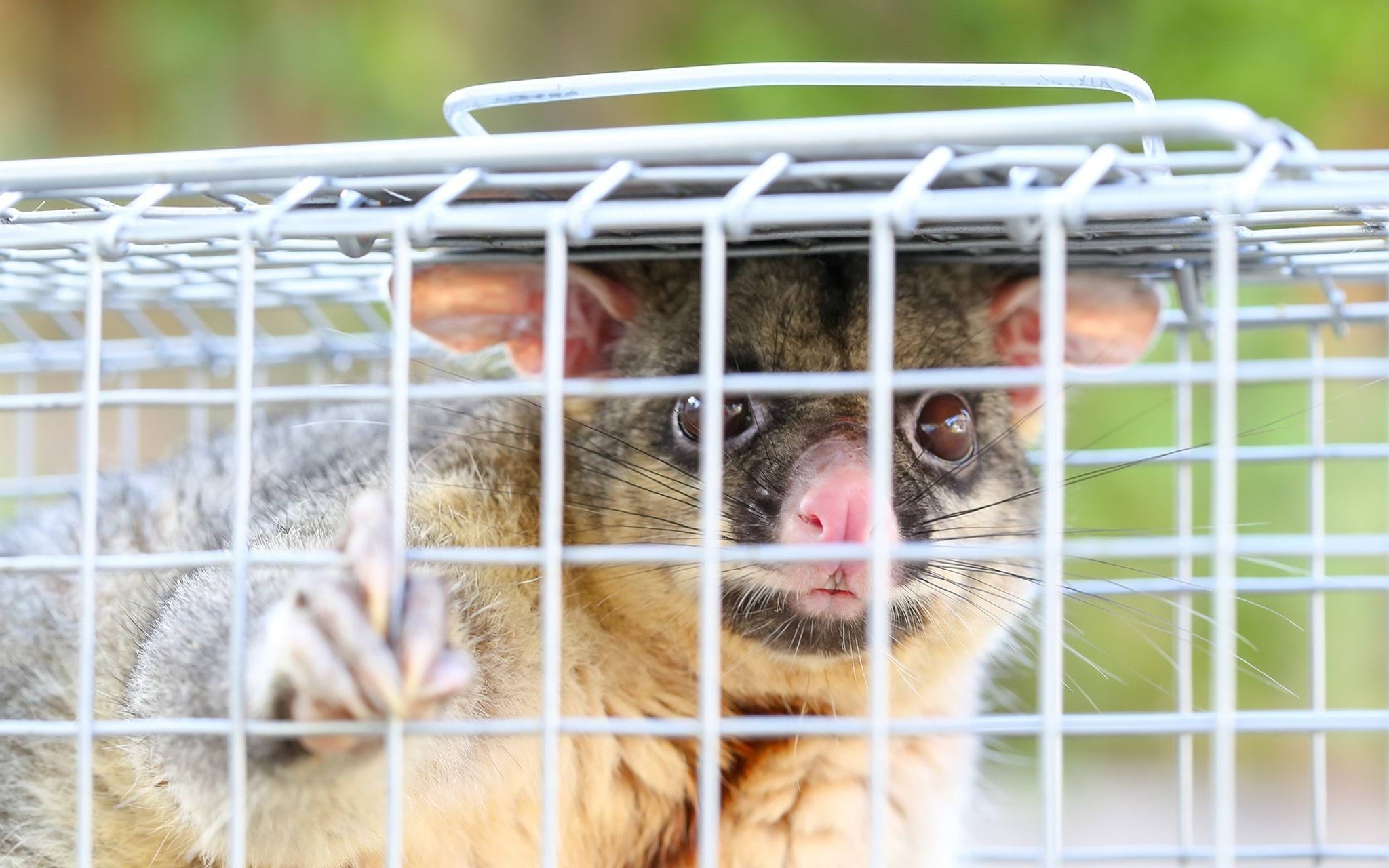
When transporting wild-caught possums:
- Care must be taken during transport to avoid exposure of possums to environmental extremes or rapid environmental fluctuations, including to temperature, noise, and light.
- Possum transport cases must be secure enough to prevent escape.
- Transport containers must not be placed in direct sunlight, water, or draughts.
Dependent wildlife
A person must not…dispose of…or transport any wildlife that is: a. a flighted bird that is too young to fly; or b. a flightless bird that is less than 4 weeks old; or c. a mammal that is not fully weaned; or d. wildlife that is obviously diseased, sick, or injured; or e. wildlife that is an egg Wildlife Regulations 2024, Reg123(6) |
Objective
To ensure the welfare and survival of dependent, sick, or juvenile wildlife and prevent the spread of disease.
How to comply
Do not control wildlife that is considered dependent. This includes birds that have not fledged (birds in nests) or any wildlife egg.
You may encounter sick or injured wildlife during assessment for control. Under Regulation 132, you may transport sick or injured wildlife to a registered vet for care regardless of your wildlife controller licence. If, however, wildlife are injured during control activities, you may:
- Transport the wildlife to a registered vet or, where a registered vet is not available, an authorised wildlife shelter or foster carer, for definitive care.
- For indigenous reptiles only, where safe and suitable to do so for the species, destroy the injured wildlife by crushing the skull.
- For listed bird species, if a bird is injured during control activity you must make appropriate efforts to locate and destroy the bird via firearm to prevent prolonged suffering.
Eggs are not eligible for control, as they are not considered dangerous or able to cause damage. All eggs produced by wildlife are also considered protected wildlife. If you are unsure whether eggs of unknown origin are wildlife or not, assume they are. In fact, under Section 65 of the Wildlife Act, any eggs are presumed to be threatened species unless proven otherwise.
Record keeping requirements
Record books
Wildlife Regulations 2024, Reg 27(1)-(4) |
Objective
To ensure that wildlife interactions are documented and lawful.
How to comply
Relevant transactions include control and disposal, including release or destruction of wildlife.
Your Wildlife Record Book is used to record all wildlife transactions. You cannot undertake wildlife control activities until you have received both your licence and record book.
All record books for all wildlife licences are supplied by the Conservation Regulator and remain the property of the Conservation Regulator. Making or keeping records that are inaccurate or false is an offence under the Wildlife Act.
To comply with this condition, you must:
- Ensure entries are recorded on the same day that an activity occurs.
- Ensure entries are permanent and legible.
- Request an additional record book from wildlife licensing if you no longer have sufficient pages to record your wildlife transactions.
- Retain all record books you have been issued until you choose to not to renew your licence.
- Return your record book to the Conservation Regulator within 10 business days should you choose not to renew your wildlife licence.
- Return your record book the Conservation Regulator if your licence is cancelled.
If you lose or damage your record book, you must report your loss to the Conservation Regulator by email or the online form within two business days. There is a fee for each book lost or damaged.
Please refer to Theft, loss, or damage of record book or return form for further information.
See Theft, loss, or damage of record book or return form
See Conservation Regulator Notify Theft, Loss, Damage or Escape form(opens in a new window)
Email wildlifelicensing@deeca.vic.gov.au
Annual return forms
Wildlife Regulations 2024, Reg 28(1)-(5) |
Objective
To provide a state-wide overview of legal wildlife interactions in Victoria, which helps to ensure we have the right legal framework in place. This record keeping also provides a mechanism for the regulator to prevent illegal trade of wildlife.
How to comply
Your return is a summary of the wildlife transactions you conducted under your licence in the 12-month period between 1 April and 31 March. Information contained in the returns is confidential.
You must submit a completed return form by 14 April each year. You must also keep a copy for your returns for future reference.
A return form must be submitted even if you have not controlled any wildlife. In this instance, wildlife controller licence holders should mark their return as Nil and submit by 14 April.
You may submit your return online on our website(opens in a new window).
If you are unable to complete the online form, you can request a form by calling or emailing us.
If you do not submit a return, you may not be eligible to renew your licence. Additional penalties may also apply if these obligations are not met.
See Wildlife licence annual returns(opens in a new window)
Call DEECA Customer Contact 136 186
Email wildlifelicensing@deeca.vic.gov.au
Do not tamper with record books or return forms
Wildlife Regulations 2024, Reg 33(6 & 7) |
Objective
To ensure record books and return forms are a true and accurate representation of wildlife possession and trade in Victoria.
How to comply
Record books and return forms are legal documents. They must be accurate and include all control activities undertaken under your licence. You do not have to record control activity that occurs under an Authority to Control Wildlife.
Record books and return forms remain the property of the Conservation Regulator. Tampering with them in any way is an offence. Tampering includes erasing or editing entries, removing pages, or otherwise damaging records.
All entries in your record book, and on hard copy return forms, must be permanent and legible. You must write in your record book with a pen in black or blue ink.
If you make a mistake when filling in an entry, you should:
- Strike a
linethrough the entry. - Write your initials and date of the correction next to the corrected entry.
You cannot use white out or other methods to cover up entries. You also cannot remove any pages from your record book.
Additional record keeping obligations
It is a condition of any wildlife licence that the licence holder must produce the record book or copies of return forms for inspection when requested to do so by an authorised officer. Wildlife Regulations 2024, Reg 29 It is a condition of any wildlife licence that the licence holder must ensure that the record book and copies of return forms are kept in a safe and secure place at the premises specified in the licence, except when undertaking a transaction in circumstances set out in regulation 38(1). Wildlife Regulations 2024, Reg 31
Wildlife Regulations 2024, Reg 32 |
Objective
To ensure oversight of all wildlife transactions in Victoria, while maintaining the confidentiality of licence holders.
How to comply
Keep your record book and return forms at the address specified on your wildlife licence and in a secure location to prevent loss or theft.
Under the Wildlife Act, you must provide a copy of your record book, licence and return forms to Authorised Officers when asked. Authorised Officers have the power to, at any reasonable time with regard to the circumstances, ask to see, inspect or make copies of record books and any other documentation associated with your wildlife licence.
The record book and return forms remain the property of the Conservation Regulator. Should you choose not to renew your licence, or surrender your wildlife, you must return your record book to the Conservation Regulator within 10 business days.
If you are provided with a written direction to surrender your wildlife record book by the Conservation Regulator, you must surrender all record books and return forms by the date specified.
Reporting
Theft or loss of wildlife
Wildlife Regulations 2024, Reg 33(1)-(5) |
Objective
To uphold the health and wellbeing of wildlife in captivity, through appropriate monitoring and investigation of theft, loss or escape.
How to comply
If there has been a theft, loss or escape of wildlife in your possession, such as loss of wildlife in transit to a release or disposal point, you must:
- For suspected theft, report it to Victoria Police within two business days of the suspected event, meaning no more than two business days after the associated wildlife control event.
- Retain a copy of the police report. If requested by an Authorised officer, you must produce a copy of the police report.
- Report the theft, loss or escape of wildlife to the Conservation Regulator by email, or by completing the Notify theft, loss, damage or escape form available on our website below and emailing us the completed form within two business days of becoming aware of the loss.
- Record the theft, loss or escape of wildlife into your record book.
Email wildlifelicensing@deeca.vic.gov.au
See Private licence obligations and record keeping(opens in a new window)
Theft, loss, or damage of record book or return form
Wildlife Regulations 2024, Reg 33(5) |
Objective
To ensure the integrity and confidentiality of records.
How to comply
You must report the loss, theft or damage of your Wildlife Record Book or Annual Returns to the Conservation Regulator by email within two business days of becoming aware. You can do this by completing the Notify theft, loss, damage, or escape form available on our website.
See Commercial licence obligations and record keeping(opens in a new window)
Change of details
It is a condition of any wildlife licence that the licence holder must notify the relevant body within 10 business days of any change of name, address or telephone number of the licence holder. Wildlife Regulations 2024, Reg 36(1)(a) |
Objective
To ensure licence details are up to date and the person responsible for the wildlife licence is identifiable.
How to comply
You must notify the Conservation Regulator within 10 business days of any changes to the details listed on your licence, including changes to your name, contact details, or the address of your specified premises. This also includes changes to the name, address or contact telephone number of the nominated responsible person where the licence is issued to a business. You can do this by completing the form available on our website.
Licences are not transferable to another person. An amended licence will be posted to you.
See Commercial licence obligations and record keeping(opens in a new window)
Updated