All wildlife in Victoria is legally protected. The Conservation Regulator administers licences, permits and authorisations under the Wildlife Act, which allows the holder of a certain licence type to engage in specific activities relating to wildlife that are illegal for non-licence holders.
Information about the different types of wildlife licences, and how to apply, can be found on our website.
All wildlife licence types fall into two categories
| Commercial wildlife licence | Commercial licences allow the holder to engage in business activities relating to wildlife. The wildlife controller licence is an example of a commercial licence. These licences can be issued to a person, corporation, company or other business entity. |
| Private wildlife licence | Private wildlife licences are designed for individuals who want to keep small numbers of wildlife at home. Private wildlife licence holders are not permitted to engage in commercial activities relating to wildlife, and the wildlife must be kept at the address specified in the licence. |
Visit Wildlife licences and permits(opens in a new window)
Visit Wildlife Regulations 2024
Visit Commercial wildlife licences(opens in a new window)
What does reference to the Secretary mean?A Secretary leads a government department, and is granted powers under different legislation, including Acts and regulations. Throughout this guide, the legislation refers to the Secretary in relation to licences. The Secretary in this circumstances is the Secretary of the Department of Energy, Environment and Climate Action (DEECA). The Secretary has the discretion to delegate powers they hold in legislation to other persons within their government department, which allows other people to also exercise these powers – without preventing the Secretary doing so when required. The Secretary has delegated powers under the Wildlife Act 1975 in regard to licences to the Conservation Regulator, so guidance throughout this document will refer to the Conservation Regulator as the decision maker for these powers. Similarly, references to the Secretary in legislation quoted in this document can be taken as references to the Conservation Regulator. |
What a wildlife controller licence allows you to do
Wildlife controller licence holders can control certain wildlife species in specific circumstances. The species you are authorised to control under your licence with no further permission required are listed in your licence conditions and are generally limited to:
- Indigenous reptiles.
- Brushtail possums.
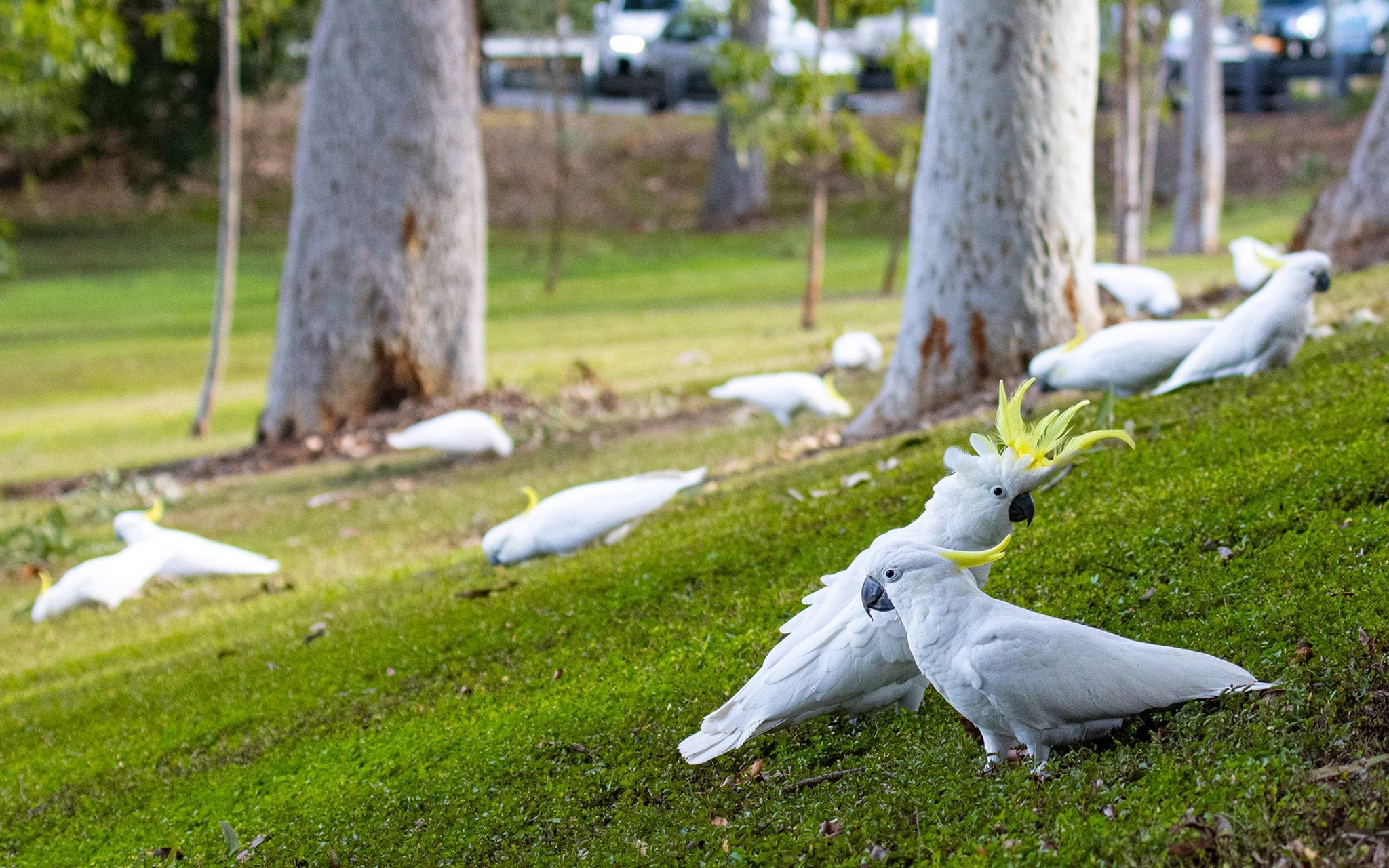
- Sulphur-crested cockatoos, long-billed corellas and galahs.
You can only control these species when they are damaging property or are a danger to people, as otherwise specified in your licence conditions.
Sometimes you may receive a request to relocate wildlife, even when the wildlife are not dangerous to people or causing property damage. In these circumstances, the landowner or manager needs an Authority to Control Wildlife to allow the wildlife to be relocated, even if the relocation is to be carried out by the holder of a wildlife controller licence. See Authority To Control Wildlife(opens in a new window) for further information.
You may hold other wildlife licences and authorities apart from your wildlife controller licence. However, the intent and activities permitted under each licence category are different, so you must keep any activities permitted under your wildlife controller licence separate from any other licences and authorities.
Visit Authority To Control Wildlife(opens in a new window)
What you cannot do under a wildlife controller licence
You cannot keep, trade, display, buy, sell, or breed wildlife under your wildlife controller licence. You cannot disturb or interfere with wildlife under your wildlife controller licence except as specifically provided for in your licence conditions.
Your licence only allows you to take, dispose of, or destroy wildlife where they are causing damage or are a danger to people, and are a species specified on your licence. This wildlife must be in your possession for the minimum practicable time prior to release or other lawful disposal, and that disposal must occur on the day of capture or as otherwise specified in your licence conditions.
You cannot relocate non-dangerous wildlife under your wildlife controller licence. For example, you cannot relocate turtle species from dams or ponds and cannot control or relocate non-dangerous reptiles such as blue-tongued lizards (Tiliqua). In Victoria, sick, injured, or orphaned wildlife can only be rehabilitated by a wildlife rehabilitator. A wildlife rehabilitator is a wildlife shelter operator or foster carer who is authorised under section 28A of the Wildlife Act.
It is illegal to keep any wildlife taken from the wild. This includes under your wildlife controller licence. You may only possess wildlife to transport it to a release site, to the holder of a Rehoming Wildlife Authorisation in accordance with your conditions, or to a vet for treatment or euthanasia if necessary. You cannot transfer wildlife controlled under your wildlife controller licence into your possession under another licence or any authorisation, including a rehabilitation authorisation.
You must not display your control activities to the public or allow your activities to be filmed by the public as much as reasonably practicable. This includes display of images or videos of wildlife control activities through traditional or social media.
You may not use wildlife as a lure, bait, or decoy to attract any other wildlife or to assist in capture.
Conservation Regulator
Role of Authorised Officers
The Conservation Regulator’s Authorised Officers monitor compliance with and enforce laws relating to natural resources, public land, and wildlife. Authorised Officers work with the community, including wildlife licence holders, to support them to understand and meet their responsibilities.
Authorised Officers are authorised under specific legislation to enforce the law, including issuing infringement notices that carry penalties for not complying. Under the Wildlife Act, Authorised Officers have the power to, at any reasonable time, and having regard to the circumstances:
- Enter, inspect, or search any property, buildings, structure, vehicles, or boats for the purposes of the Wildlife Act. This can occur with or without notice.
- Ask to see, inspect, or take photos of any wildlife held under your authorisation or wildlife licence.
- Ask to see, inspect, or make copies of your record books and any other documentation associated with your authorisation or wildlife licence.
- Inspect any parcel, bag, or receptacle the officer reasonably believes is being used or is likely to be used in contravention of the Act (for example, a cardboard box they believe holds wildlife, a hunter’s bags, or esky).
- Investigate reports of alleged illegal activity relating to wildlife.
- Seize wildlife in your possession, if the officer reasonably believes an offence against the Act has been, is being, or is about to be, committed.
- Seize anything which the officer believes has been used or has assisted with an offence against the Act.
- Direct you in writing to make specific changes or alterations to animal enclosures. This must be done within the period specified in the direction.
If requested, you must:
- Give the Authorised Officer your name and address.
- Allow an Authorised Officer to inspect wildlife held by you (including inside your house at any reasonable time) for monitoring compliance with the Wildlife Act, regulations, and conditions of your licence. If you do not provide reasonable access to all wildlife you hold, your licence may be cancelled.
- Produce your record book for inspection.
- Allow the Authorised Officer to search your vehicle, boat, or property.
- Provide anything the Authorised Officer tells you is seized.
- Comply with any legal notice issued under the Wildlife Act regarding wildlife in your possession.
- Not obstruct, threaten, or abuse an Authorised Officer during the conduct of their duties.
You can expect our Authorised Officers will act with honesty, impartiality and in a way that is procedurally fair. We will engage with you respectfully and in good faith and we ask that you do the same. Whilst we will undertake a number of activities to support you to understand and comply with the laws we regulate, the responsibility for complying with the law rests with you as a wildlife licence holder.
You have rights when interacting with an Authorised Officer, including the right to ask to see an Authorised Officer’s identification, not answer any questions that you think might incriminate you, request a receipt for anything seized from you (including wildlife), and request that an officer visit your home at a more reasonable time. You will be informed of your rights if you are being interviewed about an offence. You must, however, state your full name and correct address if asked.
If you have a complaint about the way an Authorised Officer or Forest and Wildlife Officer has interacted with you, you can submit a complaint to the department by emailing or writing to us. Further information about our complaint handling process is available on the DEECA contact webpage.
Visit DEECA contact us(opens in a new window)
Email CR.internalreview@deeca.vic.gov.au
Write to Conservation Regulator Internal Review,
PO Box 500, East Melbourne VIC 8002
Failure to comply with the law
Failure to comply with the conditions, limitations or restrictions of your licence is an offence under section 22(6) of the Wildlife Act. Failure to comply can result in fines of up to 100 penalty units (over $19,000) and may result in your licence being suspended, cancelled, or not renewed.
Penalties for cruelty
In addition to your wildlife licence conditions, you are obligated to adhere to other relevant legislation. The welfare of all animals in Victoria is protected under the Prevention of Cruelty to Animals Act 1986 (POCTA Act). Anyone who commits an act of cruelty is liable for an offence under the POCTA Act. Failure to comply with some of the conditions of your licence may also be an offence under the POCTA Act.
The penalties for offences under the POCTA Act are serious. Penalties include fines of over $40,000 or jail for up to 12 months for animal cruelty (for individuals), and fines of over $80,000 or imprisonment for up to two years for aggravated cruelty. Aggravated cruelty is cruelty that causes the death or serious disablement of an animal.
Penalties for illegally obtained or traded wildlife
A wildlife controller licence only permits the control and temporary possession of wildlife. Keeping and trading of wildlife are not permitted under this licence. Disposal of controlled wildlife may only occur by:
- Release to the wild, in accordance with conditions.
- In-field euthanasia, in accordance with conditions.
- Humane destruction or euthanasia by vet.
- Giving the wildlife to the holder of a rehoming wildlife authorisation.
When disposing of wildlife to the holder of a rehoming wildlife authorisation, ensure the authorisation is current and valid. If you are not sure if a wildlife licence is valid or required, email us.
Under no circumstances can you keep or possess beyond day of capture wildlife obtained from the wild. In Victoria, sick, injured or orphaned wildlife can only be rehabilitated by a wildlife rehabilitator. A wildlife rehabilitator is a wildlife shelter operator or foster carer who is authorised under section 28A of the Wildlife Act.
It is an offence to possess wildlife from an unlawful source under sections 45 and 47 of the Wildlife Act. This includes animals from the wild.
Offences under section 45 carry a penalty of 240 penalty units (over $45,000) or 24 months imprisonment, or both the fine and imprisonment and an additional penalty of 20 penalty units (over $3,500) for every head of wildlife in respect of which an offence has been committed.
Offences under section 47 carry a penalty of 50 penalty units (over $9,500) or 6 months imprisonment, or both the fine and imprisonment and an additional penalty of 5 penalty units (over $900) for every head of wildlife in respect of which an offence has been committed.
If wildlife is offered to you from an unlawful source, do not accept the animal and call or email us.
Call Crime Stoppers Victoria 1800 333 000
Call DEECA Customer Contact Centre 136 186
Report illegal possession of wildlife and non‑compliance
You can report wildlife crime to Crime Stoppers.
This includes if you suspect that someone is holding wildlife unlawfully.
| Call | Crime Stoppers Victoria 1800 333 000 |
| Visit | crimestoppersvic.com.au/report-a-crime |
Report someone not complying with the conditions of their authorisation by phone, email or in person.
| Call | DEECA Customer Contact 136 186 |
| wildlifelicensing@deeca.vic.gov.au | |
| In person | DEECA office locations |
Updated