- Date:
- 2 Dec 2024
The North East Link State Tolling Corporation Annual Report for the year ended 30 June 2025 was tabled in State Parliament on 31 October 2025.
Foreword
2024-25 was the third full year of operation for the North East Link State Tolling Corporation (STC).
The year saw the organisation continue to grow and mature into a sophisticated asset operator, in preparation for the opening of the North East Link (NEL) in 2028. We consolidated our position as an important part of Victoria’s transport ecosystem, and as a centre of excellence within the Victorian public sector in commercial asset management, toll road operations and infrastructure development.
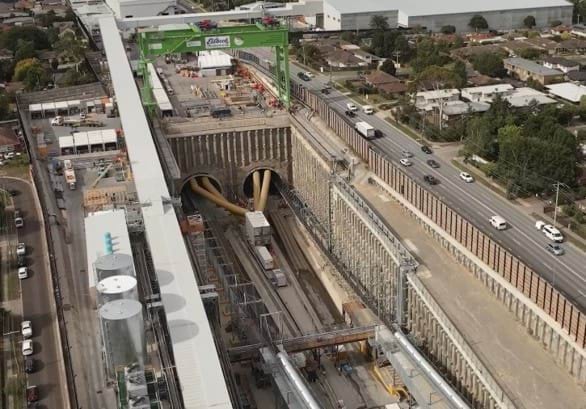
During the year, construction of the North East Link tunnels progressed exceptionally well. By September 2024 the two tunnel boring machines, Zelda and Gillian, were launched. In March 2025 they achieved breakthrough at Manningham and Bulleen Roads, before commencing the main stretch of tunnelling. The tunnelling and concrete lining of the ventilation tunnel at Yallambie was also completed. We thank all our delivery partners for achieving these important project milestones.
A key achievement for STC this year was awarding the contract for the NEL’s Road Side System. This new system will enable STC to collect tolls in the NEL tunnels when they open - providing the Victorian public sector with a toll collection capability that had previously only existed in the private sector.
We are committed to ensuring STC is a great place to work, generates commercial returns that can be re-invested into transport assets and be a model toll road operator. We look forward with confidence to another successful year and expanding our presence in Victoria’s transport system.
Responsible Body Declaration
In accordance with the Financial Management Act 1994, we are pleased to present the North East Link State Tolling Corporation’s Annual Report for the year ended 30 June 2025.
Brad Vann
Chair, Board of Directors
An Nguyen
Chief Executive Officer
About the North East Link State Tolling Corporation
STC is a corporation established under the North East Link Act 2020 and is an entity within Victoria’s transport and planning portfolio, which is led by the Department of Transport and Planning (DTP). DTP and its entities share responsibility for Victoria’s transport and planning systems. Our common aim is to create thriving places and connected communities that underpin an inclusive, successful and sustainable state.
DTP is an integrated department that brings together transport, planning, land, precinct, and policy functions. It serves four ministers and two parliamentary secretaries. STC and its initiatives are vital contributors to the transport and planning portfolio.
STC’s vision statement enables the organisation to fulfil its mandate as the commercial owner and operator of the North East Link, while also supporting the Department of Transport and Planning’s (DTP) broader strategy for the transport network.
Vision
A commercially orientated government owned toll road operator that supports DTP’s wider network vision of ‘thriving places, connected communities’ and contributes to the Government’s vision of ongoing sustainable investment in the Victorian transport network
STC's vision and purpose captures the State’s overall policy intent in creating STC. By contributing to the value and legacy of the North East Link, STC supports DTP’s purpose of creating sustainable, safe, and connected transport journeys.
Purpose
Protect and enhance the value and legacy of the North East Link while exploring ways to unlock shared value with the State
Values
STC acknowledges and abides by the seven VPS core values outlined in the Public Administration Act 2004. In addition, STC has adopted four values that reflect STC’s culture purpose and responsibilities.
- Excellent
- Innovation
- Respect
- Collaboration
STC’s role in delivery of the North East Link
The North East Link (NEL) is the largest investment in a road project in Victoria’s history. It will complete the missing link in Melbourne’s orbital freeway network between an upgraded Eastern Freeway and the M80 Ring Road. The new road will improve traffic flow, reduce travel times, remove non-local traffic from local roads and increase reliability for road users with up to 135,000 vehicles using the road daily and removing up to 15,000 trucks from local roads.
Along with the State and Spark North East Link Pty Ltd, STC is a signatory to the public–private partnership (PPP) contracts that govern the NEL primary tunnel package. STC funds PPP costs from toll revenue it will collect from vehicles and, upon completion, will be the designated road authority under the Roads Management Act 2004. When the NEL opens to traffic, STC will become the primary contract administrator of the PPP.
The Victorian Infrastructure Delivery Authority (VIDA) is responsible for delivering the primary tunnel package on STC’s behalf during the construction phase.
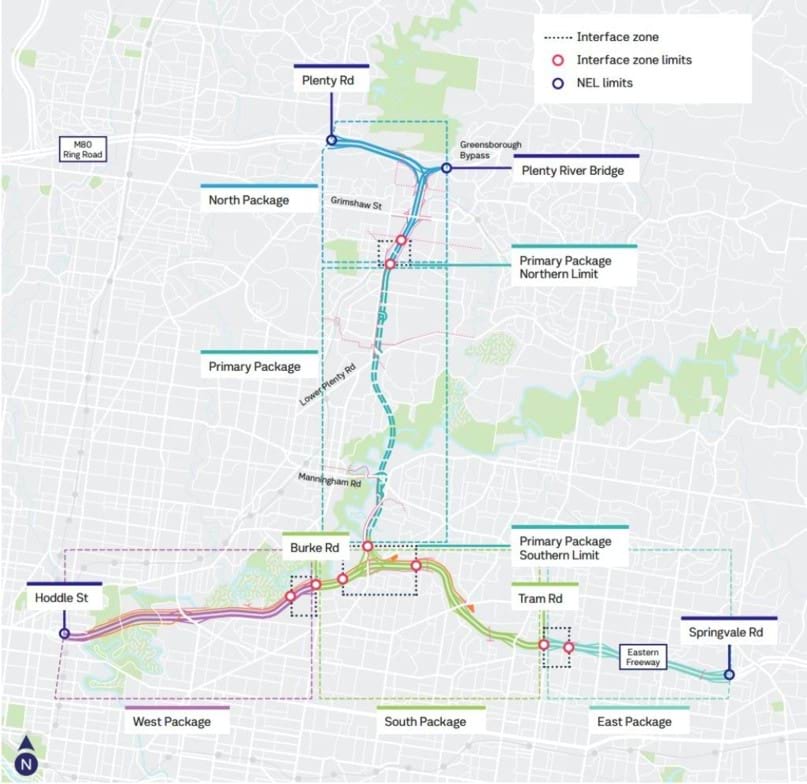
STC’s core functions
The core statutory functions comprise the following:
- Own, operate and maintain the NEL for a concession period of 50 years.
- Levy and collect tolls for use of the NEL tollway.
- Procure, deliver and operate the NEL’s tolling collection capability.
- Oversee delivery of the NEL, including PPP contracts, during the construction phase of the primary tunnel package.
- Manage the PPP with Spark North East Link Pty Ltd jointly with the State for a period of 25 years after the road opens.
Overview of STC’s operating environment
STC is a corporation established under the North East Link Act 2020 . It is part of the transport portfolio with specific accountabilities to the Victorian Government. While STC is separate to the Department of Transport and Planning, it cooperates with peer transport agencies to ensure an integrated and sustainable transport system.
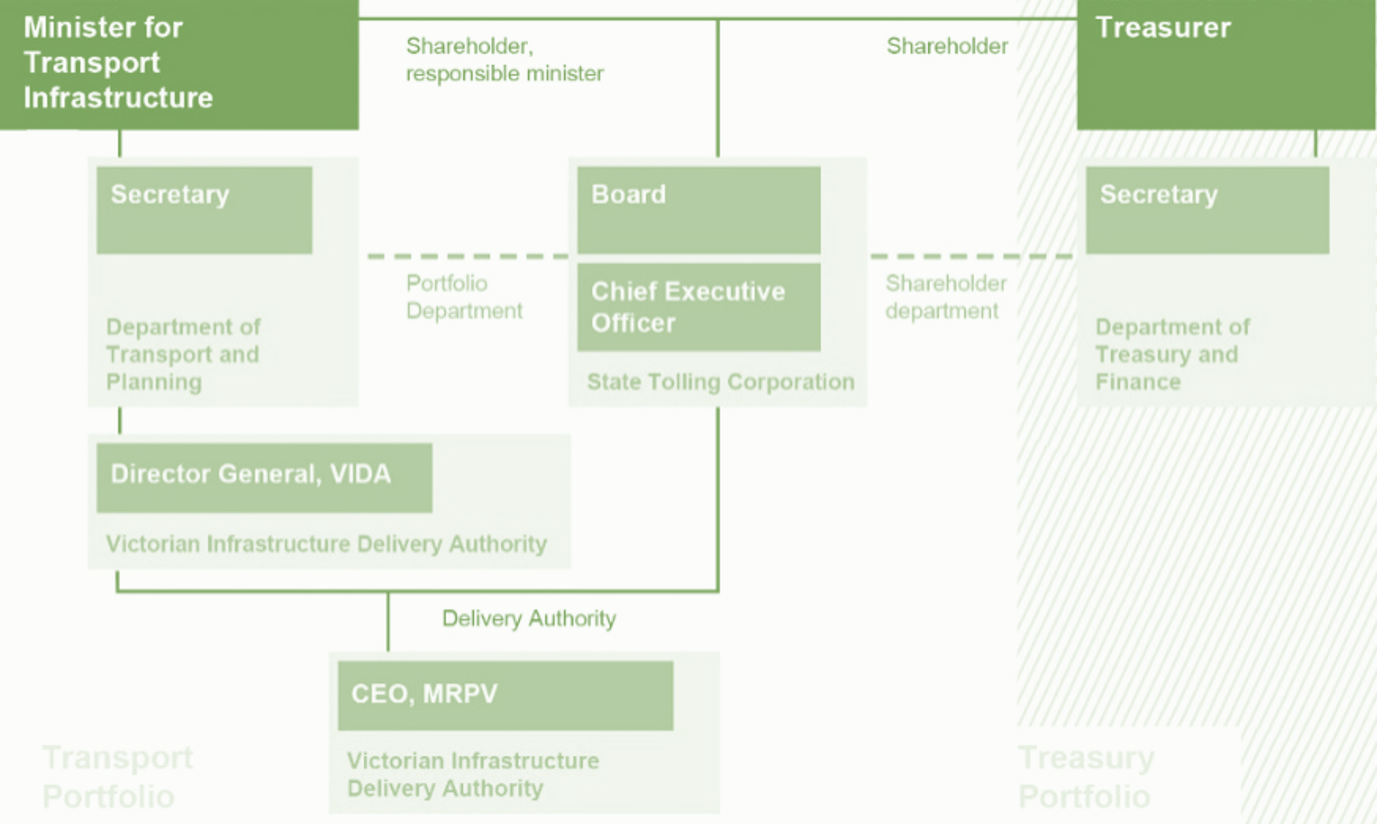
Responsible Ministers
STC is accountable to the following Ministers.
The Hon Gabrielle Williams MP
Minister for Transport Infrastructure
Ms Jaclyn Symes MP
Treasurer
The Minister for Transport Infrastructure is responsible for STC during the delivery phase of the North East Link and is one of two shareholders who hold the shareholding of STC on behalf of the Crown. The Treasurer is the other shareholder minister and is responsible for the financial performance of STC.
Board of Directors
STC’s Board of Directors holds ultimate accountability for the governance and performance of STC. This includes corporate governance and risk, financial performance, appointment of the CEO and overseeing compliance with contractual obligations. The Board is also supported by two sub-committees; the Audit and Risk and People Committees.
Chair, Brad Vann, Appointed 15 August 2022
Mr Vann is an industry leading adviser on the delivery and long-term management of infrastructure, having worked with governments and businesses on some of Australia’s largest and most complex projects for over 35 years. Mr Vann has also been involved in a range of projects in the Asia-Pacific. He was the inaugural Chair of the IFM Australian Infrastructure Fund Investor Advisory Committee. IFM is a leader in infrastructure investing on behalf of institutional investors globally, managing $124 billion in infrastructure. Mr Vann was a partner at Clayton Utz before retiring in 2020.
Deputy Chair, Aneetha De Silva, Appointed 15 August 2022
Ms de Silva is a senior executive with 25 years of infrastructure experience across the government and private sectors in Australia, South Africa and the Asia Pacific. She has expertise as an advisor, developer and manager of large infrastructure assets and services, especially in road and rail transport, telecommunications and property. Ms de Silva is also currently a member of the boards of LaunchVic and MAP Co, and Chair of Roads Australia. She has extensive experience in complex commercial and stakeholder environments.
Director, Leilani Few, Appointed 15 August 2022
Ms Frew has over 30 years of commercial and financial experience in the infrastructure, energy and utilities sectors, with 20 years of experience in governance of major infrastructure investments. In 2015, Ms Frew was a member of the inaugural Board of the Sydney Motorway Corporation, the New South Wales Government owned corporation responsible for managing the WestConnex toll road in Sydney and was Chair of the WestConnex sale in 2017. Ms Frew’s senior executive roles, in both the public and private sectors, have covered all aspects of operational and major projects, particularly finance, capital markets, strategy, risk, mergers and acquisitions. Ms Frew was appointed as Chair of the Audit and Risk Committee of the STC Board on 23 March 2023 and is currently the Deputy Secretary, Financial and Commercial, Te Tai Ohanga - The Treasury, New Zealand
Audit and Risk Committee. Janice Morris, Independent Member, Appointed October 2024
Ms Morris has more than 20 years of global infrastructure and investment management experience. She is a non-executive director of Aboriginal Housing Victoria and chair of the finance, audit and risk committee. Ms Morris has also previously held roles as an independent investment committee member of Aboriginal Investment NT, board director for Brisbane Airport and public, private partnerships and advisory board member of Cassinia Environmental. Ms Morris is currently the Portfolio Manager (Infrastructure) at Hostplus and has held senior roles across investment management and advisory
Chief Executive Officer
The CEO is accountable to the Board of Directors and is responsible for the day-to-day operation and management of STC.
Ms Nguyen is an experienced infrastructure leader, with close to two decades of broad expertise in strategic leadership and innovation, major project structuring and delivery, complex commercial and funding models, and a strong policy focus gained within the Victorian Department of Treasury and Finance (DTF). She has been widely recognised for her contribution and achievement within the global infrastructure industry and Victorian public service: she was awarded the Infrastructure Partnerships Australia’s National Woman in Infrastructure in 2017, the Partnerships Bulletin’s Individual Contribution of the Year PPP Award 2018 and the prestigious Public Service Medal in the Australia Day Honours List 2021 for outstanding public service in infrastructure delivery.
Organisational Structure
STC’s organisational structure supports its core functions. As at 30 June 2025, STC’s divisional structure comprises the office of the CEO and five functional areas.
- Tolling Systems and Operations
- Finance and Corporate Services
- Commercial and Legal
- People and Organisational Development
- Strategy and Planning
- Office of the CEO
Corporate Plan
STC is required to submit a Corporate Plan to its shareholders annually. The Plan forms the basis for all STC’s activities and gives effect to STC’s vision, purpose and values.
STC’s Corporate Plan outlines STC’s strategic priorities and focus areas over the planning period, and is reviewed annually to reflect changes in STC’s operating environment.
Contractual Structure
To exercise its core functions, STC has entered a series of contractual arrangements for the primary tunnel package. This includes a PPP shared with the State and agreements with our delivery partners. The following summarises these arrangements.
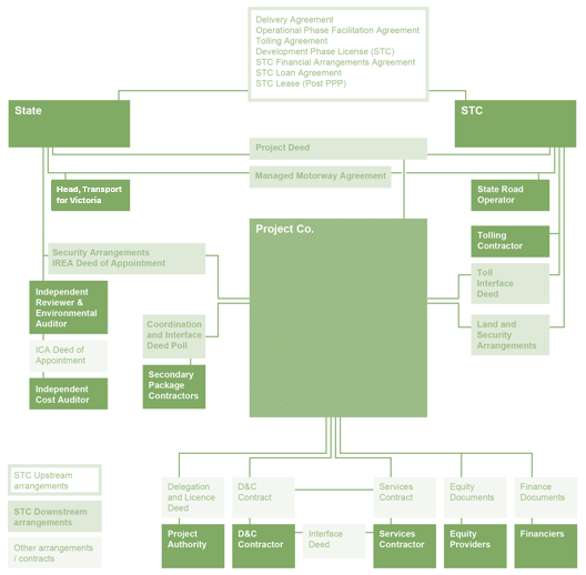
Legislative environment
North East Link Act 2020
The NEL Act covers a range of matters related to the delivery and operation of the North East Link. Key features relevant to STC include:
- Establishing STC as a public entity that is separate from the State.
- Providing STC’s functions and powers to:
- Manage access as well as operate and maintain the North East Link toll road;
- Fix and collect tolls for the use of the North East Link toll road (in accordance with the NEL Act and the North East Link Tolling Agreement);
- Optimise the value of, or return from, its infrastructure and other assets;
- Procure, deliver, and operate the North East Link tolling system;
- Be the primary funding entity for the delivery, operation, and maintenance of the North East Link toll road;
- Engage in activities in relation to the delivery of the North East Link; and
- Engage in other activities connected with the North East Link toll road, and charge fees for those activities.
- Providing requirements for STC’s Board of Directors, appointment of a CEO and employment of key personnel.
- Providing STC’s initial equity capital.
- Providing for the tabling and amendment of the North East Link Tolling Agreement.
Transport Integration Act 2010
The Transport Integration Act 2010 (TIA) is the overarching transport legislation in Victoria and sets a vision for an integrated and sustainable transport system that contributes to an inclusive, prosperous and environmentally responsible State. To achieve this vision, the TIA requires that decisions affecting the transport system be made within the same integrated decision making framework, consisting of six transport system objectives and seven decision-making principles.
Road Management Act 2004
The Road Management Act 2004 (RMA) establishes a coordinated management system for public roads, promoting safe and efficient State and local road networks and responsible road use. Before the road opens, STC will be designated as the Responsible (Prescribed) Road Authority under the RMA for the NEL with powers, rights and obligations as specified under the RMA.
Major Transport Projects Facilitation Act 2009 and Environment Effects Act 1978
The Major Transport Projects Facilitation Act 2009 (MTPFA) provides a single process for assessment, approvals, and delivery of major transport projects in Victoria. However, the NEL is declared under the MTPFA for use of delivery powers only.
Planning approvals for the delivery of the North East Link were obtained through an Environment Effects Statement Process under the Environment Effects Act 1978. The approvals are conditional on compliance with environmental performance requirements (EPRs) as part of the review process.
Other legislative reporting and governance requirements
In addition, as a Government Business Enterprise (GBE) and, in particular a Public Non-Financial Corporation (PNFC), STC is subject to various legislative instruments which form the basis of activities required to be carried out by STC, including the:
- Public Administration Act 2004 (PAA) – establishes the general governance framework for the VPS, including public entities. As a “public entity” for the purposes of the PAA, STC and its Board of Directors are subject to various duties under Part 5 of the PAA;
- Financial Management Act 1994 (FMA) – establishes the financial accountability framework for STC. As a “public body” for the purposes of the FMA, STC is bound by directions of the Minister for Finance given under the FMA (Standing Directions 2018); and
- Borrowing and Investment Powers Act 1987 (BIP Act) – provides for the borrowing and investment powers of certain statutory bodies. By virtue of amendments effected to the BIP Act by the NEL Act, certain borrowing and investment powers under the BIP Act are conferred on STC
Year in review
Toll Collection Capability
The Toll Collection Capability (TCC) project is a key component of a successfully delivered North East Link (NEL).
The TCC project provides fit-for-purpose infrastructure and technologies that efficiently collect tolls by optimising the road user experience and protecting scalability of future technology changes.
The TCC Project will give the Victorian public sector the capability to collect tolls on free- flowing toll roads – which currently only exists in the private sector.
There are two aspects to the project:
- Roadside systems which enable the detection and classification of vehicles travelling through the tunnel. It includes gantries and screens, cameras, radio frequency transponders, computer and communications systems and road markings.
- Back office systems that will link vehicle information with the vehicle owner, allow the calculation of trips and manage the collection of revenue.
In 2024-25, a contract was awarded for the roadside system aspect of the TCC project.
STC continues to work with our suppliers and delivery partners to install supporting infrastructure during the construction phase of the NEL. As part of the PPP, Project Co continued development of the enabling infrastructure for roadside systems. This includes tolling gantries and signage, pits and conduits, and electrical and communications connections.
Procurement has commenced to select a suitable supplier of the Back Office Systems component of the TCC Project. Three bidders were shortlisted following an Expression of Interest process. The Request for Proposal was issued to these suppliers in June 2025.
North East Link’s progress
STC’s delivery partners continue to progress construction of the NEL. The following milestones were achieved in the 2024-25 period:
- Launched two tunnel boring machines for major tunnelling construction from Watsonia to Bulleen.
- Breakthrough achieved for the first stage of the tunnel between Manningham and Bulleen.
- Completed tunnelling and concrete lining for the ventilation tunnel in Yallambie.
- Started works to widen Lower Plenty Road.
- Started building the new Motorway Control Centre.
- Temporarily realigned Manningham Road and Bridge Street to keep traffic moving while the new Manningham interchange is built.
- North East Community Fund established to support and strengthen local communities most impacted by construction. Nearly 100 recipients have already received funding for festivals, events, and upgrades to local infrastructure and community, sporting and recreational facilities.
Breakthrough achieved for the first stage of the tunnel between Manningham and Bulleen
Financial Performance
For the year ended 30 June 2025, STC’s comprehensive loss was $23.73 million (30 June 2024: $16.74 million loss). Total Equity of STC as at 30 June 2025 was $2,589.21 million (as at 30 June 2024, $540.00 million). The Net Cash Outflows from operating activities for the year ended 30 June 2025 were $25.65 million (30 June 2024: $18.10 million).
| Year ended | 30 June 2025 | 30 June 2024 |
|---|---|---|
($’000) | ($’000) | |
| Operating results | ||
| Other income | 3,797 | 2,412 |
| Total operating income | 3,797 | 2,412 |
| Employee benefit expenses | (8,567) | (5,622) |
| Depreciation | (706) | (63) |
| Interest expense | (176) | (17) |
| Other operating expenses | (18,012) | (13,451) |
| Total operating expenses | (27,461) | (19,153) |
| Other gain/(loss) from other economic flows | (67) | - |
| Comprehensive result (loss) | (23,731) | (16,741) |
| Financial status | ||
| Total assets | 7,853,120 | 4,644,618 |
| Total liabilities | (5,263,912) | (4,104,622) |
| Total equity | 2,589,208 | 539,996 |
Board Governance
Under Section 21 of the NEL Act, STC must have a Board of Directors comprising no fewer than three and no more than nine Directors. The STC Board Charter provides how the Board will lead STC’s governance, set strategic vision and objectives, oversee key strategic and operational activities, and establish committees as required. As at 30 June 2025, the STC Board is comprised of three Directors. Attendance by Directors at Board meetings held during the reporting period is detailed below.
| Board member | Eligible to attend | Attended |
|---|---|---|
| Brad Vann, Chair | 8 | 8 |
| Aneetha de Silva, Deputy Chair | 8 | 7 |
| Leilani Frew, Director | 8 | 8 |
Directors’ fees are fully disclosed in Note 9.1. There have been no related party transactions with Directors and their related entities STC Committees of the Board.
Committees
The STC Board has established the Audit and Risk and People Committees. Their purpose and responsibilities are listed below.
| Audit and Risk Committee | People Committee |
|---|---|
|
|
As at 30 June 2025, the Audit and Risk Committee comprises two Board Directors and an independent appointee. Attendance by Directors at the Audit and Risk Committee meetings held during the reporting period is detailed below.
| Audit and Risk Committee member | Eligible to attend | Attended |
|---|---|---|
| Leilani Frew, Chair | 5 | 5 |
| Brad Vann, Member | 5 | 5 |
| Aneetha de Silva, Member | 2 | 2 |
| Janice Morris, Independent Member | 3 | 3 |
As at 30 June 2025, the People Committee comprises two Board Directors. Attendance by Directors at the People Committee meetings held during the reporting period is detailed below.
| People Committee member | Eligible to attend | Attended |
|---|---|---|
| Aneetha de Silva, Chair | 3 | 3 |
| Brad Vann, Member | 3 | 3 |
Corporate and risk management
Over the year, STC continued to develop corporate systems and processes required to support the organisation’s development. Key changes included:
- The continued implementation of an integrated risk management framework, which provides a mechanism for monitoring and mitigating risks across the entire organisation. This includes STC’s obligations in relation to the delivery of the North East Link Primary Package, its direct role in the procurement and delivery of the Toll Collection Capability Project, and other corporate and financial risk management obligations.
- Continued build out of corporate systems, delivery models and policies, to refine STC’s reliance on DTP and other parts of Government for support in the administration of human resources, ICT and other corporate functions. This is in line with STC’s statutory role as an independent, commercial entity.
- Completed its suite of corporate policies and processes, which will position the organisation to move into the operations phase of the North East Link, while ensuring that whole of government regulatory and compliance obligations continue to be met.
Financial Statements
Accountable Officer’s, Chairperson’s and Chief Financial Officer’s declaration
The attached financial statements for the North East Link State Tolling Corporation have been prepared in accordance with Standing Direction 5.2 of the Minister for Finance under the Financial Management Act 1994 , applicable Financial Reporting Directions, Australian Accounting Standards, including interpretations, and other mandatory professional reporting requirements.
We further state that, in our opinion, the information set out in the comprehensive operating statement, balance sheet, cash flow statement, statement of changes in equity, and accompanying notes, presents fairly the financial transactions during the year ended 30 June 2025 and financial position of the North East Link State Tolling Corporation at 30 June 2025.
At the time of signing, we are not aware of any circumstance which would render any particulars included in the financial statements to be misleading or inaccurate.
We authorise the attached financial statements for issue on 10 September 2025.
An Nguyen
Chief Executive Officer
North East Link
State Tolling Corporation
10 September 2025
Brad Vann
Chair
North East Link
State Tolling Corporation
10 September 2025
Anthony Wicking
Chief Financial Officer
North East Link
State Tolling Corporation
10 September 2025
Independent Auditor’s Report
Independent Auditor’s Report
To the Board of Directors of North East Link State Tolling Corporation
Opinion
I have audited the financial report of North East Link State Tolling Corporation (the corporation) which comprises the:
- balance sheet as at 30 June 2025
- comprehensive operating statement for the year then ended
- statement of changes in equity for the year then ended
- cash flow statement for the year then ended
- notes to the financial statements, including material accounting policy information
- accountable officer's, chairperson's and chief financial officer’s declaration.
In my opinion, the financial report presents fairly, in all material respects, the financial position of the corporation as at 30 June 2025 and its financial performance and cash flows for the year then ended in accordance with the financial reporting requirements of Part 7 of the Financial Management Act 1994 and applicable Australian Accounting Standards.
Basis for Opinion
I have conducted my audit in accordance with the Audit Act 1994 which incorporates the Australian Auditing Standards. I further describe my responsibilities under that Act and those standards in the Auditor’s Responsibilities for the Audit of the Financial Report section of my report.
My independence is established by the Constitution Act 1975. My staff and I are independent of the corporation in accordance with the ethical requirements of the Accounting Professional and Ethical Standards Board’s APES 110 Code of Ethics for Professional Accountants (including Independence Standards) (the Code) that are relevant to my audit of the financial report in Victoria. My staff and I have also fulfilled our other ethical responsibilities in accordance with the Code.
I believe that the audit evidence I have obtained is sufficient and appropriate to provide a basis for my opinion.
Other information
The Board of Directors is responsible for the “other information” included in the corporation’s Annual Report for the year ended 30 June 2025. The other information in the Annual Report does not include the financial report and my auditor’s report thereon. My opinion on the financial report does not cover the other information included in the Annual Report. Accordingly, I do not express any form of assurance conclusion thereon.
In connection with our audit of the financial report, our responsibility is to read the other information when it becomes available and, in doing so, consider whether the other information is materially inconsistent with the financial report or our knowledge obtained in the audit or otherwise appears to be materially misstated. If, based on the work I have performed, I conclude that there is a material misstatement of this other information, I am required to report that fact. I have nothing to report in this regard.
Board of Directors' responsibilities for the financial report
The Board of Directors of the corporation is responsible for the preparation and fair presentation of the financial report in accordance with Australian Accounting Standards and the Financial Management Act 1994, and for such internal control as the Board of Directors determines is necessary to enable the preparation and fair presentation of a financial report that is free from material misstatement, whether due to fraud or error.
In preparing the financial report, the Board of Directors is responsible for assessing the corporation’s ability to continue as a going concern, disclosing, as applicable, matters related to going concern and using the going concern basis of accounting unless it is inappropriate to do so.
Auditor’s responsibilities for the audit of the financial report
As required by the Audit Act 1994,my responsibility is to express an opinion on the financial report based on the audit. My objectives for the audit are to obtain reasonable assurance about whether the financial report as a whole is free from material misstatement, whether due to fraud or error, and to issue an auditor’s report that includes my opinion. Reasonable assurance is a high level of assurance but is not a guarantee that an audit conducted in accordance with the Australian Auditing Standards will always detect a material misstatement when it exists. Misstatements can arise from fraud or error and are considered material if, individually or in the aggregate, they could reasonably be expected to influence the economic decisions of users taken on the basis of this financial report.
As part of an audit in accordance with the Australian Auditing Standards, I exercise professional judgement and maintain professional scepticism throughout the audit. I also:
- identify and assess the risks of material misstatement of the financial report, whether due to fraud or error, design and perform audit procedures responsive to those risks, and obtain audit evidence that is sufficient and appropriate to provide a basis for my opinion. The risk of not detecting a material misstatement resulting from fraud is higher than for one resulting from error, as fraud may involve collusion, forgery, intentional omissions, misrepresentations, or the override of internal control.
- obtain an understanding of internal control relevant to the audit in order to design audit procedures that are appropriate in the circumstances, but not for the purpose of expressing an opinion on the effectiveness of the corporation’s internal control
- evaluate the appropriateness of accounting policies used and the reasonableness of accounting estimates and related disclosures made by the Board of Directors
- conclude on the appropriateness of the Board of Directors’ use of the going concern basis of accounting and, based on the audit evidence obtained, whether a material uncertainty exists related to events or conditions that may cast significant doubt on the corporation’s ability to continue as a going concern. If I conclude that a material uncertainty exists, I am required to draw attention in my auditor’s report to the related disclosures in the financial report or, if such disclosures are inadequate, to modify my opinion. My conclusions are based on the audit evidence obtained up to the date of my auditor’s report. However, future events or conditions may cause the corporation to cease to continue as a going concern.
- evaluate the overall presentation, structure and content of the financial report, including the disclosures, and whether the financial report represents the underlying transactions and events in a manner that achieves fair presentation.
I communicate with the Board of Directors regarding, among other matters, the planned scope and timing of the audit and significant audit findings, including any significant deficiencies in internal control that I identify during my audit.
MELBOURNE
11 September 2025
Paul Martin
as delegate for the Auditor-General of Victoria
Comprehensive operating statement
For the year ended 30 June 2025
| Notes | 30 June 2025 ($’000) | 30 June 2024 ($’000) | |
|---|---|---|---|
| Revenue and income from transactions | |||
| Interest income | 3,723 | 2,230 | |
| Fair value of assets and services received free of charge or for nominal consideration | 75 | 182 | |
| Total revenue and income from transactions | 3,797 | 2,412 | |
| Expenses from transactions | |||
Employee benefit expenses
| 2.1 | (8,567) | (5,622) |
| Depreciation | 3.1.2 | (706) | (63) |
| Interest expense | (176) | (17) | |
| Other operating expenses | 2.3 | (18,012) | (13,451) |
| Total expenses from transactions | (27,461) | (19,153) | |
| Net result from transactions (net operating balance) | (23,664) | (16,741) | |
| Other gain/(loss) from other economic flows | |||
| Net gain/(loss) arising from revaluation of long service leave liability | (67) | - | |
| Net result | (23,731) | (16,741) | |
| Comprehensive result | (23,731) | (16,741) | |
The accompanying notes form part of these financial statements.
Balance sheet
As as 30 June 2025
| Notes | 30 June 2025 ($’000) | 30 June 2024 ($’000) | |
|---|---|---|---|
| Financial assets | |||
| Cash and deposits | 187,945 | 272,125 | |
| Receivables | 4.1 | 17,714 | 13,893 |
| Total financial assets | 205,659 | 286,018 | |
| Non financial assets | |||
| Property, plant and equipment | 3.1 | 7,647,441 | 4,358,600 |
| Other non-financial assets | 20 | - | |
| Total non financial assets | 7,647,441 | 4,358,600 | |
| Total assets | 7,853,120 | 4,644,618 | |
| Liabilities | |||
| Payables | 4.2 | 148,471 | 158,358 |
| Other provisions | 4.3 | 53,046 | 29,362 |
| Employee benefits provisions | 2.2 | 1,939 | - |
| Borrowings | 5.1 | 5,060,456 | 3,916,902 |
| Total liabilities | 5,263,912 | 4,104,622 | |
| Net assets | 2,589,208 | 539,996 | |
| Equity | |||
| Contributed capital | 2,642,117 | 569,174 | |
| Accumulated deficit | (52,909) | (29,178) | |
| Net worth | 2,589,208 | 539,996 | |
The accompanying notes form part of these financial statements.
Cash flow statement
For the year ended 30 June 2025
| Notes | 30 June 2025 ($’000) | 30 June 2024 ($’000) | |
|---|---|---|---|
| Cash flows from operating activities | |||
| Receipts |
|
| |
| Interest received | 3,723 | 2,221 | |
| Total receipts | 3,723 | 2,221 | |
| Payments | |||
| Payments to suppliers and employees | (25,377) | (18,067) | |
| GST payment to ATO | (3,820) | (2,250) | |
| Interest paid | (176) | (17) | |
| Total payments | (29,373) | (20,335) | |
| Net cash flows from operating activities | 5.2 | (25,650) | (18,113) |
| Net cash flows from investing activities | |||
| Payments for property, plant and equipment | (2,130,919) | (1,701,285) | |
| Net cash flows from investing activities | (2,130,919) | (1,701,285) | |
| Cash flows from financing activities | |||
| Proceeds from loan drawdowns | - | 1,743,491 | |
| (Repayment) of principal portion of lease liabilities | (623) | - | |
| Proceeds from principal portion of lease liabilities | 69 | 197 | |
| Capital contribution from the State (via the Department of Transport and Planning (DTP)) | 2,072,943 | 152,446 | |
| Net cash flows from financing activities | 2,072,389 | 1,896,134 | |
| Net increase/(decrease) in cash and cash equivalents | (84,180) | 176,736 | |
| Cash and cash equivalents at beginning of financial year | 272,125 | 95,389 | |
| Cash and cash equivalents at end of financial year | 187,945 | 272,125 | |
The accompanying notes form part of these financial statements
Statement of changes in equity
For the year ended 30 June 2025
| ($’000) | Notes | Accumulated losses | Contributed by owners | Total equity |
|---|---|---|---|---|
| Balance at 1 July 2023 | (12,437) | 382,951 | 370,514 | |
| Capital contributions by owners (via DTP) | - | 186,223 | 186,223 | |
| Net result for the year | (16,741) | - | (16,741) | |
| Balance at 30 June 2024 | (29,178) | 569,174 | 539,996 | |
| Balance at 1 July 2024 | (29,178) | 569,174 | 539,996 | |
| Capital contributions by owners (via DTP) | - | 2,072,943 | 2,072,943 | |
| Net result for the yea | (23,731) | - | (23,731) | |
| Balance at 30 June 2025 | (52,909) | 2,642,117 | 2,589,208 |
The accompanying notes form part of these financial statements.
Notes to the financial statements
01 About this Report
The North East Link State Tolling Corporation (STC) is a public entity but does not represent the Crown.
Its principal address is:
Level 8, 80 Collins Street (North Tower), Melbourne VIC 3000
ABN: 86 585 150 837
Basis of preparation
These financial statements are in Australian dollars, and the historical cost convention is used unless a different measurement basis is specifically disclosed in the note associated with the item measured on a different basis.
The accrual basis of accounting has been applied in preparing these financial statements, whereby assets, liabilities, equity, income and expenses are recognised in the reporting period to which they relate, regardless of when cash is received or paid.
Consistent with the requirements of AASB 1004 Contributions, contributions by owners (that is, contributed capital and its repayment) are treated as equity transactions and, therefore, do not form part of the income and expenses of STC.
Additions to net assets which have been designated as contributions by owners are recognised as contributed capital. Other transfers that are in the nature of contributions to or distributions by owners have also been designated as contributions by owners.
Judgements, estimates and assumptions are required to be made about financial information being presented. The significant judgements made in the preparation of these financial statements are disclosed in the notes where amounts affected by those judgements are disclosed. Estimates and associated assumptions are based on professional judgements derived from historical experience and various other factors that are believed to be reasonable under the circumstances. Actual results may differ from these estimates. Revisions to accounting estimates are recognised in the period in which the estimate is revised and also in future periods that are affected by the revision.
These financial statements cover STC as an individual reporting entity. STC is a for-profit organisation. All amounts in the financial statements have been rounded to the nearest $1,000 unless otherwise stated.
Going Concern
STC is operating on a going concern basis. The Primary Package of the North East Link project will be delivered as an Availability Public-Private Partnership (PPP) under an Incentivised Target Cost (ITC) model with STC as the asset owner, assuming all payment obligations under the contract, and Major Road Projects Victoria (MRPV), a division of the Victorian Infrastructure Delivery Authority (VIDA) (an administrative office in relation to the Department of Transport and Planning (DTP)), acting as STC’s agent, being the delivery agency. As part of this arrangement, the Treasurer provided a guarantee to the PPP contractor (Project Co) for all STC’s financial obligations to Project Co in relation to the delivery and operation of the Central Package of the North East Link.
Compliance information
These general-purpose financial statements have been prepared in accordance with the Financial Management Act 1994 (Vic) (FMA) and applicable Australian Accounting Standards (AASs), which include Interpretations issued by the Australian Accounting Standards Board (AASB). In particular, they are presented in a manner consistent with the requirements of AASB 1049 Whole of Government and General Government Sector Financial Reporting. Accounting policies selected and applied in these financial statements ensure that the resulting financial information satisfies the concepts of relevance and reliability, thereby ensuring that the substance of the underlying transactions or other events is reported.
Details of the material accounting policy information are disclosed in the applicable notes in the financial statements
02 The cost of delivering services
This section provides an account of the expenses incurred by STC in delivering services.
2.1 Employee benefit expenses in the comprehensive operating statement
2025 ($’000) | 2024 ($’000) | |
|---|---|---|
| Salaries | 6,418 | 3,445 |
| Annual leave | 612 | 797 |
| Parental leave | 27 | 31 |
| Payroll tax | 449 | 293 |
| Long service leave expense | 183 | 691 |
| Employer contribution to superannuation | 690 | 332 |
| Termination benefits | 115 | - |
| Staff expenses | 75 | 33 |
| Total employee benefit expenses | 8,567 | 5,622 |
Employee expenses include all costs related to employment including wages and salaries, fringe benefits tax, leave entitlements, termination payments and WorkCover premiums. As STC is an establishing organisation, employee costs have risen in line with STC’s growing workforce and the enhanced skill sets required to support STC’s development.
The amount recognised in the comprehensive operating statement in relation to superannuation is employer contributions for members of both defined benefit and defined contribution superannuation plans that are paid or payable during the reporting period. STC does not recognise any defined benefit liabilities because it has no legal or constructive obligation to pay future benefits relating to its employees.
Instead, the Department of Treasury and Finance (DTF) discloses in its annual financial statements the net defined benefit cost related to the members of these plans as an administered liability (on behalf of the Victorian Government as the sponsoring employer).
Termination benefits are payable when employment is terminated before normal retirement date, or when an employee accepts an offer of benefits in exchange for the termination of employment or expiry of the contract.
2.2 Employee benefits in the balance sheet
Provision is made for benefits accruing to employees in respect of salaries and wages, annual leave and long service leave for services rendered to the reporting date.
2025 ($’000) | 2024 ($’000) | |
|---|---|---|
| Current provisions | ||
| Annual Leave | ||
| Unconditional and expected to wholly settle within 12 months(a) | 405 | - |
| Unconditional and expected to wholly settle after 12 months(b) | 330 | - |
| Long service leave | ||
| Unconditional and expected to wholly settle within 12 months(a) | 52 | - |
| Unconditional and expected to wholly settle after 12 months(b) | 630 | - |
| Provisions for on-costs | ||
| Unconditional and expected to wholly settle within 12 months(a) | 91 | - |
| Unconditional and expected to wholly settle after 12 months(b) | 191 | - |
| Total current provisions | 1,699 | - |
| Non-current provisions | ||
| Long service leave(b) | 200 | - |
| Provisions for on-costs(b) | 40 | - |
| Total non-current provisions | 240 | - |
| Total provisions for employee benefits | 1,939 | - |
(a) Nominal amounts are disclosed.
(b) The amounts disclosed are discounted to present value.
In prior years, STC engaged DTP to manage all aspects of resource engagements, encompassing both directly employed and seconded staff. Effective 1 December 2024, STC assumed full responsibility for these functions. As a result, STC now recognises and administers all employee benefit provisions for its workforce directly, rather than held by DTP.
Liabilities for salaries and wages and annual leave are all recognised in the provision for employee benefits as current liabilities, as STC does not have an unconditional right to defer settlements of these liabilities.
Depending on the expectation of the timing of settlement, liabilities for salaries and wages and annual leave are measured at nominal value if STC expects to wholly settle within 12 months or present value if STC does not expect to wholly settle within 12 months.
Unconditional long service leave (LSL) is disclosed as a current liability even where STC does not expect to settle the liability within 12 months, because it will not have an unconditional right to defer the settlement of the entitlement should an employee take leave within 12 months.
The components of this current LSL liability are measured at:
- undiscounted value if STC expects to wholly settle within 12 months, or
- present value if STC does not expect to wholly settle within 12 months.
Conditional LSL is disclosed as a non-current liability. There is a conditional right to defer the settlement of the entitlement until the employee has completed the requisite years of service. This non-current LSL liability is measured at present value.
Any gain or loss following revaluation of the present value of non-current LSL liability is recognised as a transaction, except to the extent that a gain or loss arises due to changes in bond interest rates for which it is then recognised as an 'other economic flow' in the net result.
2.3 Other operating expenses
2025 ($’000) | 2024 ($’000) | |
|---|---|---|
| Professional services | 13,660 | 10,779 |
| Contractors - agency staff | 1,751 | 868 |
| Accommodation | 253 | 300 |
| Computer services and equipment | 872 | 250 |
| Staff related expenses | 352 | 180 |
| Administrative expenses | 1,124 | 1,074 |
| Total other operating expenses | 18,012 | 13,451 |
Other operating expenses generally represent the day-to-day running costs incurred in normal operations. Supplies and services are recognised as an expense in the reporting period in which they are incurred. Professional services relate to those services provided by professional service firms.
03 Key assets available to support service delivery
STC controls infrastructure and other investments that are utilised in fulfilling its objectives and conducting its activities. They represent the resources that have been entrusted to STC for delivery of those services.
3.1 Property, plant and equipment (including Right-of-Use (RoU))
($’000) | ||||||
|---|---|---|---|---|---|---|
| Gross carrying amount | Accumulated depreciation | Net carrying amount | ||||
2025 | 2024 | 2025 | 2024 | 2025 | 2024 | |
| RoU Buildings at fair value | 2,930 | 2,930 | (635) | (49) | 2,295 | 2,881 |
| RoU Vehicles at fair value | 273 | 193 | (59) | (14) | 215 | 179 |
| Leasehold improvements at fair value | 437 | 633 | (50) | - | 388 | 633 |
| Plant, and equipment at fair value | 276 | - | (26) | - | 250 | - |
| SCA road assets (Work in progress) | 7,644,294 | 4,354,907 | - | - | 7,644,294 | 4,354,907 |
| Net carrying amount | 7,648,210 | 4,358,663 | (769) | (63) | 7,647,441 | 4,358,600 |
Non-financial physical assets excluding RoU and SCA road assets - Initial recognition
Items of property, plant and equipment are measured initially at cost and subsequently revalued at fair value less accumulated depreciation and impairment.
The cost of constructed non-financial physical assets includes the cost of all materials used in construction, direct labour on the project and an appropriate proportion of variable and fixed overheads.
The cost of a leasehold improvement is capitalised and depreciated over the shorter of the remaining term of the lease or their estimated useful lives.
Right-of-use asset acquired by lessees – Initial measurement
STC recognises a right-of-use asset and a lease liability at the lease commencement date. The right-of-use asset is initially measured at cost which comprises the initial amount of the lease liability adjusted for:
- any lease payments made at or before the commencement date less any lease incentive received;
- any initial direct costs incurred; and
- an estimate of costs to dismantle and remove the underlying asset or to restore the underlying asset or the site on which it is located
Service concession assets (Under AASB 1059 – Service Concession Arrangements: Grantors) - Initial measurement
A service concession asset (SCA) under AASB 1059 Service Concession Assets: Grantors (AASB 1059) is an asset to which a private operator has right of access to provide public services on behalf of the Grantor (STC) in a service concession arrangement.
STC initially recognises a SCA at the commencement of construction at current replacement cost (CRC), calculated in accordance with the 'cost approach' to fair value measurement. The CRC reflects the amount that would be required currently to replace the service capacity of the asset. The assets recognised at the commencement of construction are reported as assets under construction until the project reaches commercial acceptance.
The CRC for the SCA includes the costs that are directly attributable to the design and construction of the SCA by the operator. AASB 116 Property, Plant and Equipment (AASB 116) is applied, which provides guidance on the elements of costs including: the purchase price and costs directly attributable to bringing the asset to its location or condition necessary.
Fair value proxy for SCA construction in progress (significant judgement)
The financing cost to STC implied in the SCA contract during the construction of an SCA is used as a proxy of the financing cost incurred by the private sector constructing the asset. This financing cost is capitalised as part of the asset with the aim of achieving representation of the CRC.
Right-of-use asset – Subsequent measurement
STC depreciates the right-of-use assets on a straight-line basis from the lease commencement date to the earlier of the end of the useful life of the right-of-use asset or the end of the lease term. Typical estimated useful life is 5 years for the leased buildings and 3 years for leased vehicles. The right-of use assets are also subject to revaluation.
In addition, the right-of-use asset is periodically reduced by impairment losses, if any and adjusted for certain remeasurements of the lease liability.
Impairment of property, plant and equipment
Non-financial assets, including items of property, plant and equipment, are tested for impairment whenever there is an indication that the asset may be impaired.
3.1.1 Reconciliation of movements in carrying amount of property, plant and equipment
($'000) | ||||||||||
|---|---|---|---|---|---|---|---|---|---|---|
| Right-of-use buildings | Right-of-use vehicles | Leasehold improvments | Plant, and equipment | SCA road assets | ||||||
2025 | 2024 | 2025 | 2024 | 2025 | 2024 | 2025 | 2024 | 2025 | 2024 | |
| Opening balance | 2,881 | - | 179 | - | 633 | - | - | - | 4,354,907 | 2,246,394 |
| Fair value of assets received free of charge or for nominal consideration | - | - | 80 | 193 | - | - | - | - | - | - |
| Additions | - | 2,930 |
| - | 81 | 633 | - | - | 3,289,386 | 2,074,741 |
| Depreciation | (586) | (49) | (44) | (14) | (50) | - | (26) | - | - | - |
| Net assets received as capital contributions by owners | - | - | - | - | - | - | - | - | - | 33,772 |
| Transfer between classes | - | - | - | - | (276) | - | 276 | - | - | - |
| Closing balance | 2,295 | 2,881 | 215 | 179 | 388 | 633 | 250 | - | 7,644,294 | 4,354,907 |
For disclosures in connection with fair value determination for non-financial physical assets refer to Note 7.2.
3.1.2 Depreciation and amortisation
Depreciation is calculated on a straight-line basis, at rates that allocate the asset’s value, less any estimated residual value, over its estimated useful life. Typical estimated useful lives for Buildings, Plant and Equipment range from 5 to 10 years.
Right-of-Use (RoU) assets are generally depreciated over the shorter of the asset’s useful life and the lease term (3 to 5 years). Where STC obtains ownership of the underlying leased asset or if the cost of the RoU asset reflects that STC will exercise a purchase option, STC depreciates the RoU asset over its useful life.
Leasehold improvements are depreciated over the lease term and their useful life (5 years).
The estimated useful lives, residual values and depreciation method are reviewed at the end of each annual reporting period, and adjustments made where appropriate
04. Other Assets and Liabilities
Introduction
This section sets out those assets and liabilities that arose from STC’s operations.
4.1 Receivables
2025 ($’000) | 2024 ($’000) | |
|---|---|---|
| Statutory | ||
| GST input tax credit | 17,714 | 13,893 |
| Total receivables | 17,714 | 13,893 |
| Represented by | ||
| Current receivables | 17,714 | 13,893 |
Statutory receivables do not arise from contracts and are recognised and measured similarly to contractual receivables (except for impairment) but are not classified as financial instruments for disclosure purposes. STC applies AASB 9 Financial Instruments for initial measurement of the statutory receivables and, as a result, statutory receivables are initially recognised at fair value plus any directly attributable transaction cost.
All receivables are due within 30 days.
4.2 Payables
2025 ($’000) | 2024 ($’000) | |
|---|---|---|
| Contractual | ||
| Capital payments for road assets | 148,355 | 158,256 |
| Other payables | 116 | 102 |
| Total Payables | 148,471 | 158,358 |
| Represented by | ||
| Current payables | 148,471 | 158,358 |
Contractual payables: Are classified as financial instruments and measured at amortised cost. Accounts payable represent liabilities for goods and services provided to STC prior to the end of the financial year that are unpaid.
Payables for supplies and services are due within an average credit period of 30 days.
4.3 Other Provisions
2025 ($’000) | 2024 ($’000) | |
|---|---|---|
| Key Results Area (KRA) payable after 12 months | 53,046 | 29,362 |
| Total other provisions | 53,046 | 29,362 |
| Represented by | ||
| Non-current provisions | 53,046 | 29,362 |
Other provisions are recognised when STC has a present obligation, the future sacrifice of economic benefits is probable, and the amount of the provision can be measured reliably. The amount recognised as a provision is the best estimate of the consideration required to settle the present obligation at reporting date, taking into account the risks and uncertainties surrounding the obligation.
Where a provision is measured using the cash flows estimated to settle the present obligation, its carrying amount is the present value of those cash flows, using a discount rate that reflects the time value of money and risks specific to the provision.
Key Results Area (KRA) is a performance regime to monitor and measure the Project Co’s performance in relation to specified Key Performance Indicators (KPIs). The provision recognised is in relation to anticipated payments to Project Co in lieu of achieving the predetermined project KPIs.
These provisions represent 50 per cent of the total KRA achieved and mature on commercial acceptance as part of an acquittal process.
Reconciliation of movements in other provisions
2025 ($’000) | 2024 ($’000) | |
|---|---|---|
| Other provisions - opening balance | 29,362 | 13,802 |
| KRA provision recognised | 23,684 | 15,560 |
| Other provisions - closing balance | 53,046 | 29,362 |
05 Financing operations
Introduction
This section provides information on the sources of finance utilised by STC during its operations, along with interest expenses (the cost of borrowings) and other information related to financing activities of STC.
5.1 Borrowings
2025 ($’000) | 2024 ($’000) | |
|---|---|---|
| Current borrowings | ||
| Lease liabilities(a) | 696 | 785 |
| Total current borrowings | 696 | 785 |
| Non current borrowings | ||
| State loan | 2,415,195 | 2,316,734 |
| Service concession financial liability | 2,642,124 | 1,596,476 |
| Lease liabilities(a) | 2,441 | 2,907 |
| Total non current borrowings | 5,059,760 | 3,916,117 |
| Total borrowings | 5,060,456 | 3,916,902 |
Notes:
(a) Secured by the assets leased. Leases are effectively secured as the rights to the leased assets revert to the lessor in the event of default.
‘Borrowings’ refer to interest-bearing state loan, lease liabilities, and service concession arrangement liabilities.
The State loan is provided by the Minister for Transport Infrastructure for and on behalf of the Crown in right of the State of Victoria and has a term of 39 years following Financial Close of the Central Package PPP on 27 October 2021. The loan is subject to a fixed interest of 4.25 per cent per annum.
Borrowings are classified as financial instruments. Interest bearing liabilities are recognised at amortised cost unless STC elects to irrevocably designate them at fair value through profit or loss at initial recognition. The election depends on the nature and purpose of the interest-bearing liabilities.
All interest-bearing borrowings are initially recognised at the fair value of the consideration received less directly attributable transaction costs and subsequently measured at amortised cost using the effective interest method.
The service concession financial liability (SCL) relates to the service concession arrangements recognised when applying AASB 1059 Service Concession Arrangements: Grantors. Interest is charged on the liability and capitalised within road assets. The SCL is reduced over the term of the arrangement through cash payments to the operator.
The lease liabilities relate to the lease of office premise and vehicles. Non-lease component has not been included in the determination of lease liabilities.
Defaults and breaches: During the current year, there were no defaults and breaches of any of the loans.
Service concession arrangement liability
As outlined in Note 3.1 Property, plant and equipment – road assets, the accumulation of costs incurred during construction, results in a progressive build-up of the service concession asset (SCA). A corresponding liability is progressively recognised in line with the fair value of the SCA. The nature of the liability and the subsequent accounting depends on the consideration exchanged in reference to the contract arrangements between STC (on behalf of the Victorian Government) and the operator.
Initial recognition
STC recognises a service concession liability (SCL) commensurate with the SCA, adjusted by the amount of any other consideration from STC to the operator, or from the operator to STC. Therefore, any Victorian Government contributions made prior to the recognition of the liability will reduce this amount.
Subsequent measurement
After initial recognition, STC will determine if the liability represents a financial liability. Where STC has a contractual obligation to pay the operator for providing the SCA, it is measured as a liability in accordance with AASB 9 Financial Instruments. The liability will be increased by interest charges, based on the interest rate implicit in the arrangement. Where the interest rate is not specified in the arrangement, the prevailing market rate of interest for a similar instrument with similar credit ratings is used. Subsequently, the liability will also be reduced by any payments made by the Victorian Government to the operator if required by the contract.
STC has determined that the SCL represents a financial liability.
5.1.1 Maturity analysis of borrowing
2025 | |||||||
|---|---|---|---|---|---|---|---|
| Carrying amount | Nominal amount | Less than 1 month | 1-3 months | 3 months-1 year | 1-5 years | 5+ years | |
| State loan | 2,415,195 | 2,415,195 | - | - | - | 1,401 | 2,413,794 |
| Lease liabilities | 3,138 | 3,460 | 70 | 139 | 629 | 2,622 | - |
| Service concession financial liability | 2,642,124 | 4,302,005 | 44,272 | 95,519 | 467,563 | 983,856 | 2,710,795 |
| Total | 5,060,456 | 6,720,660 | 44,342 | 95,658 | 468,192 | 987,879 | 5,124,588 |
2024 | |||||||
| Carrying amount | Nominal amount | Less than 1 month | 1-3 months | 3 months-1 year | 1-5 years | 5+ years | |
| State loan | 2,316,734 | 2,316,734 | - | - | - | - | 2,316,734 |
| Lease liabilities | 3,692 | 4,182 | 66 | 132 | 597 | 3,387 | - |
| Service concession financial liability | 1,596,476 | 2,499,402 | 54,408 | 54,572 | 225,796 | 755,897 | 1,408,729 |
| Total | 3,916,902 | 4,820,318 | 54,474 | 54,704 | 226,393 | 759,284 | 3,725,463 |
5.1.2 Interest capitalised
| 2025 ($'000) | 2024 ($'000) | |
|---|---|---|
| Interest on state loan | 163,684 | 65,222 |
| Interest on service concession financial liability | 114,281 | 80,074 |
| Total interest capitalised under road assets | 277,965 | 145,296 |
Interest capitalised includes costs incurred in connection with the borrowing of funds and includes interest on the State loan and the service concession financial liability. Interest capitalised is recognised in the period in which it is incurred and is capitalised to the SCA - road assets.
5.1.3 Leases
STC leasing activity
STC leases an office premise and vehicles. The lease contracts are typically made for fixed periods of 1-5 years with an option to renew the lease after that date. There is no option to renew the lease after the expiry date. Lease payments for the office premise follow fixed escalations per annum of 3.5% for 5 years.
Non-lease components have not been considered for the recognition of right-of-use assets and lease liabilities for the office premise lease. STC received a lease incentive of $567,000 as full cash payment at commencement of the lease.
5.2 Cash flow information
Cash and deposits, including cash equivalents, comprise cash on hand and cash at bank, deposits at call and those highly liquid investments with an original maturity of three months or less that are held for the purpose of meeting short-term cash commitments rather than for investment purposes, and are readily convertible to known amounts of cash and are subject to an insignificant risk of changes in value.
For cash flow statement presentation purposes, cash and cash equivalents include cash held in bank.
| Reconciliation of net results for the year to cash flow used in operating activities | 2025 | 2024 |
|---|---|---|
| Net loss for the year | (23,731) | (16,741) |
| Non-cash movements | ||
| Fair value of assets and services received free of charge or for nominal consideration recognised as income | (73) | (182) |
| Depreciation | 706 | 63 |
| Fair value of assets and services provided free of charge or for nominal consideration recognised as expenses | 74 | 183 |
| Movements in assets and liabilities | ||
| (Increase)/decrease in receivables | (3,825) | (2,221) |
| Increase/(decrease) in payables | (739) | 785 |
| Increase/(decrease) in provisions | 1,939 | - |
| Net cash flows used in operating activities | (25,650) | (18,113) |
5.3 Commitments for expenditure
Commitments for future expenditure include operating and capital commitments arising from contracts. These commitments are recorded below at their nominal value and inclusive of Goods and Services Tax (GST). Where it is considered appropriate and provides additional relevant information to users, the net present values of significant individual projects are stated. These future expenditures cease to be disclosed as commitments once the related liabilities are recognised in the balance sheet
| Total commitments payable | 2025 | |||
|---|---|---|---|---|
| Less than 1 year | 1–5 years | 5+ years | Total | |
| Service concession commitments | 1,251,956 | 2,140,874 | 9,022,383 | 12,415,214 |
| Other commitments payable | 3,096 | 17,115 | 5,224 | 25,435 |
| Total commitments not recognised as a financial liability (inclusive of GST) | 1,255,052 | 2,157,989 | 9,027,607 | 12,440,649 |
| Less GST recoverable | (855,023) | |||
| Total commitments not recognised as a financial liability (exclusive of GST) |
|
|
| 11,585,625 |
| Total commitments payable | 2024 | |||
| Less than 1 year | 1–5 years | 5+ years | Total | |
| Service concession commitments | 1,560,406 | 3,872,673 | 10,820,497 | 16,253,576 |
| Total commitments not recognised as a financial liability (inclusive of GST) | 1,560,406 | 3,872,673 | 10,820,497 | 16,253,576 |
| Less GST recoverable | (993,288) | |||
| Total commitments not recognised as a financial liability (exclusive of GST) | 15,260,288 | |||
Service concession arrangements (SCA)
Uncommissioned SCAs: The commitments include the capital component not yet recognised on the balance sheet (i.e. the amount relating to the asset which hasn’t been constructed as yet), STC’s future capital contributions as well as the operating and maintenance commitments for the SCA contract.
STC has entered into arrangements with an operator which give the operator (Project Co) the rights to provide public services to users for a specified ‘concession period’ using the relevant SCAs.
The operator, based on the terms and conditions specified in the agreements, is:
- responsible for the design, construction, partial financing, operation and maintenance of the SCA during the concession period; and
- subject to KPIs and/or annual works programs which ensure a level of service delivery for users. The operator has the opportunity to rectify any performance issues where relevant.
STC has the contractual obligation to provide the operator access to the SCA for the performance of the required services.
STC has control over the services the operator provides with the SCA over the concession period. It is responsible for monitoring that the services are performed to specified standards (i.e. frequency, quality, etc.) and other contractual obligations are met. STC will intervene as required to ensure safety for users of the assets as appropriate and to protect public interest.
At the end of the concession period, the rights and obligations provided to the operator during the concession period cease, and the SCA will be returned to STC.
Terminations are subject to standard commercial practices or under specified circumstances.
STC has recognised these arrangements in accordance with AASB 1059.
Financial liabilities SCA
A financial liability is recognised where STC has a contractual obligation to pay the operator under the service concession arrangement for the provision of SCAs and/or services. It is recognised as a borrowing (Note 5.1). The liability is increased by interest charges (Note 5.1.2), based on the interest rate implicit in the arrangement. The liability is reduced by any payments made by STC to the operator as required by the contract. These payments take the form of capital contributions, usually during the construction phase of the SCA and other periodic payments during the operation phase of the SCA (referred to as ‘Service Payments’). The periodic payments compensate the operator for delivery of services that are subject to the operator meeting KPIs. Service payments may be quarterly (QSP) or other periodic intervals.
These payments comprise a capital component associated with the design, construction and financing of the SCA, and components relating to ongoing operation, maintenance and other costs. Payments may be impacted by failure to meet KPIs.
The following material uncommissioned SCA’s existed at 30 June 2025. Unless noted in the arrangement specific disclosures below, no material changes have occurred during the year:
| Commitments - Uncommissioned SCA | 2025 | |||||
|---|---|---|---|---|---|---|
| Carrying amount of asset as as 30 June | Carrying amount of liability as at 30 June | Expected liability at commission (i) | Capital Contributions | Other commitments (ii), (iii) | Commitments (iv) |
|
|
| Discounted value | Nominal value | Present value | Nominal value |
| Road assets | 7,644,294 | 2,642,124 | 3,143,033 | 3,035,391 | 1,138,394 | 12,415,214 |
| Total | 7,644,294 | 2,642,124 | 3,143,033 | 3,035,391 | 1,138,394 | 12,415,214 |
| Commitments - Uncommissioned SCA | 2024 | |||||
Carrying amount of asset as as 30 June | Carrying amount of liability as at 30 June | Expected liability at commission (i) | Capital Contributions | Other commitments (ii), (iii) | Commitments (iv) | |
Discounted value | Nominal value | Present value | Nominal value | |||
| Road assets | 4,354,907 | 1,596,476 | 3,900,585 | 5,327,405 | 1,082,804 | 16,253,576 |
| Total | 4,354,907 | 1,596,476 | 3,900,585 | 5,327,405 | 1,082,804 | 16,253,576 |
Notes:
i. The discounted values of the 'expected liability at commission' for uncommissioned arrangements have been discounted to the expected dates of commissioning to reflect the liability balance at practical completion of the projects.
ii. Other commitments relate to operating and maintenance and lifecycle costs and have been discounted to 30 June 2025 and 30 June 2024.
iii. STC has applied the STC borrowing rate in the present value calculation of other commitments for all service concession arrangements.
iv.Commitments nominal value includes the capital portion of the SCL that has been reported on the balance sheet.
Arrangement specific details
Operator: Spark North East Link Pty Ltd as trustee of the Spark North East Link Trust
Concession period: 25 years
Operational funding: Monthly Service Payments
On 28 October 2021, the Victorian Government and STC entered into a PPP (Project Deed) with Spark North East Link Pty Ltd (Project Co or Spark) to deliver the North East Link Central Package.
The Central Package was procured and is being delivered as an ‘availability-based’ PPP with an ITC regime that applies in respect of costs incurred during the design and construction phase of the Central Package.
STC’s monthly payments to Project Co for the delivery of operating and maintenance services are subject to the terms and conditions of the Project Deed.
06 Risks
Introduction
STC is exposed to risk from its activities and outside factors. In addition, it is often necessary to make judgements and estimates associated with recognition and measurement of items in the financial statements. This section sets out financial instrument specific information, (including exposures to financial risks) as well as those items that are contingent in nature or require a higher level of judgement to be applied, which for STC related mainly to fair value determination.
6.1 Financial instruments specific disclosures
Introduction
Financial instruments arise out of contractual agreements that give rise to a financial asset of one entity and a financial liability or equity instrument of another entity. Due to the nature of STC’s activities, certain financial assets and financial liabilities arise under statute rather than a contract (for example taxes, fines, and penalties). Such assets and liabilities do not meet the definition of financial instruments in AASB 132 Financial Instruments: Presentation.
Categories of financial assets
Financial assets at amortised cost
Financial assets are measured at amortised cost if both of the following criteria are met, and the assets are not designated as fair value through net result:
- the assets are held by STC to collect the contractual cash flows; and
- the assets’ contractual terms give rise to cash flows that are solely payments of principal and interest.
These assets are initially recognised at fair value plus any directly attributable transaction costs and subsequently measured at amortised cost using the effective interest method less any impairment.
STC recognises the following assets in this category:
- receivables (excluding statutory receivables); and
- cash and deposits.
Categories of financial liabilities
Financial liabilities at amortised cost
Financial liabilities are initially recognised on the date they are originated. They are initially measured at fair value plus any directly attributable transaction costs. Subsequent to initial recognition, these financial instruments are measured at amortised cost with any difference between the initial recognised amount and the redemption value being recognised in profit and loss over the period of the interest-bearing liability, using the effective interest rate method. STC recognises the following liabilities in this category:
- payables;
- service concession financial liability;
- state loan; and
- lease liabilities.
Financial risk management objectives and policies
As a whole, STC’s financial risk management program seeks to manage risks and the associated volatility of its financial performance.
Details of the material accounting policy information and methods adopted, including the criteria for recognition, the basis of measurement, and the basis on which income and expenses are recognised, with respect to each material class of financial asset, financial liability, and equity instrument above are disclosed in the applicable notes in the financial statements.
The main purpose in holding financial instruments is to prudentially manage STC’s financial risks within the government policy parameters.
Whilst STC recognises its current risks including credit risk, liquidity risk and interest rate risk, STC is not exposed to these due to its existing financial arrangements. Should they arise, risk management procedures in line with governance requirements are outlined in STC’s Treasury Management Policy.
STC uses different methods to identify, measure and manage the different risks to which it is exposed. The primary responsibility for the identification and management of financial risks rests with the CEO of STC.
07 Fair value determination
This section sets out information on how STC determined fair value for financial reporting purposes. Fair value is the price that would be received to sell an asset or paid to transfer a liability in an orderly transaction between market participants at the measurement date.
The following assets are carried at fair value:
- Right-of-Use vehicles;
- Right-of-Use building;
- Leasehold improvements; and
- Plant, and equipment.
In addition, the fair values of other assets and liabilities that are carried at amortised cost, also need to be determined for disclosure purposes.
STC determines the policies and procedures for determining fair values for both financial and non financial assets and liabilities as required.
Fair value hierarchy
In determining fair values, a number of inputs are used. To increase consistency and comparability in the financial statements, these inputs are categorised into three levels, also known as the fair value hierarchy. The levels are as follows:
- Level 1 – quoted (unadjusted) market prices in active markets for identical assets or liabilities;
- Level 2 – valuation techniques for which the lowest level input that is significant to the fair value measurement is directly or indirectly observable; and
- Level 3 – valuation techniques for which the lowest level input that is significant to the fair value measurement is unobservable.
For those assets and liabilities for which fair values are determined, the following disclosures are provided:
- carrying amount and the fair value (which would be the same for those assets measured at fair value);
- which level of the fair value hierarchy was used to determine the fair value in respect of those assets and liabilities subject to fair value determination using Level 3 inputs; and
- a reconciliation of the movements in fair values from the beginning of the year to the end.
Right-of-use assets are measured at fair value using level 3 valuation techniques, noting that the carrying amount is equal to the fair value. The carrying amount and fair value are equal due to the assets being depreciated to represent their current replacement cost.
For disclosures in connection with fair value determination and movements for financial instruments refer note 7.1 and for non-financial physical assets refer note 3.1.1.
7.1 Fair value determination of financial assets and liabilities
STC currently holds the following financial instruments that are recorded in the financial statements where the carrying amounts are approximate to fair value, due to their short-term nature or with the expectation that they will be paid in full by the end of the next reporting period. In addition to the above, the carrying value of Service Concession Liabilities approximates fair value because it represents the net value of construction works and costs performed by Project Co less any Construction Contributions made by NELSTC.
| Financial assets | Financial liabilities |
|---|---|
| Cash & deposits | Payables Borrowings
|
Where the fair value of the financial instruments is different from the carrying amounts, the following information has been included to disclose the difference.
| Fair value of financial instruments measured at amortised cost | ($’000) | |||
|---|---|---|---|---|
| Carrying amount | Fair value | Carrying amount | Fair value | |
| 2025 | 2024 | 2025 | 2024 | |
| Financial liabilities | ||||
| Borrowings | ||||
| State loan | 2,415,195 | 2,162,421 | 2,316,734 | 2,025,162 |
7.2 Fair value determination of non-financial physical assets
Leasehold improvements and plant, equipment and vehicles
Leasehold improvements and plant, equipment and vehicles are held at fair value and classified at level 3. For a reconciliation of level 3 fair value movements, refer note 3.1.1.
When plant and equipment is specialised in use, such that it is rarely sold other than as part of a going concern, fair value is determined using the current replacement cost method.
Vehicles are valued using the current replacement cost method. STC acquires new vehicles and at times disposes of them before the end of their economic life. The process of acquisition, use and disposal in the market is managed by experienced fleet managers who set relevant depreciation rates during use to reflect the utilisation of the vehicles.
There were no changes in valuation techniques throughout the period to 30 June 2025. For all assets measured at fair value, the current use is considered the highest and best use.
08 Contingent assets and contingent liabilities
Contingent assets and contingent liabilities are not recognised in the balance sheet but are disclosed and, if quantifiable, are measured at nominal value.
STC held no contingent assets or contingent liabilities as of 30 June 2025 (30 June 2024: nil).
09 Other disclosures
Introduction
This section includes additional material disclosures required by accounting standards or otherwise, for the understanding of this financial report.
9.1 Responsible Persons
In accordance with the Ministerial Directions issued by the Minister for Finance under the FMA, the following disclosures are made regarding responsible persons for the reporting period.
Names
The persons who held the positions of Ministers and Responsible Persons in STC are as follows
| Name | Position | Relevant period |
|---|---|---|
| Mr Tim Pallas MP | Treasurer | 1 July 2024 to 19 December 2024 |
| Ms Jaclyn Symes MP | Treasurer | 19 December 2024 to 30 June 2025 |
| The Hon Danny Pearson MP | Minister for Transport Infrastructure | 1 July 2024 to 19 December 2024 |
| The Hon Gabrielle Williams MP | Minister for Transport Infrastructure | 19 December 2024 to 30 June 2025 |
| An Nguyen | Chief Executive Officer | 1 July 2024 to 30 June 2025 |
| Brad Vann | Chair | 1 July 2024 to 30 June 2025 |
| Aneetha DeSilva | Deputy Chair | 1 July 2024 to 30 June 2025 |
| Leilani Frew | Board Director | 1 July 2024 to 30 June 2025 |
9.1.1 Remuneration of Responsible Persons
The compensation detailed below excludes the salaries and benefits the Portfolio Ministers receive. Minister’s remuneration and allowances is set by the Parliamentary Salaries and Superannuation Act 1968 and is reported within the State's Annual Financial Report.
| 2025 | 2024 | |
|---|---|---|
| $60,000 - $69,999 | 2 | 2 |
| $110,000 - $119,999 | 1 | 1 |
| $510,000 - $519,999 | - | 1 |
| $540,000 - $549,999 | 1 | - |
| Total number of responsible persons | 4 | 4 |
| Total Remuneration ($’000) | 792 | 755 |
9.2 Remuneration of executive officers
During the year, 1 July 2024 ending 30 June 2025, STC engaged seven executive officers either via secondment or direct contract.
Short-term employee benefits include amounts such as wages, salaries, annual leave or sick leave that are usually paid or payable on a regular basis, as well as non-monetary benefits such as allowances and free or subsidised goods or services.
Post-employment benefits include pensions and other retirement benefits paid or payable on a discrete basis when employment has ceased.
Other long-term benefits include long service leave, other long service benefits or deferred compensation.
Termination benefits include termination of employment payments, such as severance packages.
| Remuneration of senior executives | 2025 ($'000) | 2024 ($'000) |
|---|---|---|
| Short-term employee benefits | 1,818 | 1,356 |
| Post-employment benefits | 178 | 123 |
| Other long-term benefits | 49 | 59 |
| Termination benefits(c) | 104 | - |
| Total remuneration | 2,149 | 1,538 |
| Total number of executives(a) | 7 | 7 |
| Total annualised employee equivalents(b) | 5.48 | 4.37 |
Notes:
(a) The total number of executive officers includes persons who meet the definition of Key Management Personnel (KMPs) of STC under AASB 124 Related Party Disclosures (AASB 124) and are also reported within the related parties note disclosures (refer to Note 9.3).
(b) Annualised employee equivalent is based on the time fraction worked over the reporting period.
(c) Termination benefits are payable when employment is terminated before normal retirement date or expiry of the contract.
9.3 Related parties
STC is a wholly owned and controlled entity of the Victorian Government.
Related parties of STC include:
- all key management personnels (KMPs) and their close family members and personal business interests (controlled entities, joint ventures, and entities they have significant influence over);
- all Cabinet Ministers and their close family members; and
- all public sector entities that are controlled and consolidated into the whole of State consolidated financial statements.
All related party transactions have been entered into on an arm’s length basis.
9.3.1 Significant transactions with government-related entities
During the financial year, the following aggregate transactions were undertaken, and balances held with other Victorian Government controlled entities. These transactions were undertaken in the ordinary course of operations.
| Government related entities | Nature of transaction | 2025 ($'000) | 2024 ($'000) |
|---|---|---|---|
| Department of Transport and Planning | Contributed capital to STC | 2,072,943 | 186,223 |
| Department of Transport and Planning | State loan balance | 2,415,195 | 2,316,734 |
Key management personnel of STC include the named responsible persons as disclosed in note 9.1 and members of the senior executive team as disclosed in note 9.2.
9.3.2 Remuneration of Key Management Personnel
Key Management Personnel of STC include the named Responsible Persons as disclosed in note 9.1, and members of the Senior Executive Team, which includes:
| Name | Position title | 2025 |
|---|---|---|
| John Henderson | Commercial Director | 1 July 2024 to 30 June 2025 |
| Zoltan Maklary | Tolling Director | 1 July 2024 to 30 June 2025 |
| Cathy Daly | People and Corporate Services Director | 1 July 2024 to 26 July 2024 |
| Anthony Wicking | Chief Financial Officer | 1 July 2024 to 30 June 2025 |
| Felix Moon | Strategy Director | 1 July 2024 to 30 June 2025 |
| Krystal Williams | Deputy Director, Commercial and General Counsel | 1 July 2024 to 30 June 2025 |
| Fusun Yalcin | Director, People and Corporate Services(a) | 3 February 2025 to 30 June 2025 |
Notes:
(a) The Director, People and Corporate Services position role scope focusses on people and organisational development activities.
The compensation detailed below excludes the salaries and benefits the Portfolio Ministers receives. The Minister’s remuneration and allowances is set by the Parliamentary Salaries and Superannuation Act 1968 and is reported within the State's Annual Financial Report.
| Compensation of key management personnel(a) | 2025 ($'000) | 2024 ($'000) |
|---|---|---|
| Short-term employee benefits | 2,542 | 2,044 |
| Post-employment benefits | 234 | 174 |
| Termination benefits(b) | 104 | - |
| Other long-term benefits | 61 | 73 |
| Total remuneration of KMPs | 2,941 | 2,291 |
Notes:
(a) KMPs are also reported in the disclosure of remuneration of executive officers (Note 9.2).
(b) Termination benefits are payable when employment is terminated before normal retirement date or expiry of the contract.
9.3.3 Transactions and balances with Key Management Personnel and other related parties
Given the breadth and depth of the Victorian Government activities, related parties transact with the Victorian public sector in a manner consistent with other members of the public, e.g., stamp duty and other government fees and charges. Further employment of processes within the Victorian public sector occurs on terms and conditions consistent with the Public Administration Act 2004 and Codes of Conduct and Standards issued by the Victorian Public Sector Commission. Procurement processes occur on terms and conditions consistent with the Victorian Government Purchasing Board requirements.
Outside of normal citizen type transactions with STC, there were no related party transactions that involved key management personnel, their close family members, and their personal business interests. No provision has been required, nor any expense recognised, for impairment of receivables from related parties.
9.4 Remuneration of auditors
Audit fees paid or payable to the Victorian Auditor-General’s Office for the audit of the financial statements are outlined in the table below.
| Compensation of key management personnel | 2025 ($'000) | 2024 ($'000) |
|---|---|---|
| Victorian Auditor-General’s Office | ||
| Audit of the financial statements | 105 | 99 |
| Total remuneration of auditors | 105 | 99 |
9.5 Subsequent events
The policy in connection with recognising subsequent events that are for events that occur between the end of the reporting period and the date when the financial statements are authorised for issue is as follows:
- adjustments are made to amounts recognised in the financial statements where those events provide information about conditions that existed at the reporting date; and
- disclosure is made where the events relate to conditions that arose after the end of the reporting period that are of material interest.
No event has arisen since 30 June 2025 that has significantly affected or may significantly affect the operations, or results, or state of affairs of STC.
9.6 Other accounting policies
Contributions by owners
Consistent with the requirements of AASB 1004 Contributions, contributions by owners (that is, contributed capital and its repayment) are treated as equity transactions and, therefore, do not form part of the income and expenses of STC.
Additions to net assets that have been designated as contributions by owners are recognised as contributed capital. Other transfers that are contributions to or distributions by owners have also been designated as contributions by owners.
Transfers of net assets arising from administrative restructurings are treated as distributions to or contributions by owners. Transfers of net liabilities arising from administrative restructurings are treated as distributions to owners
Foreign currency transactions
All foreign currency transactions during the financial year are brought to account using the exchange rate in effect at the date of the transaction. Foreign monetary items existing at the end of the reporting period are translated at the closing rate at the date of the end of the reporting period. Non-monetary assets carried at fair value that are denominated in foreign currencies are translated to the functional currency at the rates prevailing at the date when the fair value was determined.
Foreign currency translation differences are recognised in other economic flows in the consolidated comprehensive operating statement and accumulated in a separate component of equity, in the period in which they arise.
Accounting for GST
Income, expenses and assets are recognised net of the amount of associated GST, except where GST incurred is not recoverable from the taxation authority. In this case, the GST payable is recognised as part of the cost of acquisition of the asset or as part of the expense.
Receivables and payables are stated inclusive of the amount of GST receivable or payable. The net amount of GST recoverable from or payable to the Australian Taxation Office (ATO) is included with other receivables or payables in the balance sheet.
Cash flows are presented on a gross basis.
Commitments are also stated inclusive of GST.
Australian Accounting Standards issued that are not yet effective
Minor amendments to the accounting standards have been issued that apply to future reporting periods. These accounting standards have not been applied to the STC Financial Statements. STC, in conjunction with the Victorian Government, is reviewing its existing policies and assessing the potential implications of these accounting standards, however, they are not expected to have any significant impact on the financial statements in the period of initial application for instance, Australian Sustainability Reporting Standards - AASB S1 General Requirements for Disclosure of Sustainability-related Financial Information and AASB S2 Climate-related Disclosures.
Ex-gratia expenses
Ex-gratia expenses are the voluntary payment of money or other non-monetary benefit - for example, a write off - that is not made either to acquire goods, services or other benefits for the entity or to meet a legal liability, or to settle or resolve a possible legal liability or claim against the entity.
STC does not in its normal course of business make ex-gratia payments and is governed by the DTP Ex-Gratia Payment policy to ensure that these payments (if required) are highly regulated.
STC had no ex-gratia expenses in the financial year ended 30 June 2025
Appendix 1 People and workplace
Public sector values and employment principles
The Public Administration Act 2004 established the Victorian Public Sector Commission (VPSC). The VPSC’s role is to strengthen public sector efficiency, effectiveness and capability, and advocate for public sector professionalism and integrity.
STC continues its initiatives to foster the highest possible standard of integrity and conduct across STC, supporting staff to build a workplace that demonstrates respect, trust and openness in the way we improve outcomes for all Victorians.
Workforce inclusion policy
STC continues to make good progress in creating an inclusive working environment where equal opportunity and diversity are valued, and that reflects the communities we serve.
STC values staff with non-binary gender identities at all levels from VPS officers through the executives. Moreover, STC acknowledges that due to historic and current barriers to disclosure of non-binary gender identities, staff may not choose to disclose this information. As a result, targets or quotas are not currently a useful way to promote opportunities for gender diverse staff at all levels.
As at 30 June 2025, 33% per cent of STC’s executives were women.
Compliance with the Disability Act 2006
STC has not developed entity specific policies as provisioned in Part 3 of the Public Administration Act 2004. Instead STC was guided by and adhered to the DTP Accessibility Action Plan 2020-2024 during 2024-25. The need for a standalone Disability Action Plan for STC will be reviewed annually.
Compliance with the Carers Recognition Act 2012
STC takes practical measures to comply with its obligations under the Carers’ Recognition Act 2021. STC offers all its employees 15 days’ carers leave, in line with the Victorian Public Service Enterprise Agreement. STC also encourages and facilitates flexible work arrangements including compressed hours, flexible working hours and working from home arrangements.
Comparative workforce data
As at 30 June 2025, STC had a total of 37 Full Time Equivalent (FTE) employees, an increase from 23 as at 30 June 2024. This growth represents the ongoing establishment of STC, as well as the transition of some staff from temporary secondment or contracting arrangements to permanent roles.
| June 2025 | June 2025 | ||||||||||||||
| All employees | Ongoing | Fixed term & casual | All employees | Ongoing | Fixed term & casual | ||||||||||
| Number (Head count) | FTE | Full time (Head count) | Part time (Head count) | FTE | Number (Head count) | FTE | Number (Head count) | FTE | Full time (Head count) | Part time (Head count) | FTE | Number (Head count) | |||
| Demographic data | Gender | ||||||||||||||
| Women | 15 | 15 | 11 | - | 11 | 4 | 4 | 10 | 10 | 8 | - | - | 8 | 2 | |
| Men | 22 | 22 | 15 | 2 | 15 | 7 | 7 | 13 | 13 | 7 | - | - | 7 | 6 | |
| Self-Described | - | - | - | - | - | - | - | - | - | - | - | - | - | - | |
| Age- | |||||||||||||||
| 15-24 | 1 | 1 | 1 | - | 1 | - | - | - | - | - | - | - | - | - | |
| 25-34 | 7 | 7 | 7 | - | 7 | - | - | 5 | 5 | 5 | - | - | 5 | - | |
| 35-44 | 15 | 15 | 10 | - | 10 | 5 | 5 | 10 | 10 | 7 | - | - | 7 | 3 | |
| 45-54 | 9 | 9 | 7 | - | 7 | 2 | 2 | 5 | 5 | 2 | - | - | 2 | 3 | |
| 55-64 | 3 | 3 | 3 | - | 3 | - | - | 2 | 2 | 1 | - | - | 1 | 1 | |
| 65+ | 2 | 2 | 1 | - | 1 | 1 | 1 | 1 | 1 | - | - | - | - | 1 | |
| Classification data | STC Grade 1–5 | ||||||||||||||
| STC 1 | 1 | 1 | 1 | - | 1 | 1 | 1 | - | - | - | - | - | - | - | |
| STC 2 | - | - | - | - | - | - | - | 1 | 1 | 1 | - | - | - | - | |
| STC 3 | - | - | - | - | - | - | - | 3 | 3 | 3 | - | - | - | -1 | |
| STC 4 | 4 | 4 | 4 | - | 4 | - | - | 1 | 1 | 1 | - | - | - | - | |
| STC 5 | 14 | 14 | 12 | - | 12 | 2 | 2 | 4 | 4 | 3 | - | - | 1 | 1 | |
| Senior Employees | |||||||||||||||
| STS | 12 | 12 | 9 | - | 9 | 3 | 3 | 8 | 8 | 7 | - | - | 1 | 1 | |
| Executives | 6 | 6 | - | - | - | 6 | 6 | 6 | 6 | - | - | - | 6 | 6 | |
| Total Employees | 37 | 37 | 26 | - | 26 | 11 | 11 | 23 | 23 | 15 | - | 15 | 8 | 8 | |
Employment and conduct principles
STC has developed the following entity specific policies as provisioned under Part 3 of the Public Administration Act 2004:
- Leave
- Learning and Development
- Recruitment and Selection
- Probity
- Health, Safety and Wellbeing
- Improving Employee Performance
- Respect in the Workplace
- Infectious Diseases
- Outside Employment
Where an STC specific policy does not exist, all STC employees will defer to the applicable DTP conduct policies, as well as the Victorian Public Sector Code of Conduct.
STC is committed to applying merit and equity principles when appointing staff. The selection processes ensure applicants are assessed and evaluated fairly and equitably on the basis of the key selection criteria and other accountabilities without discrimination.
Occupational health and safety
STC has developed an entity specific Health, Safety and Wellbeing Policy, supported by both an Understanding Risks and Hazards to Psychological Health and Wellbeing Guide and Occupational Health and Rehabilitation Statement.
Environmental Reporting
STC was still in its establishment phase in 2024- 25 and did not adopt specific environmental reporting standards. It will be undertaking continuous improvement of its environmental reporting in the coming years.
STC resources travelled 146,457 kilometres on commercial flights in the 2024-25 financial year (2023-24: 85,828 kilometres).
STC had four vehicles as at 30 June 2025, three full electric and one internal combustion vehicle.
During 2024-25, STC undertakes sustainable procurement practices and initiatives to reduce the environmental impacts including:
- Paperless office environment.
- Leveraging the State Purchasing Contract (SPC) for large site energy consumption, which includes the provision of renewable energy certificates, noting a significant reduction in office energy consumption due to staff working from home and;
- Banned the use of single-use plastics in the provision of office supplies to the new building, in support of the goal to phase out single-use plastics across the VPS.
Appendix 2 Local Jobs First & Social Procurement
Local Jobs First
Whilst STC did not have entity specific policies in relation to Local Jobs in place as at 30 June 2025, it does comply with the Victorian Government Procurement Board Local Jobs First guidelines.
Social Procurement Framework
Whilst STC did not have entity specific policies in relation to Social Procurement Framework in place as at 30 June 2025, it does comply with the Victorian Government Procurement Board Social Procurement Framework.
Appendix 3 Corporate Information
Consultancy Expenditure
Details of consultancies (valued at $10,000 or greater)
In the year ended 30 June 2025, STC had one consultancy engaged during the year where the total fees payable to the consultants were $10 000 or greater. The total expenditure incurred on advisory services from Sayers Advisory Pty. Ltd. during 2024-25 was $439,474 (excluding Goods and Services Tax (GST)).
Details of consultancies under $10,000
In the year ended 30 June 2025, there were no consultancies engaged during the year where the total fees payable to the individual consultancies was less than $10,000.
STC does hold engagements with a panel of specialist resources. Whilst these engagements are not consultancy in nature there may be elements of their work undertaken throughout the year which could be considered a consultancy.
STC has disclosed the list of these engagements and their description on its website.
Information and communication technology (ICT) expenditure
STC incurred direct ICT expenditure with following vendors as at 30 June 2025:
| Supplier | ($'000) |
|---|---|
| Adobe | 2 |
| Department of Government Services | 3 |
| Docusign Inc. | 6 |
| IPSecure Pty. Ltd. | 9 |
| Diligent Board Services Australia Pty Ltd. | 12 |
| Culture Amp Pty Ltd. | 16 |
| 5 Jays Consulting Ltd. | 20 |
| Atlassian Pty Ltd. | 21 |
| Ansarada Pty. Ltd. | 33 |
| Gartner Australasia Pty Ltd. | 75 |
| Cenitex | 185 |
| Department of Transport and Planning (implementation of Human Resource system) | 315 |
| Grand Total | 696 |
Disclosure of Major Contracts
STC has disclosed, in accordance with the requirements of government policy and accompanying guidelines, all contracts greater than $10 million in value entered into during the year ended 30 June 2025.
Details of the contracts are published on the Victoria Government's contracts publishing system and can be viewed online at http://www.tenders.vic.gov.au.
Contractual details have not been disclosed for those contracts for which disclosure is exempted under the Freedom of Information Act 1982 and/or government guidelines.
Freedom of information
The Freedom of Information Act 1982 (Vic)(FOI Act) allows the public a right of access to documents held by STC. The purpose of the FOI Act is to extend as far as possible the right of the community to access information held by government departments, local councils, Ministers and other bodies subject to the FOI Act.
An applicant has a right to apply for access to documents held by STC. This comprises documents both created by the STC or supplied to STC by an external organisation or individual, and may also include maps, films, microfiche, photographs, computer printouts, computer discs, tape recordings and videotapes.Information about the type of material produced by STC is available on DTP's website under its Part II Information Statement.
The FOI Act allows STC to refuse access, either fully or partially, to certain documents or information. Examples of documents that may not be accessed include cabinet documents; some internal working documents; law enforcement documents; documents covered by legal professional privilege, such as legal advice; personal information about other people; and information provided to STC in-confidence and information that is confidential under other acts.
Under the FOI Act, the FOI processing time for requests received is 30 calendar days. However, when external consultation is required under sections 29, 29A, 31, 31A, 33, 34 or 35, a 15 day automatic extension applies. Processing time may also be extended by periods of up to 30 days, in consultation with the applicant. With the applicant's agreement this may occur any number of times. However, obtaining an applicant's agreement for an extension cannot occur after the expiry of the timeframe for deciding a request.
If an applicant is not satisfied by a decision made by STC, under section 49A of the FOI Act, they have the right to seek a review by the Office of the Victorian Information Commissioner (OVIC) within 28 days of receiving a decision letter.
Making a request
FOI requests can be lodged online at online. foi.vic.gov.au. An application fee of $32.70 applies. Access charges may also be payable if the document pool is large and the search for material time consuming.
Access to documents can also be obtained through a written request to STC's Freedom of Information Officer as detailed in section 17 of the FOI Act.
When making an FOI request, applicants should ensure requests are in writing, clearly identify what types of material/documents are being sought and be accompanied by the application fee to be a valid request.
Requests for documents in the possession of STC should be addressed to:
FOI Officer
North East Link State Tolling Corporation
Level 8, 80 Collins Street (North Tower)
Melbourne VIC 3000
FOI statistics/timeliness
During the year ended 30 June 2025, STC received no applications.
STC made no FOI decisions during the year ended 30 June 2025.
Further information regarding the operation and scope of FOI can be obtained from the FOI Act, regulations made under the FOI Act and www.foi.vic.gov.au.
Additional information available on request
In compliance with the requirements of the Standing Directions 2018 under the Financial Management Act 1994, details in respect of the items listed below have been retained by STC and are available on request, subject to the provisions of the Freedom of Information Act 1982 :
a. a statement that declares that the declaration of pecuniary interests has been duly completed by all relevant officers;
b. details of shares held by a senior officer as nominee or held beneficially in a statutory authority or subsidiary;
c. details of publications produced by STC about itself, and how these can be obtained;
d. details of changes in prices, fees, charges, rates and levies charged by the STC;
e. details of any major external reviews carried out on the STC;
f. details of major research and development activities undertaken by the STC;
g. details of overseas visits undertaken including a summary of the objectives and outcomes of each visit;
h. details of the major promotional, public relations and marketing activities undertaken by the STC to develop community awareness of the entity and its services;
i. details of assessments and measures undertaken to improve the occupational health and safety of employees;
j. a general statement on industrial relations within the STC and details of time lost through industrial accidents and disputes;
k. a list of major committees sponsored by the entity, the purposes of each committee and the extent to which the purposes have been achieved; and
l. details of all consultancies and contractors including:
i. consultants/contractors engaged;
ii. services provided; and
iii. expenditure committed to for each engagement.
The information is available on request from:
FOI Officer
North East Link State Tolling Corporation
Level 8, 80 Collins Street (North Tower)
Melbourne VIC 3000
Compliance with the Building Act 1993
STC does not own or control any government buildings and consequently is exempt from notifying its compliance with the building and maintenance provisions of the Building Act 1993.
Compliance with the Public Interest Disclosures Act 2012
The Public Interest Disclosures Act 2012 encourages and assists people in making disclosures of improper conduct by public officers and public bodies. It provides protection to people who make disclosures in accordance with the act and establishes a system for the matters disclosed to be investigated and rectifying action to be taken.
STC does not tolerate improper conduct by employees, nor the taking of reprisals against those who come forward to disclose such conduct. It is committed to ensuring transparency and accountability in its administrative and management practices and supports the making of disclosures that reveal corrupt conduct, conduct involving a substantial mismanagement of public resources, or conduct involving a substantial risk to public health and safety or the environment.
STC will take all reasonable steps to protect people who make such disclosures from any detrimental action in reprisal for making the disclosure. It will also afford natural justice to the person who is the subject of the disclosure to the extent it is legally possible.
Reporting procedures
Disclosures of improper conduct or detrimental action by STC or any of its employees may be made to the Independent Broad-based Anti-Corruption Commission:
Level 1, North Tower, 459 Collins Street
Melbourne, VIC 3000
Phone: 1300 735 135
Internet: www.ibac.vic.gov.au
Email: info@ibac.vic.gov.au
Asset Management Accountability Framework (AMAF) maturity assessment
STC does not have any assets where the AMAF attestation requirements are applicable under the Standing Directions 2018 under the Financial Management Act 1994 .
Compliance with DataVic Access Policy
STC does not currently have high value datasets as defined in the DataVic Access Policy.
Disclosure of procurement complaints
Under the Governance Policy of the Victorian Government Purchasing Board (VGPB), STC must disclose any formal complaints relating to the procurement of goods and services received through its procurement complaints management system.
STC did not receive any complaints relating to its procurement processes during the year ending 30 June 2025.
Competitive neutrality
Competitive neutrality requires government businesses to ensure that where services compete, or potentially compete, with the private sector, any net advantage arising from government ownership is accounted for if it is not in the public interest. Government businesses are required to set a competitively neutral price, which accounts for any net advantage that comes from public ownership. Competitive neutrality policy supports fair competition between public and private businesses and provides government businesses with a tool to enhance decisions on resource allocation. This policy does not override other policy objectives of government and focuses on efficiency in the provision of service.
STC complied with the requirements of competitive neutrality policy during 2024-25. It is noted that while the North East Link remains in the delivery phase, competition issues related the entity are limited because it is not in competition with other toll road operators. Further consideration of competition issues may be required when the North East Link opens to traffic.
Attestation for financial management compliance with Ministerial Standing Direction 5.1.4 North East Link State Tolling Corporation financial management compliance attestation statement
The North East Link State Tolling Corporation is required to comply with the Standing Directions 2018 of the Financial Management Act 1994 , which set the standard for financial management by Victorian Government agencies. The North East Link State Tolling Corporation undertakes an annual internal review of its performance against these Directions, reviewed by a formal internal audit program. The North East Link State Tolling Corporation has not identified any Material Compliance Deficiencies in relation to the 2024-25 compliance year.
I, An Nguyen, Chief Executive Officer of the North East Link State Tolling Corporation, certify that the North East Link State Tolling Corporation has no Material Compliance Deficiency with respect to the applicable Standing Directions under the Financial Management Act 1994 and Instructions as at 30 June 2025.
An Nguyen
Chief Executive Officer
North East Link State Tolling Corporation
10 September 2025
Appendix 4 Acronyms
| Acronym | Definition |
|---|---|
| AAS | Australian Accounting Standards |
| AASB | Australian Accounting Standards Board |
| AMAF | Asset Management Accountability Framework |
| ATO | Australian Taxation Office |
| BIP Act | Borrowing and Investment Powers Act 1987 |
| CEO | Chief Executive Officer |
| CRC | Current Replacement Cost |
| D&C Contract | Design and Construct Contract |
| DTP | Department of Transport and Planning |
| DTF | Department of Treasury and Finance |
| EPR | Environmental Performance Requirement |
| FMA | Financial Management Act 1994 |
| FOI Act | Freedom of Information Act 1982 |
| FOI | Freedom of Information |
| FRD | Financial Reporting Direction |
| FTE | Full Time Equivalent |
| GBE | Government Business Enterprise |
| GST | Goods and Services Tax |
| ICT | Information and Communication Technology |
| ITC | Incentivised Target Cost |
| KMP | Key Management Personnel |
| KPI | Key Performance Indicator |
| KRA | Key Results Area |
| MRPV | Major Road Projects Victoria |
| MTPFA | Major Transport Projects Facilitation Act 2009 |
| NEL | North East Link |
| OVIC | Office of the Victorian Information Commissioner |
| PAA | Public Administration Act 2004 |
| PNFC | Public Non-Financial Corporation |
| PPP | Public Private Partnership |
| Program | The North East Link Program |
| QSP | Quarterly Service Payment |
| RoU | Right-of-Use |
| RMA | Road Management Act 2004 |
| SCA | Service Concession Asset |
| SCL | Service Concession Liability |
| Spark / Spark Consortium | Spark North East Link Pty Ltd |
| SPC | State Purchasing Contract |
| STC | North East Link State Tolling Corporation |
| TBM | Tunnel Boring Machines |
| TCC | Tolling Collection Capability |
| TIA | Transport Integration Act 2010 |
| VGPB | Victorian Government Purchasing Board |
| VIDA | Victorian Infrastructure Delivery Authority |
| VPSC | Victorian Public Sector Commission |
| VPS | Victorian Public Service |
Appendix 5 Disclosure index
The annual report of STC is prepared in accordance with all relevant Victorian legislations and pronouncements. This index has been prepared to facilitate identification of STC's compliance with statutory disclosure requirements.
| Legislation | Requirement | Page |
|---|---|---|
| Charter and purpose | ||
| FRD 22 | Manner of establishment and the relevant Ministers | 7 |
| FRD 22 | Objectives, functions, powers and duties | 12 |
| FRD 8 | Departmental objectives, indicators and outputs | 12 |
| FRD 22 | Key initiatives and projects | 15 |
| FRD 22 | Nature and range of services provided | 7 |
| Management and structure | ||
| FRD 22 | Organisational structure | 8 |
| Financial and other information | ||
| FRD 8 | Performance against output performance measures | N/A |
| FRD 8 | Budget portfolio outcomes | N/A |
| FRD 10 | Disclosure index | 64 |
| FRD 12 | Disclosure of major contracts | 59 |
| FRD 15 | Executive disclosures | 48 |
| FRD 22 | Employment and conduct principles | 56 |
| FRD 22 | Occupational health and safety policy | 56 |
| FRD 22 | Summary of the financial results for the year | 17 |
| FRD 22 | Significant changes in financial position during the year | 20 |
| FRD 22 | Major changes or factors affecting performance | 20 |
| FRD 22 | Subsequent events | 51 |
| FRD 22 | Application and operation of Freedom of Information Act 1982 | 59 |
| FRD 22 | Compliance with building and maintenance provisions of BuildingAct1993 | 60 |
| FRD 22 | Statement on National Competition Policy | N/A |
| FRD 22 | Application and operation of the Public Interest Disclosures Act 2012 | 60 |
| FRD 22 | Application and operation of the Carers Recognition Act 2012 | 54 |
| FRD 22 | Details of consultancies over $10 000 | 58 |
| FRD 22 | Details of consultancies under $10 000 | 58 |
| FRD 22 | Disclosure of government advertising expenditure | N/A |
| FRD 22 | Disclosure of ICT expenditure | 58 |
| FRD 22 | Disclosure of procurement complains | 61 |
| FRD 22 | Statement of availability of other information | 60 |
| FRD 22 | Asset Management Accountability Framework (AMAF) maturity assessment | 61 |
| FRD 24 | Reporting of office based environmental impacts | 56 |
| FRD 25 | Local Jobs First | 57 |
| FRD 29 | Workforce Data disclosures | 54 |
| FRD 22 | Review and studies expenditure | N/A |
| FRD 22 | Disclosure of emergency procurement | N/A |
| Compliance attestation and declaration | ||
| SD 5.1.4 | Attestation for compliance with Ministerial Standing Direction | 61 |
| SD 5.2.3 | Declaration in report of operations | 2 |
| Financial statements | ||
| Declaration | ||
| SD 5.2.2 | Declaration in the financial statements Accountable Officer's and Chairperson's declaration | 21 |
| Legislation | Requirement | Page |
| Standing directions and financial reporting directions | ||
| Other disclosures as required by FRDs in notes to the financial statements | ||
| FRD 11 | Disclosure of Ex-gratia Expenses | 52 |
| FRD 21 | Disclosures of Responsible Persons, Executive Officers and other Personnel (Contractors with Significant Management Responsibilities) in the Financial Report | 47 |
| FRD 103 | Non-Financial Physical Assets | 32 |
| FRD 110 | Cash Flow Statements | 26 |
| FRD 114 | Financial Instruments - general government entities and public non-financial corporations | 44 |
Notes: References to FRDs have been removed from the Disclosure Index if the specific FRDs do not apply.
| Legislation | Page |
|---|---|
| Building Act 1993 | 60 |
| Carers Recognition Act 2012 | 54 |
| Disability Act 2006 | 54 |
| Financial Management Act 1994 | 3, 13, 21, 28, 60, 61 |
| Freedom of Information Act 1982 | 59 |
| Gender Equality Act 2020 | 54 |
| Local Jobs Act 2003 | 57 |
| Public Interest Disclosures Act 2012 | 60 |
Specialist Resources Reporting
STC Specialist resources for the 2024-25 financial year
| Specialist Resource | Description of Engagement |
|---|---|
| Clayton Utz | Provision of Legal Advisory Services to NEL State Tolling Corporation |
| Collaborative ITS Consulting Australia Pty Ltd | Technical Advisor for NEL State Tolling Corporation – Tolling System procurement |
| MBB Group | Transaction Advisor to NEL State Tolling Corporation |
| Smedley Technical and Strategic | Technical Assurance & Coordination Advisor to NEL State Tolling Corporation |
| Veitch Lister Consulting | Strategic Traffic Modelling Advisor to NEL State Tolling Corporation |
| Ernst & Young | Provision of Commercial Advisory Services to NEL State Tolling Corporation |