- Published by:
- Department of Education
- Date:
- 15 July 2026
The Early Childhood Update e-newsletter is sent to early childhood teachers and workers, but is open to anyone interested in best practice in early years education and evidence-based teaching approaches. Subscribe here to receive the e-newsletter(opens in a new window).
Supporting children to become confident learners
New resources and learning opportunities to strengthen practice and support high-quality learning.
Dear early childhood education professionals
As we move into the second half of the year, it’s a good time to reflect on how your skills and knowledge are supporting the children and families in your service community, and take a new opportunity to deepen and strengthen this.
The revised Victorian Early Years Learning and Development Framework (PDF, 17.3 MB) (VEYLDF) has been released to support your day-to-day work and further strengthen practice across the sector. It sets high expectations for professional practice, supports high-quality teaching and learning, and makes learning and wellbeing programs easier for you to plan and deliver.
The updated framework strengthens the focus on child safety and recognises and embeds the knowledge, cultures and histories of First Nations peoples. It also supports stronger connections between teachers, educators and other early years professionals, helping you to work together to support children’s ongoing learning and development.
We encourage your teams to explore the changes to the VEYLDF and think about how they can support your practice, and the practice of your team and service. To help you understand the changes, information sessions and resources are available through the Early Childhood Hub.
This year, NAIDOC Week took place from Sunday 5 to Sunday 12 July. The theme, 50 Years of Deadly, celebrated the strength, leadership, culture and achievements of Aboriginal and Torres Strait Islander peoples over the past 50 years.
Early childhood services play a critical role in supporting First Nations children to be strong in their identity. Your work also supports all children to learn about First Nations culture and history. You can find resources to use at your service all year round on the NAIDOC Week website.
Also in this edition, learn how to mark National Aboriginal and Torres Strait Islander Children’s Day, celebrated every year on 4 August. It’s an opportunity to show support for Aboriginal and Torres Strait Islander children and learn about the impact that culture, family and community have on their lives. You can also read how Early Learning Victoria is using First Nations names at its centres. These names reflect the culture, lands, waterways, animals or plants of the Country on which each centre is located.
Supporting your professional development remains a priority. In this edition, we feature information on supports for early childhood professionals at all stages of their careers. This includes coach and mentor training and conferences for early career teachers and educators.
Finally, it was great to see such a strong turnout at the event, A Day of Play, held at the State Library in early June. Around 300 children took part in free interactive activities, highlighting the benefits of play-based learning.
Thank you for all your work through the first half of this year and all the best for the term ahead.
Bronwen FitzGerald
Deputy Secretary
Early Childhood Education
Updated Victorian Early Years Learning and Development Framework supports best practice
The updated VEYLDF continues to support early childhood professionals to deliver inclusive, high-quality learning for children aged birth to 8 years, with an enhanced focus on child safety.
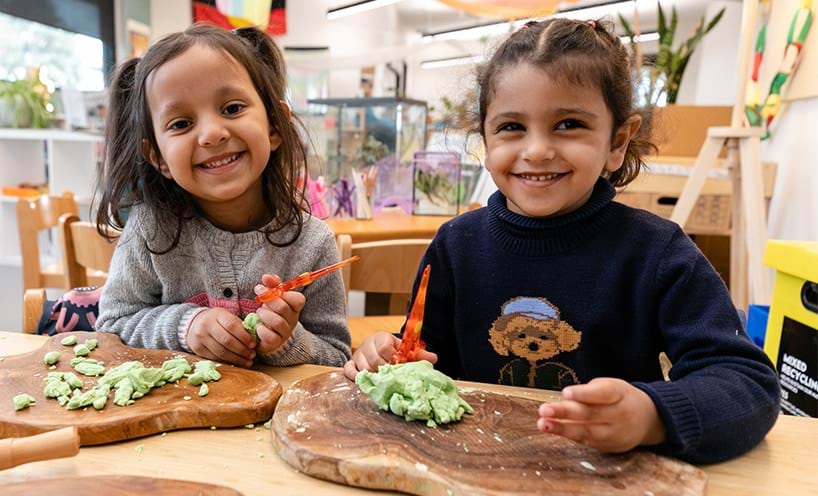
Victoria has updated the Victorian Early Years Learning and Development Framework (VEYLDF). This update will ensure the VEYLDF continues to support early years professionals to deliver inclusive, high-quality learning for children aged from birth to 8 years.
Supporting early years professionals to work together allows them to build stronger teams and share the workload effectively. This helps children, families and professionals access the right supports at the right time.
We have listed some of the key changes in the updated VEYLDF below.
- Strengthened focus on child safety and wellbeing throughout for all early childhood professionals.
- Integrated teaching and learning approaches. Previously a Practice Principle within the framework, integrated teaching and learning approaches now sit above the Practice Principles, alongside the Early Years Planning Cycle. The importance of intentional teaching is explained more clearly.
- Cultural knowledge stories. Additional cultural knowledge stories have been added throughout the framework.
- New examples to support translation of principles into every-day practice. The document has been redesigned to provide clear examples under each Practice Principle of what professionals will do, see and reflect on if they are aligning their practice to the VEYLDF.
- Updated outcome descriptors. The outcome descriptors have been updated to align with the Early Years Learning Framework 2.0 and the Victorian Curriculum 2.0.
A phased approach to implementation
All services will receive a hard copy of the updated VEYLDF later in the year.
There will be discussions about the updated VEYLDF in the Term 3 Early Years Learning Networks and through upcoming information sessions (refer to registration details under ‘Find out more’ below).
Guided by Victoria’s Kindergarten Teaching Excellence Approach, additional professional learning and targeted capability building resources will be provided to support teaching teams. The resources will enable teaching teams to deepen their understanding of the revised VEYLDF and update their teaching and learning programs.
From January 2028, Victorian kindergartens will be required to align their educational programs with the updated VEYLDF.
Next steps
We encourage you and your teams to:
- familiarise yourself with the updated framework
- share the updated framework across your networks and teams
- begin conversations on how the updates can support practice within your setting or organisation.
Find out more
To learn more about the updated VEYLDF, please register for upcoming information sessions:
- for teachers, educators and service leaders working in or with a funded kindergarten service, register through the Early Childhood Hub
- for all other service providers and professionals, register using the VEYLDF Information Sessions form.
The updated framework is now available on the VEYLDF webpage.
Information sharing and Child Link training
Access e-learn modules and register for a new interactive webinar to strengthen child safety and wellbeing at your service.

Information sharing and Child Link help early childhood services support the safety and wellbeing of children.
Child Link is a digital tool that displays key information about the children enrolled at your service, such as a child’s participation in Maternal and Child Health Services.
E-learn modules and interactive webinars are available to help you understand the information-sharing reforms and how to access Child Link.
All services that offer funded 3-Year-Old and 4-Year-Old Kinder are highly encouraged to access Child Link.
Actively using Child Link may help you to meet your obligations under Child Safe Standard 8: Providing child safety training and support to staff and volunteers in early childhood services and the National Quality Framework.
Early childhood providers can nominate up to 3 Victorian Institute of Teaching-registered teachers and the nominated supervisor (PDF, 127 KB) as Child Link Users for each service.
To access Child Link, staff need to complete both Child Link and information sharing training.
Training in 2026
A new interactive webinar on Supporting Transitions: Child and Family Violence Information Sharing in Practice is now available. All early childhood professionals can take part in the training.
The webinar covers how information sharing and Child Link can support children during key developmental stages and transitions, such as moving from kindergarten to primary school. It also gives early childhood professionals the chance to ask a specialist facilitator questions.
The following e-learn modules are also available:
- Child Link User Training
- Information Sharing for Education Professionals
- Information Sharing and Child Link Training (combined) – Education Workforces.
To access the training, create an account on the: Information Sharing and MARAM Online Learning Management System.
Find out more
For more information, refer to:
- Child Link for Early Childhood Providers
- Information Sharing and Family Violence Reforms – Guidance and Tools
- Child Information Sharing Scheme
- Child Safe Standards.
For further enquiries on Child Link and information sharing training:
- phone: 1800 549 646 (Monday to Friday, 9 am to 5 pm)
- email: cisandfvis@education.vic.gov.au
For support with Child Link access, contact the Child Link team by email: childlink@education.vic.gov.au
Spreading the word about more hours of 4-Year-Old Kinder
More than 200 families from across the state visited community events.
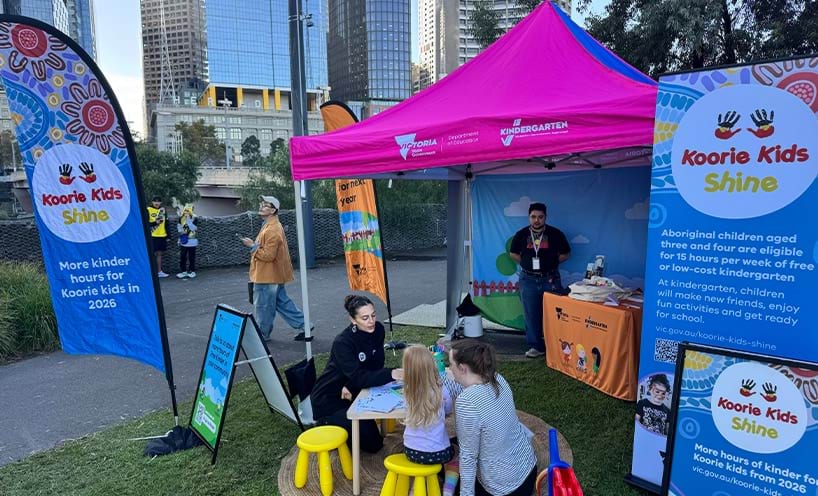
Between April and June 2026, the department hosted community events to raise awareness about more hours of 4-Year-Old Kinder and priority access for Aboriginal and Torres Strait Islander children.
At the 15 community events, families could ask questions about kinder eligibility, enrolment and the benefits of early childhood education. This opportunity supported localised marketing efforts by services and providers who could then help families with specific information on the programs their services offer.
From 2026, Aboriginal and Torres Strait Islander children across Victoria are eligible for up to 25 hours of funded 4-Year-Old Kinder each week. Activations were held in Swan Hill, Melton, Frankston, Portland and at The Long Walk in Melbourne, enabling direct engagement with Koorie families and communities.
The events also helped raise awareness of additional 4-Year-Old Kinder hours in 12 local government areas (LGAs) set to receive up to 20 hours of funded 4-Year-Old Kinder from 2027. The additional roll out LGAs for 2027 are:
- Alpine Shire
- Central Goldfields Shire
- Colac-Otway Shire
- Glenelg Shire
- Indigo Shire
- Moira Shire
- Moorabool Shire
- Moyne Shire
- South Gippsland Shire
- Southern Grampians Shire
- Swan Hill Rural City
- West Wimmera Shire.
More hours of 4-Year-Old Kinder gives children more time to play, learn and build the skills supporting lifelong learning, wellbeing and development.
Free Kinder includes 3-Year-Old Kinder and 4-Year-Old Kinder programs, with hours increasing in stages across Victoria as part of the Best Start, Best Life reforms.
Find out more
To learn more about Free Kinder, visit the Free kinder shapes young lives webpage.
Applications open for Bush Kinder Grants Program
Apply for a grant to establish a new or enhance an existing bush kinder program. Applications close 5 August 2026.
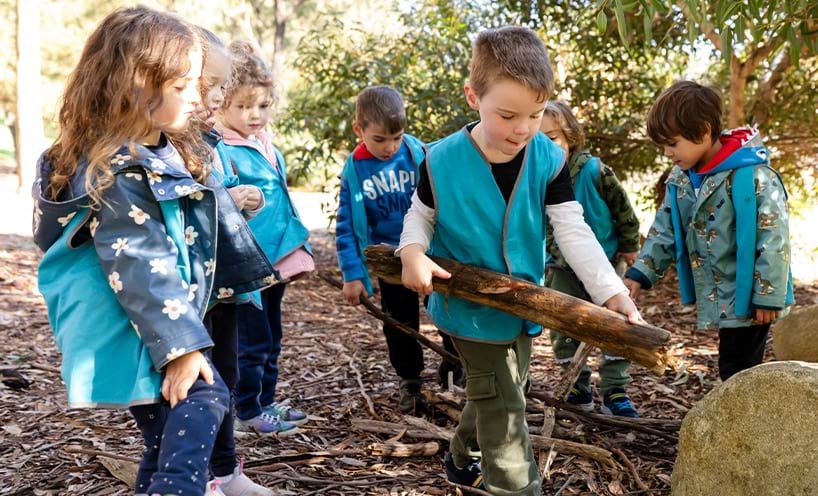
Eligible early childhood services are invited to apply for a one-off $6,000 grant to help establish a new or enhance an existing bush kinder program for delivery in 2027.
These outdoor learning programs give children more opportunities to get outdoors, connect with nature and learn.
Up to 150 grants are available for successful applicants.
For more information about how to apply, see: Bush Kinder Grants Program.
Applications close 11:45 pm Wednesday 5 August 2026.
Find out more
For more information about how to set up a bush kinder program, see: Bush kinders.
For further enquiries about the grants, contact the bush kinder grants team by email: bush.kinder.grants@education.vic.gov.au
Planning for emergencies in early childhood education services
Review your emergency and evacuation policy and procedures in preparation for the high-risk weather season 2026–27.

Every approved early childhood service must have procedures in place for emergencies to help keep everyone on site safe. Services must review these at least once a year and practice them every 3 months.
Winter is a good time to review and update your service’s emergency and evacuation policy and procedures, so you are ready for the 2026–27 high-risk weather season.
You must assess and consider mitigations and procedures for emergencies and critical incidents, including:
- heatwave
- pandemic
- medical incident such as anaphylaxis or asthma attack
- severe weather
- loss of essential services
- death or serious illness
- missing student
- gas leak
- aggressive person or intruder
- bushfire
- smoke/air quality.
The following webpages have useful information to help you plan:
- Prepare and Get Ready on the Vic Emergency website. This includes details on where to get information in an emergency
- Educational activities and hazard information on the Victoria State Emergency Service website. This has information to help you prepare for storms, floods, and other hazards.
We also encourage you to look at your local council’s Municipal Emergency Management Plan and talk to staff about recent events or incidents to better understand risks at your service.
Assessing and managing bushfire risk in early childhood services
Victoria is one of the most fire-prone places in the world. The Victorian Climate Science Report 2024 (PDF, 15.8 MB) states that bushfires have become more frequent and severe.
We work with CSIRO to assess and manage bushfire risk for schools and early childhood services. We continually improve our bushfire risk assessment process to ensure it follows the latest scientific research.
This year, bushfire risk will be assessed using a mapping tool and specialised guidance developed for us by CSIRO. The tool was designed for Victorian education facilities. It uses current data from national and state bushfire authorities.
We are currently reviewing all services for bushfire risk for 2026–27.
Services at risk of bushfire or grassfire
Some early childhood services are at greater risk of bushfire or grassfire because of their location.
Services assessed as being at the highest risk of bushfire are placed on the Bushfire At-Risk Register (BARR) (Categories 0, 1, 2 and 3).
Services assessed as being at some risk of bushfire or grassfire are listed as Category 4.
Services categorised as 5 or 6 are not considered to be at significant bushfire risk. These services are not published on the BARR or Category 4 List. They also do not reference bushfire on their service approval conditions.
Family day care (FDC) services are not individually assessed for bushfire or grassfire risks. This means they are not on the BARR or the Category 4 list. The bushfire risk assessment process is designed for facility-based services and schools.
Approved providers of FDC services must assess the fire danger risk to their educators and attending children and manage fire risk appropriately. The Country Fire Authority has information on how to prepare your property to reduce your risk of bushfire.
Actions for approved providers
All approved providers should:
- check your service approval conditions
- review your emergency and evacuation policy and procedures
- check your rating on the BARR and Category 4 list in late July 2026, after the latest review. If your service does not appear, you are likely considered low risk. New services may not yet appear online, so always follow your service approval conditions
- download the Vic Emergency app, set up a watch zone around your service and monitor for local incidents, forecasts and warnings
- familiarise yourself with how to monitor the fire danger ratings in your area, through the Country Fire Authority Total Fire Bans and Fire Danger Ratings webpage
- make sure your families and local community understand your emergency procedures and reasons your service may need to close
- check that your service approval shows your correct address including the street number so that the correct site can be included in our bushfire risk assessment.
Remember not to publish your full policies and procedures on your public facing website if it contains sensitive information, like staff contact details. Only share the parts of the policies and procedures that families and key contacts need to know.
Find out more
For more information, refer to:
- Emergency management in early childhood services
- Managing bushfire and grassfire risk in early childhood services.
For emergency management questions, contact our Security and Emergency Management Division by email: emergency.management@education.vic.gov.au
For questions about service approval conditions, contact the Victorian Early Childhood Regulatory Authority by email: licensed.childrens.services@education.vic.gov.au
National Aboriginal and Torres Strait Islander Children’s Day 2026
Use our resource kit to help celebrate the day at your service on 4 August 2026.
National Aboriginal and Torres Strait Islander Children’s Day is celebrated every 4 August. It’s a chance to celebrate Aboriginal and Torres Strait Islander children and learn about the impact that culture, family and community have on their lives.
This year’s theme is Living Our Truth. It celebrates the voices, stories and knowledge of Aboriginal and Torres Strait Islander children, families and communities. It recognises the importance of truth-telling in building identity, belonging and cultural strength. It also honours the role of Elders and community in passing knowledge to the next generation.
Each year, to celebrate, we work with our principal partner in First Nations education, the Victorian Aboriginal Education Association Incorporated (VAEAI), to develop and distribute a resource kit to more than 3,000 Victorian government-funded kindergartens.
Kindergartens will receive the resource by mail in time for Children’s Day.
About Children’s Day
Children’s Day is an initiative of the Secretariat of National Aboriginal and Islander Child Care(opens in a new window). The day celebrates the strengths and culture of Aboriginal and Torres Strait Islander children across Australia.
It began in 1988 amid protests during Australia’s bicentennial year. The date was chosen because it was historically used as a communal birthday for Stolen Generations children who were taken from their families at a young age and did not know their actual birth dates. (Source: SNAICC)
As Victorians, the journey of truth-telling through the Yoorrook Justice Commission is an opportunity to reflect on the stories and experiences of First Nations people. It highlights the important role that education plays in healing and moving forward.
Supporting cultural safety
Resources are available to help enact the vision of Marrung (PDF, 1.10 MB) at your services.
You can learn more about building cultural safety and self-determination in education by registering to attend one of the online facilitated modules offered by the department. For more information, refer to: Building change together: First Nations learning suite(opens in a new window).
You can also refer to the VAEAI’s Koorie Early Years Best Practice and Protocols – a practitioner’s guide (PDF, 12.7 MB). This provides guidance on how to incorporate Aboriginal perspectives into early childhood services and protocols to help provide a welcoming environment for Koorie families.
Find out more
For more information, refer to:
Compliance with Australia’s Foreign Relations Act
School and school-council run early childhood services interested in changing or creating foreign arrangements in 2026 must contact the department by 14 August 2026.

We are seeking expressions of interest from services that want to form a new or change a current foreign arrangement in 2026. This includes all school and school-council run early childhood education and care (ECEC) services.
This is in line with Australia’s foreign policy objectives under the Australia’s Foreign Relations (State and Territory Arrangements) Act 2020.
Under the Act, these services must send their new arrangements, or variations to existing ones, to the Australian Government Department of Foreign Affairs and Trade through the department.
First, reach out to the department’s International Education and Partnerships Division Stakeholder Engagement team. Do this before you discuss or enter arrangements with foreign entities.
This ensures that arrangements between state and territory government departments and international counterparts are aligned to Australia’s foreign policy objectives.
Arrangements that need approval
The legislation extends to any written arrangements between schools or school-council run ECEC services, and foreign entities. This includes overseas governments, universities, and other schools.
Common examples of foreign arrangements requiring Australian Government approval include:
- partnerships with foreign ECEC providers or services
- agreements
- written arrangements
- contracts
- memoranda of understanding (MoU)
- teacher exchange programs.
You can make arrangements in any way. You don’t need to sign them or make them legally binding for them to be covered by the Act.
How to submit an expression of interest
The department’s expression of interest process for new or existing foreign arrangements happens twice a year, in Term 1 and Term 3.
If you plan to change or start a new foreign arrangement before December 2026, please reach out to the department by Friday 14 August 2026 with:
Please send these to the department’s Stakeholder Engagement team by email: ied.stakeholder.engagement@education.vic.gov.au
Find out more
For further enquiries, contact the department’s Stakeholder Engagement team by email: ied.stakeholder.engagement@education.vic.gov.au
Supports for early career professionals
Find out about supports available for teachers and educators in their first 5 years in the profession.
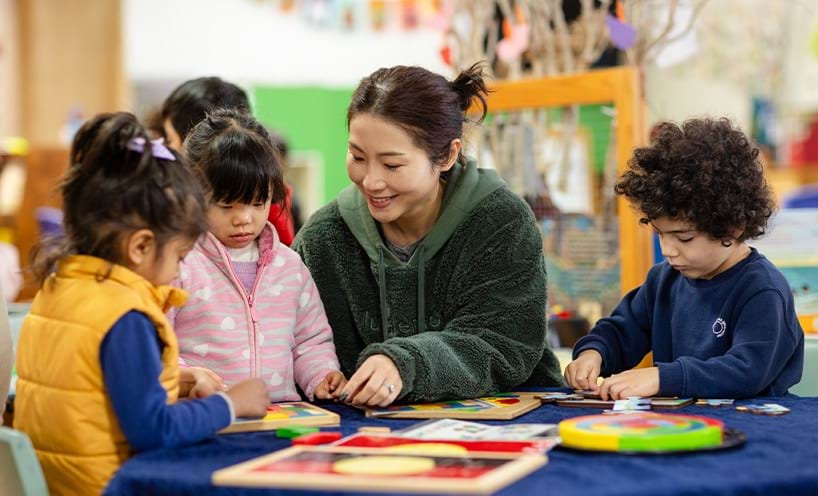
The Victorian Early Childhood Early Career Supports program offers professional learning supports for early career and returning teachers and educators in their first 5 years of practice.
It provides tailored supports to strengthen a professional identity and chances to connect with peers through:
- Beginning Teacher Conferences
- Early Career Workshops
- Early Career Coaching
- Early Career Alumni conference.
For more information on these supports and their release dates, visit Supports for early career early childhood professionals.
Service leaders supporting their staff’s attendance in this program will benefit from:
- improved staff retention and job satisfaction (National Quality Standard 4)
- cultivation of a learning culture within the workplace, fostering continuous development (National Quality Standard 4)
- increased organisational credibility, establishing the service as a leader in delivering high-quality education (National Quality Standard 7).
Beginning Teacher Conferences 2026
These conferences promote ongoing professional development and connection with peers, reinforcing professional identity and confidence in the early stage of professionals’ careers.
The 2026 conferences will support teachers at the start of their career to:
- navigate the early childhood systems and frameworks
- build professional identity and confidence
- support wellbeing and sustainable careers
- strengthen ethical, collaborative and inclusive practice.
Participation is open to:
- early childhood teachers who are working in early childhood services with funded kindergarten programs and are in their first year of practice
- those anticipated to graduate as early childhood teachers in the next 12 months.
Event details
In-person sessions
Dates:
- Monday 10 August 2026
- Friday 4 September 2026
- Friday 2 October 2026.
Time: 8:30 am to 3:30 pm.
Location: The Academy Presentation Hall, Victorian Academy of Teaching and Leadership, 41 St Andrews Place, East Melbourne
Cost: fully funded at no additional cost to participant.
Online sessions
Dates:
- Tuesday 18 August 2026
- Tuesday 15 September 2026
- Friday 16 October 2026.
Time: 8:30 am to 3:30 pm.
Cost: fully funded at no cost to participant.
To express your interest, complete the short form on the EOI: Beginning Teacher Conferences webpage.
Find out more
For further enquiries about the Victorian Early Childhood Early Career Supports program, email: early.years.workforce@education.vic.gov.au
New resources page on the Early Childhood Hub
Explore resources for early childhood professionals to help support practice.
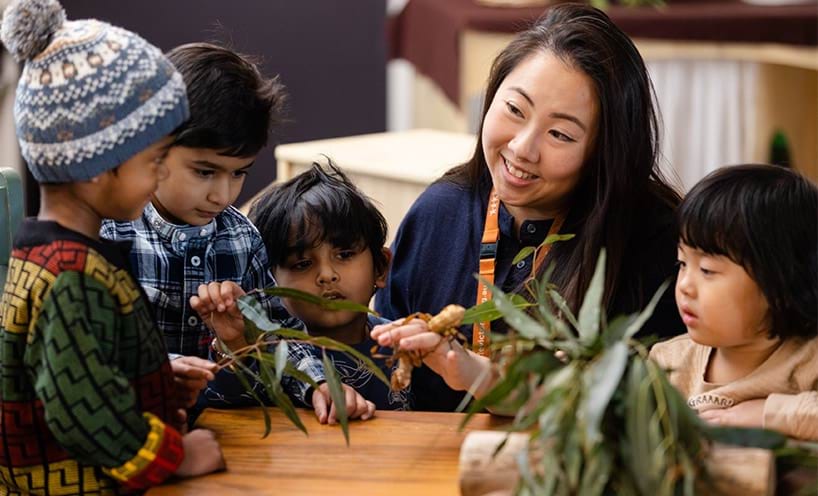
A new page to help early childhood professionals access resources to support practice is now available on the Early Childhood Hub.
We will regularly update the page with videos, publications, and quick links to professional practice guides.
The following resources are available:
- expert videos on maintaining practice quality through a period of change, childhood brain development, and language and literacy through intentional teaching
- links to Victorian Kindergarten Teaching Excellence Approach brochures, including the Kindergarten Learning Progressions
- a link to the updated Victorian Early Years Learning and Development Framework. For more information about the updated framework, refer to the Updated Victorian Early Years Learning and Development Framework supports best practice article in this edition of Early Childhood Update
- a link to the Early Years Planning Cycle Resource. This resource has sample learning plans focused on learning and development across each of the VEYLDF outcomes.
You can access the resources page by clicking ‘Resources’ on the Early Childhood Hub website navigation menu or by visiting: Early Childhood Hub – resources.
Find out more
For further enquiries about the Early Childhood Hub, email: earlychildhoodhub@education.vic.gov.au
Register for the 2026 Victorian Teachers’ Games
The annual event will take place in Melbourne in September. Early childhood professionals are invited to take part. Registrations close 25 August 2026.
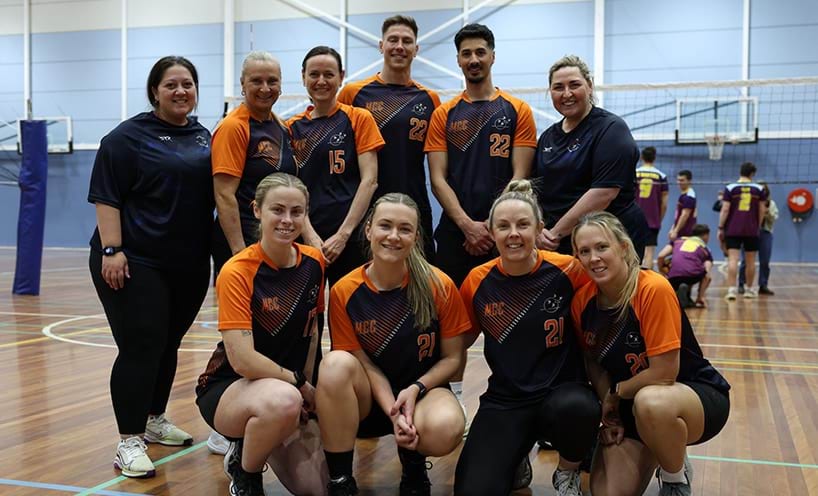
The Victorian Teachers’ Games (VTG) are back in 2026.
Held in Melbourne from Sunday 20 September to Tuesday 22 September 2026, the games are a chance for early childhood teachers and educators to connect with peers while supporting their health and wellbeing. Registrations close on Tuesday 25 August 2026.
Spread the word at your service and share these promotional resources, including social media tiles and a poster:
- VTG 2026 Session planner (PDF, 358 KB)
- VTG 2026 Information pack (PDF, 1.80 MB)
- VTG 2026 Registrations open video (MP4, 38.22 MB)
- VTG 2026 Newsletter text (DOCX, 2.45 MB)
- VTG 2026 Sign up poster (PDF, 2.80 MB)
- VTG 2026 Registration social tile (PNG, 568 KB)
.png)
Why take part in the VTG?
With a diverse program of sporting, recreational and social activities, there’s something for everyone. From team sports such as netball and basketball to social favourites such as trivia and lawn bowls, the VTG is all about taking part, connection and having fun.
The VTG is a unique opportunity to:
- build connections with colleagues from across the state
- prioritise your physical and mental wellbeing
- step outside your routine and try something new in a fun, low-pressure environment.
In 2025, 98% of those who took part said the VTG helped their health and wellbeing.
Find out more
For more information, view the full program and register at Victorian Teachers’ Games(opens in a new window).
For enquiries, please contact the VTG team:
Coach and Mentor Training Program for experienced teachers and educators
Apply to take part in the program to develop your coaching and mentoring skills. Applications close 31 July 2026.
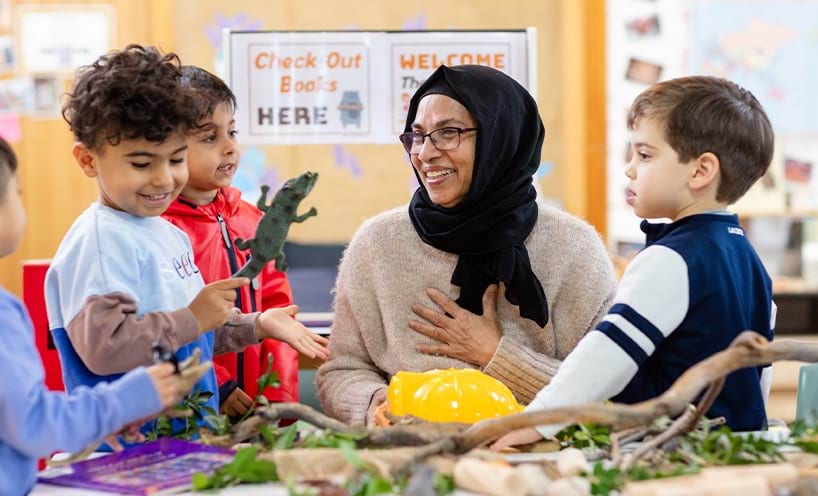
Registrations for intake 2 of the 2026 Coach and Mentor Training Program are open.
The program helps experienced teachers and educators to build on their existing knowledge and skills. It covers the foundations of what makes a good mentor or coach.
About the program
The program has 2 face-to-face workshop days and 3 online modules. Participants must complete all workshops and modules.
The program will help participants to:
- identify and use data to inform approaches to coaching and mentoring
- use coaching and mentoring approaches to support change
- support their wellbeing and the wellbeing of others.
Eligibility
To be eligible for the program, early childhood teachers and educators must meet the following criteria:
- be working in or with a service delivering a funded Victorian kindergarten program
- have full Victorian Institute of Teaching registration (teachers) or Australian Children’s Education and Care Quality Authority-approved diploma qualifications (educators)
- have at least 5 years of experience in a funded kindergarten program
- be committed to full participation in the program activities and requirements.
Participants must also have the support of their employer to complete the program.
How to take part
To register, refer to Coach and Mentor Training Program 2026 – intake 2 on Eventbrite.
Applications close at 5 pm on Friday 31 July 2026.
Find out more
For further enquiries, please email: ec.mentoring@education.vic.gov.au
Honouring First Nations languages in early learning centres
How Early Learning Victoria is prioritising the use of First Nations names.
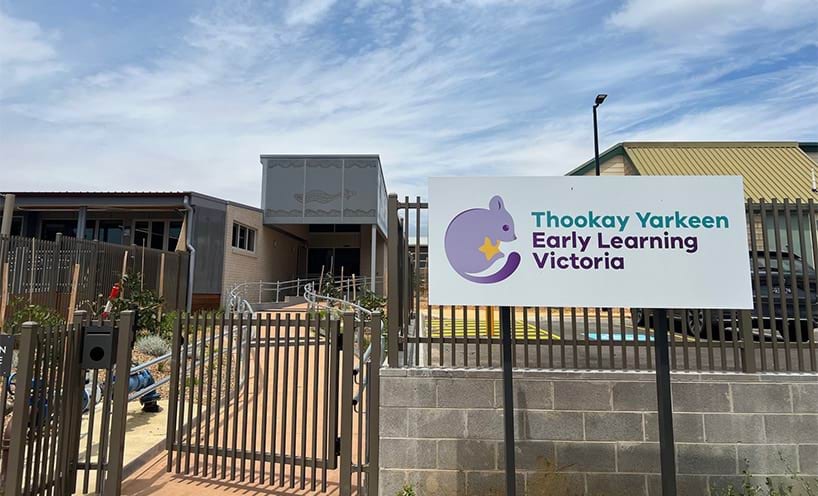
Early Learning Victoria centre, Thookay Yarkeen (Dook-eye Yar-keen, which means ‘children dreaming’) in Portland South, opened its doors earlier this year.
Before it opened, Traditional Owner representatives from Gunditj Mirring Traditional Owners Aboriginal Corporation and Dhauwurd Wurrung Elderly and Community Health Service toured the centre. They were pleased to see the service adopt and embrace the Aboriginal language name they provided.
Thookay Yarkeen joined the growing list of schools and early learning centres prioritising the use of Aboriginal language names.
Language and education
Language holds great significance for First Nations peoples. Language is Country, survival, wellbeing, birthright, strength, healing and connection to culture, identity and ancestors. Language, Country and culture are deeply intertwined.
Connection to First Nations languages, culture and perspectives is critical to supporting children’s learning outcomes, emphasised in the recently updated Victorian Early Years Learning and Development Framework.
Gunditjmara man, Stephen Lovett, explained why he appreciated seeing the new centre adopt the name Thookay Yarkeen.
‘Educators' contribution towards the revitalisation of Gunditjmara's dhauwurd wurrung language plays an important part in the development of a strong sense of identity, pride and self-esteem for all students, particularly First Nations students,’ Stephen said.
‘Access to language is crucial for the revitalisation of Aboriginal language.
‘Gunditj Mirring Traditional Owners Aboriginal Corporation is proud to be part of the Early Learning Victoria journey, supporting centres to be culturally inclusive environments and empowering First Nations students to be strong, proud and deadly in their identity.
‘The importance of education saves the pain of ignorance.’
After consultation with Gunditj Mirring Traditional Owners Aboriginal Corporation, Gunditjmara language names were also provided for the children’s room names at the centre: wilarn (will-arn, which means ‘black cockatoo’), kooyang (koo-yang, which means ‘eel’) and kappring (kup-ring, which means ‘emu’).
Reflecting culture
Early Learning Victoria has now received First Nations language names for 16 of the new centres it has opened. These names reflect the culture, lands, waterways, animals or plants of the Country on which each centre is located.
Early Learning Victoria engages respectfully with Registered Aboriginal Parties and Traditional Owners to consult on use of language for the naming process in partnership with the Victorian School Building Authority and the Victorian Aboriginal Education Association Incorporated. Early Learning Victoria is committed to embracing the history, culture and perspectives of First Nations peoples.
Find out more
For more information, refer to Early Learning Victoria.