The approach at a glance
The Kindergarten Teaching Excellence Approach is a professional learning system. It provides access to:
- online learning
- coaching/mentoring
- events
- resources.
These supports are designed to help improve early childhood teaching.
The approach is part of the Best Start, Best Life reforms. It helps use the increased kindergarten hours well by:
- strengthening teaching practice
- supporting high-quality learning.
Why early childhood education matters
Evidence shows that children learn and develop best in high-quality early childhood education.
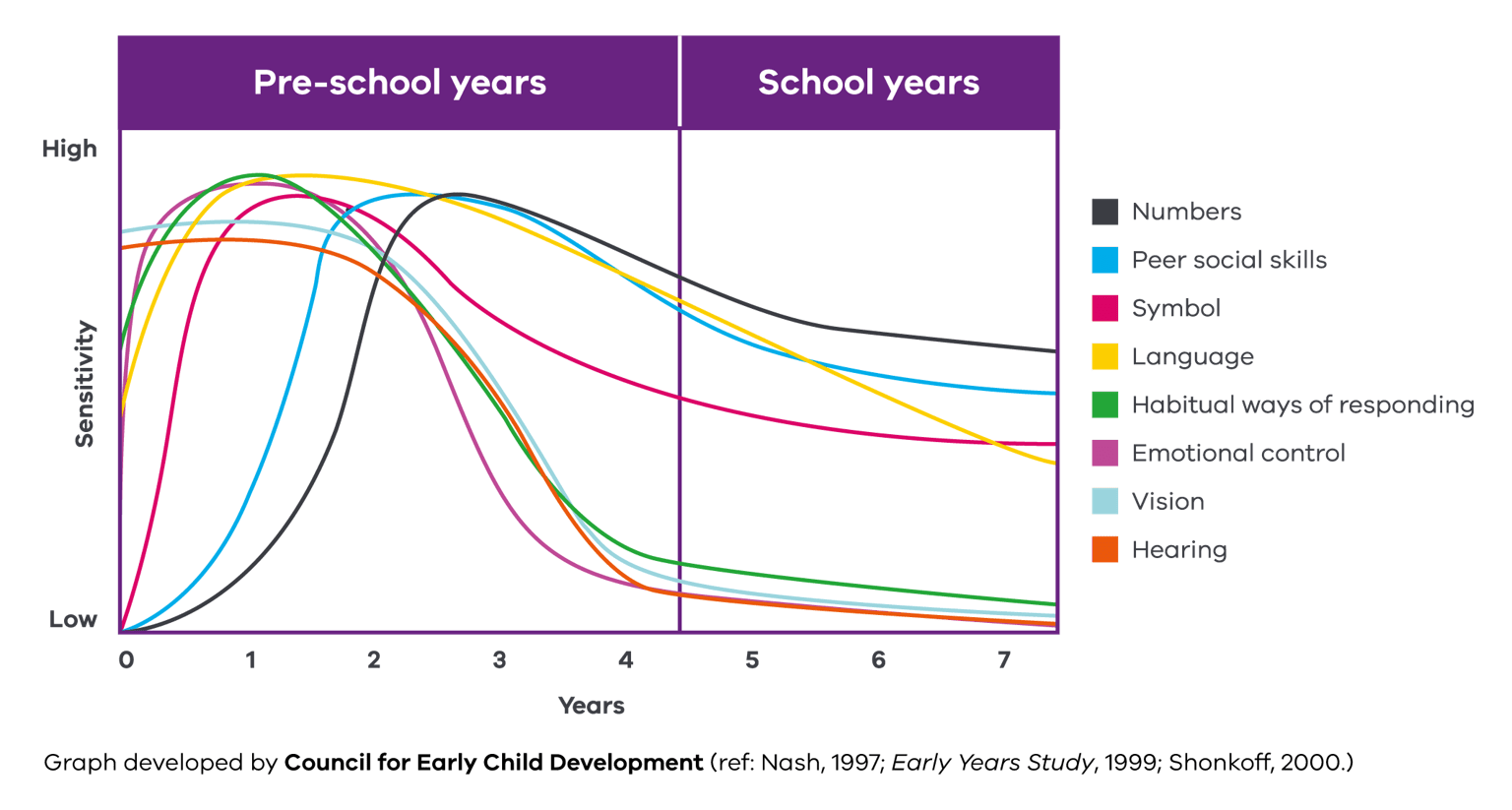
Children’s brains are most able to grow and change from birth to 5 years old. This ability decreases as children get older.
If children do not meet key developmental milestones, later learning can be harder. Rich interactions in warm, respectful and safe settings also help children build strong foundations for learning throughout their lives.
Early child sensitivity to different learning types
What quality teaching looks like
Evidence shows that children learn best when teachers combine teaching with intentional play.
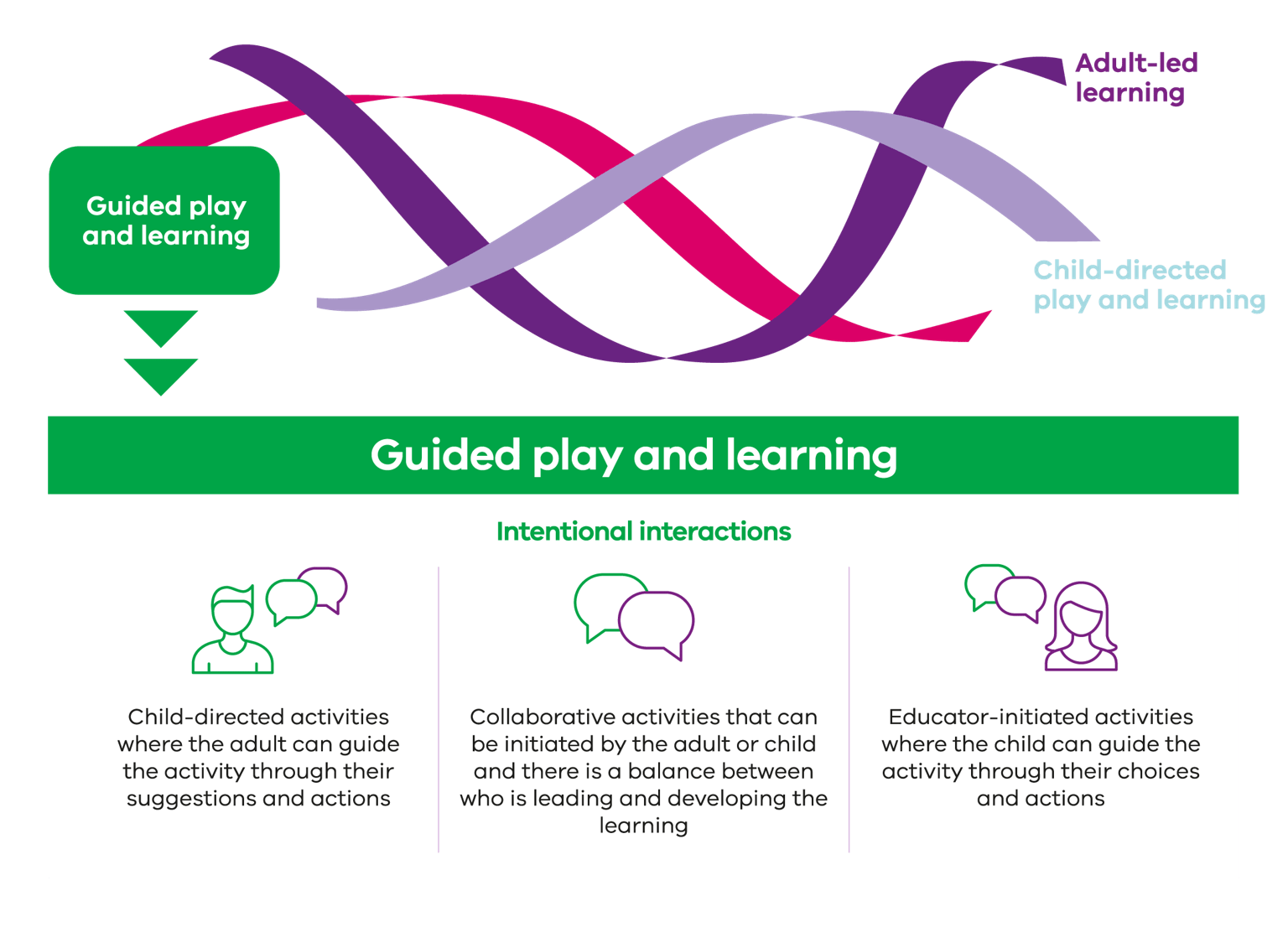
The Victorian Early Years Learning and Development Framework (VEYLDF) outlines an integrated approach to teaching and learning. It is also known as ‘intentional teaching’. You can think of this approach as a triple helix.
Triple helix of learning approaches
Intentional interactions
Within guided play and learning, there are 3 types of intentional interactions:
- Child-directed. The child leads the activity, and the adult guides learning through their ideas, questions and actions
- Collaborative. The child and adult learn together, with each taking a turn to lead.
- Educator-initiated. The adult starts the activity, and the child guides it through their choices and actions.
Intentional interactions are central to the new Kindergarten Teaching Excellence Approach.
Structural quality and process quality
High-quality early childhood education depends on 2 things:
- structural quality
- process quality.
Child safety underpins both structural quality and process quality.
Structural quality
Structural quality is how a service is set up. It creates the conditions for quality learning.
Examples include:
- buildings
- resources
- staff ratios
- qualifications.
The National Quality Framework (NQF) has helped build and strengthen structural quality.
Process quality
Process quality is how children experience these conditions each day.
Examples include:
- interactions
- relationships
- leadership
- teaching practice
- pedagogical skills
- subject matter knowledge.
The Kindergarten Teaching Excellence Approach places more focus on process quality.
This reflects strong research evidence, including the E4Kids study and research from the Organisation for Economic Co-operation and Development (OECD), showing that process quality is strongly linked to better child outcomes.
Why we introduced this approach
The Best Start, Best Life Workforce Strategy includes a commitment to support teachers and educators to embed quality practice as kindergarten hours increase.
The approach delivers on this commitment. It also responds to feedback from kindergarten teaching teams across Victoria.
The sector asked for professional learning that is:
- high-quality
- on-demand
- tailored
- relevant to career stage and role.
The approach is designed to meet that need.
Download the brochure
Updated