What the approach aims to do
The approach has 2 key objectives:
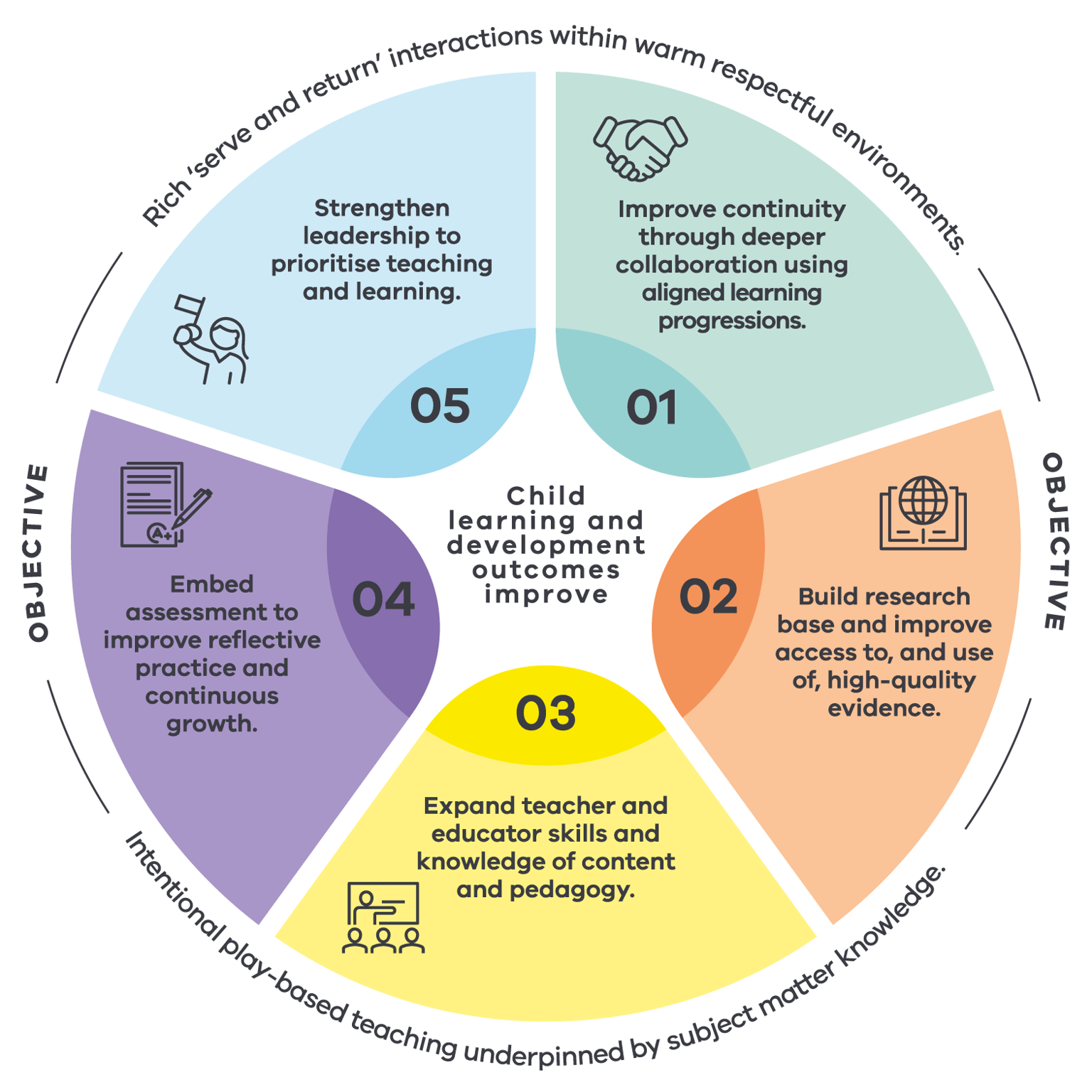
- support rich ‘serve-and-return’ interactions between educators and children in warm, respectful environments.
- develop intentional play-based teaching practices, underpinned by current subject matter knowledge.
The 5 priority areas
The approach focuses investment across 5 priority areas. Together, they create a balanced set of practice supports. This set targets the parts of teaching practice most likely to improve outcomes for children.
Outcomes, objectives and priority areas
1. Strengthen leadership
Strengthen leadership to prioritise teaching and learning.
2. Improve continuity
Improve continuity through deeper collaboration using aligned learning progressions.
3. Embed assessment
Embed assessment to improve reflective practice and continuous growth.
4. Build and use evidence
Build the research base and improve access to, and use of, high-quality evidence.
5. Expand skills and knowledge
Expand teacher and educator skills and knowledge of content and pedagogy.
Together, these 5 priority areas support:
- stronger teaching practice
- better child learning and development outcomes.
Download the brocure
Introducing the Kindergarten Teaching Excellence Approach
(opens in a new window)
Updated 24 Aug 2026
Updated