Overview
Early Start Kindergarten gives eligible children 15 hours of free or low-cost kindergarten a week for 2 years before starting school. Children in ESK can also access more hours of 4-Year-Old Kinder no matter where they live in Victoria. Qualified, VIT-registered teachers lead 3-Year-Old and 4-Year Old Kinder programs.
Eligible children
To be eligible for ESK, a child must turn three years old by 30 April in the year they are enrolled to start the program. ESK is for children who:
- are Aboriginal and/or Torres Strait Islander or
- are from a refugee or asylum seeker background or
- have had contact with Child Protection.
Important: If a child’s birthday is between 1 January and 30 April, the family can choose which year they will start school. You should talk to parents and carers about when they plan for their child to start school, before confirming which year they access ESK.
How to make a referral
Parents or professionals working with families can tell services directly if a child is eligible for ESK.
- You can do this in writing or by talking to the service, based on the knowledge you have about the family’s background.
- No other action or information is needed to determine eligibility.
Enrolments
Children in ESK need to be in a group where they can receive 15 hours per week of high-quality education. It is best if they can learn from the same teacher, to make sure their learning has continuity.
The child can be placed in a 3-Year-Old Kinder program, a mixed age program, or a 4-Year-Old Kinder program. They can also be in multiple groups to access 15 hours per week.
Early Start Kindergarten, Free Kinder and 3-Year-Old Kinder
ESK is still available for eligible 3-year-old children to access 15 hours of free or low-cost kindergarten per week.
Even if your service already offers Free Kinder or funded 3-Year-Old Kinder, you should enrol eligible children in ESK.
Enrolling children through ESK:
- gives the child priority of access to kindergarten and more hours of 4-Year-Old Kinder the following year.
It also means services receive additional funding and support. For example, more ESK enrolments at a service increases School Readiness Funding (SRF).
- It helps the service to plan the delivery of more hours of 4-Year-Old Kinder.
Services should talk to families and referrers about ESK and more hours of 4-Year-Old Kinder, in addition to the information collected in enrolment forms.
ESK funding from 2026
- Single monthly Payment: ESK is now paid monthly as one payment that includes both Per Capita and Free Kinder funding. For more information on Per Capita and Free Kinder funding please see the Kindergarten funding settings.
- Start of Year Funding: Children enrolled in ESK or the Access to Early Learning program are funded from the start of the year, no matter the service type they are enrolled in.
- If a child leaves your service:
- If the service is eligible for baseline funding, the service will keep getting funding for the child for the rest of the year.
- If the service does not receive baseline funding, funding for the ESK child stops from the next month following the cease date.
- ACCO Services: Aboriginal Community Controlled Organisation (ACCO)-managed services get a single per-child rate that includes all funding types (Per Capita, Free Kinder, Early Childhood Teacher Supplement, Ratio Supplement and School Readiness Funding). For more information on ACCO funding see Funding for Aboriginal Community Controlled Organisations delivering kindergarten | vic.gov.au(opens in a new window)
- Extension Grants: From 2026, more hours of 4-Year-Old Kinder replaces ESK extension grants for children from priority backgrounds. For more information on funding see Kindergarten funding settings | vic.gov.au.
Refugee and asylum seeker children
A child is eligible for ESK if the child – or their parent, carer or legal guardian - holds, used to hold, or is applying for one of the following:
- Refugee visa (subclass 200)
- In-country Special Humanitarian visa (subclass 201)
- Global Special Humanitarian visa (subclass 202)
- Emergency Rescue visa (subclass 203)
- Woman at Risk visa (subclass 204)
- Humanitarian Stay visa (subclass 449)
- Temporary Protection visa (subclass 785)
- Temporary (Humanitarian Concern) visa (subclass 786)
- Safe Haven Enterprise visa (subclass 790)
- Resolution of Status visa (subclass 851)
- Protection visa (subclass 866)
- Bridging visa, and is in the process of applying for one of the above Refugee or Humanitarian visas
- ImmiCard
- an approved exemption from the department.
Important: this includes children and families who now hold Australian citizenship or permanent residency. Children and families who meet the above criteria can provide this information verbally – they don’t need to provide visa documentation or other evidence. Keep this information in the child’s confidential enrolment record.
Exemptions: families can get an exemption if they have a refugee background but have not held a humanitarian visa in Australia (for example, parents or children who entered Australia on non-humanitarian visas but who previously settled in another country as a refugee or asylum-seeker, or who have been sponsored to come to Australia by a family member). The same criteria apply for more hours of 4-Year-Old Kinder for children from priority backgrounds. Contact your local Early Childhood Improvement Branch if an exemption is required or you have questions about eligible visas.
Children in out-of-home care
Any child in out-of-home care who turns 3 by 30 April in the year they start kinder is eligible for ESK. This is a commitment under the Early Childhood Agreement for children in out-of-home care. These children can also access more hours of 4-Year-Old Kinder.
Long Day Care and ESK1
You can use ESK funding along with the Australian Government’s Child Care Subsidy (CCS) and Additional Child Care Subsidy (ACCS).
First, the Long Day Care service must use the ESK funding to give the child 15 hours a kinder a week (600 hours a year) for free.
Long Day Care services may collaborate with the family or carer to determine how to support the child’s needs. The service may consider how this can contribute to their Quality Improvement Plan.
The service can allocate the funding towards:
- gap fees not covered by CCS or ACCS
- financial expenses whilst accessing ACCS
- resources for children with high, complex needs or those experiencing disadvantage
- employment of a kindergarten teacher
- out-of-pocket expenses such as excursions/incursions
- professional development for staff about Aboriginal and Torres Strait Islander culture.
Immunisation status for Early Start Kindergarten enrolments
No Jab No Play
Under No Jab No Play, children enrolled in ESK can enrol immediately without up-to-date immunisation records.
Families get a 16-week ‘support period’ to get their Immunisation History Statement from Medicare or the Australian Immunisation Register (phone: 1800 653 809). Families may request help to get the statement from their Maternal and Child Health Nurse or their doctor. The service should support the family to do this over this time.
If 16 weeks pass, and the service has not received appropriate documentation (including a 'catch up schedule'), the child can still attend kindergarten unless there is an infectious disease outbreak. The support period intends to encourage immunisation, not prevent attendance.
No Jab No Play
Under the Victoria Government’s No Jab No Play legislation, families accessing kindergarten in Long Day Care can only receive financial assistance through the Child Care Subsidy if children meet immunisation requirements.
Information for Maternal and Child Health professionals
Information for Child Protection professionals
Other early intervention programs and funding
The Access to Early Learning (AEL) program is a more intensive early intervention than ESK. Through AEL, a facilitator helps 3-year-olds from families with multiple and complex needs, supporting them to access universal kindergarten programs.
AEL is for families that have a range of barriers to children's kindergarten participation. ESK predominately addresses financial barriers.
AEL facilitators do home visits to help families build their child’s engagement with formal learning. They also help strengthen the home learning environment and collaborate with educators and other services.
Find out more, get support and resources
Why participation matters
Participation in quality kinder helps children’s long-term development and wellbeing, particularly those who are vulnerable, and prepares them for school.
Within a protective, supportive environment, Kindergarten helps children develop essential skills, build positive relationships, and receive early support if needed.
When children attend consistently, they make friends and learn from educators who understand their unique interests, strengths, and needs. This sense of belonging helps children feel valued, secure and confident to explore and enjoy their learning environment.
Consistent kindergarten attendance can also support children to smoothly transition to school. This is because children who have consistent attendance patterns in kindergarten are more likely to maintain their level of participation once they commence school.
The evidence behind 2 years and more time in kindergarten provides more information about the importance of early childhood education and the evidence behind the Best Start, Best Life reforms.
Resources for Funded Kindergartens provide further information about ESK for kindergarten services, MCH services, Child Protection and Child FIRST professionals.
Find out more, get support and resources
Interpreters: services can access a telephone interpreting service to help multicultural families understand ESK. Call All Graduates on 03 9605 3051 or email de.enquiries@allgraduates.com.au.
Free Print Materials: order free posters and brochures by signing up/logging in to the Victorian Kindergarten Resources website. Select the Early Start Kindergarten option. Anyone can view and order ESK print material.
Information for parents: direct parents and carers to Early Start Kindergarten for more information about ESK.
Downloadable Resources
- Communication kit (DOCX, 6MB)
- Communications kit for Refugee and Asylum Seeker families (DOCX, 7MB)
- Early Start Kindergarten postcard (PDF, 456KB)
- Early Start Kindergarten brochure (PDF, 781KB)
- Early Start Kindergarten for refugees and asylum seekers brochure (PDF, 589KB)
- Early Start Kindergarten for refugees and asylum seekers brochure - Easy English version (DOCX, 2MB)
- Supporting CALD families to engage in kindergarten
Social media tiles
15 Hours of kindergarten
No child left behind
Why ESK?
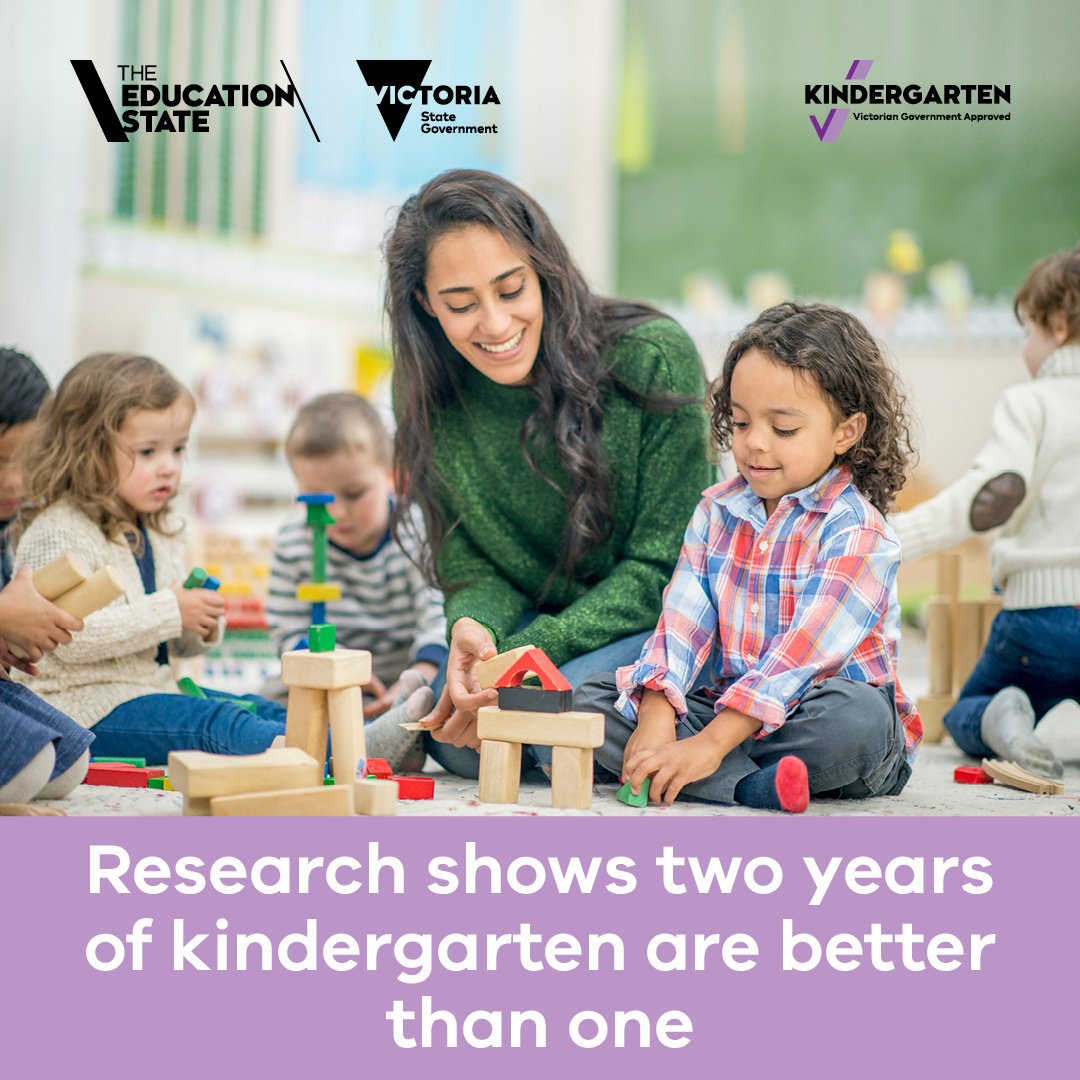
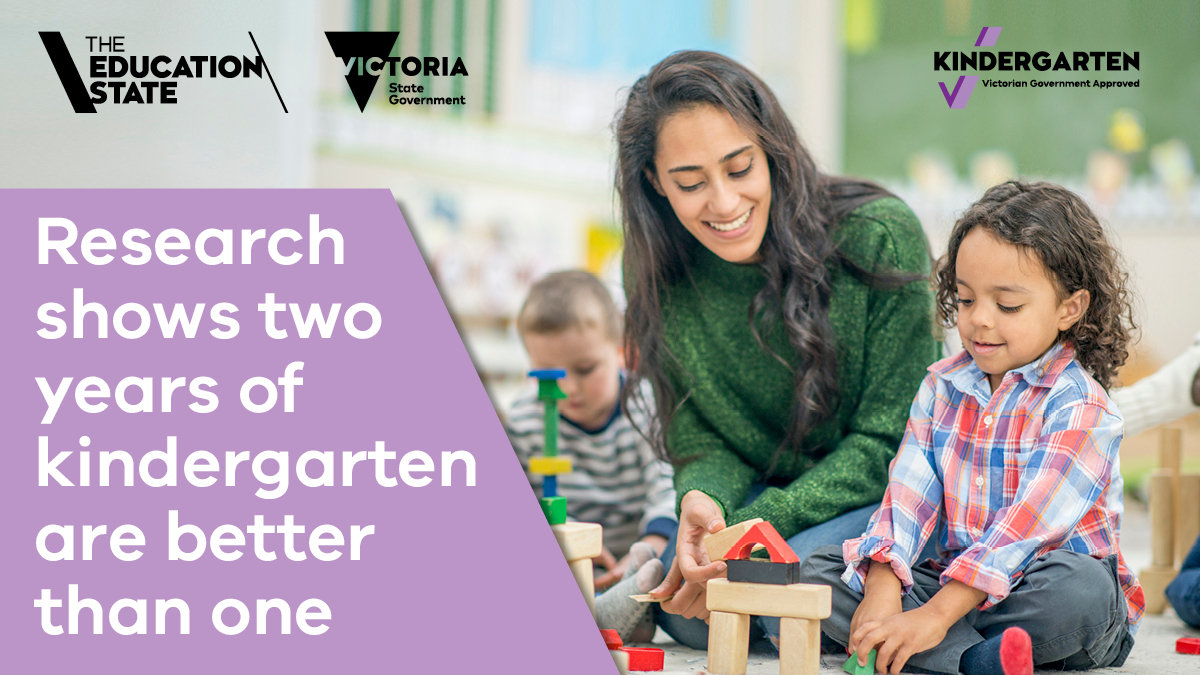
Why ESK? (support)
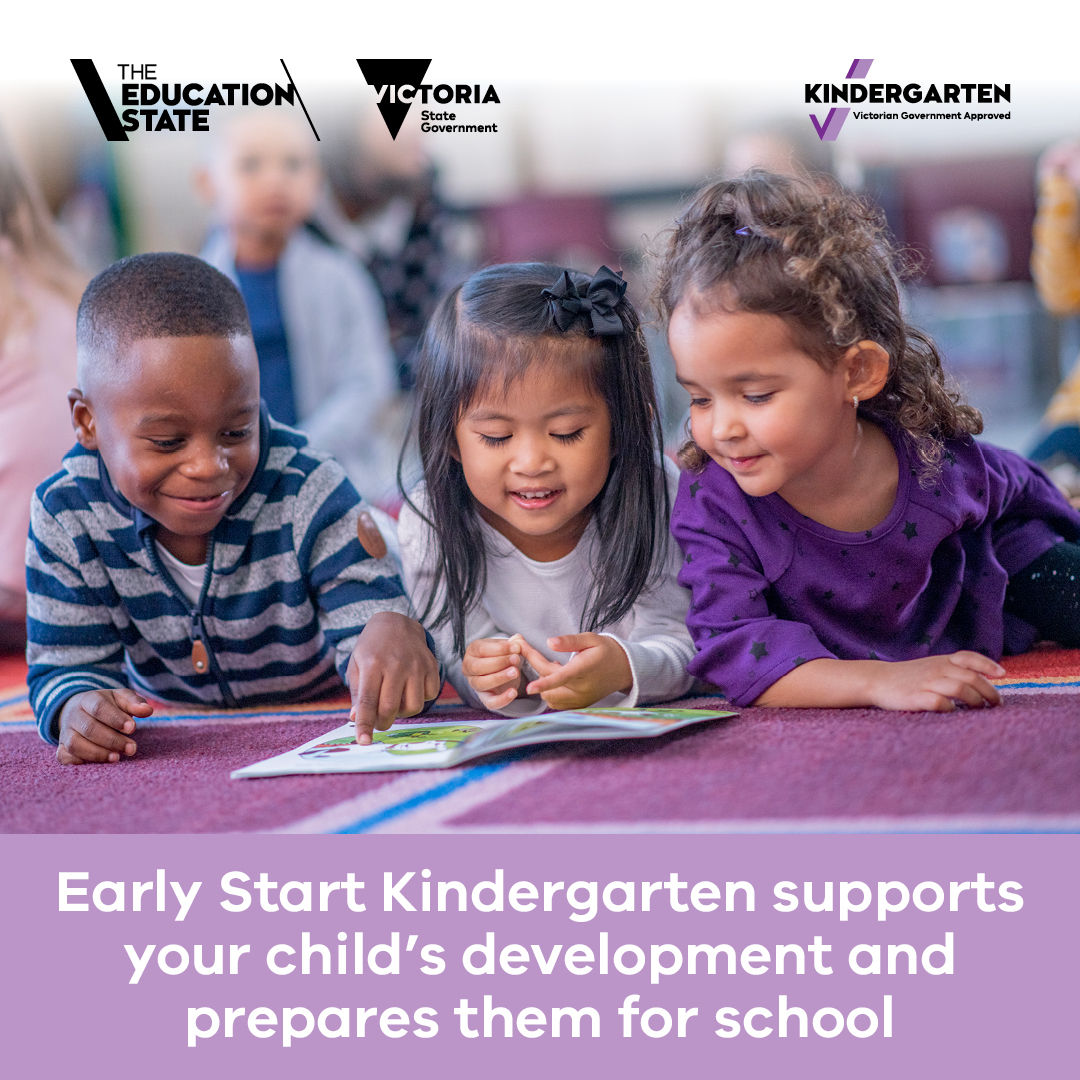
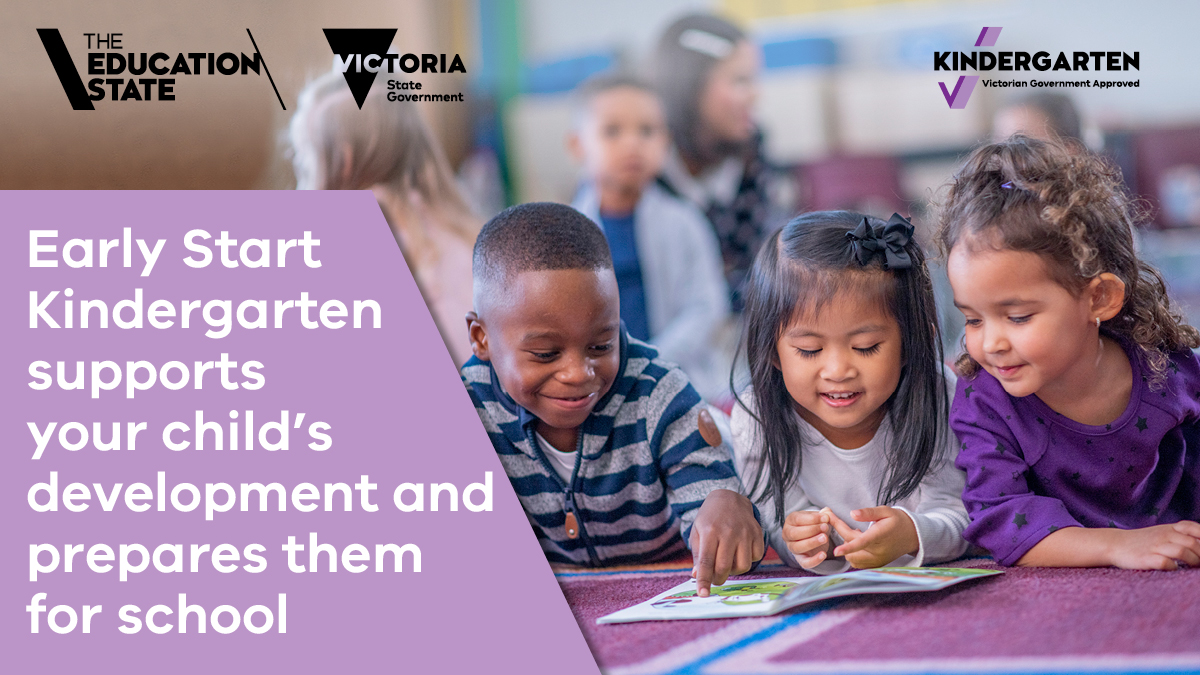
Translated brochures and social media tiles
Translated versions of the above resources can be found at Early Start Kindergarten.
Updated