Bridge Road Kindergarten is in the City of Melton, Australia’s fastest growing local government area. Overseen by Early Childhood Management Services, it is a 4-room service, operating 15 sessional kinder programs each week, staffed by a team of 35 educators.
The community is culturally and linguistically diverse, with 36% of all children, from birth to 4-years-olds, speaking a language other than English. Many families have recently arrived in Australia, and developmental vulnerability is higher than the state average.
Communicating effectively with families from different language backgrounds was a challenge for educators at the service. The service used School Readiness Funding (SRF) to help overcome this barrier.
Creating a sense of belonging
Service leader Poonam Jain said intergenerational and childhood trauma is present in their community. This leads to complex behavioural needs within the kinder program.
‘As a service we needed to develop a deeper understanding of the impact of trauma and how to respond in ways that support children’s participation and educator wellbeing,’ she said.
With a large team of educators at different stages of their careers, more mentoring and coaching opportunities were needed to build confidence in supporting children and families.
Finding a focus
Educators collected information about the children in the group to help identify where extra support was needed.
Through SRF, the service employed in-house practice coaches and social workers to work alongside educators and leaders. A strong understanding of the local community was important to develop targeted programs, resources and referral pathways.
‘Together we have made connections with external community professionals supportive of families and children,’ Poonam said.
‘The outreach maternal health nurse, mobile dentist, preschool field officer and library program are just some of the regular visitors coming to our service.’
Creating meaningful experiences
Using SRF, the kindergarten also employed 2 community support educators to work above ratio to support Burmese and Punjabi children and families. One of the educators co-facilitated and translated a school transition information session for Burmese families.
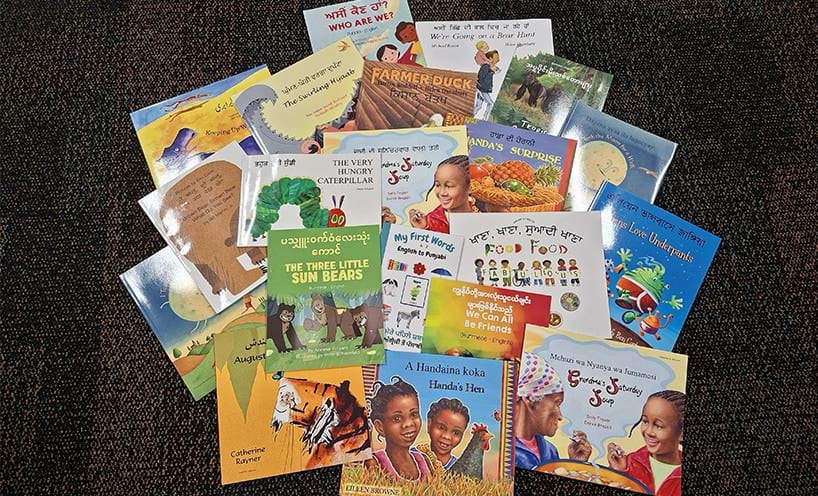
The service also established an SRF-funded lending library in the foyer. This gives children and families access to translated children's books. This has been particularly popular with Punjabi grandparents who often live with and care for their grandchildren.
Strengthening connection and collaboration
Poonam said coaching has helped the educators feel more supported and empowered.
‘We have seen a significant increase in the educator’s capability and capacity to support children’s diverse behaviour and needs within the programs. This has led to increased participation and staff wellbeing,’ she said.
A shared journey of learning
Poonam said SRF is a great resource to achieve long term and meaningful goals for the service and the community.
‘Take your team on a shared journey of learning and do less but more deeply. Align your SRF menu choices with your service philosophy and celebrate the successes through your Quality Improvement Plan’.
Poonam said that as a leader, she has become more aware that families sometimes don’t know what we think they should know.
‘We need to provide a safe and trustworthy environment for them to learn and become confident in the care of their young children,’ she said.
‘I now know that we can break down barriers to inclusion in so many ways.'
Find out more
To learn more about School Readiness Funding, refer to: School Readiness Funding or contact your Early Childhood Improvement Branch.
Updated