- Published by:
- Department of Education
- Date:
- 7 Oct 2026
The Early Childhood Update e-newsletter is sent to early childhood teachers and workers, but is open to anyone interested in best practice in early years education and evidence-based teaching approaches. Subscribe here to receive the e-newsletter(opens in a new window).
Shining a light on professionalism in our sector
From Children's Week to World Teachers’ Day and the Victorian Early Years Awards ceremony, there is a lot to celebrate in October.
Dear early childhood education professionals
In this month’s edition, we begin our countdown to World Teachers’ Day on Friday 30 October 2026 by celebrating the professionalism and expertise of our early childhood teachers. The theme this year is 'Shine a light on teachers' and it's an opportunity to spotlight the amazing work you do to make a difference in children’s lives. To mark the occasion, we are also encouraging services to use this celebration kit to highlight the work of their early childhood teachers.
Also in October, Victoria is strengthening the Working with Children (WWC) Check. This includes the introduction of WWC Connect and new mandatory child safety training for people applying for or renewing their WWC Clearance. These changes will help organisations make safer decisions about the people they engage to work or volunteer with children. See: changes to the Working with Children Check.
The 2026 Victorian Early Years Awards ceremony is being held on Tuesday 27 October. The awards recognise the remarkable work of early childhood teachers and educators across Victoria. Now in their 21st year, they celebrate the people making a difference every day in the sector. All finalists are in the running to receive an award at the ceremony.
Looking ahead, Children's Week will take place from Saturday 24 October to Sunday 1 November 2026. This is a national celebration that recognises the talents, skills, achievements and rights of children. Thousands of Victorian children and families will be able to take part in free activities and events taking place across the state. Successful grant applicants will be notified soon.
Also in this edition, you can find the latest information on Thriving Kids, a new national support system for children aged 8 and under with developmental delay or autism, with low to moderate support needs. Thriving Kids will be rolled out progressively, with the first supports available this month. As Thriving Kids rolls out, we’ll provide more information to professionals and services that support children. This will help you understand the new system and how to guide families.
I hope you find the resources and information in this edition useful for you and your teams. Wishing you all the best for the month ahead.
Bronwen FitzGerald
Deputy Secretary
Early Childhood Education
Changes to the Working with Children Check
Find out about changes to the Working with Children Check which come into effect on 19 October 2026.
Victoria is strengthening the Working with Children (WWC) Check. There are new mandatory requirements that apply to all organisations that perform child-related work.
From Monday 19 October 2026:
- organisations will have a new legal requirement to notify the Social Services Regulator (SSR) about workers and volunteers they engage to work with children using a new online system ‘WWC Connect’
- the SSR will require individuals applying for or renewing their WWC Clearance to complete a mandatory online child safety training module.
These reforms respond to recommendations from the Rapid Child Safety Review. They will strengthen the safeguards that help organisations to make decisions about the people they engage to work or volunteer with children.
Working with Children Connect
WWC Connect will allow organisations to connect workers they engage for child-related work. This will help organisations:
- provide accurate information to the SSR about the people they engage
- receive notifications if a worker or volunteer’s WWC Clearance status changes.
The information organisations need to include in WWC Connect:
- name
- WWC Check card number
- address
- email address
- telephone number.
To read more about the changes, refer to Working with Children (WWC) Connect.
What you need to do
To comply with new WWC Connect requirements, from Monday 19 October 2026 organisations must:
- Check – use the WWC status checker to verify a person’s WWC Clearance before they start work
- Connect – when ready to formally engage, connect them to the organisation through WWC Connect
- Record – keep appropriate records to show they have completed the required checks and connection
- Maintain – keep the organisation’s WWC Connect records up to date as workers start or stop doing child-related work and if their contact details change.
Organisations are required to update WWC Connect when cardholders start or finish child-related work with the service, or when there is a change of relevant details. Organisations will have 7 days to update information for workers and 21 days for volunteers from when an event occurs.
Organisations are encouraged, but not required, to add all existing staff and volunteers with a WWC Clearance to WWC Connect. Doing so will ensure receipt of notifications where a staff member or volunteer’s WWC Clearance status changes, meaning they are no longer permitted to work with children.
Organisations are not required to add labour hire agency staff to WWC Connect. This is the responsibility of the labour hire agency.
Early childhood teachers registered with the Victorian Institute of Teaching (VIT) continue to be exempt from the requirement to hold a valid WWC Clearance to engage in child related work. However, organisations must notify the SSR if they engage a VIT-registered teacher to undertake child-related work outside of their teaching role, for example, as a volunteer.
WWC Connect is a new requirement of the Victorian SSR. Approved providers must also continue to provide staff and volunteer information, including WWC Check card numbers, to the National Early Childhood Worker Register, as required by the National Law. This is managed by the Australian Children’s Education and Care Quality Authority, in accordance with the National Law.
Working with Children child safety training
Mandatory Working with Children child safety training will also be required from Monday 19 October 2026. The training is mandatory for:
- new WWC Check applicants
- people renewing their WWC Clearance
- people changing from a volunteer WWC Clearance to an employee WWC Clearance.
Individuals will need to complete the training before their WWC Check application can be finalised. The training responds to recommendations from the Rapid Child Safety Review and will help build a consistent understanding of child safety responsibilities across Victoria’s child-related workforce.
The training is an online, self-paced course. It takes about 45 minutes to complete at the Services Victoria website. It is suitable for all sectors and settings that need a WWC Clearance.
For more information, visit: Mandatory Child Safety Training for Working with Children Clearance holders.
Early childhood education and care (ECEC) services are not responsible for managing the completion of WWC child safety training for staff or volunteers. The SSR will communicate directly with WWC cardholders about this requirement when their card is due for renewal.
The WWC child safety training does not replace ECEC sector-specific training that must be completed by relevant staff and volunteers under the National Law. For information on these requirements, refer to: Child protection and child safety training in early childhood.
How to prepare for the changes
Ahead of Monday 19 October 2026, early childhood providers and services should:
- check that staff and volunteers’ WWC Clearance information is accurate and up to date
- use the WWC status checker to verify the clearance details for your cardholders is accurate
- prepare to add staff and volunteers to WWC Connect when it becomes available:
- a template will be available to support bulk upload of cardholder information to WWC Connect
- you will need know an individual’s name, WWC Check card number, address, email address and phone number
- ensure anyone in the organisation who manages staff recruitment, contractors, sole traders and volunteers is aware of the changes
- inform staff and volunteers about the Working with Children mandatory training requirement where relevant.
Find out more
To read more about the changes, refer to: Working with Children (WWC) Connect.
Marrung 2026–2036
Victoria has launched a new First Nations education strategy, setting the direction for the next decade of learning at all stages.

The Marrung 2026–2036: First Nations education strategy has now been launched. This is a significant milestone for First Nations education in Victoria.
Marrung 2026–2036 sets out a shared vision for a Victorian education system that values and respects First Nations cultures, knowledge and identity. It supports First Nations learners to achieve their aspirations.
The strategy promotes culturally safe, inclusive and responsive learning environments. It aims to help First Nations children feel a strong sense of identity, belonging and connection to Country.
The strategy was developed through a co‑design process with key First Nations stakeholders and education partners. It sets out 6 key priorities and 31 actions to guide practice across kindergartens, long day care services and early years programs.
For the first time, Marrung 2026–2036 brings Victoria’s 3 education systems – government, Catholic and independent – together under one statewide approach. It is designed to support First Nations learners from early childhood through to the skills and technical and further education sector.
Early childhood education and care (ECEC) has an important role in achieving the vision of Marrung 2026–2036. The experiences children have in their earliest years can strengthen identity, culture and belonging. They can also establish strong foundations for their future learning.
Key actions for early childhood services
A number of the actions within Marrung are particularly relevant to ECEC services and the early childhood workforce.
These include:
- strengthening culturally safe and responsive learning environments
- increasing opportunities for First Nations cultures, histories and perspectives to be embedded in learning
- supporting the workforce to build its cultural knowledge and capability
- supporting, strengthening and expanding service provision by Aboriginal Community Controlled Organisations.
Marrung also places a strong emphasis on genuine partnerships with First Nations families, communities and organisations. It recognises the important role they play in supporting children’s learning, development, identity and connection to culture and Country.
ECEC services will have access to resources to build cultural understanding and include First Nations perspectives in everyday practice.
How you can engage with Marrung
We encourage services to:
- familiarise yourselves with the 6 priorities and 31 actions in Marrung 2026–2036
- consider how your existing practices contribute to culturally safe, inclusive and responsive environments for First Nations children and families
- continue to strengthen relationships with First Nations families, communities and local organisations
- take part in upcoming regional information sessions.
Regional roadshow information sessions will start in October. They will provide an opportunity to learn more about the strategy and discuss what Marrung means locally. They will also explore how education sectors and communities can work together to support implementation.
The department will share further information about implementation, including resources and supports for early childhood services, as planning progresses.
Find out more
For more information, refer to Marrung.
For further enquiries, contact the team by email: marrung@education.vic.gov.au
Thriving Kids
Find out about new disability supports for children and families.
New Thriving Kids supports will start to roll out this month. They will provide trusted advice and support to families of children with developmental delay or autism.
About Thriving Kids
Thriving Kids is a new system of disability supports for children aged 8 and under with developmental delay or autism with low to moderate support needs. It also supports their families.
Thriving Kids supports started rolling out on 1 October 2026. The full range of services will be in place from 1 January 2028. This is to align with changes to National Disability Insurance Scheme access.
Early childhood education and care (ECEC) services will not be responsible for delivering Thriving Kids supports, but will continue to play an important role in helping identify developmental concerns and supporting children and families to get the information and help they need.
ECEC services should continue to:
- identify and respond to children’s educational and developmental needs through existing processes and supports
- connect families with existing services and supports, where appropriate.
New supports available from October 2026 include:
- Expanded training to help early childhood teachers and educators identify and work with other professionals and families to respond effectively to developmental concerns for children and deliver inclusive early learning experiences. This will strengthen inclusion capability and capacity in kindergartens.
- Practical information, guidance and help to navigate supports for families. This will help them understand what support is available, identify next steps and know where to get help if they have concerns about their child’s development. The ACD – Advocating for Children with Disability Support Line can be accessed on 03 9880 7000 or 1800 654 013 (regional).
- More publicly funded autism assessments for children aged 8 and under. These will focus on families that might need more support.
- More places in the Strengthening Parent Support Program. This will help parents build skills, confidence and stronger relationships. Support can include peer support groups, information sessions and tailored advice.
From 2027, Victoria will also deliver a range of targeted allied health and other support services through Thriving Kids as part of a staged roll out. The first 6 sites will be located at Bendigo, Hobsons Bay, Hume, Loddon, Maribyrnong and Melton. They will open from January 2027.
This time-limited allied health support to children and their families will help children build everyday skills and independence. It will also help families understand how to support their child’s development.
How often a child receives allied health support and for how long will depend on their needs.
Starting in the initial delivery sites, Victorian families will also have access to 2 new developmental checks – one as each child starts kinder, and one as they start school.
Victoria is taking a state-led and coordinated approach to delivering these supports, with the Department of Education leading the delivery of targeted supports and development checks, as well as managing triaging and intake.
In some cases, delivery of targeted allied health will be supported by community partner organisations where this best meets the needs of the community.
Developmental checks will be undertaken by allied health professionals and trained clinicians, and mean children and families can be connected with the right supports sooner – so children are set up for success at kinder and school.
More information about the roll out of allied health supports will be available soon.
New online training
Online training on inclusion will be provided for early childhood educators from October 2026 through the Early Childhood Hub. More information on this training will be available soon.
This training will help teachers, educators and service leaders build their capacity to deliver inclusive early learning experiences to children, strengthening the supports you already provide to children and their families.
Working with early childhood education and care services
In line with the Thriving Kids roll out, the department will provide professionals and early childhood services more information and supports to guide and refer families.
Please note that Thriving Kids will complement existing disability and inclusion supports in kindergartens. This includes supports provided through the Kindergarten Inclusion Support and Preschool Field Officer programs. Existing programs that support inclusion in kindergarten services, include:
These programs will continue to work with services and professionals, including Thriving Kids, to help children and families access timely and co-ordinated support.
Find out more
For more information about Thriving Kids, visit Thriving Kids Victoria.
How 3-Year-Old Kinder gives kids a head start
New Victorian research shows that an extra year of early learning before school boosts children’s outcomes.
The University of Melbourne’s Educational and Developmental Gains in Early Childhood (EDGE) Study provides some of the first Australian evidence on the benefits of 3-Year-Old Kinder.
It found that 2 years are better than one. Children who attend 2 years of kindergarten have stronger language and problem-solving skills when they start school than children who attend only one year. Children benefitted more when they attended more hours per week of a quality 3-Year-Old Kinder program.
The department would like to thank the 149 early childhood services, over 2,200 children, their teachers and families across Victoria who participated in the study for their contribution to these landmark findings.
More than 3,000 services are delivering 3-Year-Old Kinder programs to more than 70,000 children across Victoria. This new evidence confirms the fantastic work early childhood services are doing is helping to give kids the best start in life.
Study findings
2 years of kindergarten are better than one
Children who completed 2 years of kindergarten gained an additional 5 months of development in language comprehension, and 2 to 3 months in early numeracy and working memory, compared with children who completed only one year.
The benefits were greater for children from socioeconomically disadvantaged backgrounds. They had a relative gain of at least 5 months in early numeracy and working memory (compared to 2 to 3 months for other children). This highlights the potential of 3-Year-Old Kinder to reduce existing disparities and promote more equitable outcomes.
The largest developmental gains were in children who:
- were funded for the full 15 hours of 3-Year-Old Kinder per week
- attended more hours of kindergarten
- attended high-quality services.
High-quality programs are achievable anywhere, and workforce matters
Researchers saw high-quality kinder programs across Victoria in very different communities and settings. This shows that excellence is not limited to socioeconomically advantaged communities.
Teacher experience was the strongest factor linked to high-quality programs. This highlights the importance of our highly skilled kindergarten workforce.
It also demonstrates the importance of providing ongoing professional learning supports for teachers and educators. The department’s Kindergarten Teaching Excellence Approach includes the new Early Childhood Hub. This is a one-stop-shop for free, evidence-based professional learning.
About the study
The independent EDGE Study is one of the largest Australian evaluations of 3-Year-Old Kinder. It is led by the University of Melbourne, in partnership with The Front Project, and funded by the Paul Ramsay Foundation and Ian Potter Foundation. The Victorian Department of Education provided administrative data to support analysis.
The study is the first in Australia to combine child outcome data with detailed information about children’s kindergarten attendance and the quality of programs they experience.
The EDGE Study team will continue to analyse the data to strengthen the findings and examine longer-term outcomes.
Further findings will be released progressively from 2027.
Find out more
For more information about the findings, refer to Educational and Developmental Gains in Early Childhood on the Front Project website.
Inspiring curiosity and confidence
Early childhood teacher Hannah Stephen shares what she loves about teaching and what keeps her inspired this World Teachers’ Day.
World Teachers’ Day on Friday 30 October celebrates teachers and the difference they make in children’s lives.
This year’s theme, ‘Shine a light on teachers’, puts their impact in the spotlight.
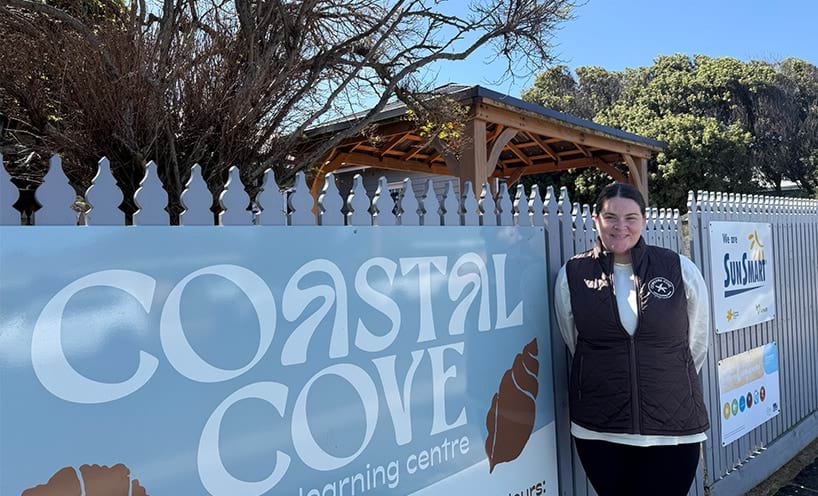
Hannah Stephen is an early childhood teacher at Coastal Cove Early Learning in Warrnambool. She was also a finalist in the 2025 Victorian Early Years Awards.
Hannah has worked in early childhood education for almost 15 years. She teaches 3- and 4-Year-Old Kindergarten programs.
She says she was drawn to teaching because it gave her the chance to support children at an important stage of their lives.
‘I am grateful to know that the experiences, relationships and little moments we create can have a lasting impact on a child.'
‘There is something pretty special about being part of their journey as they discover who they are and the world around them,’ Hannah said.
Following children’s curiosity
Hannah enjoys following children’s interests and seeing where their ideas lead.
‘Sometimes you might start the day with one plan, and before you know it, the children have taken you somewhere completely different,’ she said.
She says when her intentional teaching approach draws on child-directed learning, it can be some of the most rewarding work. She is motivated by seeing children’s faces light up when they have space, time and support to discover something for themselves.
Learning through exploration
Hannah is passionate about giving children opportunities to explore beyond the service.
Coastal Cove Early Learning runs a beach kindergarten program with support from a bush kinder grant received in 2025. The program gives children the chance to learn in a different environment and connect with their local area, community and Country.
Connecting with Country is an important part of the beach kinder experience. Each time they visit the beach, the children acknowledge the Traditional Owners of the land.
‘The children now talk about how this is Eastern Maar Country and they are learning and playing on the shared lands of the Peek Whurrong and Kirrae Whurrong People of the Maar Nation. They understand that we need to say thank you,’ Hannah said.
‘Hearing the children express this understanding in their own words is really meaningful.’
The beach visits also help children notice, question and investigate the world around them.
‘Finding a feather, a shell or a tiny creature can create so much excitement and lead to so many questions and conversations,’ she said.
Hannah leads beach kinder 3 to 4 times each term. She says that children become more settled, engaged and confident as they become more familiar with the experience.
A new challenge each day
Hannah said her team, the culture at Coastal Cove Early Learning and the children themselves keep her excited about her work.
‘No two days are ever the same,’ she said. ‘The children’s questions and ideas constantly excite me and challenge me to think differently’.
Hannah hopes her time with the children will stay with them long after they leave kindergarten.
‘More than anything, I hope they remember feeling loved, safe, listened to and believed in,’ she said.
She also hopes they remember the fun and adventures they shared through Beach Kinder and develop a sense of wonder.
For Hannah, helping children build confidence and curiosity is an important part of her work.
‘If they leave feeling confident in who they are, curious about the world around them and knowing that their voice matters, then I feel I have done my job.’
Find out more
For more information about World Teachers’ Day, visit World Teachers’ Day.
Celebrate with your community this Children’s Week
Children’s Week is from 24 October to 1 November 2026.
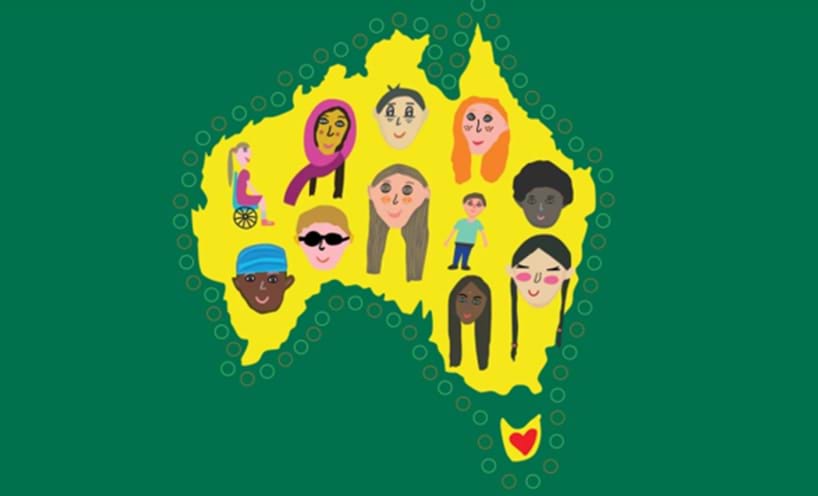
Children’s Week is a national celebration that recognises the talents, skills, achievements and rights of children.
It will run from Saturday 24 October to Sunday 1 November 2026. Thousands of Victorian children and families are expected to take part.
This year’s theme is ‘Children have the right to use their own language, celebrate their culture and practise their religion’. The theme is a simplified version of Article 30 of the United Nations Convention on the Rights of the Child.
Celebrate together
Local councils, not-for-profit organisations, schools and early childhood services will host in-person and online events and activities during Children’s Week.
The department is supporting free events and activities for children aged up to 12 years. This gives families the chance to enjoy fun, engaging and educational experiences. Successful grant applicants will be notified soon.
Spread the word
To promote Children’s Week in your community, free promotional materials are available, including:
- social media tiles
- posters
- signature blocks.
Find out more
For further enquiries, contact the Children’s Week team by email: childrens.week@education.vic.gov.au
Working together to promote kinder and support Victorian families
Connecting with families to share the benefits of kinder through a partnership with Museums Victoria.
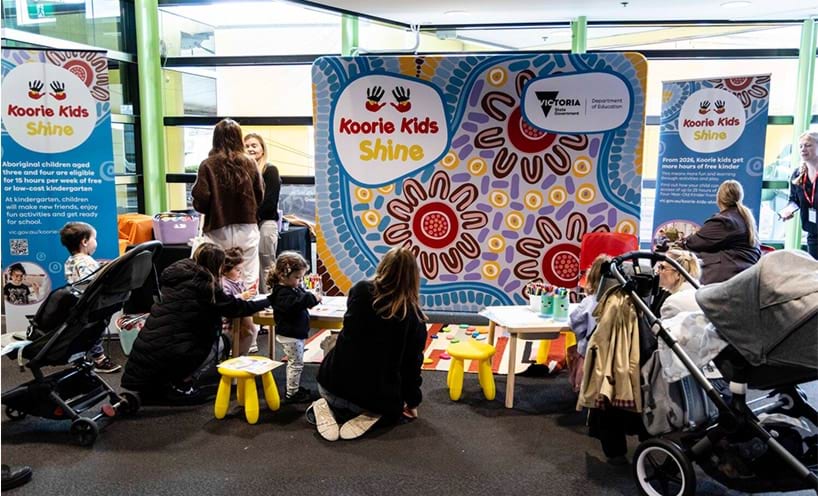
The department and Museums Victoria are working together to help families learn more about kinder.
In August, we joined Museums Victoria at the Little Kids Day In: Caring for Country event at Scienceworks.
The event celebrated Aboriginal and Torres Strait Islander Children's Day. It explored First Peoples' connection to and knowledge of Country.
We hosted a Koorie Kids Shine themed play space at the event. Families could take part in activities and learn more about kinder in Victoria.
The space was fully staffed by volunteers from the Western Melbourne Early Childhood Improvement Branch. They answered questions and talked to families about the benefits of 2 years of kinder and Free Kinder. Their knowledge and experience helped families better understand what kinder means for them.
Attending events such as Little Kids Day In gives us a chance to hear directly from families.
These conversations help us understand what families need, identify gaps in their understanding and address any confusion about kinder.
Looking ahead – Children's Week
We will join Museums Victoria again on Saturday 24 October 2026 for Romp & Stomp at Melbourne Museum. The event will mark the start of Children’s Week.
For one day, Melbourne Museum will transform into a museum-wide celebration of learning through play. We will be there to share information about kinder and connect with families.
To read more about Children’s Week, refer to the Children’s Week article in this edition.
Museums Victoria partnership
Museums Victoria support programs that promote Victoria’s Best Start, Best Life early childhood reforms.
It has also been funded by the department to deliver professional learning programs that align with the Victorian Early Years Learning and Development Framework (PDF, 24MB).
This reflects a shared goal of supporting the best outcomes for every child.
Find out more
For further enquiries about the partnership, contact the department by email: ec.portfolio.communications@education.vic.gov.au
Kindergarten Parent Opinion Survey 2026
Encourage parents and carers to take part in the survey, running from 12 to 30 October 2026.
We’re inviting parents and carers of children enrolled in a funded kindergarten program to take part in this year’s Kindergarten Parent Opinion Survey (KPOS).
The survey is running from Monday 12 October to Friday 30 October 2026. It’s a chance for families to give feedback on their child’s kindergarten program. This feedback will help services to continue to provide quality early years education that is responsive to their community.
We encourage all funded kindergarten services to share the survey with parents and carers of children enrolled in their funded 3- or 4-Year-Old Kindergarten programs. We will send you resources to help in early October.
About the survey
The survey takes a few minutes. It asks parents and carers about their service’s educational program and quality, as well as their child’s learning and development.
The survey will be available in 10 languages other than English, so more people can take part. These include: Arabic, Dari, Hindi, Nepali, Punjabi, Simplified Chinese (Mandarin), Sinhalese, Traditional Chinese (Cantonese), Urdu and Vietnamese.
Results will be available in early 2027 for providers and services where 5 or more families have completed the survey.
ORIMA Research Pty Ltd is running the survey on behalf of the department.
2025 results
Last year more than 14,795 parents and carers of children enrolled in funded 3- or 4-Year-Old Kindergarten programs took part in the survey. The results were exceptionally positive.
Responses from parents and carers at a state-wide level revealed:
- 90% thought the quality of education offered was good
- 91% think attending kindergarten is important for their child’s education
- 94% said that the service is welcoming and inclusive of all children.
These results are a testament to the wonderful work of our kindergarten services, teachers and educators.
Find out more
For more information, refer to Kindergarten Parent Opinion Survey.
Bringing knowledge together to support children’s development
How Southern Rise Children’s Centre is using the Early Years Assessment and Learning Tool to inform planning.

Southern Rise Children’s Centre in Wodonga is using the Early Years Assessment and Learning Tool (EYALT) to build a clearer picture of each child’s learning and development.
The EYALT is an online observation-based formative assessment resource. It is designed to help early childhood teachers and educators understand each child’s unique strengths, interests and abilities. It also helps them to understand and support children's learning.
The team introduced the EYALT in 2025. They initially planned to use it to support assessment for 4-Year-Old Kindergarten but soon saw the benefits of extending it to 3-Year-Old Kindergarten.
The team use it across the 2 assessment cycles. The reports help inform their planning, supporting them to set individual goals and inform conversations with families.
Bringing information together
Team leader Ebony Ablett-Johnstone said one of the biggest benefits of the EYALT is that it brings together the information teachers have about each child.
‘The EYALT is a way of collating all our knowledge of the children,’ Ebony said.
‘This includes information gathered through observations, conversations with families, enrolment information and everyday interactions with the children.’
This gives them a clearer picture of each child’s learning outcomes.
Setting goals and planning
The team completed their first EYALT assessment early last year and shared information from the reports with families as a mid-year report. The reports replaced their previous mid-year term summary.
The teachers used the reports to help set goals and plan for the rest of the year.
They then used EYALT reports from the second assessment cycle to set goals for the children moving to 4-Year-Old Kindergarten. The reports also helped inform Transition Learning and Development Statements.
Nicky Henderson is an educational leader and nominated supervisor at the service. She said, ‘using the EYALT supports early years educators in forming a more global picture of where the child is at and where they are going.’
‘Goals and supports can be delivered at the level that each child is at and in all areas of development supporting the children’s development.’
The team have seen the development of the children in the reports over the 2 years.
Taking the time to learn
Nicky’s advice is to take time to become familiar with the tool. She found the more the team used it, the easier and quicker the process became.
‘When you first start filling out the areas for each child it can be overwhelming,’ she said.
‘Work on the assessments throughout Term 2, adding what you know about the child rather than leaving it and doing all your group at once.’
‘It is okay to have gaps. These are areas you can visit and talk with your team about in your program.’
Building on their experience
As the team has become more familiar with the EYALT, they have started exploring more functions. This includes using Group Reports to support setting room goals for their programs.
They are also looking more deeply into the suggested activities in the Learning Report and using this to support families and teachers.
Find out more
For more information about the EYALT, refer to Early Years Assessment and Learning Tool.