- Published by:
- Department of Education
- Date:
- 28 Oct 2026
The Early Childhood Update e-newsletter is sent to early childhood teachers and workers, but is open to anyone interested in best practice in early years education and evidence-based teaching approaches. Subscribe here to receive the e-newsletter(opens in a new window).
Working with Children Check changes in effect
Learn more about the changes that took effect on 19 October 2026, and new resources.

In the 7 October 2026 edition of Early Childhood Update, we shared information about the changes to the Working with Children Check that took effect on Monday 19 October 2026.
This article reminds you of how to comply with the new requirements. It also shares new guidance videos to help you use Working with Children (WWC) Connect.
Working with Children Connect
WWC Connect is now available through the Service Victoria website. It helps organisations to meet the new legal requirement to notify the Social Services Regulator (SSR) about workers and volunteers they engage to work with children.
To meet the new requirements, your organisation should:
- Check – use the WWC status checker to verify your workers’ WWC Clearance
- Connect – when ready to formally engage, connect them to your organisation using WWC Connect
- Record – keep records to show you have completed the required checks and connection
- Maintain – keep your WWC Connect records up to date as workers and volunteers join, leave or their details change. You need to do this within 7 days for workers and 21 days for volunteers.
Although there is no legal requirement to connect workers who were engaged before Monday 19 October 2026, the SSR strongly encourages you to do so. This will give a more complete view of your child-related workforce. It will help ensure you receive notifications if someone’s WWC Clearance status changes. Please also let your workers and volunteers know the information you are uploading to WWC Connect.
WWC Connect allows you to upload workforce information in bulk using a template. You can access the template in WWC Connect.
Approved providers must also continue to submit workforce information to the National Early Childhood Worker Register, as required by the National Law. You can export information from the National Register about your workers to help complete the WWC Connect bulk upload template. This includes their name, WWC Clearance number and contact details. For information on how to do this, refer to the October 2026 edition of the Victorian Early Childhood Regulatory Authority newsletter: Changes to Working with Children (WWC) Connect.
For guidance videos on how to use WWC Connect, refer to: Working with Children Connect on the Service Victoria website.
If you cannot update WWC Connect within the timeframes (7 days for workers or 21 days for volunteers) for any reason, contact the Social Services Regulator contact centre.
Working with Children child safety training
Mandatory Working with Children child safety training is now in place for people:
- applying for a WWC Clearance
- renewing their WWC Clearance
- changing from a volunteer WWC Clearance to an employee WWC Clearance.
The Working with Children child safety training is a mandatory step in the Working with Children Check application process. It does not replace existing child safety responsibilities, induction, supervision and training, such as the National Child Safety Training or EC PROTECT for early childhood education and care services.
Organisations are not responsible for managing the completion of WWC child safety training for staff or volunteers. The SSR will communicate directly with WWC cardholders about this requirement when their card is due for renewal.
For more information, visit: Mandatory Working with Children Child Safety Training.
Find out more
For more information about WWC Check, refer to: Working with Children Check.
Updated Victorian Early Years Learning and Development Framework
Explore the new Learning and Development Maps and other updates to the framework.
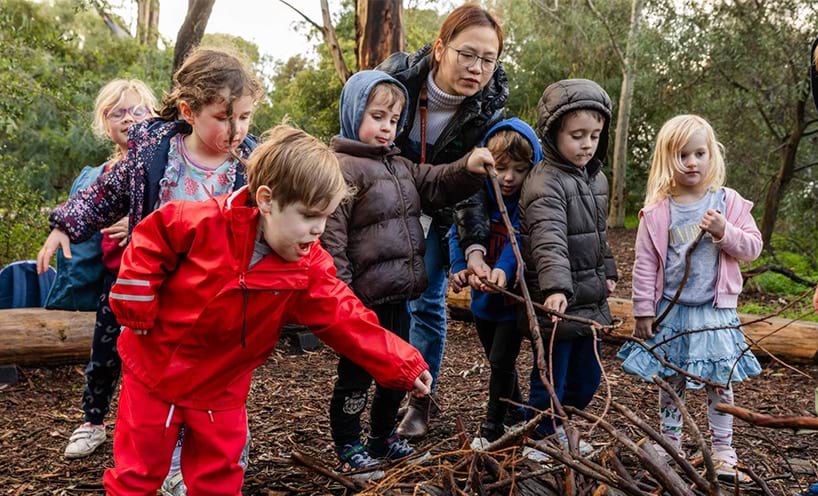
Victoria has updated the Victorian Early Years Learning and Development Framework (VEYLDF).
The updated framework includes Learning and Development Maps. The maps will help early childhood professionals understand and support children’s learning and development.
The VEYLDF continues to promote inclusive, high-quality practice, with a strong focus on child safety. It supports professionals and families to work together so children can develop as confident learners.
The online version of the updated VEYLDF includes the Learning and Development Maps. They are also included in printed copies being sent to services.
New Learning and Development Maps
The maps support early childhood professionals, school educators and families to understand how children's learning and development through the VEYLDF Outcomes continues into the first 3 years of school.
They support observation, planning and reflective practice. The maps can be used to help identify a child’s progress in learning and development. They can also support conversations between professionals, families and other services about children’s learning, their progress and the learning they will be supporting the child/children to develop next.
Other changes
The updated VEYLDF also includes several other changes. These include:
- a stronger focus on child safety and wellbeing
- clearer information about intentional teaching, and integrated teaching and learning approaches
- more cultural knowledge stories across the framework
- updated outcome descriptors aligned with the Early Years Learning Framework 2.0 (PDF, 24.9 MB) and the Victorian Curriculum F-10 Version 2.0
- new examples to show how the Practice Principles can be used in everyday practice.
These changes aim to make the framework clearer and easier to use.
Resources and professional learning
Resources and professional learning opportunities are available to help professionals and teaching teams understand and use the updated VEYLDF.
You can:
- access materials and recordings on the updated VEYLDF Resources webpage
- explore resources on the Early Childhood Hub (under the Resources tab).
There are also supporting materials linked to the cultural knowledge stories in the framework.
Time to prepare
Throughout 2027, kindergartens can align their programs with the updated VEYLDF.
From January 2028, the Victorian Early Childhood Regulatory Authority will engage with the updated framework during assessment and ratings visits.
This gives services time to:
- read the updated framework
- explore the Learning and Development Maps
- talk as a team about how the changes can support practice.
We will provide more professional learning and capability-building resources to support implementation. These will be guided by Victoria’s Kindergarten Teaching Excellence Approach.
Find out more
For more information about the VEYLDF and to access the updated framework, refer to the VEYLDF webpage.
Victorian Early Years Awards 2026 winners
Celebrating the outstanding work of early years professionals and services.
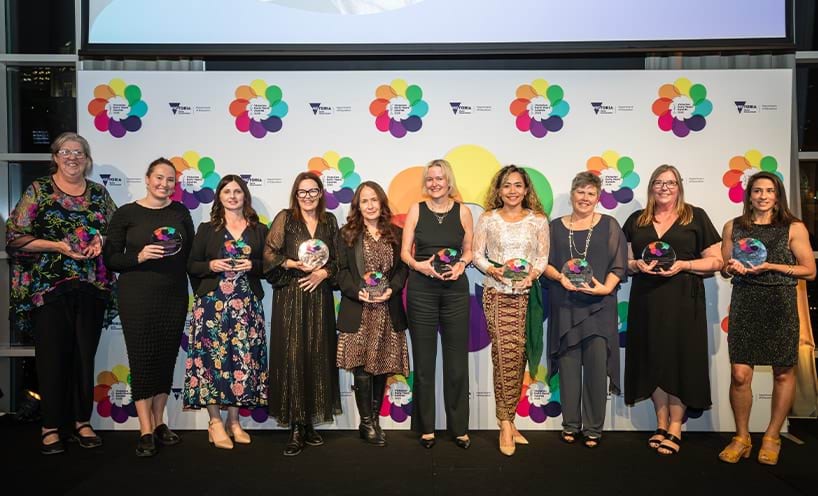
The 21st Victorian Early Years Awards winners were announced at a ceremony last night, Tuesday 27 October 2026.
The 26 finalists were celebrated for their outstanding practice, skill and commitment to improving outcomes for Victorian children and their families.
From this impressive cohort, 10 winners were selected, reflecting the vital work happening in the early years sector.
Each winner received a $15,000 grant, which they can use for professional development or to support their initiative in the early years sector.
Individual awards
The winners for their individual contributions to supporting improved learning and development outcomes for children were:
Early Childhood Teacher of the Year: Diah Hastuti from Dill-be-din Kindergarten. Diah has found creative ways to help children and families feel safe and connected. She learned basic Arabic, introduced keyword sign language, used interpreters and brought Arabic, Oromo and Amharic into the learning environment. This has led to better attendance, communication and wellbeing.
Educator of the Year: Cerri May from Gowrie at The Harbour. Cerri brings more than 30 years of experience to her role. Cerri believes children are capable, curious learners who thrive in inclusive environments. She works closely with families and professionals to understand each child’s strengths, needs and identity, adapting learning through braille, tactile and sound-based experiences. These experiences build empathy, self-regulation and belonging. She also shares her expertise as a mentor and coach.
Service and organisation awards
The services and organisations that received awards were recognised for:
- supporting parents
- working with others in the community
- improving child health and wellbeing
- achieving high-quality outcomes.
The recipients were:
- Improving Access and Participation in Early Learning: Family Voices Matter, Foundation House (in partnership with Colman Education Foundation – Our Place (Northern Bay) and CALD Outreach (City of Greater Geelong))
- Supporting Parents to Build their Capacity and Confidence: Bringing Up Aboriginal Babies at Home program, Victorian Aboriginal Child Care Agency
- Creating Collaborative Community Partnerships: Road safety upgrades, Ada Mary A’Beckett Children’s Centre (in partnership with Port Phillip Council)
- Promoting Children’s Health and Wellbeing: Pop-Up Playgroups, Baw Baw Shire Council
- Continuity of Early Learning: Keysborough Primary Kindergarten (in partnership with Keysborough Primary School)
- The Emeritus Professor Collette Tayler Excellence in Educational Leadership award: Debbie Roper, Gowrie Victoria
- The Aunty Rose Bamblett Koorie Early Years Legacy Award: Lake Tyers Early Learning Centre and Kindergarten.
The Minister’s Award
Finalists in each category were also eligible for the prestigious Minister’s Award, selected by the Minister for Children Lizzie Blandthorn.
This year’s winner of the Minister’s Award was Julie-Anne Joyce from Coburg Children’s Centre. Julie-Anne has worked at the centre for more than 18 years. Julie-Anne champions inclusion, innovation and advocacy in her work. As a proud Deaf educator, she has embedded Auslan and Deaf culture into daily learning. Julie-Anne embeds Auslan through songs, stories and mealtimes. Her leadership shows children that rich communication includes gestures, movement, visual cues, sounds and spoken language.
Find out more
For more information about this year’s winners and finalists, refer to Finalists for 2026 VEYA.
For further enquiries, contact the department by email: early.years.awards@education.vic.gov.au
Strengthening First Nations recognition and self-determination
Learn about changes to Victoria’s education laws and what they mean for the early childhood workforce.
On 5 August 2026, Victoria amended the Education and Training Reform Act 2006 to legally recognise First Nations peoples’ unique status and rights and support self-determination in education.
The changes are now part of the law that governs education in Victoria across:
- early childhood education
- schools
- vocational education training
- adult, community and further education.
The changes support Victoria’s commitment to improving cultural safety and self-determination. They also affirm work underway, including through Marrung 2026–2036, Victoria’s First Nations education strategy.
The changes also support Victorian Child Safe Standard 1.
About the changes
The Act now includes:
- a new Statement of Recognition that acknowledges First Nations people, histories and cultures in education
- new principles that every person and organisation in the sector must consider and apply in their role. These relate to:
- the importance of self-determination to improving learning and wellbeing outcomes for First Nations learners
- the need for the education system to recognise, respect and support the cultural rights, and the right to cultural safety, of First Nations people
- First Nations histories, cultures (including languages) and perspectives being an important and core part of learning
- preventing, identifying and responding to racism experienced by First Nations people as a priority
- the role of the education system in addressing the historic and ongoing structural, systemic and interpersonal biases and educational inequities experienced by First Nations people
- the role of the education system in supporting First Nations language reclamation and revitalisation as led by the First Nations community.
- a new requirement for the department’s Secretary to consult First Nations representatives on policies and measures that relate to First Nations education or learners
- confirmation that First Nations histories, cultures and perspectives are part of the school curriculum
- new definitions to support the changes. This includes a revised definition of ‘parent’ to include First Nations kinship systems.
There will also be a new requirement for the department’s Secretary to make Aboriginal cultural understanding training available to all Victorian education workforces. This amendment starts on Sunday 1 August 2027 to allow time to develop training.
The changes were developed with representatives from:
- Aboriginal Community Controlled Organisations
- early childhood associations
- principals’ associations
- the Australian Education Union
- the training sector.
This involvement ensures the changes reflect First Nations community aspirations and can be implemented.
What the changes mean for early childhood services
The changes apply to everyone working in Victoria’s education system. This includes corporate, administrative and frontline staff.
The early childhood workforce should familiarise themselves with the amendments. In particular, staff groups are encouraged to read and discuss the new principles and how they will meet the requirements. Please read this fact sheet for guidance about the new principles and what they mean.
The amendments do not represent a change in education policy. They embed in law Victoria’s existing commitments to recognising First Nations people supporting their self-determination in education.
Resources and support for early childhood professionals
The following resources are available on the department’s website:
- Early childhood education programs supporting Aboriginal children
- Early Years Engagement Program supporting culturally safe and inclusive kindergarten environments
- Child care and kindergarten services operated by and for First Nations communities.
Professional learning is available to support education staff to strengthen culturally safe and inclusive practice. To access training, refer to the Bringing Change Together: First Nations Learning Suite.
The Victorian Aboriginal Education Association Incorporated website also has resources for early childhood services, including:
- Walking Together (PDF, 3 MB) — an inclusion support and protocols resource developed with the Victorian Inclusion Agency
- Early Childhood Activities (PDF, 1.48 MB).
Find out more
To access the Act, refer to: Education and Training Reform Act 2006 on the Victorian Legislation website.
To access Victoria’s new First Nations education strategy, refer to: Marrung 2026–2036.
For more information about Child Safe Standard 1, refer to: Complying with the Child Safe Standards.
Kindergarten funding updates for 2027
Access the 2027 kindergarten funding rates and find out about enterprise agreement payments and funding adjustments.
Provisional 2027 kindergarten funding rates are now available.
The rates include increases and changes across several funding streams. These include:
- increased Per Capita rates
- increased Ratio Supplement funding
- changes to the Early Childhood Teacher Supplement
- a new service leader payment for eligible services.
Kinder funding rates increase in 2027 for all services.
Services that operate under the new kindergarten enterprise agreements will receive additional funding to cover the workforce costs associated with these agreements.
The department will confirm the rates after the Fair Work Commission (FWC) approves both agreements.
The FWC has approved the Early Education Employees Agreement (EEEA). The Victorian Early Childhood Teachers and Educators Agreement (VECTEA) is awaiting FWC approval.
The rural travel allowance will also expand in 2027. This will help eligible rural services where a teacher travels more than 100km or one hour by car, one way, to deliver a funded kindergarten program.
The department will provide more information about the new service leader payment, expanded travel allowance and leave reimbursement to eligible service providers before the 2027 kindergarten year.
You can find more information about the funding rates and settings on the Kindergarten funding rates webpage.
One-off 2026 enterprise agreement payment
Service providers that operate under the VECTEA or EEEA will receive a one-off payment of about $400 per eligible 15-hour enrolment.
The payment will help cover the additional salary costs associated with the new kindergarten enterprise agreements from 15 May 2026 until the 2027 funding rates begin in January.
This payment is in addition to the 2.5% increase in kindergarten funding rates introduced at the start of 2026.
The department expects that together, this funding will meet additional salary costs for 2026.
The payment will be available to service providers that either:
- operate under the new enterprise agreements
- have an existing equivalent agreement and commit to providing the salaries and conditions of the new enterprise agreements from 15 May 2026.
Providers that operate under the VECTEA or EEEA do not need to take any action to receive the payment.
The department has processed payments to providers that operate under the EEEA. The department will process payments to providers that operate under the VECTEA once the FWC approves the agreement.
Providers with approved equivalent employment arrangements may also be eligible for the payment. The department will email these providers with more information about eligibility and how to access the payment.
Providers that would like more information about accessing higher kindergarten funding rates based on an equivalent enterprise agreement should contact their local Early Childhood Improvement Branch.
2026 funding monitoring and assurance
The department continues to monitor kindergarten funding calculated and paid through Arrival to ensure payments are accurate.
The first funding review, covering January to May 2026, is complete. We have contacted affected providers about any funding adjustments.
We are finalising the second review, covering June to August 2026. We will email providers directly if we identify an adjustment for their service.
We are also developing funding reports to help providers understand their funding calculations and any enrolment-level adjustments. We will email providers when these reports are available.
Find out more
For more information, refer to Kindergarten funding rates.
For further enquiries, contact Early Learning Funding and Operations by email: kindergarten.funding@education.vic.gov.au
Updated Kindergarten Funding Guide
Find out about changes to the guide and access resources to help you prepare for 2027.
The updated Kindergarten Funding Guide is now available.
The guide is the key reference for funded kindergarten providers. It brings together information about:
- requirements for operating a funded kindergarten service
- kindergarten funding and eligibility
- provider reporting and compliance obligations.
After consulting services and other users, we have restructured the guide to make information easier to find, navigate and understand.
The updated guide reflects current kindergarten funding policy settings, including updates and clarifications to existing requirements. A summary of changes is available on the department’s website.
We will keep the guide updated regularly. Service providers should review the updated guide and summary of changes and refer to the online version for the latest information.
Service providers are responsible for understanding and meeting the requirements in the guide as a condition of kindergarten funding.
The updated guide includes a new statement on the inclusion of First Nations children, families and communities in kindergarten programs. The statement supports the implementation of Marrung 2026–2036. It also supports the Victorian Government’s commitment to an education system where First Nations learners:
- feel safe, respected and strong in their culture and identity
- have a voice in decisions that affect their education
- have access to high-quality learning and support
- can move confidently through early childhood, school, further study, training and work.
One funded kindergarten place form
The 2027 one funded kindergarten place form is now available. There are no changes to the form or policy settings for 2027.
A child can access a funded kindergarten place at only one service at a time. Services must make sure families complete the declaration as part of the enrolment process and keep a signed copy on the child’s enrolment record.
The department can request copies of completed declarations at any time for audit purposes.
To access and download the form, visit: Resources for funded kindergartens.
Additional year of funded kindergarten declarations
Early childhood teachers must complete an additional year declaration of eligibility form for children assessed as needing an additional year of funded kindergarten in 2027. This was formerly known as a second-year declaration.
Teachers should complete the form after reviewing the child’s Term 3 plan for learning and development and discussing the outcome with the family.
Completed forms must be submitted to your local Early Childhood Improvement Branch by Monday 30 November 2026.
The department can request a copy of the declaration when assessing an exemption from school application (DOCX, 74.4 KB).
To access the form, visit: Additional year of funded kindergarten.
Find out more
For more information, refer to Kindergarten Funding Guide.
For further enquiries, contact Early Learning Funding and Operations by email: kindergarten.funding@education.vic.gov.au
Priority of Access and more hours of 4-Year-Old Kinder criteria for 2028 enrolments
Find out about changes for the 2028 kinder year related to Priority of Access and concession card holder eligibility for more hours of 4-Year-Old Kinder.

An updated Priority of Access (PoA) policy will apply for children in kinder in the 2028 year. There are no changes to enrolments for the 2027 kindergarten year.
PoA supports the Central Registration and Enrolment Schemes (CRES), and service providers, to make enrolment decisions when demand exceeds places available.
It ensures children who might face barriers to kindergarten participation can access the kindergarten programs that best meet their needs.
Changes to how kindergarten places are prioritised
There is no change to the groups of children eligible for PoA.
The updated policy will maintain the highest priority in allocating kinder places for children facing the greatest barriers to accessing kindergarten.
It will also provide greater consideration for children continuing from 3-Year-Old to 4-Year-Old Kinder at the same service.
What is changing
A new 3-tier approach will change how children are prioritised when demand exceeds available places.
- Tier 1 – Highest priority: Children facing the greatest barriers to accessing kindergarten will continue to receive the highest priority.
- Tier 2 – Continuity of enrolment: Children already attending 3-Year-Old Kinder who wish to continue to 4-Year-Old Kinder at the same service.
- Tier 3 – Additional priority: Children or families holding concession cards, children from multiple births (triplets or more), and children whose parents or carers have additional needs.
How prioritisation will work
When there are more applications than available kinder places, the tiers will be applied in order:
- Tier 1 children are prioritised first
- Tier 2 children are prioritised once all Tier 1 children have been offered places. If there are not enough places for all Tier 2 children, those who meet both Tier 2 and Tier 3 criteria should be prioritised
- Tier 3 children are prioritised after all Tier 1 and Tier 2 children have been offered places.
Once these priorities have been applied, and criteria for services in rollout local government areas offering more hours of 4-Year-Old Kinder (Pre-Prep), where relevant, have been applied, services and CRES providers may use locally agreed criteria to allocate remaining places.
For more information, visit: Priority of Access 2028.
Concession card holders
From 2028, children who hold a Commonwealth concession card, or whose parent or legal guardian holds one, may be eligible for:
- more hours of 4-Year-Old Kinder
- Tier 3 PoA when demand for places exceeds availability.
Eligible cards include Commonwealth Health Care Cards, Pensioner Concession Cards and Veterans’ Affairs Cards.
Concession card validity
The validity requirements differ depending on the policy:
- More hours of 4-Year-Old Kinder: The concession card must be valid at any time from 1 January in the year before the child attends 4-Year-Old Kinder.
- Priority of Access – Tier 3: Service and CRES providers can determine the period during which a concession card must be valid to establish eligibility. This includes in aligning with the eligibility period for more hours of 4-Year-Old Kinder. Eligibility can be checked at one or more points before places are allocated, regardless of when the card was valid.
For more information and guidance to support implementation of these updates, refer to:
Resources will be available in Term 1, 2027 to support families to understand the updated Priority of Access policy.
Find out more
For further information and support, contact your local Early Childhood Improvement Branch.
School Readiness Funding planning for 2027–2028
Preparing for the next 2-year cycle and menu reform.

Kindergarten services across Victoria will soon receive their 2027–2028 School Readiness Funding (SRF) allocations and can begin planning how to use the funding.
For the first time, services will complete SRF planning and management in Arrival. This replaces the previous KIMS platform.
There are no significant changes to policy or planning requirements. However, the transition to a new system is a significant change for many services. You might need time to become familiar with the new processes and functionality.
Support available
To help services with the transition, Arrival information, guidance materials and planning resources will be available on the SRF webpage. These will include step-by-step information about how to develop, submit and manage an SRF plan.
We also encourage you to work with your local Early Childhood Improvement Branch. They can provide advice and support throughout the planning process.
When developing your plan, you should:
- undertake planning with your service community
- use the offline planning template (when available) before entering your plan into Arrival
- allow time to become familiar with Arrival
- consider your plan carefully before submitting it. Changes to approved plans require further approval in Arrival.
SRF planning is not limited to the formal planning period. Across the 2-year planning cycle, services should:
- continue to reflect on their priorities
- analyse service data
- consider local needs to ensure funding decisions continue to support improved outcomes for children.
Submitting your plan
You must submit your SRF plan to the department within 4 weeks of acknowledging the terms and conditions in Arrival.
SRF Menu reform
The department is introducing a new process to assess existing menu items and new applications to ensure items are high quality, accessible and available.
This process includes:
- expanded assessment criteria
- greater emphasis on evidence.
We are adding 12 new items to the menu for the 2027–2028 planning cycle. Of these, 10 are new and 2 have been on the SRF Menu previously. The new items are listed in the table below. These will be added to the SRF Menu website and Arrival over the coming weeks.
We will share more information about the new SRF Menu application process in 2027.
New SRF Menu items available for the 2027–2028 cycle
| Menu name | Provider name | Description |
| Co-regulation for caregivers and educators | Kid Link Occupational Therapy Pty Ltd | A professional learning workshop for educators and caregivers. It builds capacity to support children’s regulation, wellbeing, participation and social-emotional development through co-regulation. |
| Creating Emotionally Safe Kindergartens: Trauma-Informed Strategies for Behaviour Support | MOAT: Mental Health Services | A trauma-informed professional learning program. The program helps educators understand behaviour, strengthen relational practice, and support children’s wellbeing, regulation and participation. |
| Developing Executive Functions in the early years: SOWATT can you do? | SOWATT learning | Training for educators in the SOWATT (Self-Regulation, Organisation, Working Memory, Attention, Thinking Flexibly, and Thinking About Thinking) approach. This approach helps educators intentionally build children’s executive function skills through everyday routines, play, interactions and learning experiences. |
| Developing Speech Sounds: Foundations for Clear Speech and Literacy Readiness | Pelican Talk | Training for educators on speech sound development and phonological awareness. This will help educators to use strategies and activities that are tailored to each child’s level of need. |
| Early Childhood Literacy Coaching | SailAway Readers | A literacy-focused professional development and coaching service for educators. |
| Inclusive Practice in Early Childhood: Regulation and Participation | Monkey Minds Pty Ltd | A capacity-building professional learning program for educators to strengthen inclusive practice through a practical, respectful and play-based early childhood lens. |
| Early Childhood Mathematics Professional Learning | The Mathematical Association of Victoria | A professional learning and coaching program that strengthens educators’ capability to embed mathematics and numeracy learning within play-based early childhood programs. |
| Outdoor Learning Environments: Building Communication and Connection | Nature Talking | Training and coaching for early childhood educators to support children’s communication, emergent literacy and participation within in-nature learning environments. |
| Relate, Regulate, Reason | Life Ready Learning | A training program for educators to develop competency in emotional regulation as the foundational skill for executive function in children. |
| Stephanie Alexander Kitchen Garden Program for Early Childhood | Stephanie Alexander Kitchen Garden Foundation | A training program to equip educators to deliver play-based, hands-on kitchen and garden learning experiences for children aged 2 to 6. |
Find out more
For more information about School Readiness Funding, refer to the SRF webpage. The webpage will be updated when School Readiness Funding allocations are released.
Child Link resources and training
Access new resources to support conversations with families, and training to strengthen child wellbeing and safety at your service.

Child Link is a digital tool that displays important information about the children enrolled at your service, such as a child’s participation in Maternal and Child Health Services.
Services can use Child Link and information sharing to support the wellbeing and safety of children.
To help services build and maintain trusted relationships with families, the department has developed resources to help professionals explain Child Link to families when they have questions.
The resources outline what Child Link is and how professionals use it to support children. They include resources designed for First Nations peoples.
You can download flyers and fact sheets to support your conversations with families. To access the new resources, visit the Child Link(opens in a new window) webpage.
Child Link can help services meet child safety requirements
All early childhood providers operating a service with a funded kindergarten program should access Child Link, as outlined in the updated kindergarten funding guide.
Using Child Link can help you to meet your obligations under Child Safe Standard 8 and Quality Area 2 of the National Quality Framework.
Providers can nominate up to 3 Victorian Institute of Teaching-registered teachers and the nominated supervisor (PDF, 127 KB) as Child Link Users for each service.
Staff must complete both Child Link and information sharing training to access Child Link.
Register for training
eLearn modules and interactive webinars are available to help you understand information sharing and how to access Child Link.
If you need to complete training to become a Child Link User and have not completed information sharing training, we recommend the Information Sharing and Child Link Training (combined) webinar or eLearn.
If you have already completed information sharing training, you can do the stand-alone Child Link User webinar or eLearn.
If you are in a role where you are likely to share information and need a detailed understanding of information sharing, we recommend the Information Sharing for Education Professionals webinar.
An optional webinar on Child and Family Violence Information Sharing in Practice is also available. This is open to all early childhood professionals. It gives participants the chance to discuss information sharing questions with a specialist facilitator.
To access the training, create an account on the: Information Sharing and MARAM Online Learning Management System.
Gain access to Child Link
To access Child Link at your service, refer to guidance on the Child Link for early childhood providers webpage.
To find out if your service has a Child Link Authoriser and if you are eligible to be a Child Link User, email: childlink@education.vic.gov.au(opens in a new window)
If you are already a Child Link User, you should continue to use it to support the wellbeing and safety of children in your care. To log in, visit the Child Link login webpage.
Find out more
For more information, refer to:
- Child Link for early childhood providers
- Child Link general information webpages
- Information Sharing and Family Violence Reforms – Guidance and Tools
- Child Safe Standards.
For further enquiries on Child Link and information sharing training:
- phone: 1800 549 646 (Monday to Friday, 9 am to 5 pm)
- email: cisandfvis@education.vic.gov.au
For support with Child Link access, contact the Child Link team by email: childlink@education.vic.gov.au
Streamlining teacher registration for early childhood employers
Learn about recent changes to the Victorian Institute of Teaching Employer portal.
The Victorian Institute of Teaching (VIT) has made changes to the VIT Employer portal.
The updated portal makes it easier for early childhood providers and services to manage teacher registration.
The changes will help providers and services to meet their child safety requirements and regulatory obligations.
Why the VIT made changes
Early childhood providers and services have a shared responsibility to ensure their teachers hold valid early childhood teacher registration.
The VIT Employer portal allows them to monitor the registration details of the teachers they employ. This includes checking teacher registration status, category, expiry date and conditions.
The updated portal will make it easier to manage this information across multiple services. It will also make it easier to recommend teachers for full registration.
These changes will help ensure teachers hold current and appropriate registration for their role.
About the changes
All early childhood providers and their services are connected through a new VIT Employer portal structure.
The portal also has improved search functions and simpler account management. This makes it easier to access and manage teacher registration information.
For providers (including local government)
Each early childhood provider has access to a provider portal to manage the services they operate.
Through the portal, providers can:
- update their provider information
- view and manage multiple linked services from one account. Providers can also add and remove services
- add, remove and view early childhood teachers on their own teacher list and the teacher lists of linked services
- view and action provisional to full and returning to full applications submitted to them or their linked service
- access VIT communications.
For services under provider management
Each early childhood service has access to a service portal to manage the teachers employed at their service. These services are linked to their provider's portal. This creates a clearer connection between providers and their services.
Through the portal, these services can:
- update their service information
- add, remove and view early childhood teachers on their own teacher list
- view and action provisional to full and returning to full applications submitted to them
- access VIT communications.
Services linked to the same provider do not have access to view each other's portals.
For local government run services, the early childhood provider will manage their teacher registration information through the provider portal.
For services under their own management
Each early childhood service has access to a service portal to manage the teachers they employ. These services are not linked to a provider portal because they manage their own operations.
Through the portal, these services can:
- update their service information
- add, remove and view early childhood teachers on their own teacher list
- view and action provisional to full and returning to full applications submitted to them
- access VIT communications.
Benefits for providers and services
The improved portal will help providers and services:
- find and verify teacher registration information faster
- improve visibility and transparency across organisations
- reduce duplication and administrative work
- complete registration tasks with greater confidence
- meet regulatory obligations more efficiently.
Resources and support
The VIT has developed guidance and support materials to help providers and services use the portal.
Resources include:
Find out more
For more information about the portal, contact VIT by email: vit@vit.vic.edu.au
New intentional teaching professional learning
Access 4 new Intentional Teaching (Build) courses on the Early Childhood Hub.
We have added 4 new Intentional Teaching (Build) professional learning courses to the Early Childhood Hub.
The courses are:
These complement the existing Introduction to Intentional Teaching, and Language and Literacy courses.
We have developed these to support the Kindergarten Teaching Excellence Approach. The courses and resources aim to build teachers’ and educators’ understanding of intentional play-based teaching and learning in specific content areas. They also aim to build their capacity to implement this approach in their practice.
The Victorian Early Years Learning and Development Framework helps early years professionals develop a common language and shared understanding. This helps them to extend children’s learning through play, intentional teaching and meaningful experiences. We encourage you to explore the updated framework with your team.
Find out more
To explore intentional teaching professional learning, refer to Early Childhood Hub.
New early career workshops
Learn about new supports for early career and returning early childhood professionals.
Are you an early childhood teacher or educator in your first 5 years of practice, or returning to the profession after a break?
The department’s Early Childhood Early Career Supports Program offers workshops and personalised coaching to help build confidence, capability and wellbeing as you grow your career.
Early Career Workshops
The workshops will run on Friday 6 November, Tuesday 17 November and Monday 30 November 2026. They will focus on:
- managing administrative responsibilities and time effectively
- navigating difficult situations through clear communication in multicultural and inclusive settings
- supporting families with complex needs while maintaining professional wellbeing.
Each workshop includes a self-paced eLearning module and an online half-day facilitated session.
Who can take part
You may be eligible to take part if you are:
- an early childhood teacher or educator in your first 5 years of work in an early childhood service delivering a funded kindergarten program
- returning to the profession after a break and working in an early childhood service delivering a funded kindergarten program.
To register for Early Career Workshops, sign up to the Early Childhood Hub.
Find out more
For more information on these supports, refer to Supports for early career early childhood professionals.
Changing careers while raising a family
How an Early Childhood Scholarship helped Rashmin Luitel move from a career in aged care to early childhood teaching.

Rashmin Luitel began her teaching career in Nepal, where she taught primary school children.
After migrating to Australia, she worked for 7 years in aged care as an assistant in nursing. While she found the work fulfilling, she continued to feel a strong connection to education.
A visit to a kindergarten with her daughter made Rashmin realise she wanted to pursue a career in early childhood education.
‘I saw the genuine care, warmth and positive impact educators had on young children.
‘That experience stayed with me and made me realise that early childhood education was the path I truly wanted to follow,’ Rashmin said.
The experience inspired Rashmin to apply for an Early Childhood Scholarship to support her studies.
Balancing study, work and family
Rashmin completed a Bachelor of Teaching (Early Childhood) at Victoria University in Melbourne last year.
As a working mother with 2 young children, she had to balance study, work, placements and family life.
‘I had to manage assignments, placement requirements, work, parenting and everyday family responsibilities. There were moments of self-doubt when I wondered whether I could manage everything,’ Rashmin said.
Rashmin’s family became her biggest motivation. She wanted her children to see that education and personal growth are possible at any stage of life.
Finding the right support
The Early Childhood Scholarship helped ease the financial pressure of studying. It helped cover the costs of childcare, textbooks, transport and make up for her reduced work hours during placements. This allowed Rashmin to focus on her studies.
The scholarship gave Rashmin more than financial help. It also gave her a sense of belief and support.
‘Knowing that someone believed in my potential gave me confidence during the times when I felt overwhelmed or questioned myself,’ she said.
A career filled with purpose
Rashmin is now working as an early childhood teacher at Billy Button Early Learning in Craigieburn. She works in a 4-Year-Old Kindergarten program.
‘What I enjoy most is seeing children grow in confidence, develop relationships and become excited about learning.’
‘Every day is different! I love being able to follow children’s interests and use those interests to create meaningful learning experiences,’ Rashmin said.
It’s never too late
Rashmin encourages others considering a career in early childhood teaching to explore the support available through an Early Childhood Scholarship. She said the support she received made a significant difference.
‘To anyone who thinks it may be too late to start again, it is not.’
‘You can begin a new chapter at any stage of life. Your experiences, challenges and strengths can become part of what makes you a meaningful educator,’ Rashmin said.
Find out more
For more information about the Early Childhood Scholarships Program, visit: Financial support to study and work in early childhood.