
Congratulations to all the 2026 Victorian Training Awards winners and finalists.
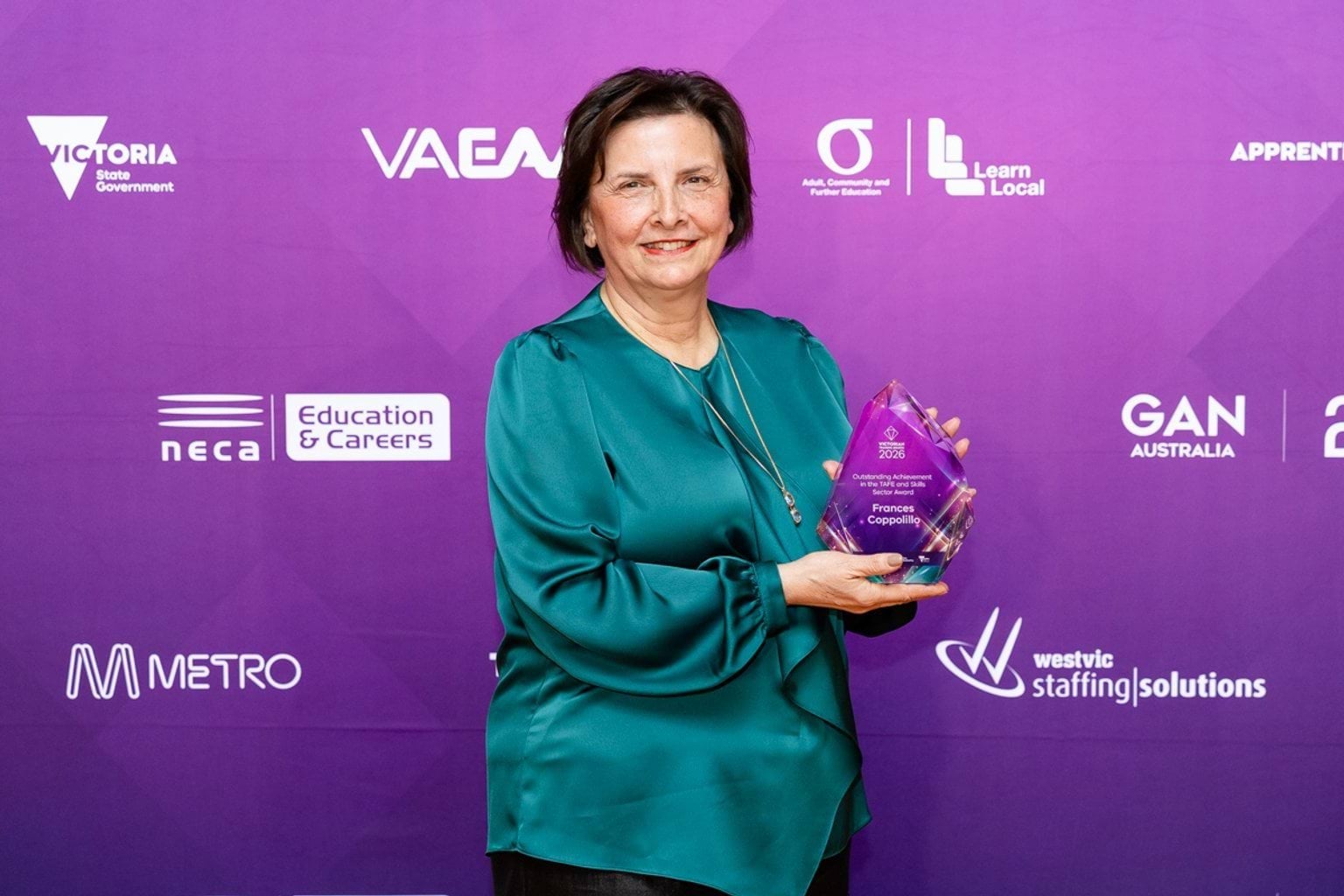
Frances Coppolillo
2026 Outstanding Achievement in the TAFE and Skills Sector Award recipient
Individual categories
Congratulations to Anna Oliphant Wright - 2026 Apprentice of the Year award winner
Certificate III in Electrotechnology Electrician - Holmesglen Institute
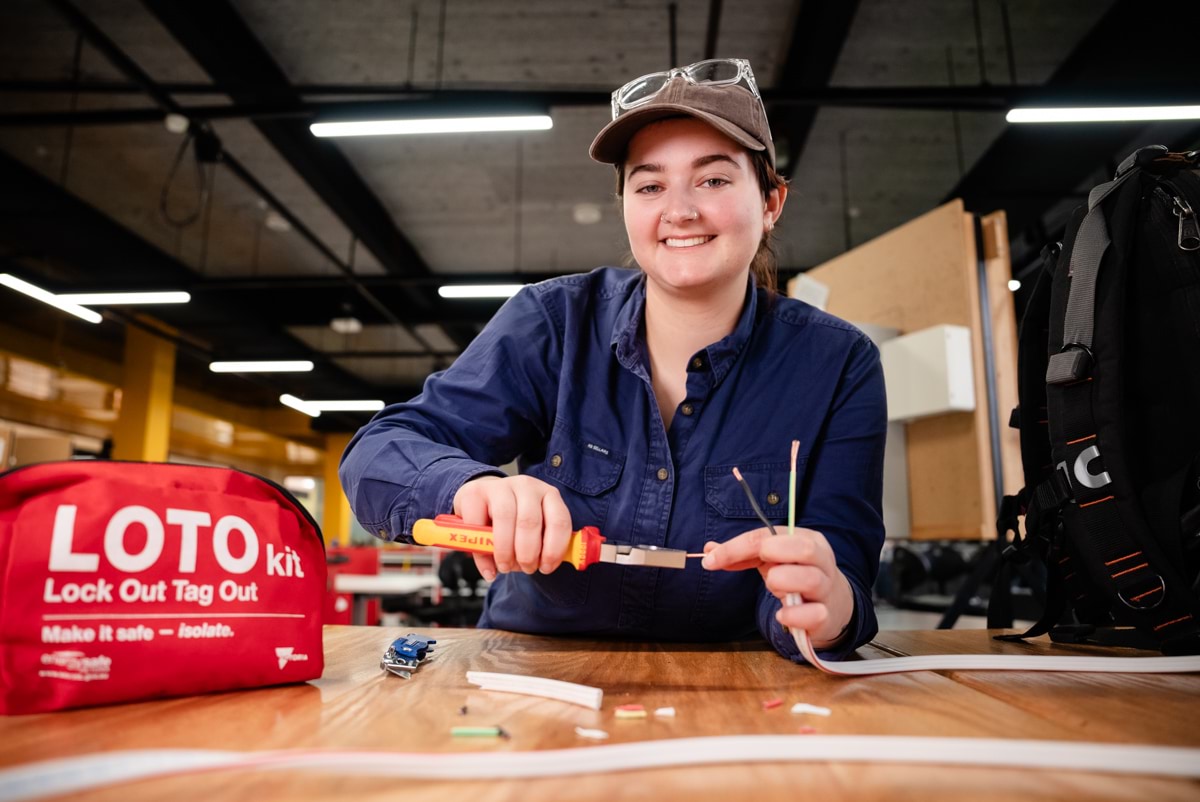
Growing up with a dad who was a 'sparky' inspired Anna Oliphant Wright to pursue her passion for the electrical industry and railways. During her electrical apprenticeship with UGL Rail, she worked on the Gippsland Line Upgrade, where the complexity of large-scale electrical systems consolidated her interest in signalling and safety-critical technologies.
Beyond her technical achievements, Anna demonstrated strong leadership through her Mental Health First Aid training, supporting classmates, colleagues and a positive workplace culture.
Despite personal challenges, she showed resilience, using her experiences to help others and contribute to her community. Professionally, she excelled by developing an estimating tool for the Metro Tunnel project that uncovered previously overlooked productivity issues. After completing a Certificate III in Electrotechnology Electrician at Holmesglen Institute, Anna gained experience with train manufacturer Alstom and is now commencing a Signal Maintenance Technician traineeship with V/Line, aiming to specialise in industrial control and signalling systems within essential services.
Georgia Baxter
Certificate III in Agricultural Mechanical Technology - Sunraysia Institute of TAFE
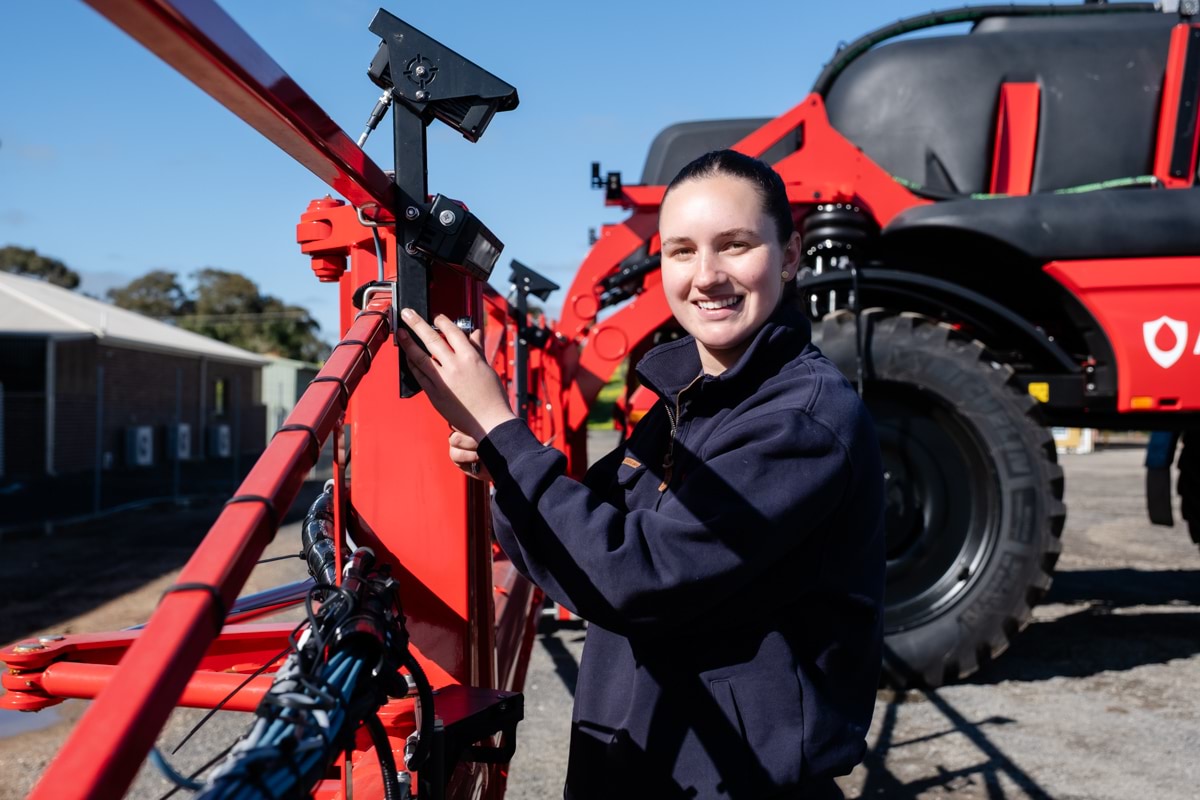
Georgia Baxter grew up within a family of diesel mechanics, but it wasn’t until a gap year spent as a firefighter driving dozers that she discovered that working with heavy machinery was her path. The experience ignited a determination to learn how to service and repair agricultural mechanical technology.
After completing her apprenticeship in December 2025 through SuniTAFE’s Swan Hill campus, she joined a company supplying advanced agricultural spraying equipment where she serviced, diagnosed, and repaired equipment on regional farms. Working independently in remote locations with limited phone reception taught her to rely on her training and trust her problem-solving skills.
As electrical systems became increasingly common in agricultural machinery, she used her skill to contribute to workplace improvements such as streamlining wiring processes to enhance efficiency and profitability. Georgia is committed to inspiring others. Her message is simple, anyone can succeed in a trade regardless of background, gender, or expectations.
Sarah Hunn-Mozes
Certificate III in Engineering (Heavy Fabrication) - Melbourne Polytechnic
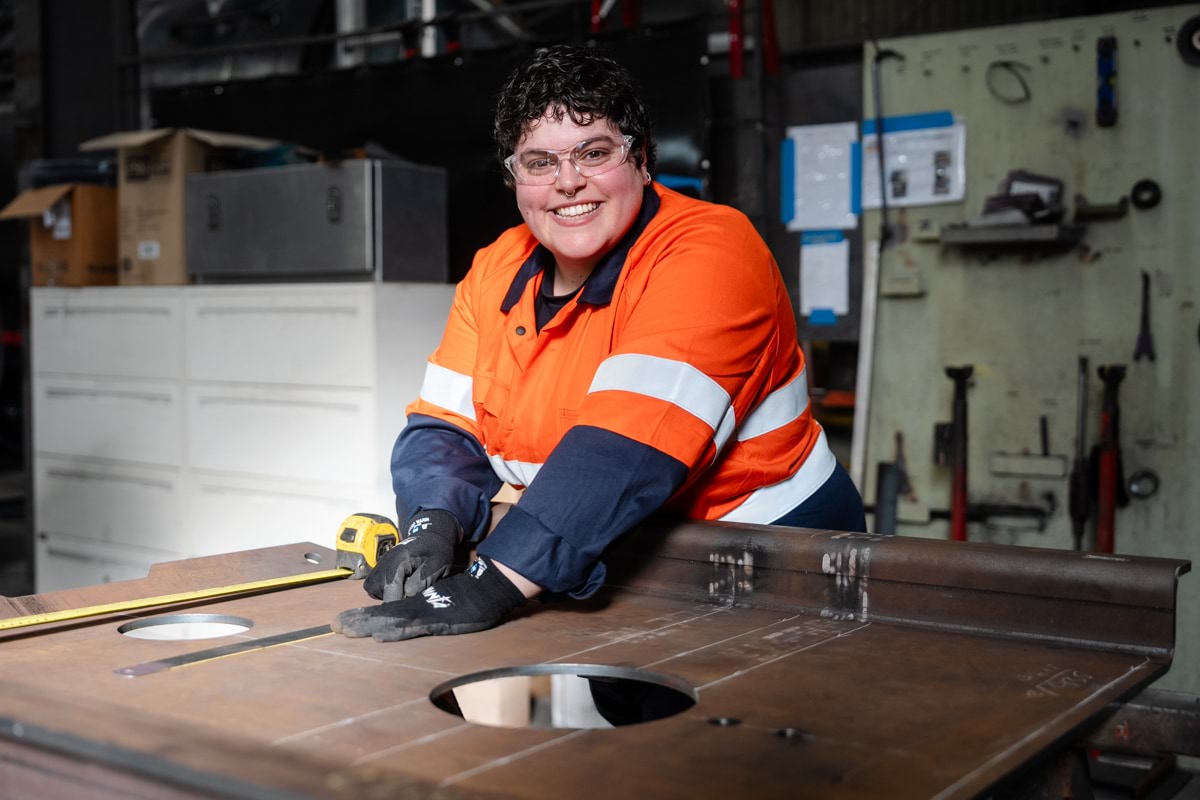
When Sarah Hunn-Mozes decided to forgo social work and disability support for a career in fabrication, she never looked back. A hands‑on career that reaped tangible results suited her. From her first weld, she felt a sense of achievement she’d never experienced, and she knew she’d found the right path.
Sarah was employed by the Australian Industry Group Apprentice and Trainee Centre and hosted to Convair Engineering while completing her Certificate III in Engineering – Fabrication (Welding). Entering a male‑dominated trade as a mature‑aged apprentice came with some challenges, but she was well supported by supervisors and Trades Women Australia, and her confidence grew.
Throughout her apprenticeship, Sarah continually demonstrated initiative. She advocated for properly fitting PPE for women, took on safety roles, pursued extra training, and even took up powerlifting to meet the job’s physical demands. Sarah is proud of her progress and excited about the impact she can make in her trade.
Congratulations to Marta Strykhotska - 2026 Trainee of the Year award winner
Diploma of Project Management - Chisholm Institute

After fleeing the war in Ukraine to protect her family, Marta Strykhotska wasted no time in establishing herself in Australia. With limited English and no experience of Australian workplaces, she completed an English course and then joined the CareerSeeker Program. This led to a full‑time role as an administrator with Laing O’Rourke on the Eastern Freeway Upgrades: Burke to Tram Alliance. Although the construction industry was a completely new environment, she quickly proved her capability, supporting engineers with logistics and traffic management coordination.
Marta completed a Certificate IV in Business, strengthening her communication, administration and leadership skills. In 2025, she was promoted to Senior Traffic Administrator in recognition of her professionalism and work ethic. She’s now undertaking a Diploma of Project Management.
Balancing work and study, and raising children in a new country has been challenging, but Marta’s discipline and optimism have shaped her into a valued contributor to the project and a strong advocate for vocational education.
Megan Watts
Diploma of Nursing - Federation TAFE
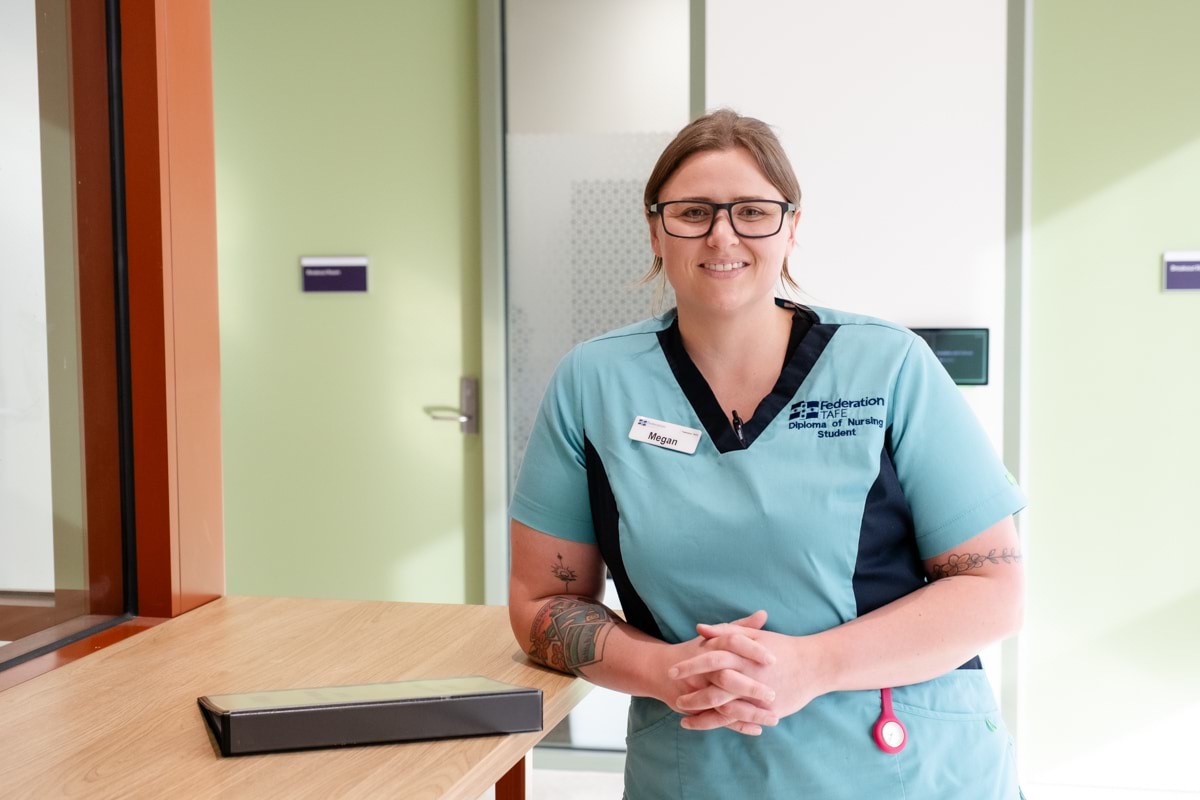
Megan Watts sought a career change where she could make a practical, lasting contribution to her community’s health and wellbeing. After more than a decade working in medical administration, alongside her work as an Ambulance Community Officer and first responder, she undertook the Diploma of Nursing.
Balancing study, clinical placements, work and family responsibilities required resilience, organisation and reflective practice. Returning to study as an adult learner meant rebuilding academic confidence, but with strong routines and support from educators, she thrived.
Megan is currently completing the diploma as an Enrolled Nurse trainee with West Wimmera Health Service, while studying at Federation TAFE’s Wimmera Campus in Horsham. The traineeship model gave her a balance of theoretical learning and hands on experience in real healthcare settings across acute, aged care, and community health. Living and working in a rural community shaped her commitment to contributing locally where healthcare workforce needs are great.
Justin Thomason
Certificate III in Business - Chisholm Institute

At age 14, an accident left Justin Thomason a quadriplegic. This abruptly ended his education and instilled the belief that further learning and a profession were unattainable. Time proved how resilient he was and today, he’s a valued member of the M80 Ring Road Completion project.
Justin courageously decided to leave regional Victoria to live independently and seek employment. With the assistance of MatchWorks and the Social Sustainability and Diversity & Inclusion Managers at the M80RRC he joined the project in Melbourne. He undertook a traineeship in the Diversity and Inclusion Team and completed a Certificate III in Business. This helped build his confidence, independence, and belief in his own capability.
Building strong skills in data management, reporting and analytical problem-solving, Justin identified limitations in the workforce reporting process. Teaching himself advanced Excel and Power Query, he redesigned the entire system, creating a platform that was used across the project. Justin continues to expand his skills through a Certificate IV in Data Analytics.
Congratulations to Ying Soon - 2026 Vocational Student of the Year award winner
Diploma of Auslan - Melbourne Polytechnic
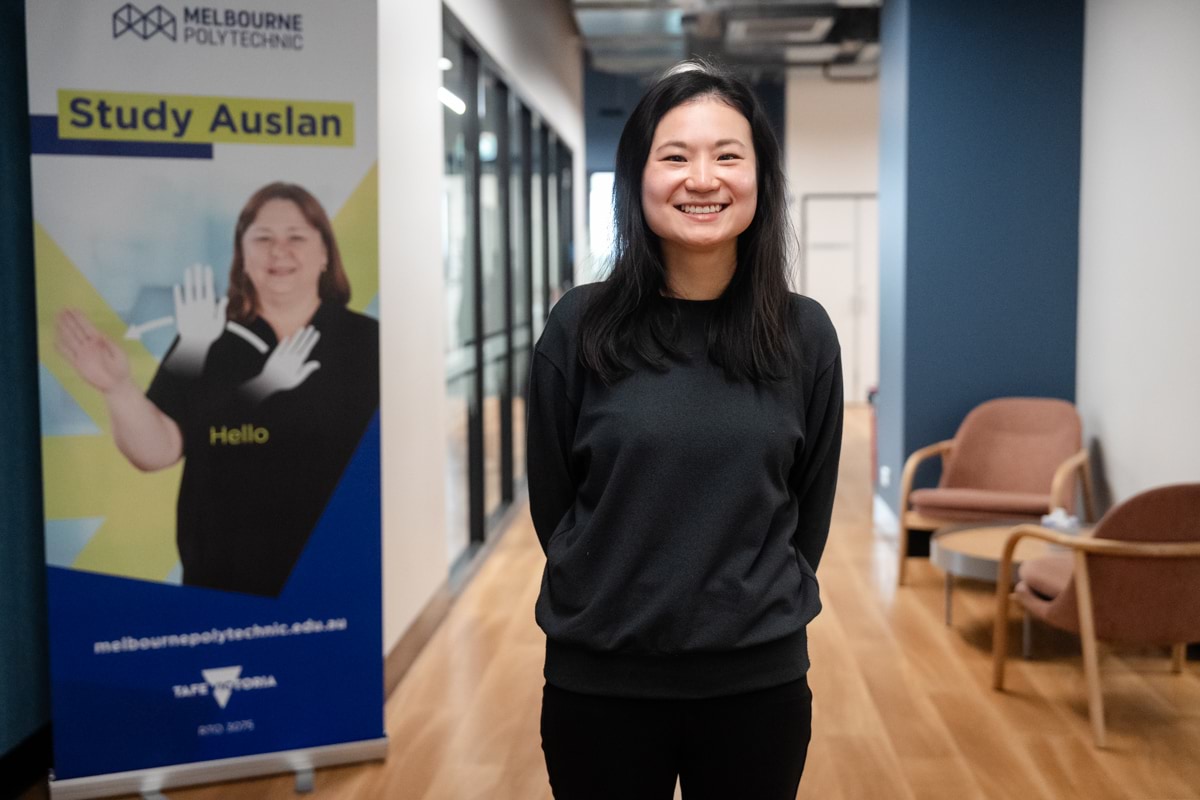
Ying Soon chose to study Auslan out of curiosity. Already fluent in 3 languages, she was fascinated by a form of communication that relied not on sound, but on movement and visual connection. Living in Malaysia, Beijing and Hong Kong made her comfortable navigating diverse languages. Auslan quickly became more than a subject of interest, it became a doorway into a vibrant community. This prompted her to enrol in the Certificate II in Auslan at Melbourne Polytechnic.
Studying Auslan meant more than language proficiency, it shaped Ying’s professional life and created lasting relationships. While studying, she stepped into a supportive role in and outside the classroom to help fellow students, offering encouragement and practicing signing. Ying brings a deep sense of responsibility to every interaction. As event floor supervisor in a hotel, she confidently communicates with deaf guests and raises awareness among colleagues. Auslan is now woven into every part of Ying’s life.
Masoumeh Bayat
Certificate IV in Cyber Security - Kangan Institute

Iranian born Masoumeh Bayat migrated to Australia with a Bachelor’s and Master’s degree in IT. She was determined to rebuild her career. Cybersecurity appealed to her analytical mindset and desire to contribute to a safer digital world. Studying at Kangan Institute was the first time she felt genuinely supported and respected as a woman in STEM.
In 2025, Masoumeh completed the Certificate IV in Cyber Security, gaining practical, industry aligned training. She progressed through roles demanding increasingly specialised expertise, beginning as a Network Support Engineer focused on operational network issues, and advancing into a highly competitive Security Engineer role at Aussie Broadband. This transition required persistent upskilling, self-directed learning, and the continued application of the foundational cybersecurity training gained through the Free TAFE course. Reaching a security position represents a significant milestone in her professional development and directly aligns with the long-term career goals that TAFE helped her establish.
Although English is her second language, Masoumeh quickly developed strong communication and teamwork skills. Her journey reflects resilience, continuous learning, and a commitment to sharing knowledge.
Oksa Heickel
Diploma of Hospitality Management - Box Hill Institute

Food has been a defining thread throughout the life of Indonesian born Oksa Heickel. As a child, he’d watch and help his mother prepare traditional Indonesian dishes for their 50-strong extended family. Those gatherings, filled with food, laughter and shared stories, sparked a lifelong passion. On moving to Australia, he experimented with local ingredients to create his own Indonesian‑meets‑Australian style cuisine.
Oksa formalised his skills by completing a Certificate III in Commercial Cookery and becoming a qualified cook. To extend his opportunities, he enrolled in the Diploma of Hospitality Management at Box Hill Institute, focusing on leadership, operations and business management.
Since 2019, Oksa has progressed from cook to café manager, where he now leads his team. His studies equipped him to drive significant improvements in business performance, which resulted in a 15% increase in customers and the lowest staff absenteeism rates in 3 years. Oksa dreams of eventually applying his skills to his own Indonesian restaurant.
Congratulations to Harvey Hughes - 2026 School-based Apprentice or Trainee of the Year award winner
Certificate III in Agriculture - Skillinvest Limited
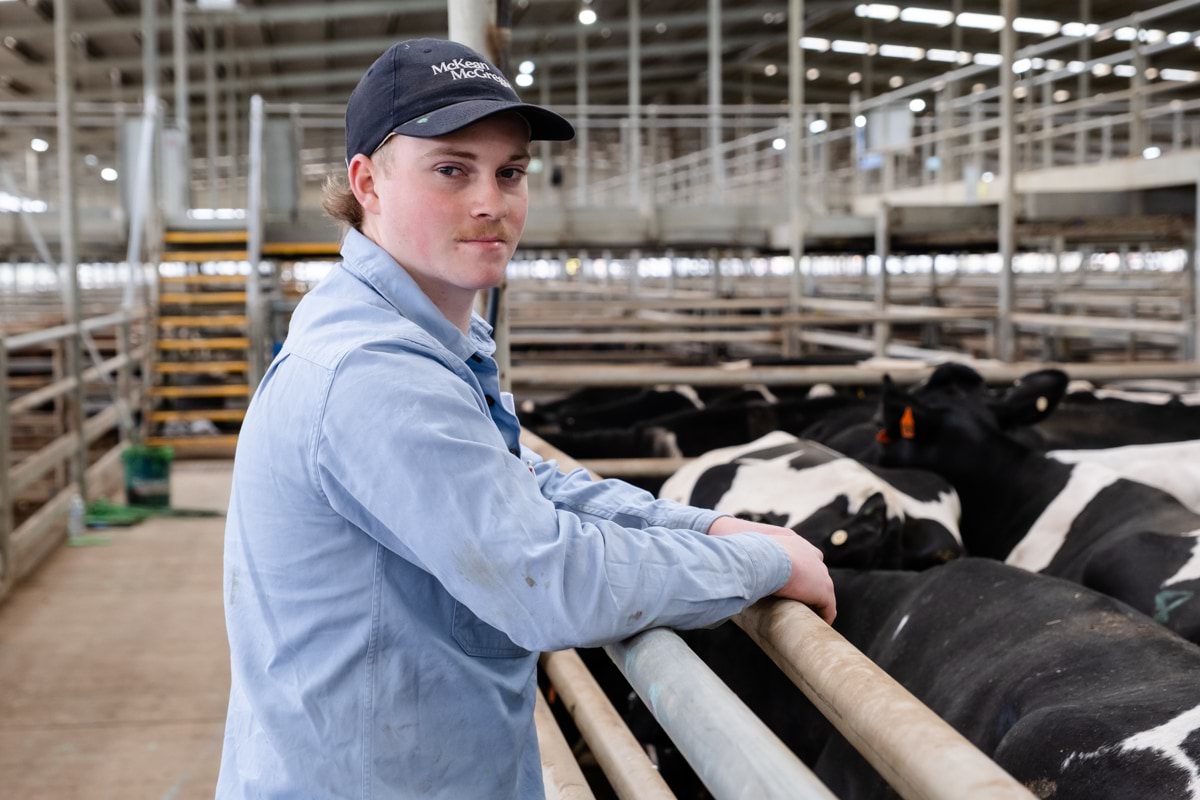
Harvey Hughes discovered his interest in agriculture when he chose it as a school elective. Although there was no family background in farming, the subject sparked a passion he was determined to pursue. At 16, he worked on a friend’s farm during school holidays, assisting with fencing, unloading trucks, and working as a shearer’s roustabout.
Taking on the School‑Based Apprenticeship and Traineeship provided the ideal balance allowing him to complete VCE and gain real industry experience. Harvey is now completing a Certificate III in Agriculture through Longerenong College and developing skills in livestock handling, machinery operation, farm safety, and general farm management.
Never letting the grass grow under his feet, Harvey established a small hobby farm on his family’s land where he applies his new skills. Managing long workdays, balancing school and TAFE work, handling volumes of livestock, has made Harvey resilient, committed, and enthusiastic about a long and rewarding career in agriculture.
Ethan Phillips
Certificate III in Carpentry - Sunraysia Institute of TAFE
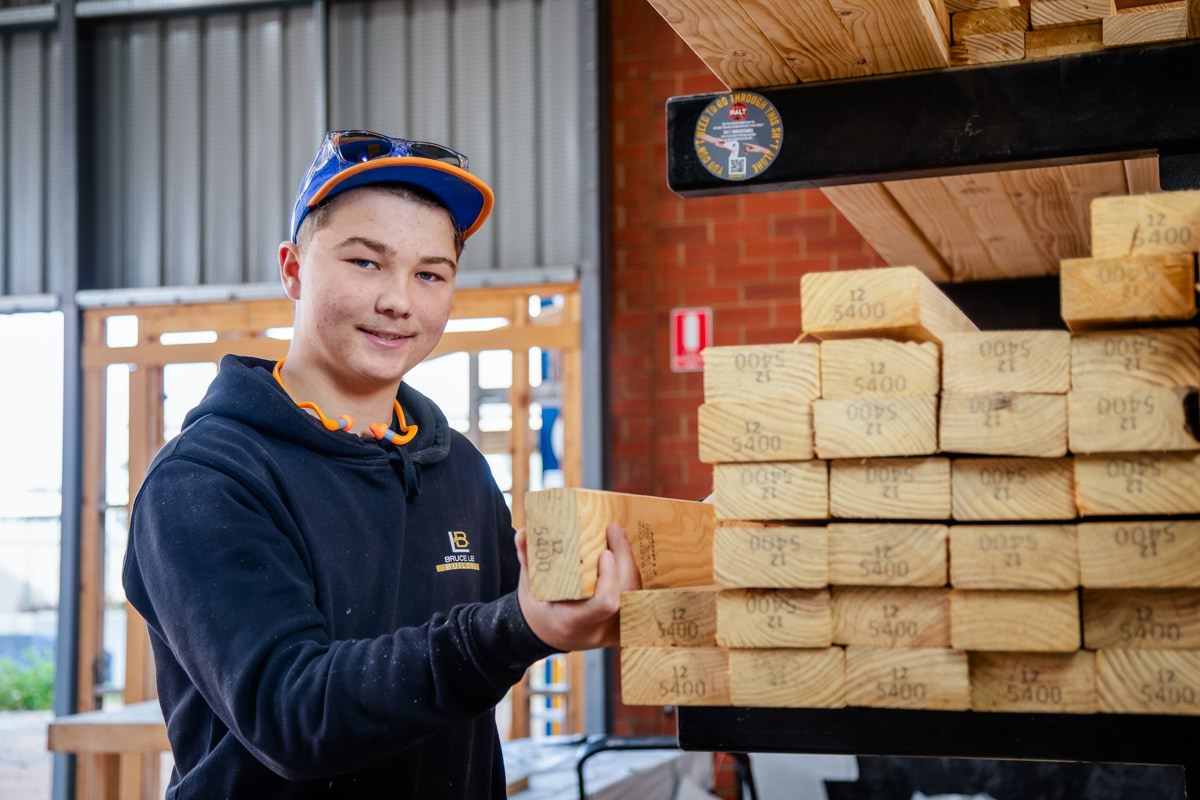
Since childhood Ethan Phillips was drawn to making things with his hands. With family in the building trade, he spent school holidays dressed in hi‑vis gear and work boots, building and creating projects with friends. This cemented his desire to pathway into the building trade.
After completing work experience with a building company, Ethan was invited to return on weekends. before formally beginning his apprenticeship in Year 10. He’s currently completing a school‑based apprenticeship while studying his VCE Vocational Major and the Certificate III in Carpentry.
Ethan developed strong carpentry skills and approaches every job with a focus on high-quality workmanship rather than simply completing a task. Ethan’s other achievements include being named Sunraysia Institute of TAFE Outstanding First Year Apprentice in Carpentry (2025) and receiving the Master Builders Victoria Bendigo Region Apprentice of the Year Certificate of Excellence (2026). As an ambassador for vocational pathways, he actively encourages others to pursue school-based apprenticeships.
Isabella McKinley
Certificate III in Hairdressing - Murray ACE Inc.

Creativity has always been central to Isabella McKinley’s identity. From childhood she loved styling and experimenting with hairstyles. Taking on a school‑based apprenticeship in hairdressing allowed her to turn that passion into a professional pathway. Knowing a traditional academic route wasn’t the right fit, she was keen to start training early. Now in Year 12, she’s completing a Certificate III in Hairdressing in Swan Hill while working in a busy, fast‑paced salon in Mildura.
Isabella has thrived on the balance of structured training and real salon experience. Learning new techniques in class and applying them immediately at work, has strengthened her confidence and deepened her understanding of the technical and practical sides of the industry.
In 2024, she received the Sunraysia Careers Award for Salon Assistance for being the top student in her VET class. Despite challenges such as 6-hour round trips to training, Isabella remains dedicated and hopes to one day mentor apprentices.
Congratulations to Phil Cooper - 2026 Koorie Student of the Year award winner
Certificate III in Civil Construction Plant Operations - National Skills Institute
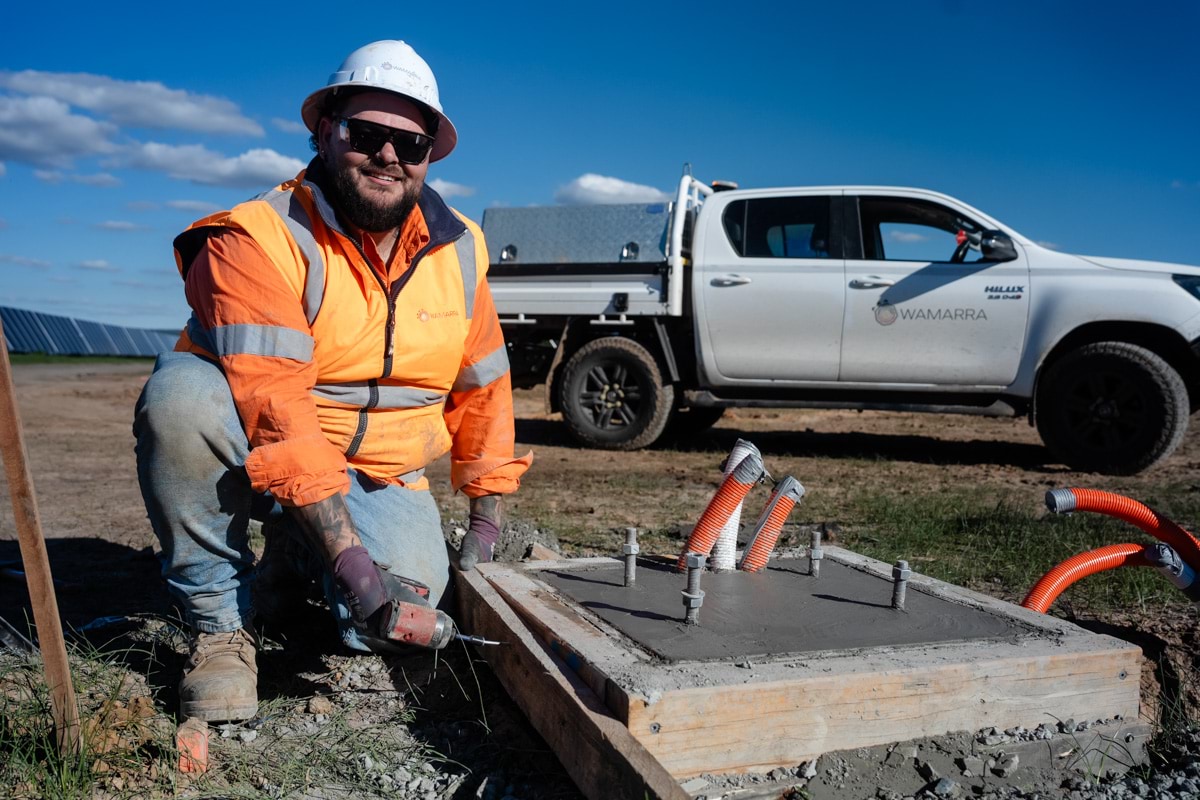
Working within Wamarra, an Indigenous-led civil construction organisation, gave proud Gunditjmara man, Phil Cooper, the opportunity to build a strong career in civil construction. He’s completing the Certificate III in Civil Construction through the National Skills Institute while working full-time as a Leading Hand, and he’s keen to show younger Aboriginal people that a strong future is achievable.
Phil chose the industry to build a long‑term career grounded in practical skills and meaningful work. Recognised for his initiative, leadership, ability to coordinate crews and solve problems, led to his progression from labourer to Team Leader, then Leading Hand in just two years. Completing Mental Health First Aid training further strengthened his commitment and ability to supporting colleagues and community.
Balancing full-time work, study, leadership responsibilities, and fatherhood required discipline, resilience and strong support from his employer, family, and trainer. Phil’s journey reflects leadership, perseverance, and a deep commitment to ongoing growth.
Alashanee Ross
Certificate IV in Civil Construction (Supervision) - ECB Training
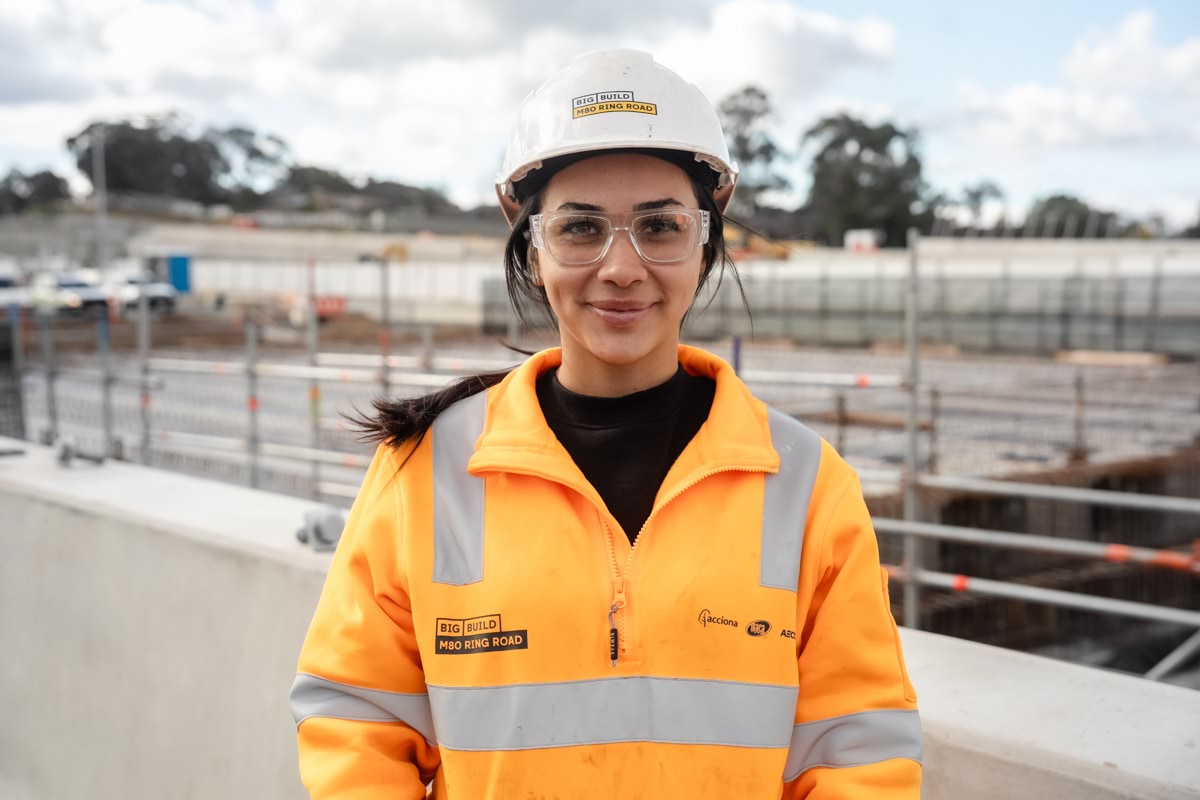
Alashanee Ross set her sights on a hands-on career that challenged her and created community benefit. Drawn to the scale of major infrastructure projects, she began her career in civil construction on the M80 Ring Road Completion project where she completed a Certificate III in Civil Construction as part of a traineeship.
Learning on site gave Alashanee the chance to work across multiple crews and gain exposure to the full breadth of civil construction. She thrived in the team-based environment, developing strong technical skills and confidence operating in high-stakes settings. Her work ethic was quickly recognised by supervisors who entrusted her to monitor daily tasks and oversee work areas.
As a young Aboriginal woman in a male dominated industry, Alashanee became a role model and mentor for new trainees and encouraged Aboriginal students to consider a career in construction. She’s now completing a Certificate IV in Civil Construction (Supervision) and hopes to inspire others in her community.
Tyrhys Wilson
Certificate III in Business - Integrity Business College

Proud First Nations man from the Miriwoong mob, Tyrhys Wilson, completed a Certificate III in Business through the MEGT Cooee Traineeship Program. This is an initiative designed to provide Aboriginal and Torres Strait Islander trainees with practical workplace experience, nationally recognised qualifications and long‑term career pathways. Business was mixed with pleasure for Tyrhys because he was also encouraged to continue his painting practice alongside his traineeship work. This included a large-scale artwork for the Melbourne Museum.
The traineeship provided Tyrhys with work experience across multiple business units at MEGT. He began in the Apprenticeship Connect division at head office before moving to Employment Services in Footscray, where he supported the Transition to Work team and contributed to First Nations engagement activities.
Learning in a culturally supportive environment gave Tyrhys a sense of belonging where he could settle easily into professional life in a safe space where yarning built strong relationships.
Congratulations to Bobby Read - 2026 Teacher / Trainer of the Year award winner
Certificate III in Landscape Construction - Northern Victoria Institute of TAFE
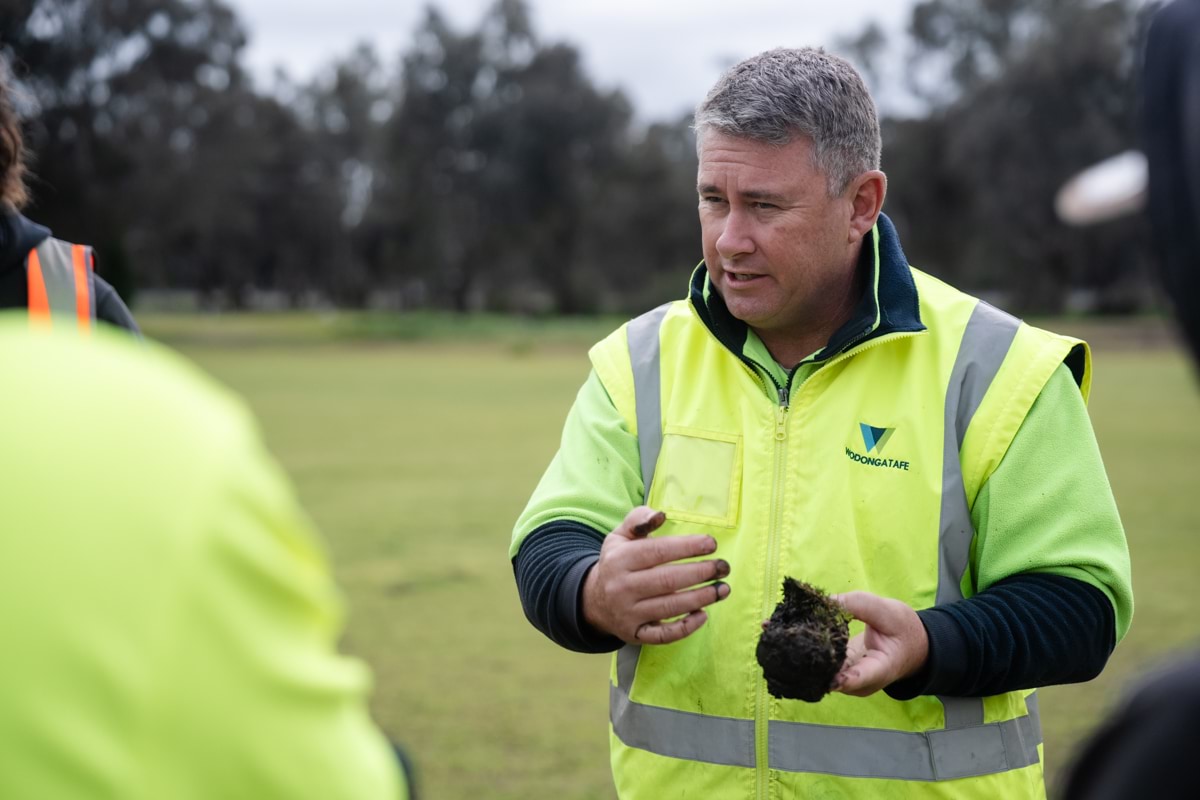
Bobby Read has brought more than 20 years of landscape industry experience to Wodonga TAFE. When he began delivering the Certificate III in Landscape Construction, he saw that apprentices were struggling with the theory‑heavy, classroom‑based approach, particularly those with diverse literacy needs. Apprentices attended block training while working full‑time, and the long theory sessions often led to fatigue and reduced participation. Bobby knew the program needed a new direction.
He redesigned the qualification to connect classroom learning with practical, sustainability‑driven, community‑based construction projects. Literacy, numeracy and compliance were embedded directly into hands‑on tasks. A standout example was the multi‑stage landscaping project at the Halve Waste Education Centre, where apprentices constructed retaining walls, seating, garden beds and irrigated lawn areas using recycled materials to learn circular‑economy principles.
The impact has been significant with apprentice retention increasing to 95%, improved technical competence, and employers consistently reporting that Bobby’s apprentices enter the workplace confident and capable.
Marcus Newman
Certificate III in Screen and Media - Northern College of the Arts and Technology
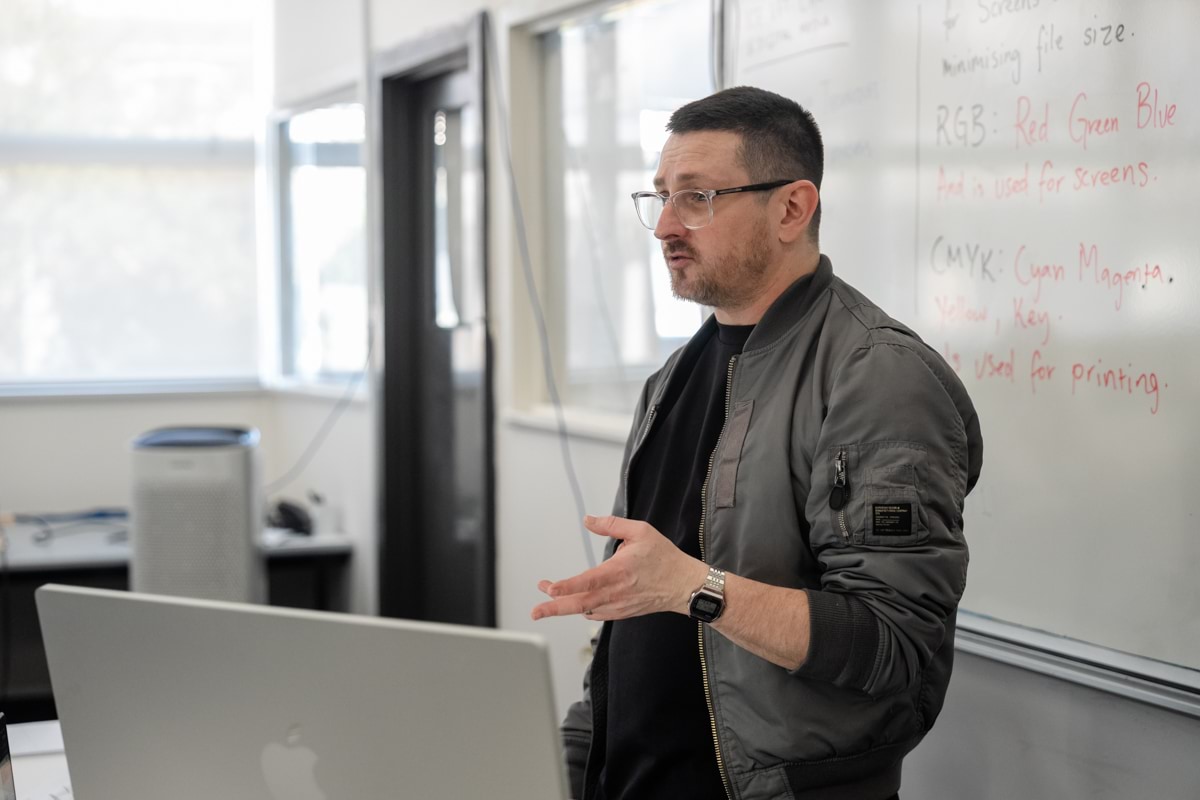
When Marcus Newman joined the Northern College of the Arts and Technology 12 years ago, he recognised the need to refresh the Creative and Digital Media program. What followed was a transformative redevelopment of the curriculum, reshaping the VET Creative and Digital Media offering into a contemporary, industry‑aligned program that evolves with technology.
Marcus teaches the VCE VET Certificate III in Screen and Media (Creative and Digital Media) and the Certificate IV in Photography and Digital Imaging. He teaches animation, web design, video production, podcasting, studio lighting and photography. He’s widely recognised for innovation and an unwavering commitment to student success.
A deliberate focus of Marcus’ work is on foundational creative principles rather than software‑specific training. This ensures that students are adaptable, future‑focused and prepared for both employment and further study. His students have achieved the highest‑ever scores of 49/50, and graduates consistently progress to leading institutions including the Victorian College of the Arts and RMIT.
Deahnn Johnson
Certificate II in Animal Care - Foundation Learning Centre
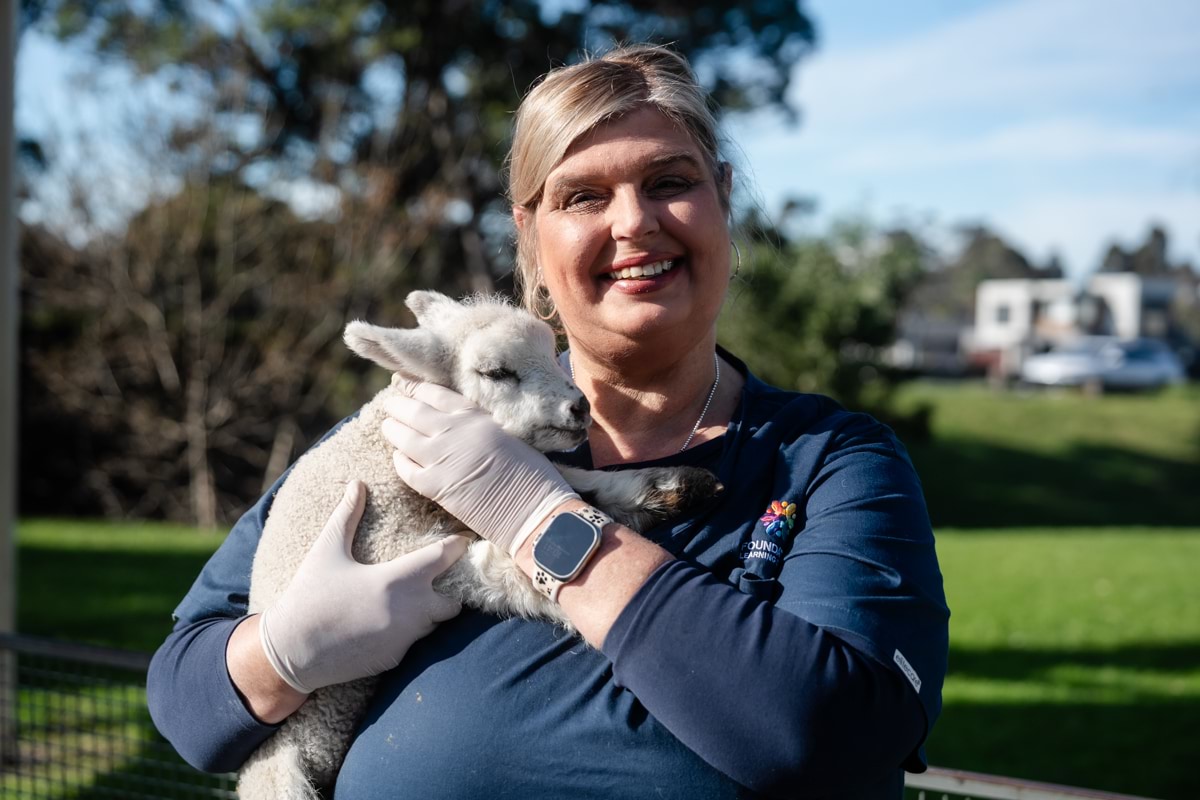
Before joining Foundation Learning Centre to teach the Certificate II in Animal Care, veterinary nurse Deahnn Johnson worked with species ranging from rhinos in Africa to Bangal tigers in India. The breadth of her experience elevates the program, delivering training that is high-quality, industry-aligned and genuinely transformative.
Deahnn redesigned resources and built strong industry partnerships across farming, wildlife and captive‑animal sectors, including Myuna Ark Mobile Farm and Healesville Sanctuary. This gave learners real‑world exposure that builds confidence and capability. In delivering an in‑house program for Youth 2 Industry College, she tailored the curriculum to strengthen involvement for learners with trauma histories, neurodiversity and disrupted schooling, creating engaging, meaningful opportunities.
Devoted to hands‑on, student‑centred VET delivery, Deahnn adapts to learner needs, preparing them for compassionate, skilled work in the animal care industry. Under her leadership, enrolments grew from 102 to 307 with a 79% completion rate, positioning FLC as the fourth‑largest provider of the qualification in Victoria.
Employer categories
Congratulations to Border Crane Consultants - 2026 Small Employer of the Year award winner
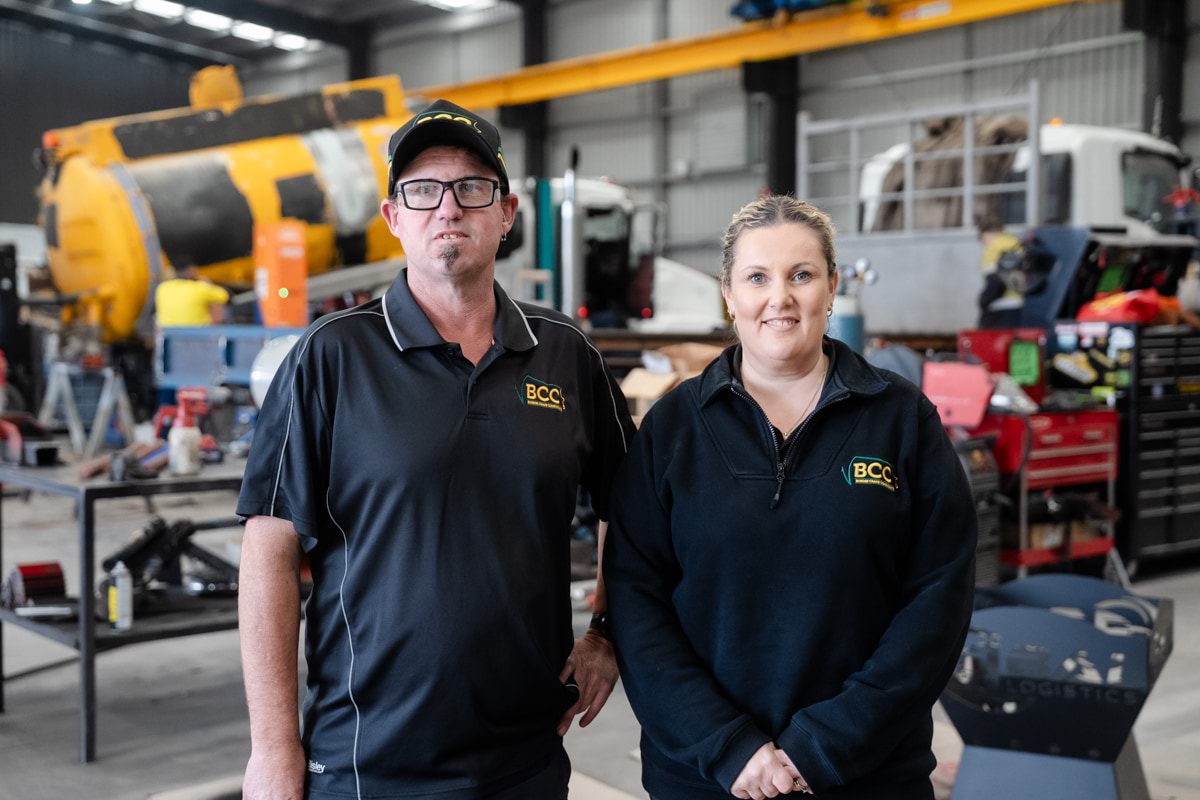
Border Crane Consultants (BCC) is a specialist engineering and service company based in rural Victoria. It’s a one-stop solution for the design, installation, certification, inspection, repair, and maintenance of cranes and high‑risk equipment. It supports industries across transport, construction, utilities, government, agriculture, disability services, mining, manufacturing, and defence.
BCC built a strong training culture by designing learning pathways that reflect it's specialised business, with training embedded into operations. Being a highly specialised field where no single trade qualification covers the full scope of work, training was customised to extend beyond standard trade curricula. It incorporates everything from hydraulics and pneumatics to diagnostics, fabrication, and fault‑finding.
Of the 37 employees, 13 are engaged in formal VRQA training contracts. Otherwise, staff undertake a wide range of qualifications and licences, supported through structured supervision, mentoring, and on-the-job learning. As a result, employees have built secure careers, increased their earning capacity, and in some cases started their own businesses.
Smart Business Solutions Group
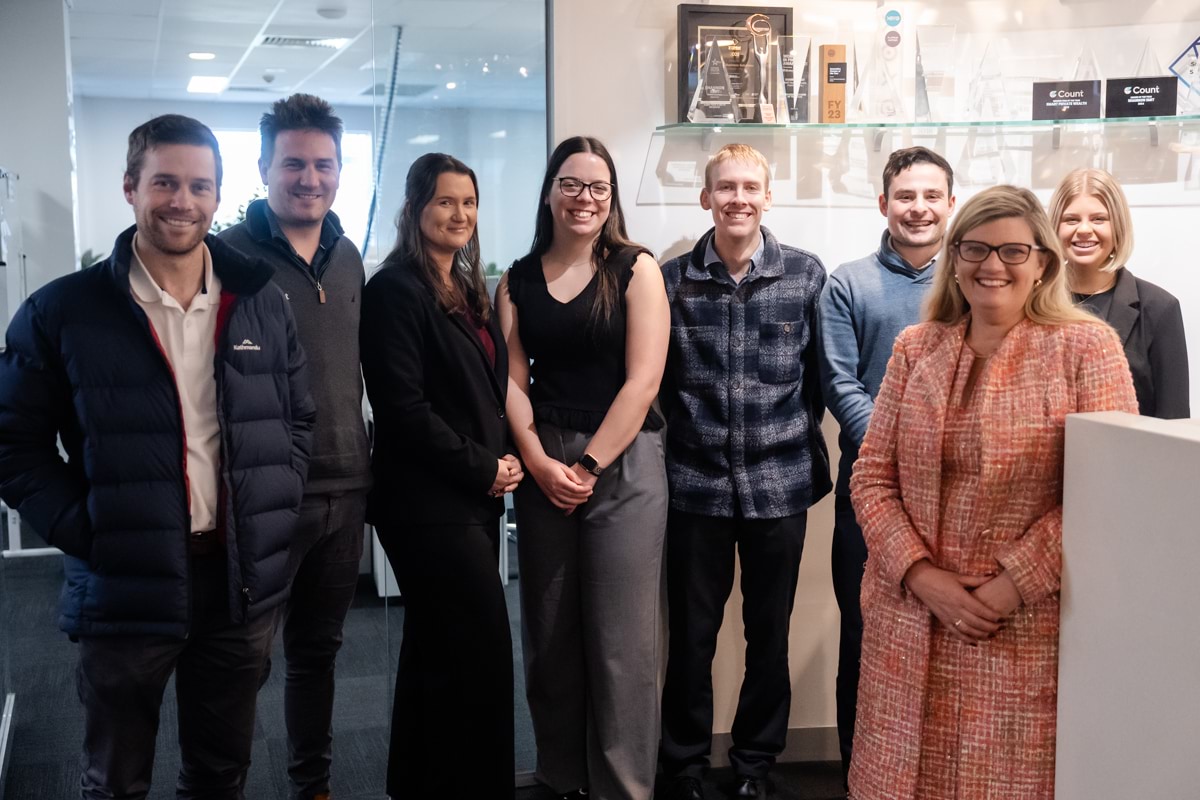
Smart Business Solutions Group is an integrated financial services firm based on the Mornington Peninsula, supporting small and medium businesses, individuals, and families across Victoria. The firm provides services spanning accounting and taxation to mortgage broking and business consulting. They employ 21 staff and training is at the centre of their operating model.
Partnering with RTOs, universities and professional bodies ensures that employees hold the qualifications and accreditations required to deliver trusted, high‑quality advice. A major milestone was the firm‑wide adoption of artificial intelligence and robotic process automation. In 2024–2025, every employee completed structured AI and automation training, saving more than 2,000 hours annually, enabling staff to focus on higher‑value advisory work.
More than 40% of staff are engaged in external study at any time, completing qualifications ranging from Certificate III and IV in Business Administration to the CPA Program and Masters in Financial Planning. Collectively they complete around 1,200 hours of training annually.
Custom Transport Equipment
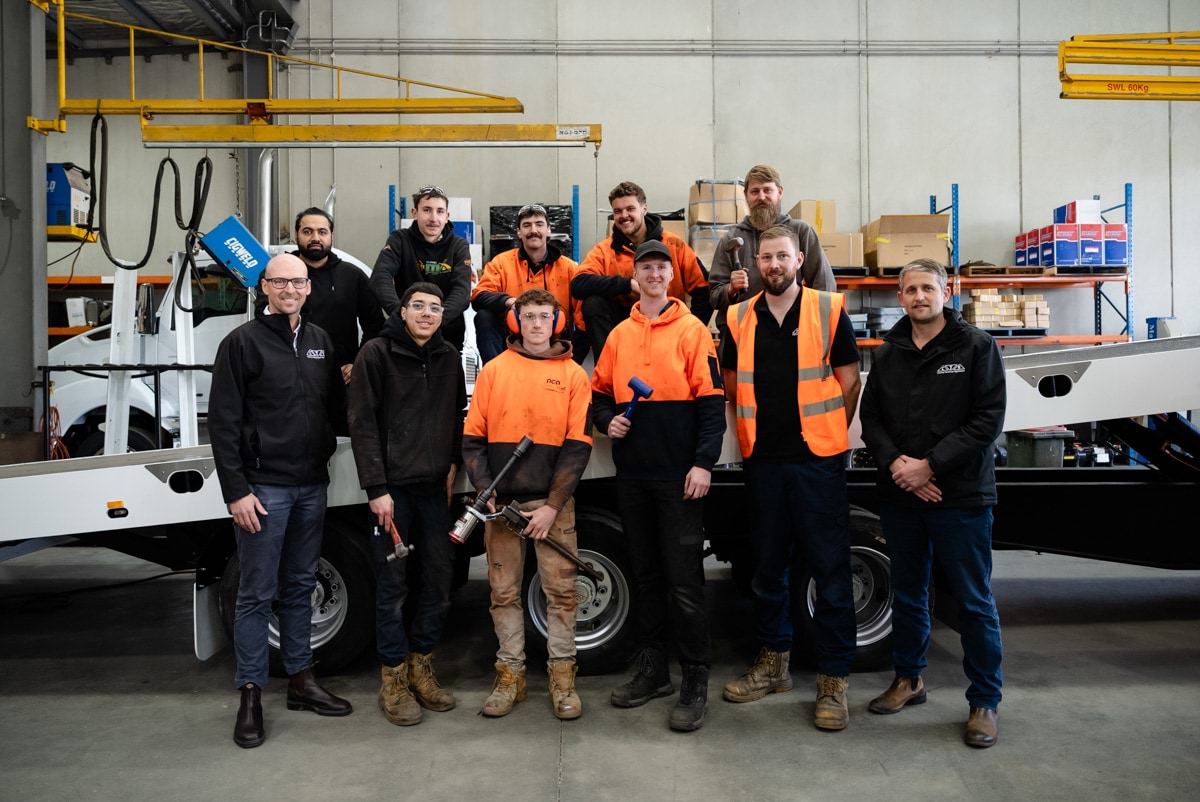
Custom Transport Equipment (CTE) is a Victorian manufacturer of premium heavy transport trailers and truck bodies—custom built giants of the highway. They produce Tiltslides, Supertilts, drop decks, wideners, extendables, tag trailers and livestock trailers. Operating from a 4,900 sqm facility in Drouin, CTE services customers nationally across transport, agriculture, mining, construction, infrastructure, and energy.
In this highly specialised manufacturing environment, no single trade qualification covers the full scope of skills required to build heavy transport trailers. In response, the company developed a structured, production‑aligned training model. At any time, 3–4 staff are engaged in nationally recognised training and apprentices progress through the lifecycle of the build.
CTE’s commitment to training has strengthened product quality, operational efficiency, and staff retention. The business has achieved 13% annual revenue growth from 2022–2025, supported by a highly skilled, cross‑trained, capable workforce delivering consistent, high‑precision builds. Their training culture has produced long‑term career pathways, award‑winning apprentices, and a reputation for excellence.
Congratulations to Metro Trains Melbourne - 2026 Large Employer of the Year award winner
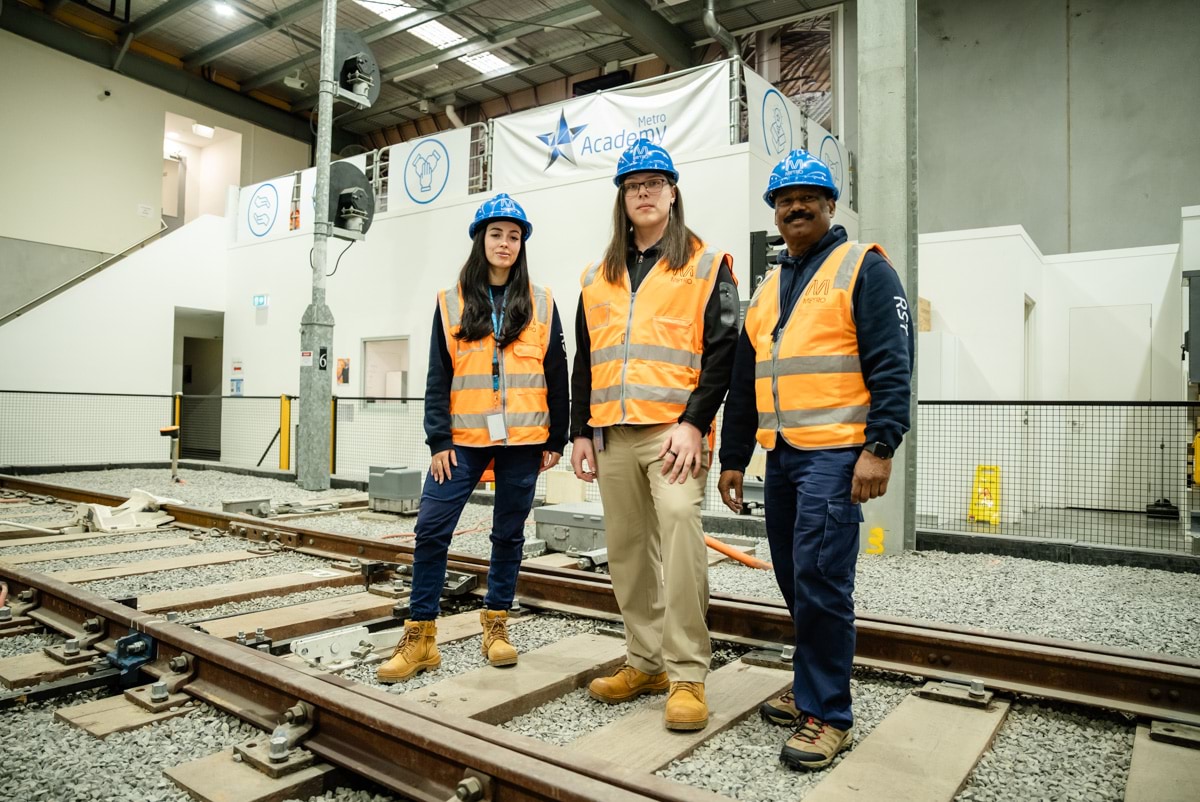
Metro Trains Melbourne (Metro) operates Melbourne’s metropolitan rail network, moving more than 165 million passengers annually. It plays a critical role in connecting communities and supporting economic activity. With a workforce of more than 7,000 employees across operational, technical, and corporate roles, Metro delivers train operations including network control, customer service, assets, and the management of complex rail interfaces.
As a Registered Training Organisation, Metro designs training specifically for its operating environment. Programs are developed by subject matter experts and instructional designers across train driving, customer service, signalling, track, electrical networks, and safety‑critical operations. Preparing for the Metro Tunnel opening required one of the largest workforce transformations in the organisation’s history, including extensive driver training for new routes, signalling systems and underground operations, as well as upskilling staff to work safely within a more complex rail environment.
Workforce development is embedded within Metro’s business strategy ensuring training supports safety, operational performance, and the organisation’s ability to meet current and future demands.
Eastern Freeway Upgrades: Burke to Tram Alliance
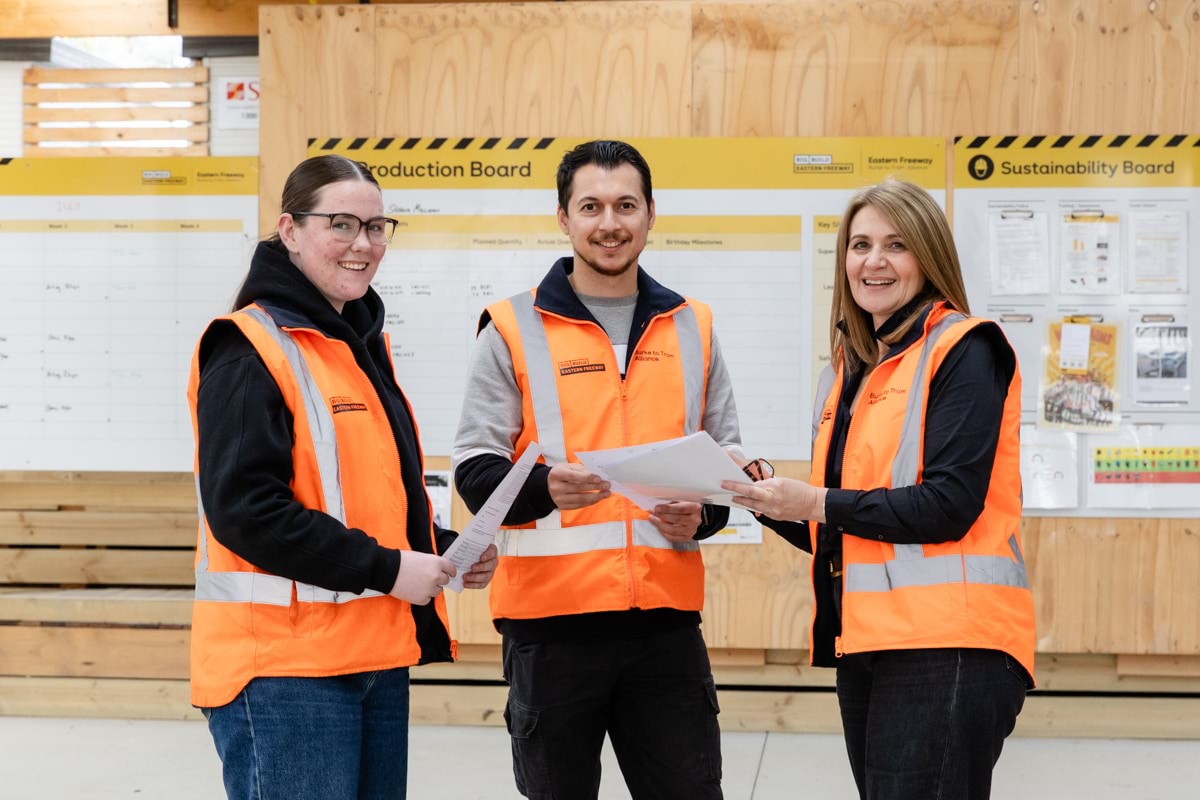
The Eastern Freeway Upgrades: Burke to Tram Alliance (EBTA) is travelling well in delivering the southern package of Victoria’s Northeast Link Program. As one of the state’s largest transport infrastructure projects, the upgrade includes new express lanes, a busway, pedestrian bridges, walking and cycling paths and 1.8 million new trees and plants. Beyond engineering achievement, EBTA has embedded a sector leading workforce development model through its Learn Build Lead program.
Learn Build Lead integrates nationally recognised vocational education directly into project delivery. Training is delivered in partnership with multiple RTOs and spans civil construction, plant operations, supervision, safety, business, leadership, and project management. Of the 850 full time equivalent employees at peak delivery, around 95 employees engage in traineeships, apprenticeships and upskilling.
The qualification completion rate is an outstanding 90% with the employee retention rate sitting above 85%. The Learn Build Lead program has strengthened productivity, safety, and workforce capability, contributing to accelerated project delivery and sustainable employment opportunities for the workforce post-project.
Fredon (VIC) Electrical
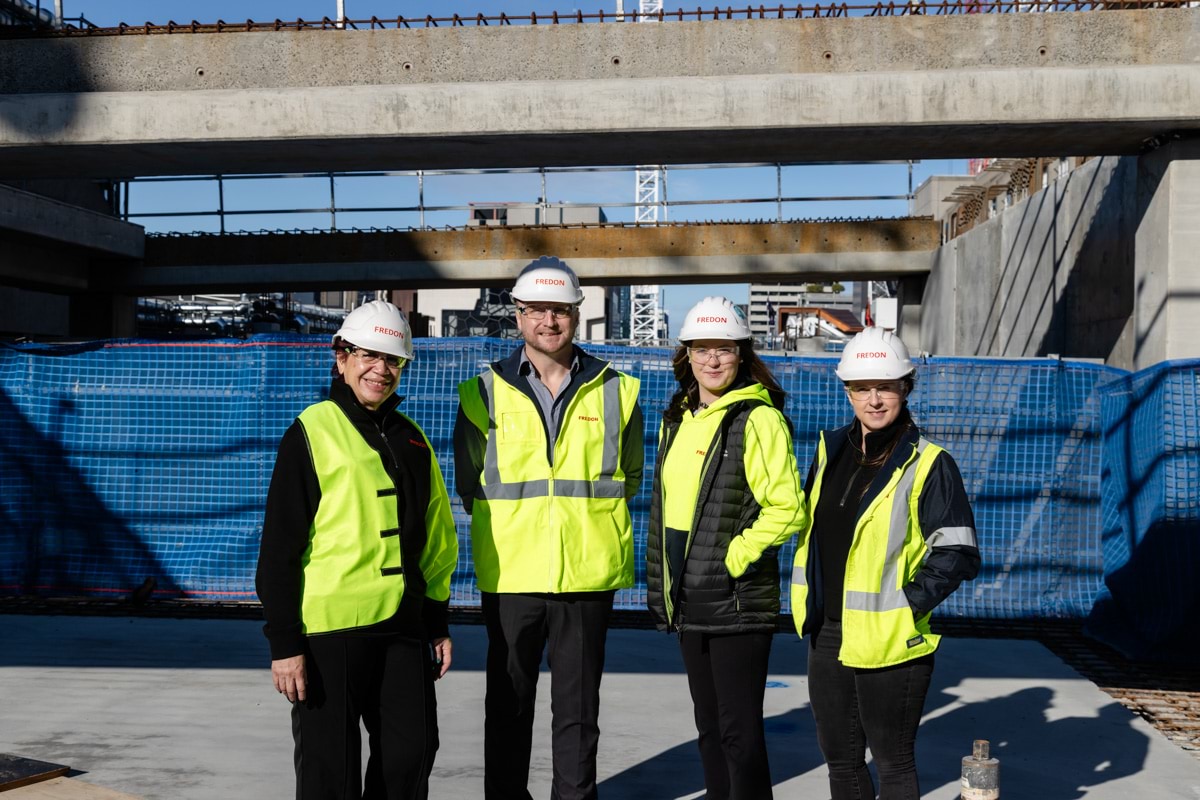
Fredon Electrical is a leading provider of electrical and communications solutions, delivering complex, large‑scale projects across the commercial, infrastructure, health, education and government sectors. Structured training, apprenticeships, and inclusive employment pathways are embedded into its operating model, and training is designed to encompass high‑risk, technically complex project environments.
Employees undertake a wide range of qualifications, including certificates in electrotechnology and project management. Their tailored training model includes vendor led certifications, safety and compliance training, and an internally developed verification of competency program for electrical testing. Apprentices and employees receive structured mentoring, wellbeing check-ins, and individualised development plans to ensure training is responsive and supportive.
Fredon’s commitment to structured training, engaging more than 25% of its Victorian workforce at any time, has created clear career pathways and strong outcomes. Training has lifted productivity, strengthened client relationships, improved retention, and built a diverse workforce shaping the future of the electrical and communications industry.
Congratulations to Tequa Plumbing & Civil - 2026 Employer Award for Apprenticeship Development winner
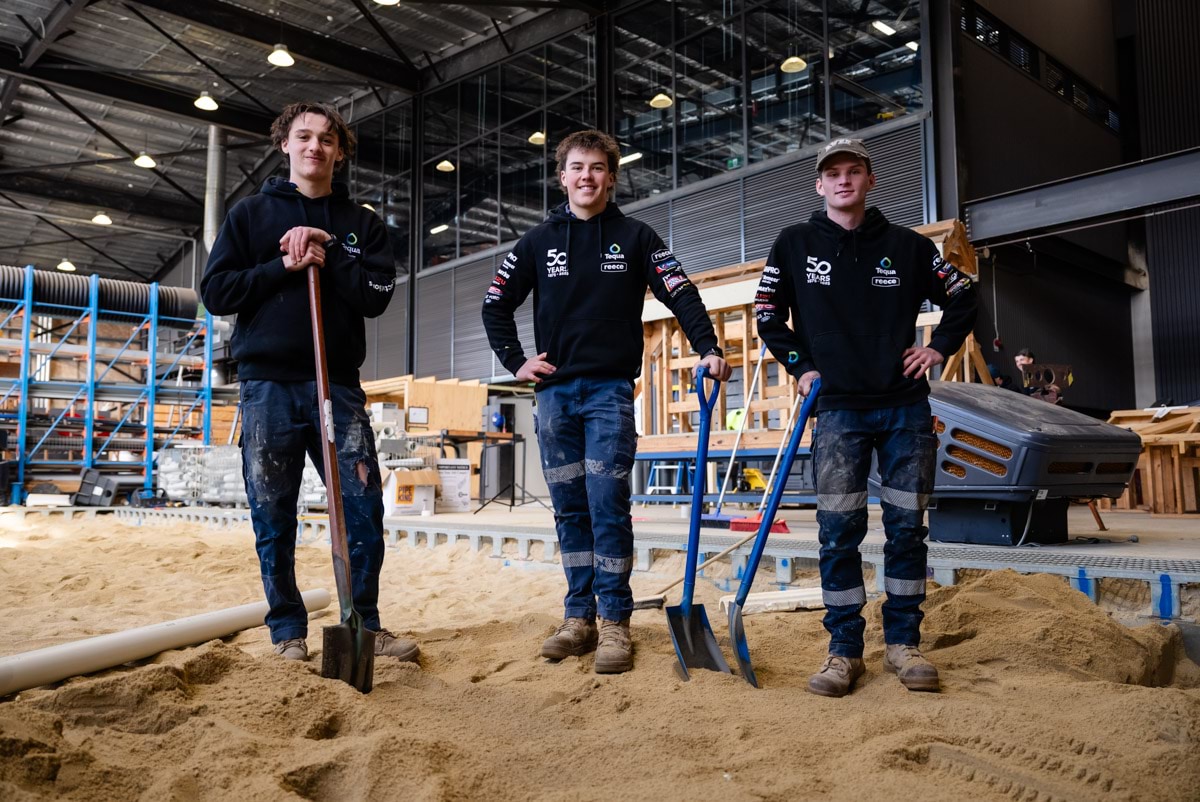
For 50 years Tequa Plumbing & Civil has played a vital role in supporting water, sewer and drainage systems that underpin growing communities across Gippsland. Their workforce spans experienced tradespeople, apprentices, engineers, and operational support teams. Tequa’s long-term success is anchored in capability development through the Tequa Academy.
Tequa Academy provides a structured, end-to-end training model that blends hands-on learning, formal education and personalised career development that deals with a number of industry challenges. This includes skills shortages, training quality, and maintaining apprentice engagement. The academy actively manages the apprentice journey from early exposure, through engagement with local secondary schools, to qualification and long‑term employment. This creates a strong local talent pipeline.
Its inclusive pathways include school partnerships, work experience programs, and targeted outreach to underrepresented groups, including women and First Peoples students. Through this model, Tequa academy not only meets workforce needs, but it also shapes the next generation of skilled tradespeople.
Ezy Air Conditioning & Heating Pty Ltd
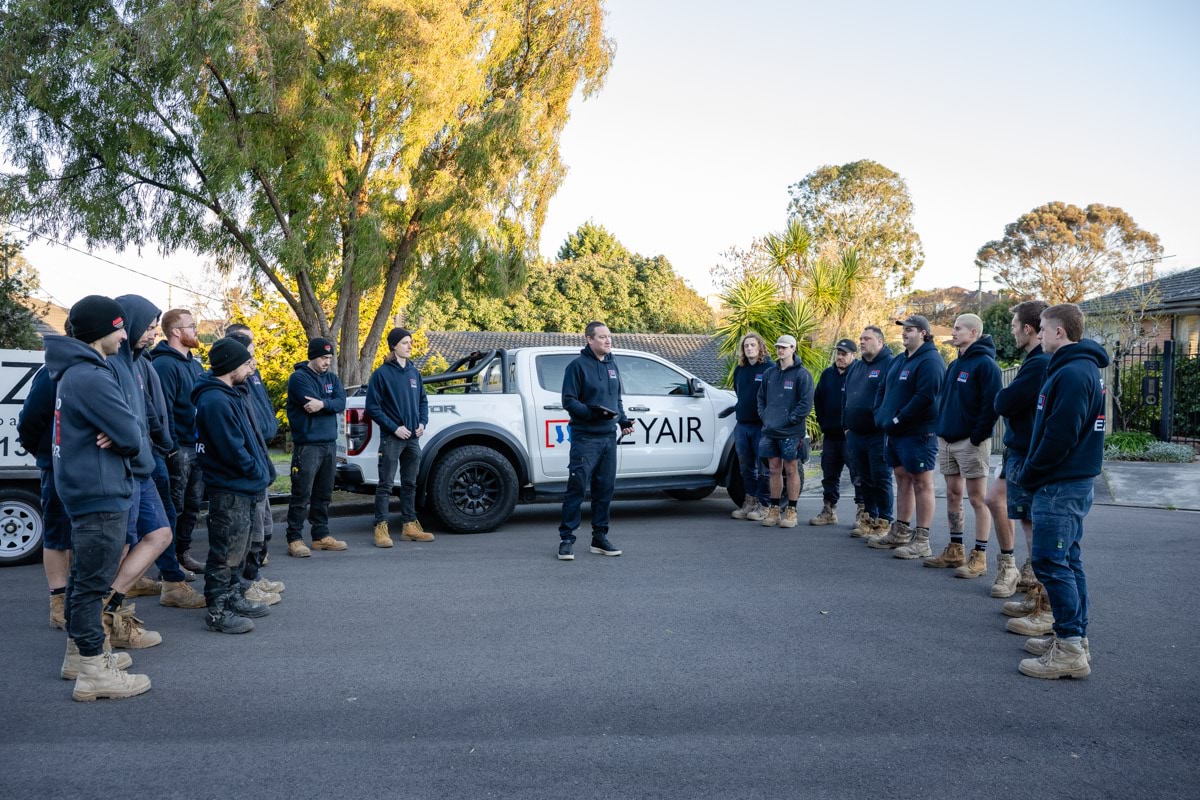
Innovation is at the heart of EZYAIR’s response to addressing the renewable energy landscape. As heating and cooling specialists, they recognised that household energy usage was one of the biggest climate control issues. In light of this, the traditional single trade model could no longer meet the demands of the renewable energy transition. So EZYAIR responded with a bold solution; a Triple‑Trade Training Pathway that gives every apprentice, whether electrical, HVAC or plumbing, hands‑on experience across two additional complementary disciplines.
Technicians graduate with a deep understanding of refrigeration mechanics, electrical circuitry, and hydraulic plumbing, resulting in higher quality workmanship, fewer onsite errors, and a dramatically improved customer experience.
The program delivers long-term career security, doubles or triples earning capacity, and has driven a market leading 90% retention rate while building the next generation of renewable‑energy leaders. Their impact has been recognised nationally through awards including the 2024 Environmental Stewardship Excellence Award from the Department of Climate Change, Energy, Environment and Water.
AMA Group Limited

AMA Group Ltd is Australia and New Zealand’s largest collision repair organisation, employing more than 3,500 people across 140 sites, including 50 in Victoria. Their apprentices are employed across six disciplines including body repair, refinishing, mechanical technology, heavy vehicle, glazing, and vehicle body building. As vehicles became more complex and the industry faced severe skills shortages, AMA Group created an innovative program that fundamentally redesigned how apprentices are recruited and trained.
The introduction of their Accelerated Learning Program in 2025 ensures training happens from day one so apprentices can apply new skills immediately and gain earlier exposure to advanced repair techniques, EV systems, and emerging technologies. The course is delivered over 14 weeks and blends TAFE based learning with structured workplace application.
Apprentices are job‑ready up to 12 months earlier than standard pathways. Exceptional results include a 100% apprentice retention rate.
Congratulations to Melton NextSteps Program: A place-based solution for disengaged high school students - 2026 Industry Collaboration Award winner
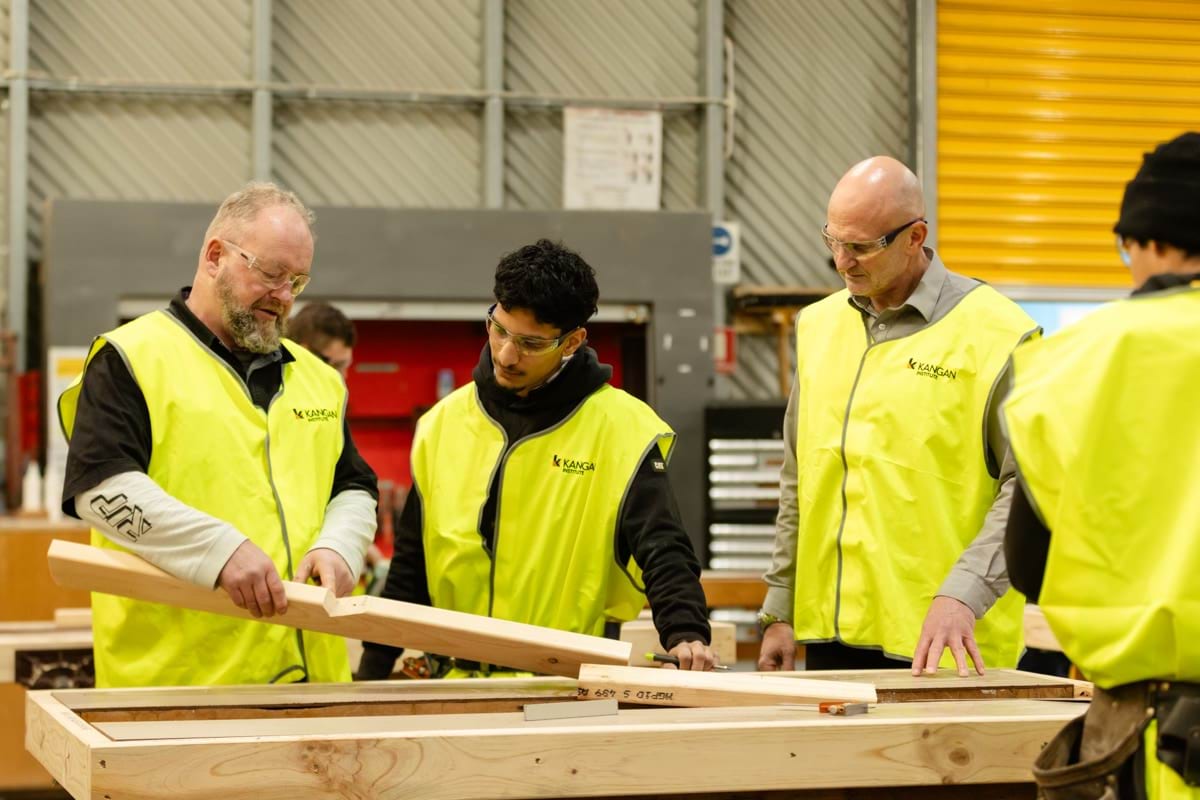
The Melton NextSteps Program is an innovative, targeted pilot designed for Year 11 and 12 students at risk of disengaging from education. It’s delivered through a collaboration between Kangan Institute, Lendlease, Melton Secondary College and local construction employers. The program provides a structured, industry aligned pathway into construction while responding directly to local and statewide workforce shortages.
Each partner plays a defined role. Secondary schools identify and support suitable students, Kangan Institute designs and delivers training, and Lendlease and local employers provide the sites and industry insights. Units from the Certificate II in Construction Pathways are delivered through an accelerated, immersive model. Students train two days per week over one semester, engage in site visits, and are exposed to multiple trades.
The program’s first year delivered strong outcomes. Of 22 high-risk students, 18 completed the program. The NextSteps Program demonstrates how industry embedded VET can re‑engage young people in education and training.
Fostering Positive Health Outcomes for People with Disability
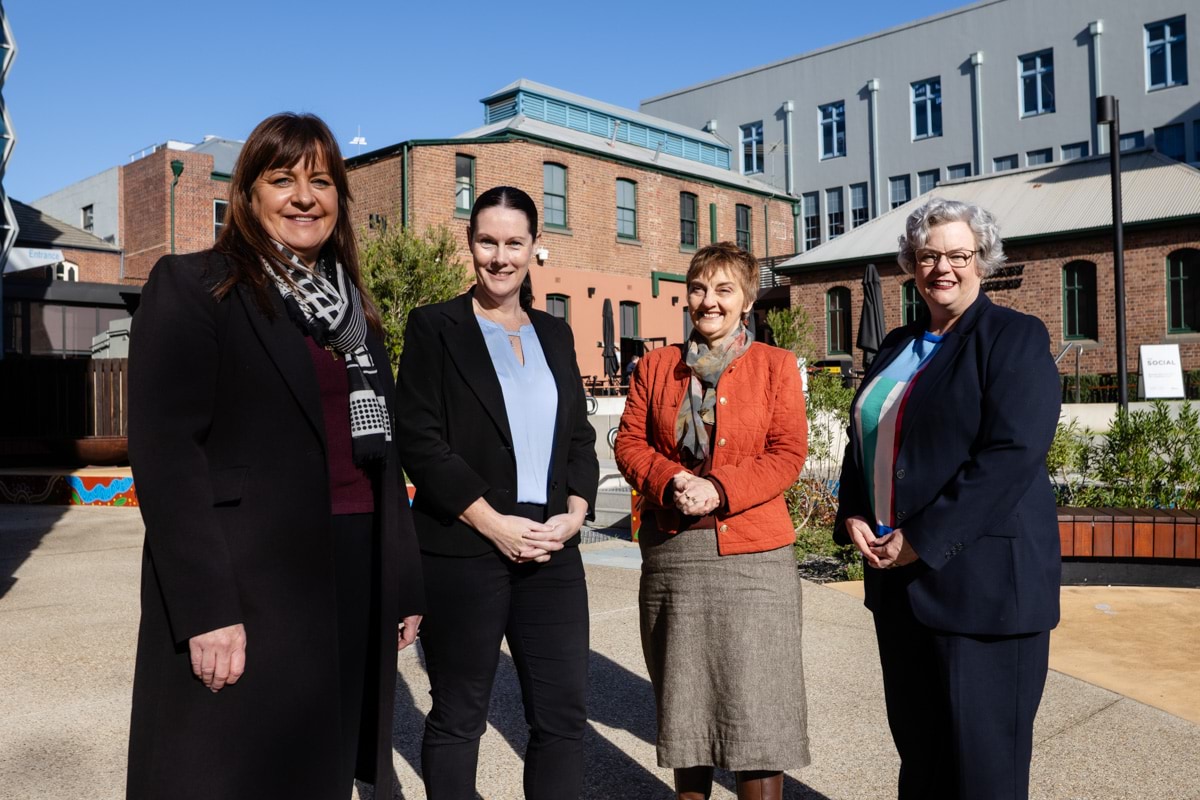
The Fostering Positive Health Outcomes for People with Disability pilot was established to address persistent health inequities experienced by people with disability. The aim was to strengthen the capability of the disability support workforce. Led by National Disability Services (NDS) in partnership with The Gordon, the project combined industry leadership with vocational education expertise to deliver practical, evidence-based workforce development.
Commencing in 2024, the collaboration responded to increasing complexities in people’s disabilities, workforce capability, and the need for stronger integration between disability and health systems. Micro-credential modules were developed for existing workers across supported independent living, and day programs and services.
NDS led project management, industry engagement, and evaluation, while The Gordon oversaw curriculum design and delivery. The pilot enrolled 88 learners, with 63 completing (71%), which exceeded targets. Evaluation showed participants developed increased confidence in recognising health deterioration, initiating actions, and supporting access to health services. The pilot’s successful conclusion led to a national rollout.
AMA Group Victorian Collision Repair Pathways Program
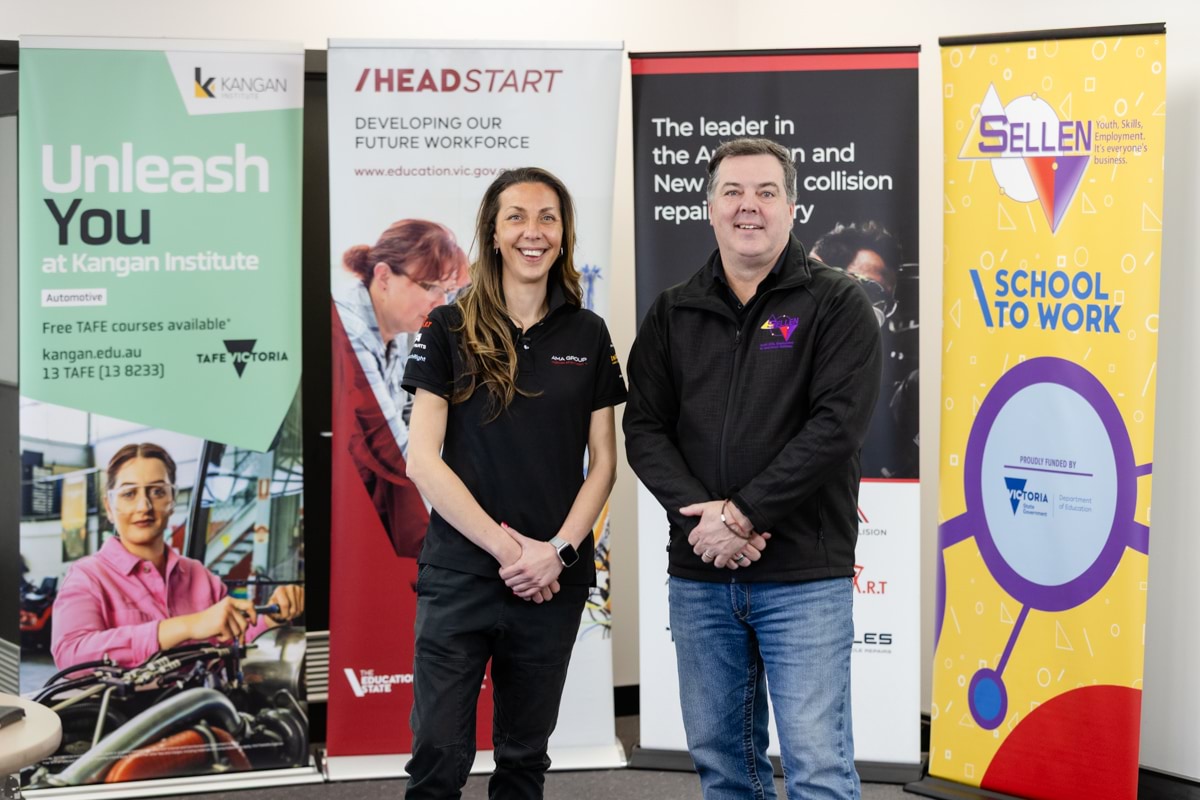
AMA Group, the largest collision repair organisation across Australia and New Zealand, has built a statewide collaboration designed to secure Victoria’s future automotive workforce. Through the AMA Group Collision Repair Pathways Program, the organisation created a coordinated, industry aligned pathway from secondary school into skilled employment. The partnership involves South East Local Learning and Employment Network (SELLEN), the Local Learning and Employment Network (LLEN), Head Start and Bendigo Kangan Institute’s Automotive Centre of Excellence.
The initiative responds to critical workforce shortages, lack of student awareness of automotive careers and the increasing technical complexity of modern vehicles. The collaboration delivers nationally recognised training and provides high-quality workplace learning that pathways into apprenticeships and employment across AMA Group’s 50 Victorian sites.
The program has delivered strong outcomes with a 198% increase in participation from 2023 to 2025 and a significant increase in apprentice retention. The program demonstrates how coordinated, industry led programs can address skills shortages, broaden access, and create meaningful, long‑term careers for young people.
Training provider category finalists
Congratulations to Laverton Community Education Centre - 2026 Community Training Provider of the Year award winner
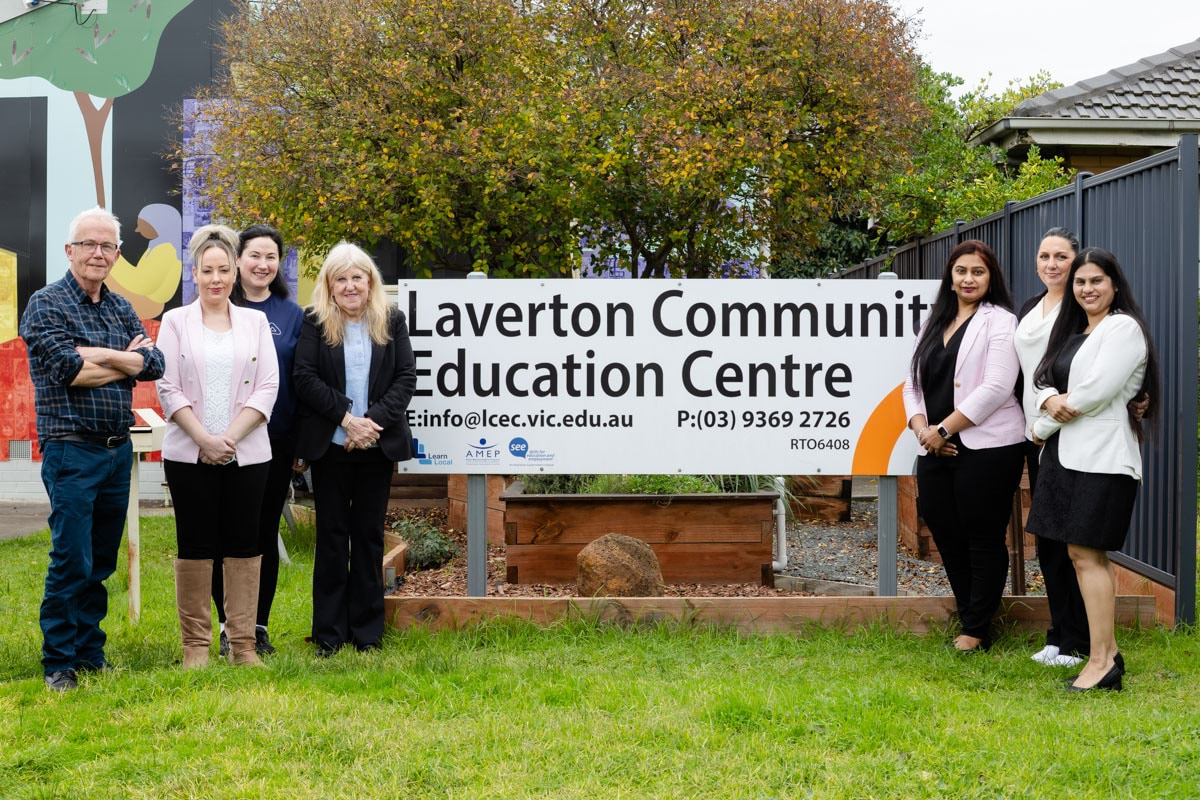
Laverton Community Education Centre (LCEC) is the education and training arm of Laverton Community Integrated Services Inc, founded in 1974 by local residents to meet the learning needs of a rapidly growing, diverse community, that is home to many recently arrived migrants, one parent families and households experiencing insecure work. In 1999 the centre became a Registered Training Organisation and built a strong reputation for high quality, community embedded education.
In the past year, LCEC trained students from 69 countries. More than 350 learners each month accessed accredited and pre accredited programs, including classes in English, LLND and employability skills.
Strong industry partnerships enabled 154 organisations to host around 200 student placements in 2024–25. With VET programs focused on high growth sectors such as early childhood education, aged care, and disability support, 60% of graduates gained employment within 12 months. LCEC builds the skills and confidence learners need for study, work, and independence.
Australian Vietnamese Women's Association Inc.
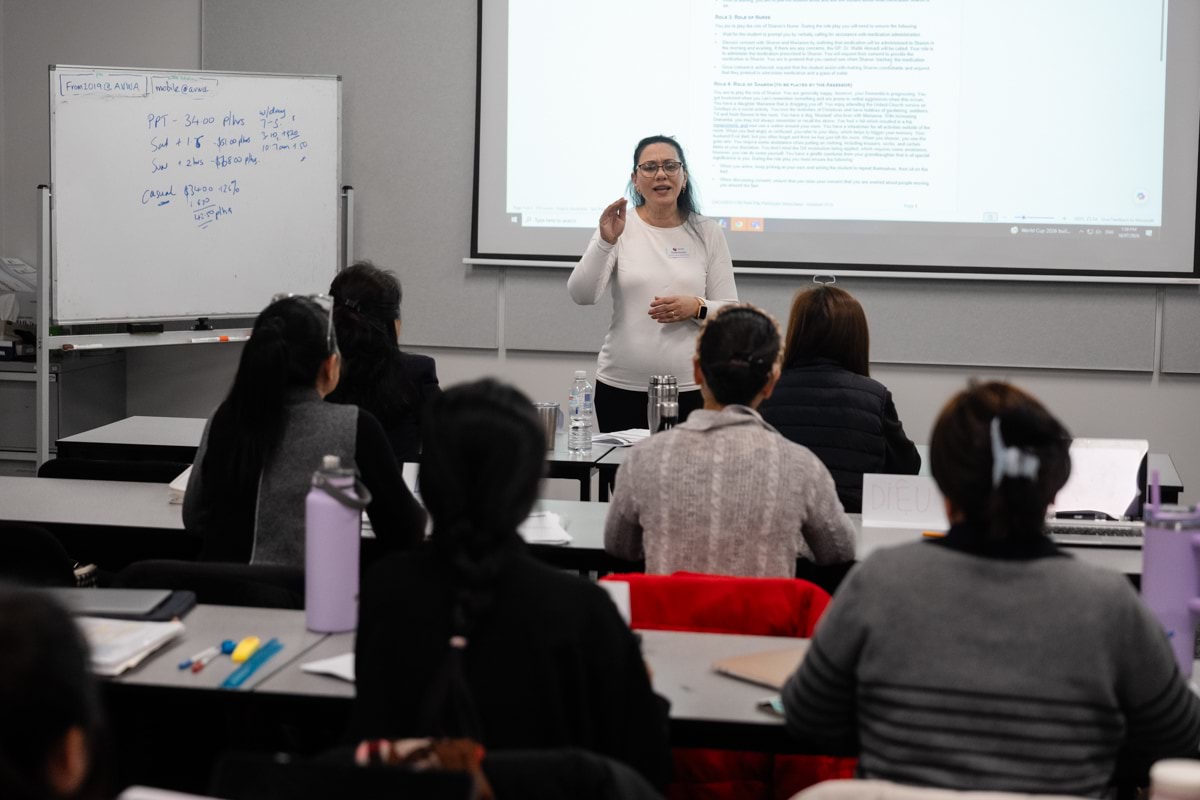
The Australian Vietnamese Women’s Association (AVWA) is a leading community service organisation with more than 43 years of experience supporting Vietnamese refugees and culturally and linguistically diverse communities across metropolitan Melbourne. AVWA delivers integrated programs that strengthen education, employment, health and social wellbeing outcomes for vulnerable individuals and families.
Its Registered Training Organisation provides nationally accredited qualifications and pre-accredited pathways tailored to learners facing significant barriers. Accredited programs focus on high-demand sectors such as aged care, disability support and early childhood education and care, while foundation skills programs support learners with low English proficiency, limited schooling or long-term disengagement to transition into formal study.
AVWA’s training model is holistic and culturally responsive, combining bilingual and blended delivery, counselling and practical supports such as childcare, transport and family services. This wraparound approach helps learners complete their studies and address barriers to training and employment. In 2025, 71% of Individual Support graduates found work, while Early Childhood Education graduates also moved into jobs or further study.
AMES Australia

AMES Australia has delivered high-quality, inclusive education for migrant and refugee communities since 1951. Under its vision of ‘full participation for all in a cohesive and diverse society’, the organisation supports migrants and refugees to achieve their social and economic goals.
Many learners face barriers such as low English and digital literacy, disrupted education, caring responsibilities and reduced confidence. Contextualised and integrated language, employability, and digital literacy programs build capacity of their students to navigate services and experience the local workforce. These pathways lead to further training, volunteering, and work.
Today, AMES delivers a comprehensive suite of nationally recognised VET and pre accredited programs across Victoria. Learner satisfaction sits at 79%, completion rates at 85%, with feedback consistently highlighting the quality and approachability of teachers. As Victoria’s largest Learn Local provider, AMES is recognised for excellence in foundation skills delivery. Its sustained commitment to equity and prosperous settlement continues to improve outcomes for migrant communities statewide, supporting families and building stronger communities.
Congratulations to Harvester Technical College - 2026 Small Training Provider of the Year award winner
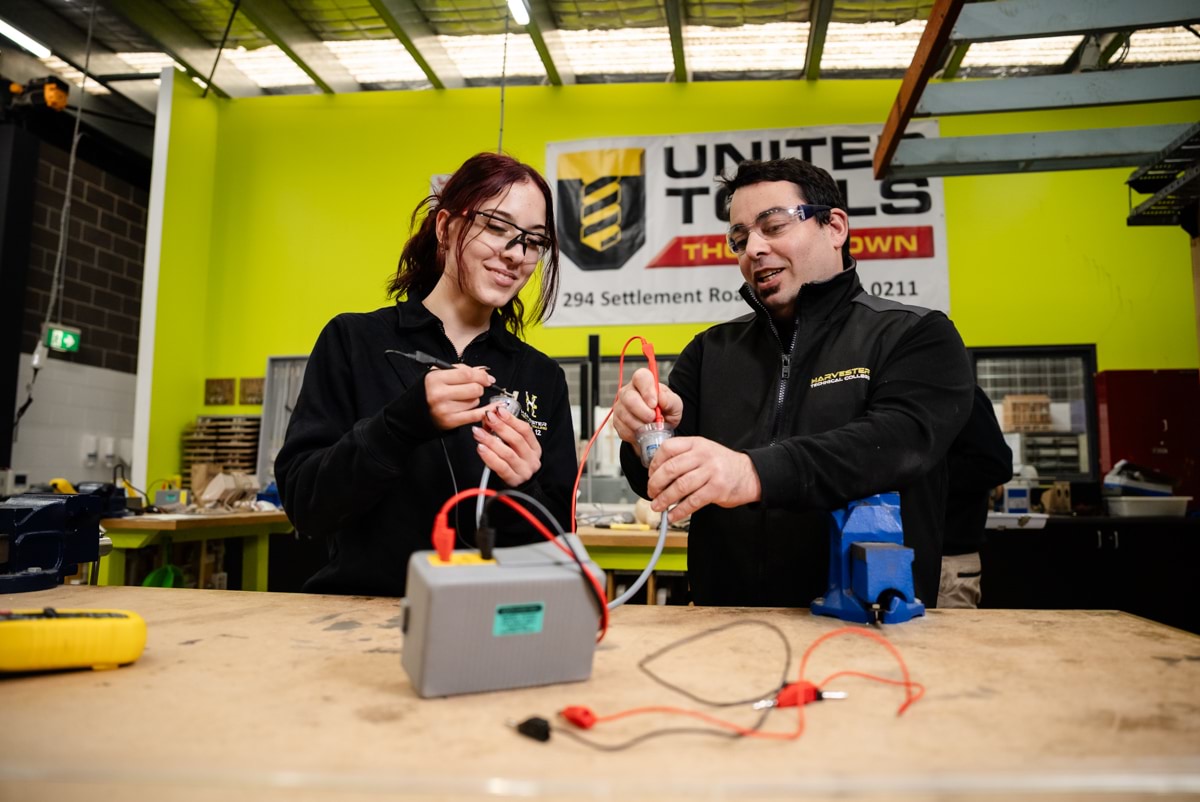
Harvester Technical College is a specialised senior secondary college delivering technology and trade focused VET programs for students in Years 10–12. As a Victorian Government school-based RTO (Sunshine College), it services the VET needs of Melbourne’s inner west. It offers an applied learning environment where VCE Vocational Major studies are integrated with authentic, trade-based learning.
Creating a state-of-the-art Trade Training Centre enabled Harvester to expand on high demand pre apprenticeship pathways, delivering Certificate II programs in Building and Construction, Electrotechnology, Engineering Studies and Plumbing, alongside a customised White Card unit to ensure workplace readiness. Their new Certificate II in Integrated Technologies equips learners with emerging skills in automation and robotics.
Centralised delivery, industry immersion and structured workplace learning enables students to complete Certificate II qualifications in one year with many graduates completing two pre apprenticeships. Consistently strong outcomes reinforce Harvester’s reputation as a leader in VET education. In 2025, apprenticeship retention rates were high, and 92% of students achieved full qualifications.
VEG Education
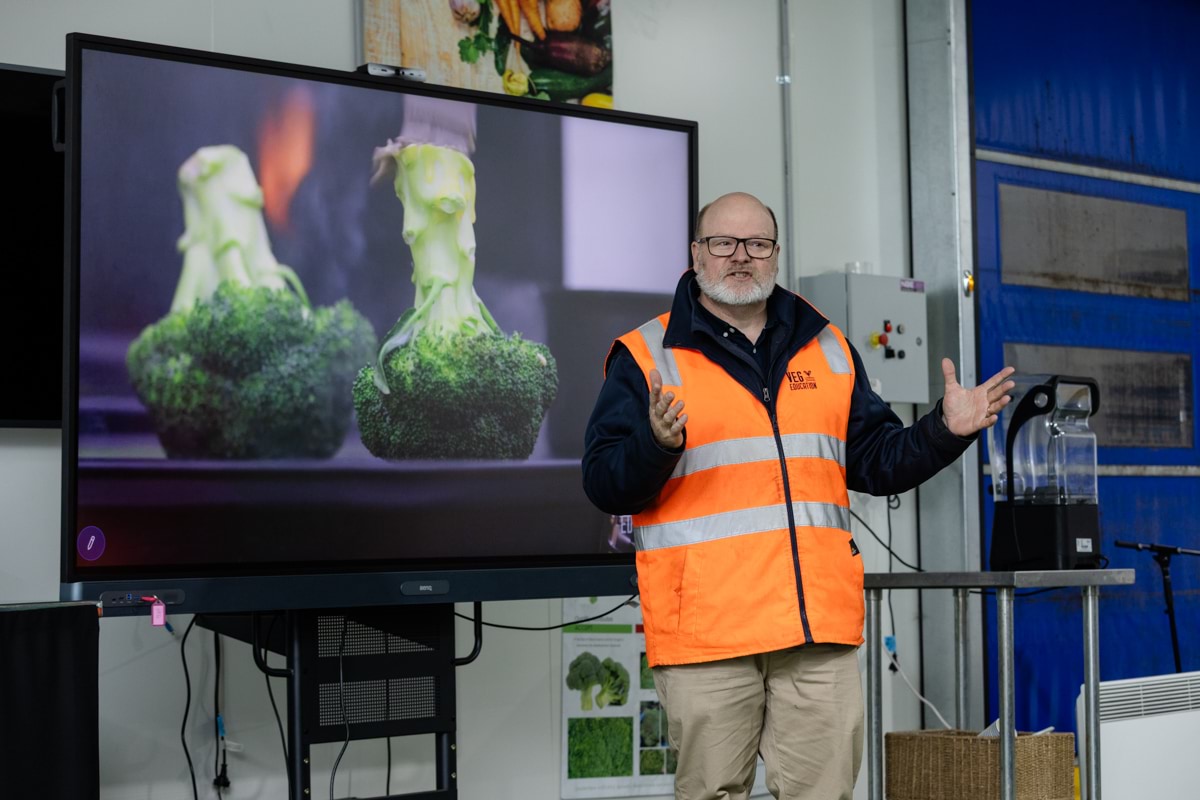
Food and fibre fuels VEG Education, a highly specialised Victorian Registered Training Organisation. Informed by the experience and insight of commercial vegetable enterprise Velisha Farms, VEG Education was created to meet workforce, safety and compliance needs across the fresh produce and broader horticulture sectors. It engages learners across the entire supply chain, from paddock to plate, raises the profile of food and fibre careers, and equips learners with the tools to thrive.
VEG Education’s school-based VET programs do more than train students — they shine a light on horticulture as a skilled, innovative and rewarding career pathway, building early interest and creating a stronger pipeline into further training, employment and the future workforce needs of the industry.
Completion rates exceed 88%, employer satisfaction averages 95%, and graduates consistently transition into employment or further training. VEG Education demonstrates how a small, specialist provider can deliver large‑scale industry impact.
CEAV Institute
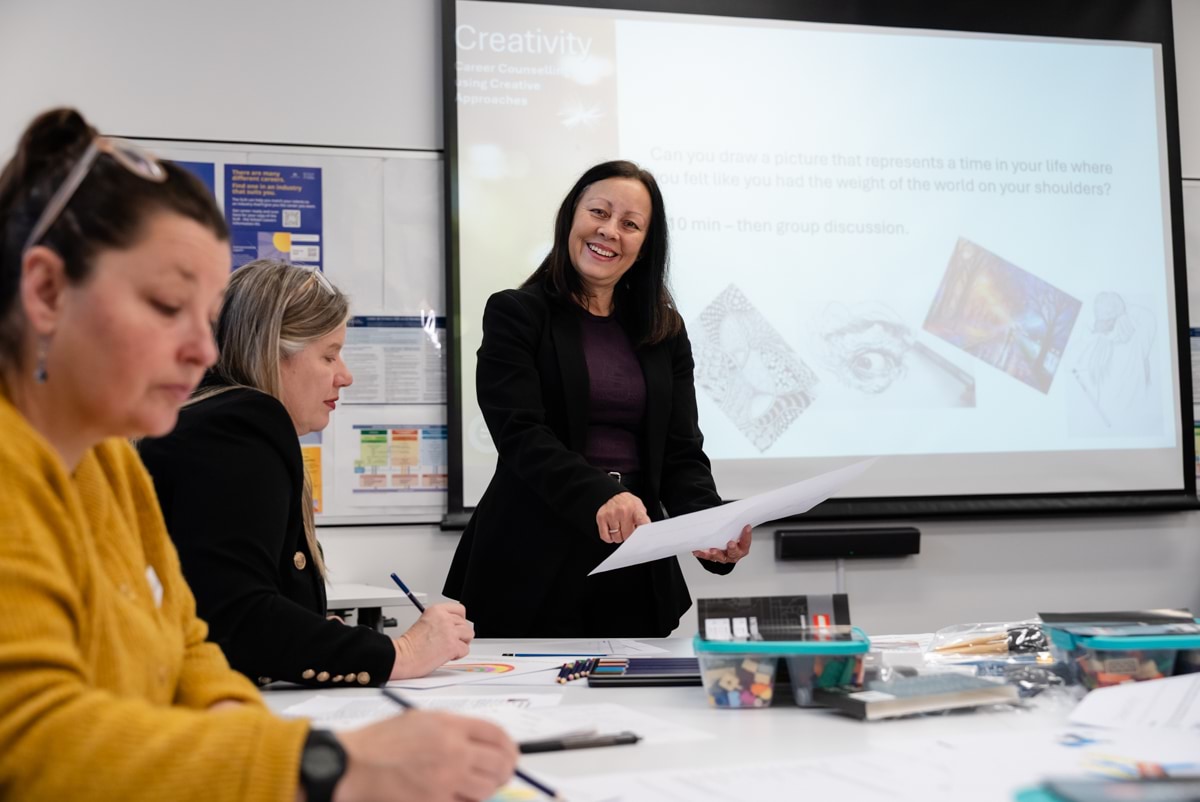
Supporting Australia’s workforce, CEAV Institute is a leading not for profit provider of specialist career development education. It provides high quality career development graduates with the specialised skills to work effectively in the career development field.
Training and assessment are continually refined and aligned to industry best practice and designed to ensure graduates are genuinely work ready. In 2025, 80% of students completed their qualification within 12 months, with overall satisfaction at 94%. Reported outcomes included 36% securing new employment and 86% achieving promotion or pay progression. Graduates work across schools, community organisations, employment services, tertiary settings and industry programs nationwide.
Operating as a division of the Australian Centre for Career Education, the organisation has assisted in the as Engaging Parents in Career Conversations, Industry Immersion Programs and the My Career Insights program, which has supported over 32,000 Victorian students since 2019. It has also provided advocacy and support for Career Development Practitioners throughout Victoria and Australia through research and development.
Congratulations to South West TAFE - 2026 Large Training Provider of the Year award winner
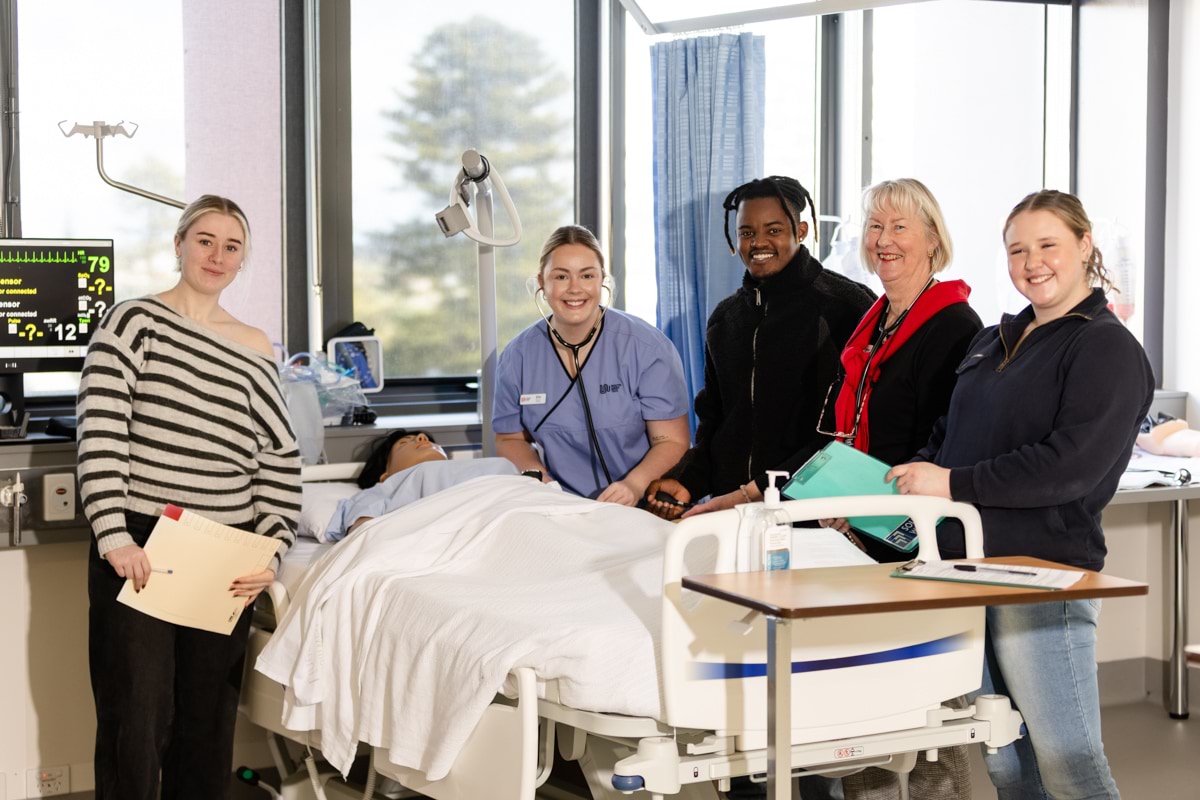
South West TAFE (SWTAFE) is the largest vocational education and training provider in south-west Victoria, operating across six campuses and four training sites. Delivering accessible, high-quality education aligned to the Victorian Skills Plan, SWTAFE works closely with more than 300 employers and 26 schools to address workforce shortages in aged care, disability, early childhood education, agriculture, First Nations communities and skilled trades.
Continuous improvement is embedded across the organisation, driving innovation and stronger outcomes for students, industry and staff. This commitment has contributed to SWTAFE consistently ranking among Victoria’s highest-performing TAFEs for student and employer satisfaction. Current results include Victoria’s second-highest student satisfaction rate, a completion rate of 63.2% compared with the state average of 50.2%, and 88.3% of graduates employed or undertaking further study.
Equity, access and inclusion are central to SWTAFE’s approach, with wrap-around support delivering strong outcomes for priority learner cohorts. More than just a TAFE, SWTAFE provides a lifetime of opportunity, strengthening communities and regional prosperity for all.
Chisholm Institute
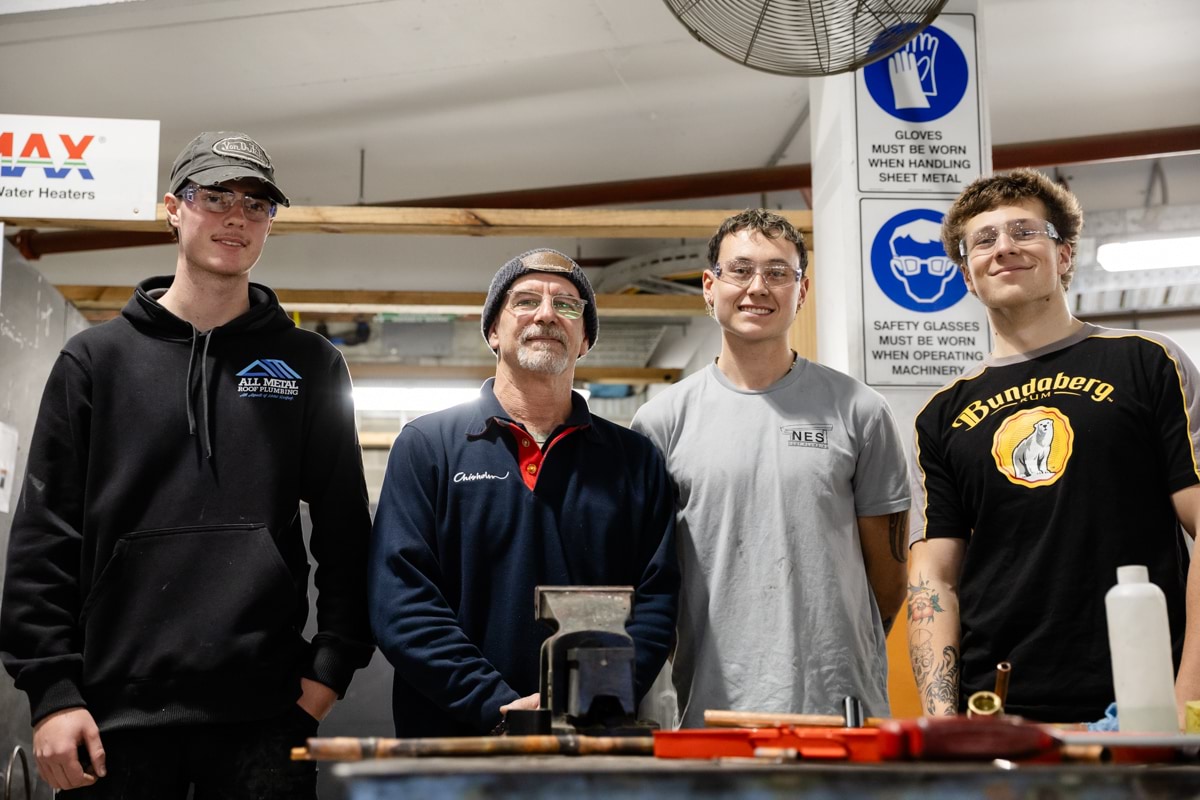
Chisholm Institute is one of Victoria’s largest and most diverse vocational education providers, delivering training that transforms lives, strengthens communities and supports workforce needs. Operating across some of Melbourne’s most socio-economically disadvantaged areas, Chisholm ensures access to high-quality education for all, regardless of circumstance. In 2025, more than 32,500 students from 158 countries enrolled in 220 qualifications delivered on campus, online, in workplaces and internationally.
Chisholm demonstrates sector leadership through initiatives including the $30 million National Centre of Excellence in Digital, AI and Technology, the VET Educator Academy and the Learning and Innovation Precinct at Frankston. These investments have strengthened student outcomes and educator capability.
The Quality Indicators for Learning and Teaching survey ranked Chisholm as Australia’s highest-performing TAFE for undergraduate educational experience, scoring 86.3%. Chisholm also achieved Victoria’s highest TAFE completion rates for women in trades. Student satisfaction increased to 76% in 2025, up 2.1 percentage points over two years. Its workforce remains highly engaged, with 93% of staff understanding how their role contributes to organisational objectives.
NECA Education & Careers
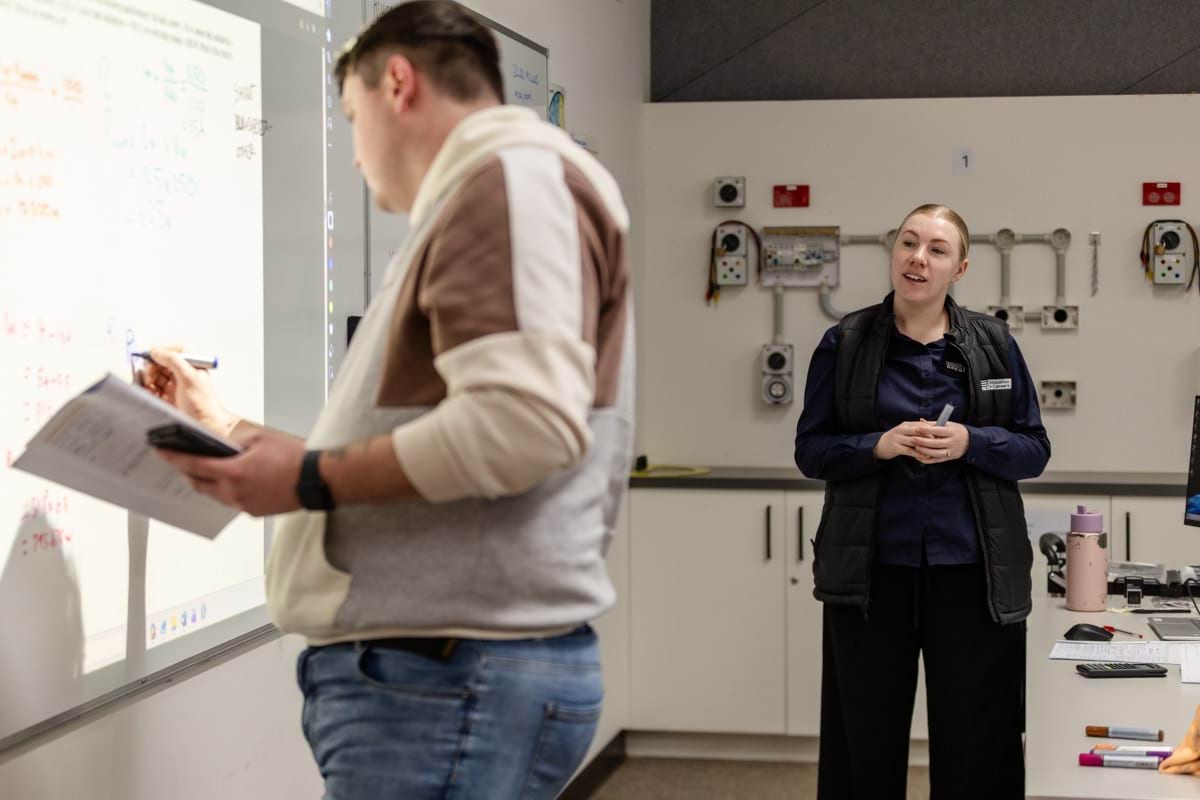
NECA Education and Careers is a leading not for profit RTO specialising exclusively in electrical training. Owned by the National Electrical and Communications Association and governed by an independent board, it delivers accredited and non- accredited programs across 4 qualifications, 10 skill sets and post trade courses. In 2022, it became the first provider approved by Energy Safe Victoria to deliver Continuing Professional Development for all Electricians and Licensed Electrical Inspectors.
As Victoria’s largest electrical training provider, NECA Education and Careers recorded more than 3,147 enrolments in 2025. Apprenticeship completion rates reached 78%, which was well above the national average. First time pass rates for the Licensed Electrical Assessment sit well above the average, compared with other RTOs.
Training is delivered using blended, practical, and simulated learning supported by online resources.
Innovation is central to NECA’S model. The EDGE program addresses the trade teacher shortage by training electricians to become educators, while diversity initiatives such as Leading Mates and Women and Their Trade have lifted women’s apprenticeship participation far above the state average.
Updated