- Published by:
- Victorian Early Childhood Regulatory Authority
- Date:
- 19 Feb 2026
The VECRA newsletter is sent to all approved providers, services, key stakeholders and subscribers. It is open to anyone interested in the regulation of early childhood education in Victoria. Sign up to receive the newsletter.
VECRA information sessions
Online information sessions on recent regulatory changes.

VECRA will deliver online information sessions in the last week of February to support the sector to understand and comply with recent regulatory changes, many of which come into effect on 27 February.
Please note: centre-based sessions are open to all educators from all service types, including Family Day Care and Outside School Hours Care (OSHC), to support those who may be unable to attend the Wednesday session.
We encourage you to register for one of these sessions in Eventbrite:
Centre-based services
- Monday 23 February 6:30 pm–8:00 pm, centre-based educators and approved providers
- Tuesday 24 February 10:00 am–11:30 am centre-based educators and approved providers
- Thursday 26 February 6:30 pm–8:00 pm centre-based educators and approved providers
- Tuesday 3 March 10:00 am–11:30 am centre-based educators and approved providers
- Thursday 5 March 10:00 am–11:30 am centre-based educators and approved providers
Family day care services
Wednesday 25 February 6:30 pm–8:00 pm family day care educators and approved providers.
Resources on all the regulatory changes
Read about all previous changes, starting from 1 September 2025:
- Child Safety - What is changing?
- Child Safety and Child Protection training
- NQF child safety changes from 1 September and 1 January 2026
- Guide to the NQF (updated)
- Child safety reforms: National and Victoria-specific legislative changes
- Child safe practices for digital technologies and personal electronic devices.
Please note that ACEQA is also hosting a Child Safety Reform information session on 20 February.
Preparing for the new national worker register
Guidance on important steps in preparation for the new National Worker Register.

The new National Early Childhood Worker Register comes into effect on 27 February 2026, and there’s some important steps service providers need to take to prepare ahead of this date.
The introduction of the register is an important step in strengthening child safety across Australia, as it gives regulatory authorities like VECRA and our interstate and national counterparts clear visibility of who is working in services and where. This will make it easier to monitor, identify and respond to risk.
The Australian Children's Education and Care Quality Authority (ACECQA) will be responsible for establishing and maintaining the Worker Register.
What you need to do
Approved providers must:
- make sure all current staff information is entered into the system within one month of 27 February 2026
- update details within 14 days whenever someone starts work, leaves or their details change
- make sure that all worker records meet the requirements set out in the National Law and Regulations.
How to update the Worker Register
Employee information must be updated via the NQA ITS portal. There will be options to either enter and update worker information manually one-by-one, do a bulk upload using excel or a JSON file upload.
For more information and practical support on completing your worker register and answers to frequently asked questions, please visit ACECQA’s website. ACECQA also has a dedicated support team for any phone or email enquiries on the worker register:
- Email: WorkerRegister@acecqa.gov.au
- Phone: 1300 422 327
Verifying educator qualifications
Early education and care educators must hold appropriate qualifications.

Early education and care educators must hold appropriate qualifications as specified in the National Regulations, which can also be found on ACECQA’s website Qualification requirements | ACECQA.
Approved providers have a legal obligation under the National Law to ensure educators hold appropriate qualifications. To ensure compliance, persons with management or control of a service (PMCs) must be vigilant and ensure qualifications are authentic.
There are several simple and effective ways to verify vocational education and training qualifications. These include:
- Checking that the qualification was issued by an approved Registered Training Organisation (RTO) by searching the National Training Register. Enter details of the RTO number, name, or ABN for their approval status and scope of registration. The qualification is valid if it was issued by an approved RTO during their period or registration, and the qualification is listed on their scope.
- Ensuring that the qualification has not been cancelled by visiting the Australian Skills Quality Agency’s (ASQA) website at Australian Skills Quality Authority (ASQA) and search for 'All Qualification Integrity Actions'. A list of all cancelled qualifications and RTO will appear in chronological order. In 2025, ASQA undertook regulatory actions against several providers offering early childhood education courses: Luvium Pty Ltd, SPES Education Pty Ltd (SPES), Gills College, Arizona College, Christa College, and Unique College of Technology. ASQA is continuing a program of regulatory actions in 2026 against non-genuine and bad-faith providers. Remember cancelled qualifications cannot be used for employment as an educator.
- Checking that all requirements for the qualification have been completed, and the recipient has completed the training within required course durations. False or non-genuine qualifications have often been completed in very short timeframes. These details can be checked easily by asking the candidate to supply an official VET transcript from the holder’s Unique Student Identifier. (USI) account.
- Knowing the requirements of common vocational courses for the early childhood education and care sector or checking this information on the National Training Register. You can then check official transcripts to ensure all required units of competency have been completed, including all mandatory work placement hours and required duration of study. For example: the Certificate III in Early Childhood Education and Care requires candidates to complete 17 units (15 core units and 2 electives) and complete a minimum of 160 work placement hours to obtain this qualification. Check the dates that each competency was completed to ensure the person completed their qualification within the mandatory time frames. Certificate III qualifications should be completed within a minimum period of 6 months (600 hours total). The Diploma of Early Childhood Education and Care qualification requires 12 core units and 3 elective units to be completed within a minimum of 12 months.
National vocational qualifications are usually updated every 5 years. To ensure your staff have current knowledge and skills, check whether their qualification is current or that they have maintained their skills and knowledge through continuous employment in a relevant role in the early education and care sector.
If a potential employee’s qualification was obtained more than 5 years ago, check their resume and references to ensure their employment history reflects ongoing engagement in the sector and includes regular use of the skills and knowledge at the level of the qualification. For example, a diploma-qualified educator needs to continue to engage in a diploma-qualified level of work to be able to retain the currency of their skills and knowledge. If there are substantial gaps, the educator needs to demonstrate that they have undertaken additional training to update their skills. This is particularly important for units relating to first aid and anaphylaxis competencies because a lack of understanding or skills in these areas can endanger the lives of children.
Higher education qualifications including Bachelor degrees required for Early Childhood Teachers (ECTs) can be verified via The Tertiary Education Quality Standards Authority’s (TEQSA) National Register at National Register | Tertiary Education Quality and Standards Agency. To verify an individual’s qualification, you can also use the USI Student Portal at Welcome to USI - Unique Student Identifier with the individual’s consent or contact the specific university’s or higher education provider’s Registrar and make a formal request to verify a person’s qualification. If an ECT is currently registered with the Victorian Institute of Teaching (VIT), then you can be assured that their qualification has already been verified.
Remember that qualification requirements do differ in each jurisdiction. For more comprehensive information about qualification requirements, please visit Qualifications | ACECQA.
Managing air quality after bushfires
Protecting children from asthma, allergies and other respiratory problems.

There has been frequent smoke haze and poor air quality in many areas across Victoria following the January bushfires, raising concerns for all children and especially those with asthma, allergies or other pre-existing health conditions.
Young children are at a higher risk of experiencing respiratory problems caused by exposure to smoke as their lungs are still developing and maturing. In addition, smoke from the bushfires often contains fine particles which are toxic when breathed in, which can result in respiratory inflammation. Children who have not previously displayed symptoms of allergies or asthma may also be at risk, and experience asthma symptoms.
It’s important to remind families regularly throughout the year to update the service about any changes to their children’s health, or any recent symptoms as it allows staff to be aware of additional health risks.
Actions to protect all children - daily procedures
Providers and services are encouraged to check daily air quality forecasts for their area and regularly monitor the air quality before scheduling daily routines. This way staff can determine the best times to go outside, as air quality particles can change from hour to hour, and day to day.
This additional air quality check can be incorporated into other daily procedures at the start of each day alongside monitoring other hazards like UV and heat. Check the Environmental Protection Agency (EPA)’s air quality forecasts for your area at: Check air and water quality.
Actions to protect children with asthma or allergies
Services should already be aware of each child’s medical needs based on the information provided by families in their enrolment records. Each child with a diagnosed health care need, allergy or relevant medical condition must also have medical management plans and communication plans.
Staff should be trained so they know how to respond appropriately to each child, and have the correct first aid, anaphylaxis management and asthma management training.
Finally, all relevant medications for each child must are stored appropriately so they are effective when required and checked regularly to ensure they have not expired.
Add information about managing air quality risks after bushfires to your Emergency Management Plan (EMP)
We recommend that services include procedures to manage the risks of poor air quality in their service’s Emergency Management Plan (EMP). Some examples of actions to consider are:
Medical
- Call 000 if anyone is experiencing wheezing, chest tightness and difficulty breathing.
- Closely monitor adverse effects of smoke on children and staff.
- Children and staff with existing heart or lung conditions (including asthma) should follow the treatment plan advised by their doctor.
- Asthmatics must follow their personal asthma action plan and keep a reliever or inhaler on hand.
- Notify parents/carers about conditions, and ensure they cater for their child’s needs, such as providing an extra inhaler.
Activities
- Restrict outdoor activities or cancel, re-schedule or use alternative venues for any outdoor activities.
- Close windows and doors.
- Switch air conditioners to 're-circulate' or 'reuse air’ (turn it off if it doesn’t have this function).
- Limit prolonged or heavy physical activity relative to the conditions.
Notification/information – as appropriate
- Notify and/or seek advice from your PMC if required.
- Report serious incidents to VECRA in accordance with relevant regulatory requirements and service agreement.
Additional resources
- EPA air quality forecasts – Check air and water quality
- Bushfire smoke affects children differently – here’s how to protect them
- Allergy Aware – Best practice guidelines for anaphylaxis prevention and management in children’s education and care services – new version coming soon
- Access a broad range of useful expert resources from Allergy aware
- Managing children's medical conditions in early childhood services
- Melbourne Pollen – count and forecast
- First aid qualifications and training
Focus on staff wellbeing
Practical resources and proven strategies to support educator wellbeing in meaningful ways.

The start of the new term can be a demanding time for ECE staff and educators, so it’s vital that staff wellbeing remains a priority.
A new Australian Children’s Education & Care Quality Authority (ACECQA) Quality Area 4 information sheet brings together some practical resources and proven strategies to support educator wellbeing in meaningful ways.
Approved providers are reminded that the goal of Quality Area 4 within the National Quality Standard is to support services and service leaders to strengthen educator wellbeing and practices within the workforce. The guidance encourages early childhood leaders to tailor approaches to the unique needs of their team to support them.
Career opportunities at VECRA
Join a purpose-driven regulator committed to integrity, professionalism and continuous improvement.

We have a number of career opportunities open at VECRA at the moment. Please feel free to share with your networks, and if something sounds like a good fit, we encourage you to apply.
| Position Title | Level | Work Type | Where to apply (link) | Closing date |
| Principal Practice Advisor | VPS6 | Ongoing | Principal Practice Advisor, VECRA | 24 February 2026 |
| Senior Program & Project Advisor | VPS5 | Ongoing | Senior Program & Project Advisor, VECRA | 24 February 2026 |
| Program Advisor | VPS4 | Ongoing | Program Advisor, VECRA | 24 February 2026 |
| Senior Assessment & Rating Officer | VPS5 | Ongoing | Senior Assessment & Rating Officer, VECRA | 24 February 2026 |
| Senior Trainer | VPS5 | Ongoing | Senior Trainer, VECRA | 25 February 2026 |
Winner of the 2025 Victorian Early Years Award for promoting Children’s Health and Wellbeing
Congratulations to Connie Benn Early Learning Centre in conjunction with Heidelberg Psychological Services.
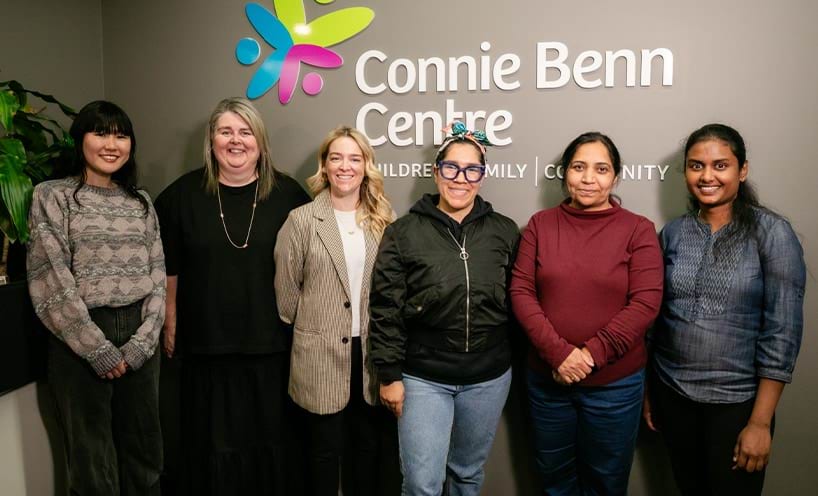
Connie Benn Early Learning Centre (Connie Benn), in partnership with Heidelberg Psychological Services, received the 2025 Victorian Early Years Award for promoting children’s health and wellbeing for its whole-service commitment to trauma-informed practice.
A centre at the heart of community
Nestled within the Fitzroy Early Years Precinct at the Atherton Estate, Connie Benn has long been more than a place of early learning.
As part of the broader Connie Benn Centre Hub, the service works alongside co-located social and family support services to meet the needs of a community experiencing significant social and economic disadvantages.
A moment of reflection
In 2019, Connie Benn received a Working Towards rating against the National Quality Standard. Rather than viewing this as a setback, the leadership team saw an opportunity. Educators were noticing behaviours in children linked to emotional dysregulation, and families were sharing concerns about their children’s wellbeing.
It became clear that meeting these needs required more than incremental change. It called for a shift in how the service understood and responded to children.
This moment sparked a deep reflection on practice and a commitment to embedded trauma-informed and well-being-focused approaches across every layer of the service.
Laying the foundations: trauma-informed practice
Beginning in early 2020, Connie Benn invested in extensive professional learning for leaders and educators, grounded in attachment theory and research from the Australian Childhood Foundation.
The focus was on safety, empathy and predictability; co-regulation and emotional attunement; and providing consistent, compassionate responses to behaviour. Regular trauma-informed coaching, reflective discussions, and debriefing sessions are now a part of everyday practice, supporting educators’ wellbeing while strengthening their confidence and skills.
A space designed for regulation and resilience
A standout milestone in the journey was the creation of the Wellbeing Room in 2023, co-designed with an occupational therapist through School Readiness Funding. This purpose-built space supports all seven sensory systems: auditory, visual, tactile, olfactory, gustatory, vestibular and proprioceptive providing calming, inclusive experiences for children through small groups and one-to-one support.
The space is used to support children to regulate their emotions and engage in small group interactions and intentional teaching practices. The centre reports that the impact has been profound, with improved emotional regulation, fewer behavioural incidents, stronger peer relationships, and increased engagement in learning.
Strengthening partnerships with families
As practice evolved, so did relationships with families. Open communication, shared goal setting, and genuine collaboration have become hallmarks of the service.
Families experiencing vulnerability have reported feeling seen, supported and confident that their children are receiving individualised, compassionate care.
A culture transformed
In 2024, Connie Benn progressed from Working Towards to achieving an Exceeding rating against the National Quality Standard. In addition, the service has cultivated a culture defined by empathy and inclusion, reflective evidence-based practice, strong trusting relationships, and collective responsibility for wellbeing.
This transformation strongly aligns with the Victorian Early Years Learning and Development Framework (VEYLDF), which emphasises reflective and evidence-informed practice, respectful and responsive relationships, equity and inclusion, and strong partnerships with families as foundations for quality early learning.
Connie Benn’s trauma-informed approach, focus on co-regulation and emotional safety, and commitment to collaborative, family-centred practice directly supports VEYLDF Outcome 3: Children have a strong sense of wellbeing, reinforcing wellbeing as fundamental to children’s learning, development and long-term outcomes.
Rachel Dike, Fitzroy Precinct Early Years Coordinator shared her thoughts on winning the award:
‘The team is thrilled to be recognised by the Victorian Early Years Awards for Connie Benn’s dedicated leadership, trauma-informed practice, and strong community partnerships. This award is a testament to the outstanding care, innovation and resilience our childcare staff provide to children and families in Yarra.'