

Even though Islam is not a race, Islamophobia is understood and experienced as a form of racism. This is because Muslim people often face unfair treatment, hate and discrimination because of who they are or the faith they follow.
Some people use the term ‘anti-Muslim hate’ to show that it is based on hatred, not fear. This can help describe certain experiences, but it may not fully capture the wider, systemic discrimination and prejudice that Muslim people can face.
Islamophobia at a personal level
Islamophobia can occur at a personal level, between individuals. It can be direct or indirect and includes:
- verbal abuse and harassment such as insults, yelling, intimidation, threats or swearing
- non-verbal intimidation and harassment such as offensive hand gestures
- physical assault and violence, including spitting or pulling off a hijab (head covering)
- targeting and bullying of young people in school settings
- graffiti
- hate mail
- online abuse, typically on social media and can include misinformation, hate speech, calls to violence or bullying.
Islamophobia at structural levels
Structural Islamophobia or systemic Islamophobia is racism and discrimination that has become part of daily life. It is deeply embedded and considered the ‘way things are’. It worsens social, emotional and economic outcomes and entrenches disadvantage. Structural Islamophobia can include:
- under-representation of Muslims in the media and in positions of leadership
- profiling by security and authorities based on how a person dresses or looks
- misrepresentation and negative stereotypes of Muslims by the media and public figures.
Experiences of Islamophobia can overlap with other forms of racism and discrimination.
For instance, people can experience Islamophobia because they are Muslim as well as other forms of racism because of their race or ethnic background or discrimination because of their gender, age or ability. This can make racism, discrimination or exclusion even worse for Muslim people.
Islamophobia is often targeted at women and girls who choose to wear a hijab, niqab, burqa or other head covering. It is also experienced by men who wear religious attire and individuals who are not identifiable as Muslim and choose not to wear religious attire.
Islamophobia in Australia Report
Islamophobia in 2023-24
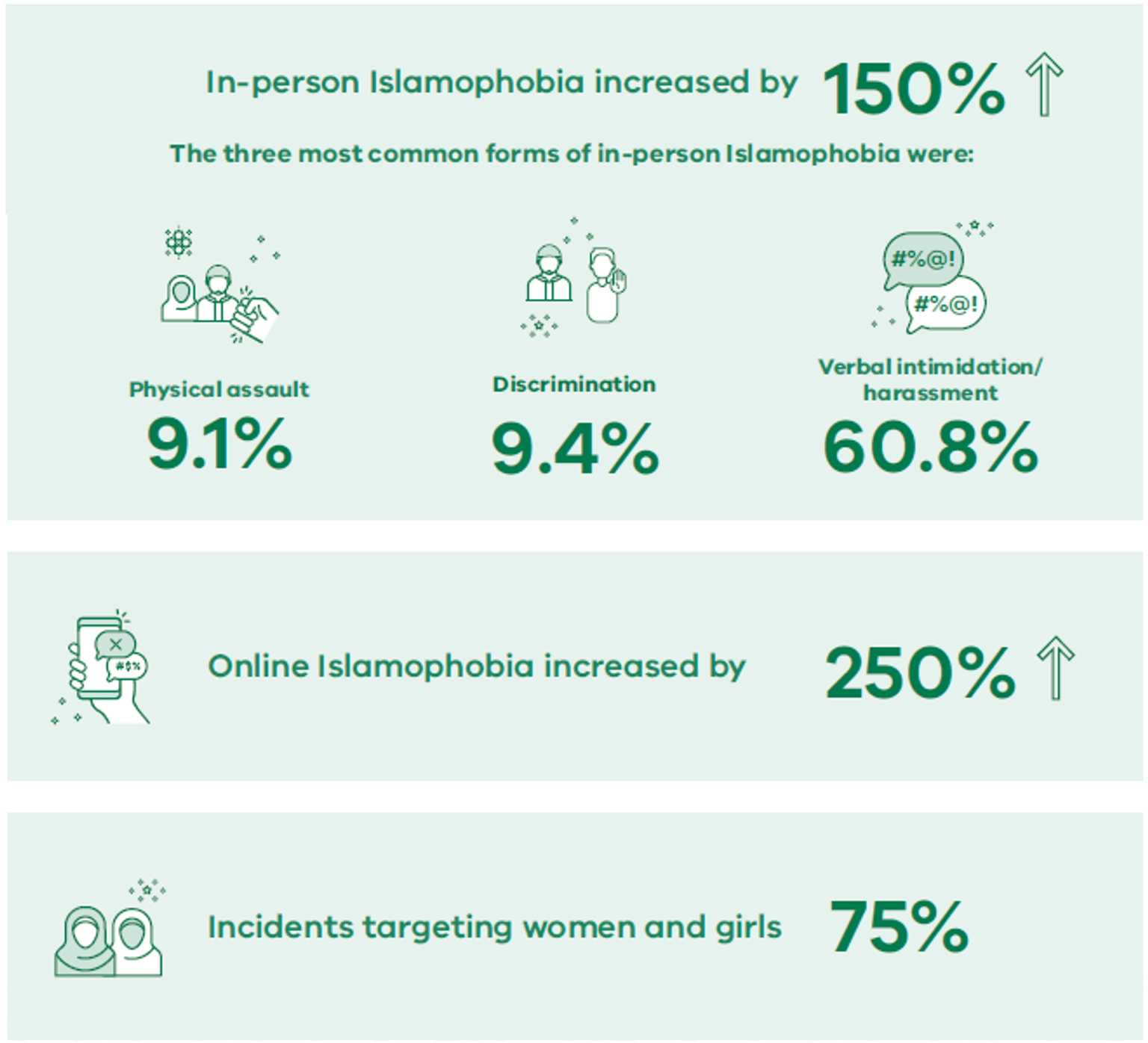
People who experience Islamophobia do not always report it. This means that actual rates of Islamophobia are likely higher than what is reported. There are many reasons for this. These include:
- feeling hopeless and that reporting won’t help
- trauma associated with recounting experience of Islamophobia
- language barriers
- not knowing where or how to report an incident
- feeling unsure of what can be reported
- not trusting authorities.
In 2024, most reports of Islamophobia were in public spaces such as on the street, driving or parking, shopping centres, on public transport, at workplaces and online3.
All forms of Islamophobia are deeply harmful to Muslim people and communities and contribute to a decline in wellbeing.
References
2S Carland, N Alziyadat., M Vergani and & K O’Brien, Islamophobia in Australia Report V, Islamophobia Register Australia, 2025.
3Carland et al, Islamophobia in Australia Report V
Updated