Lorimer is set to transform into a highdensity precinct with quality open space, recreation links and transport connections across Fishermans Bend and towards the CBD.
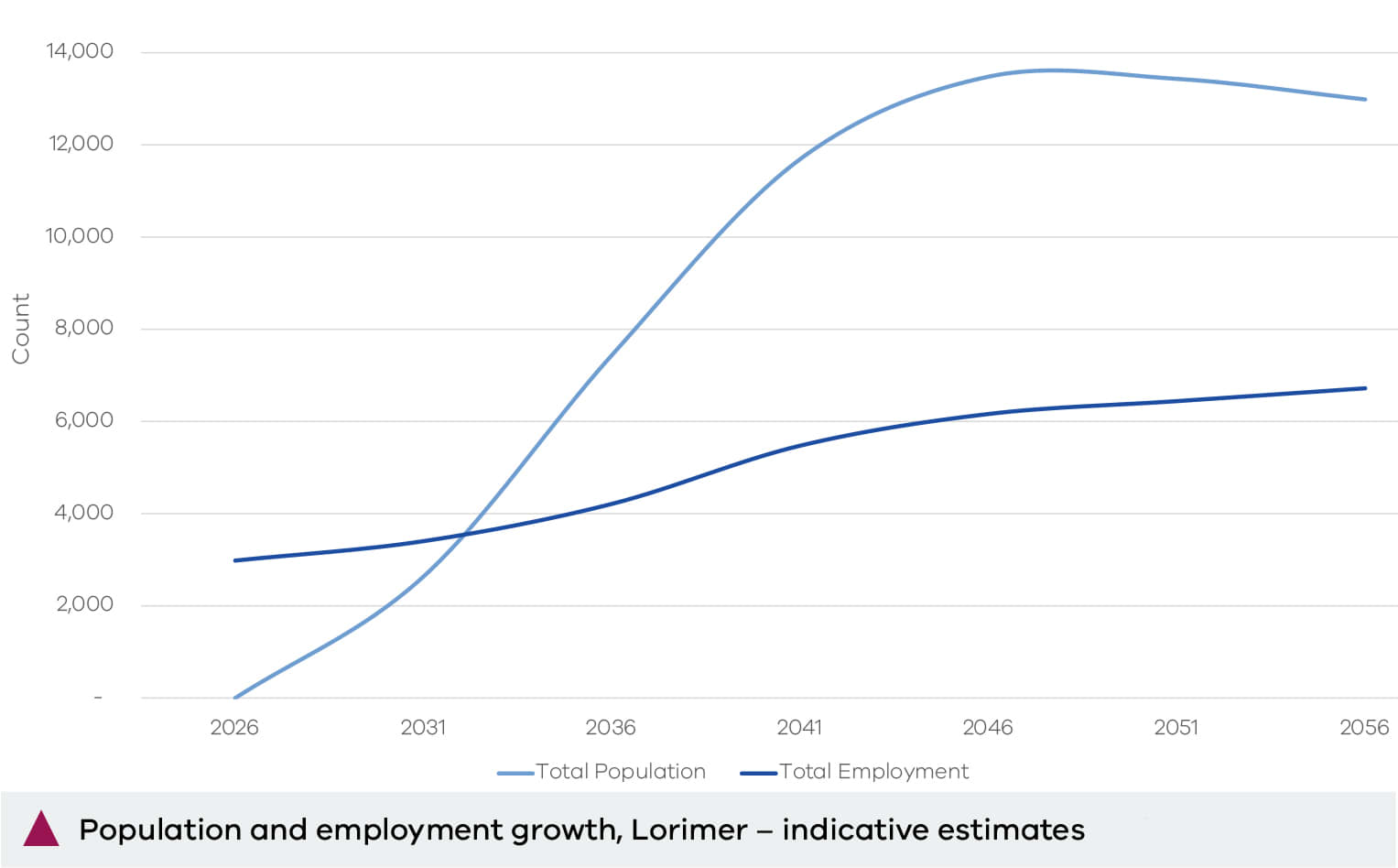
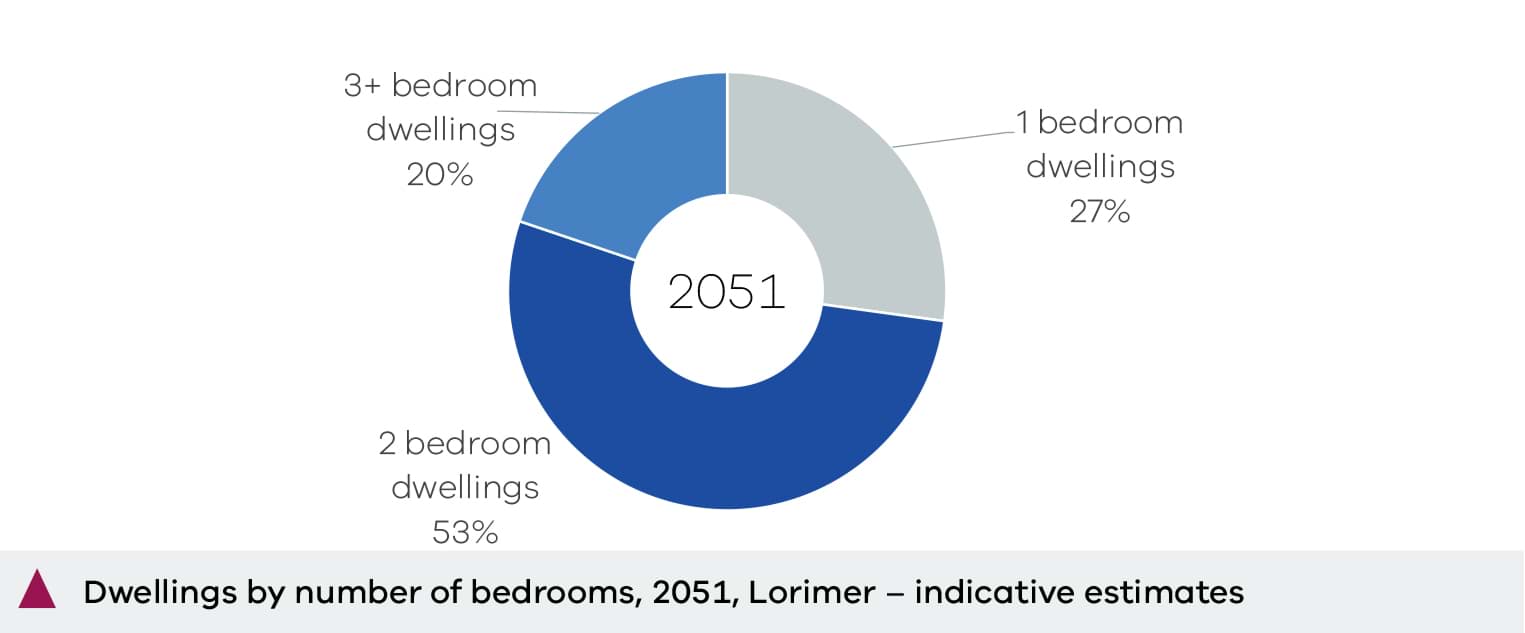
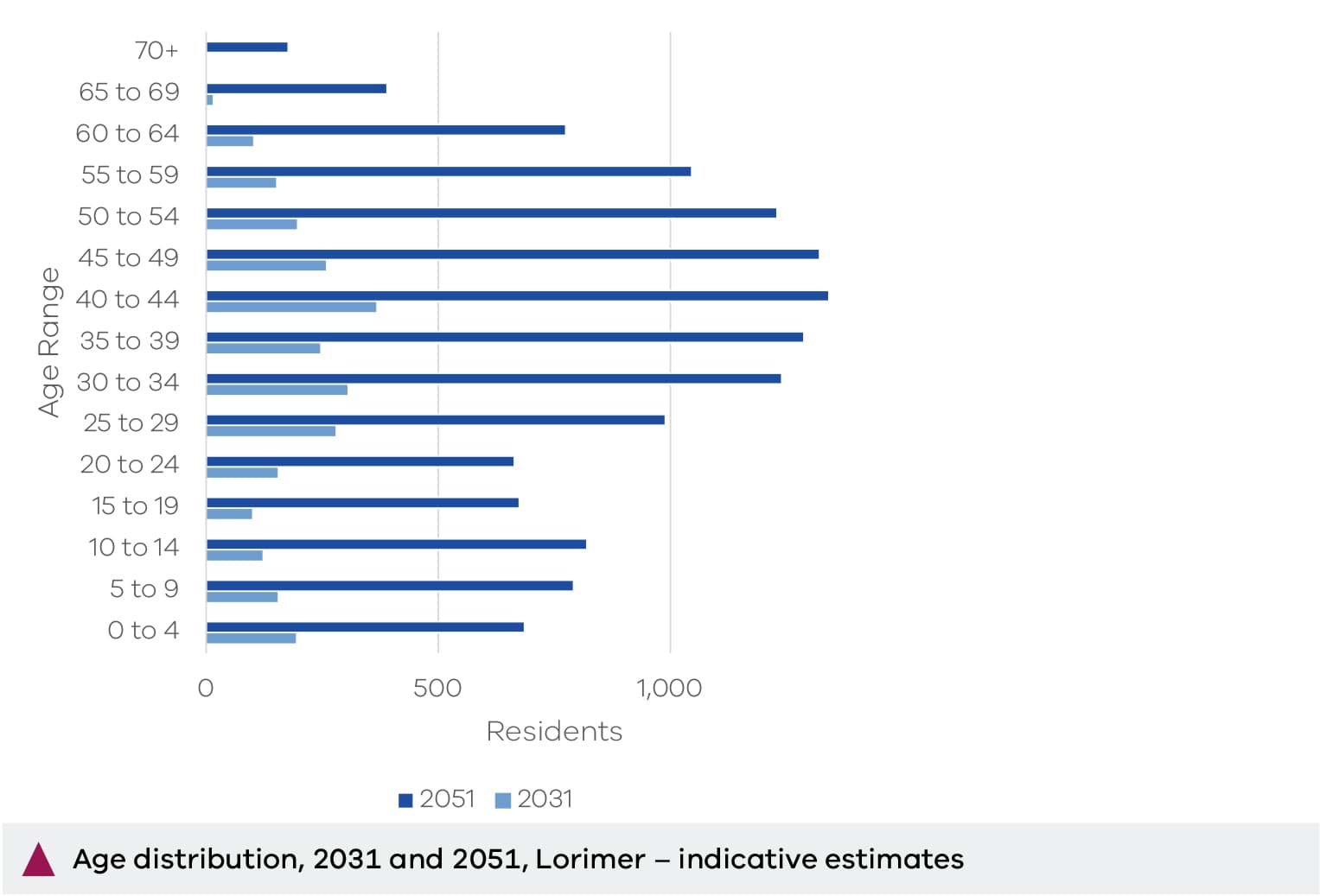
The first residential development has recently commenced in Lorimer. To develop indicative population estimates for the precinct, the Demographic Model assumes Lorimer’s population to be similar to that of Docklands, consisting of a large cohort of established professionals seeking two-to-three bedroom apartments within the precinct. This population are expected to remain in place for longer, and experience some ageing. Population growth is expected to accelerate in the 2030s. Employment is estimated to grow steadily over the coming decades.
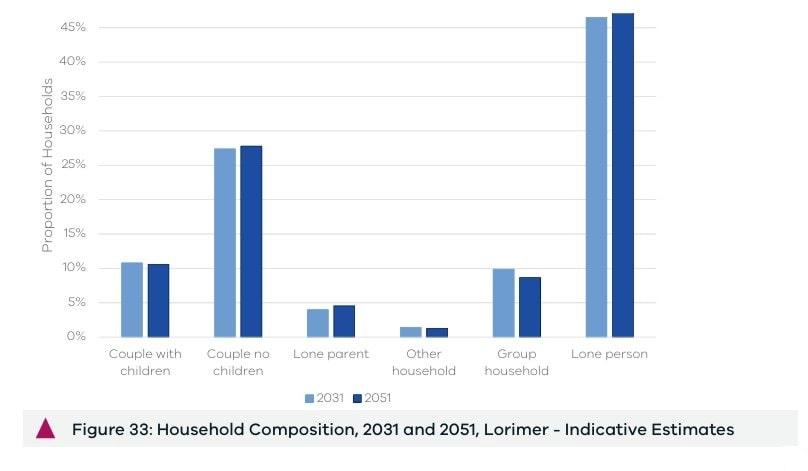
Lorimer is not anticipated to accommodate the scale of low-to-mid-rise development expected in Sandridge and Wirraway. As a consequence, while a moderate number of households are expected to be families with children. The Demographic Model’s indicative estimates show smaller households without children as the predominant household type. Lorimer’s population is expected to skew more heavily towards older residents than the neighbouring Sandridge and Montague precincts.
Industry Change, Lorimer
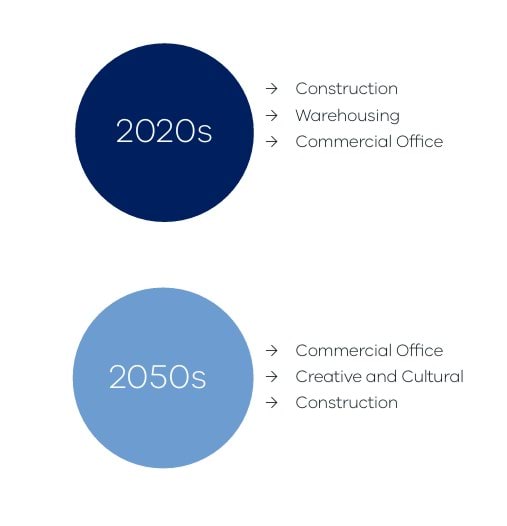
Lorimer is anticipated to experience a moderate increase in employment as the precinct’s population grows. At present, employment in Lorimer predominately takes the form of construction, warehousing and other industrial-type employment with some office-based employment already present.
Lorimer’s proximity to the CBD and Docklands is likely to drive similar employment patterns to the central city. Office-based employment is expected to continue to grow, alongside employment within the creative and cultural, retail and entertainment sectors.
Updated