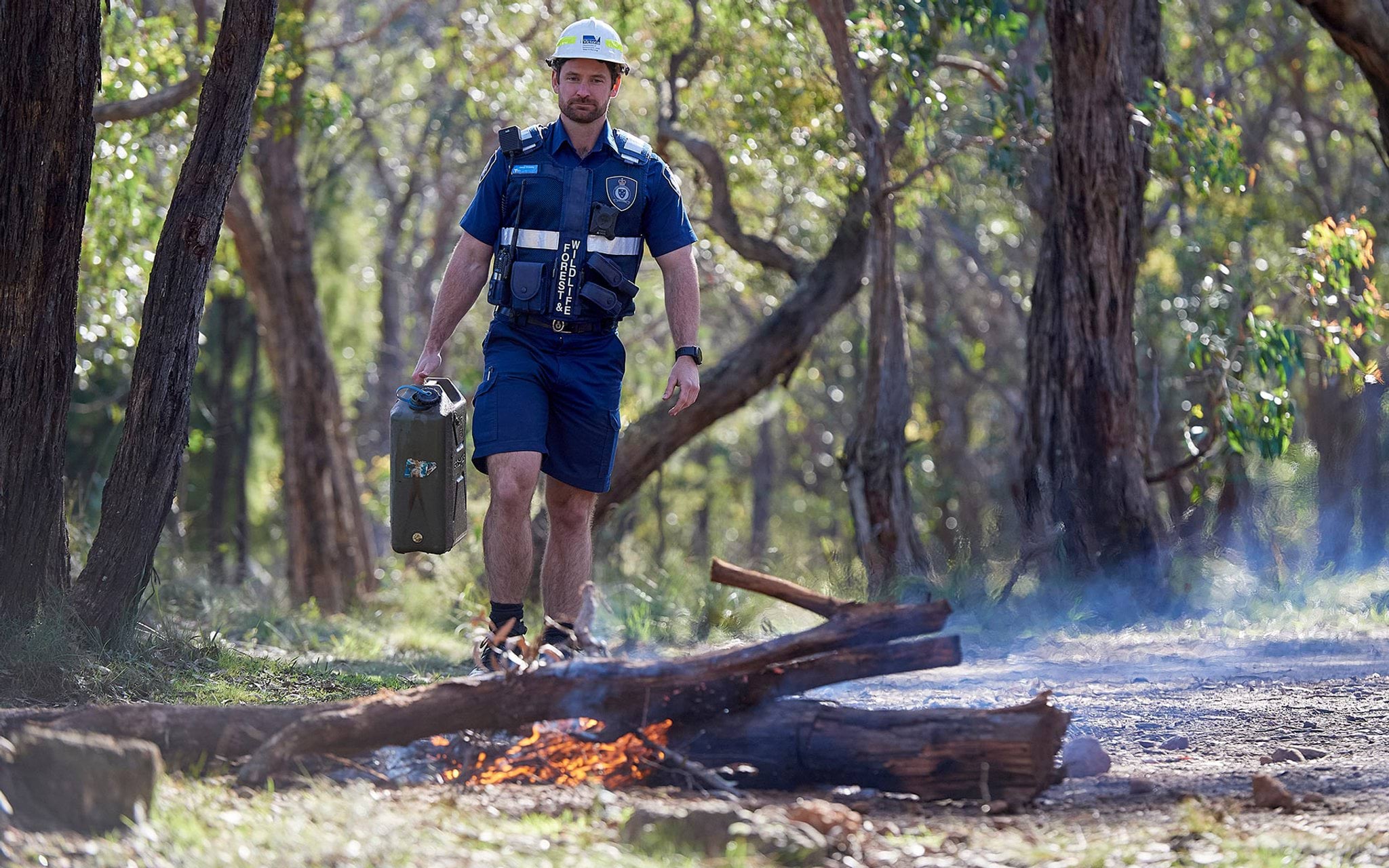
The Conservation Regulator is committed to delivering on our regulatory responsibilities. By focusing on what matters most, we can design more proactive and preventative approaches to ensure that all Victorians can enjoy our State forests and the remarkable biodiversity within them.

Cruelty to wildlife
In Victoria, we are incredibly fortunate to share our forests with an array of native animals. Whether wildlife are living in the wild or being cared for in captivity, they all deserve to be treated humanely. The number of reports of illegal and deliberate harm to wildlife has continued to increase, and we have responded by maintaining our focused regulatory efforts on cruelty to wildlife.
Our aim for this regulatory priority is to prevent harm to wildlife and our approach is proactive and preventative as well as responsive. We focus our efforts on instances of significant and intentional cruelty to both wild and captive wildlife. By partnering with Crime Stoppers to raise awareness of wildlife cruelty and providing guidance to Victorians on ensuring welfare of native animals, we can increase awareness and address breaches of the law.
The Conservation Regulator has four key objectives for the prevention of, and our response to, wildlife cruelty:
1. Greater community awareness
Increase understanding of wildlife welfare in the community and by stakeholders and co-regulators.
2. Enforcement capability
Ensure our Authorised Officers have the appropriate tools, training and resources to identify, record and respond to instances of animal cruelty.
3. Appropriate permissions
Ensure our licences and permits effectively protect animal welfare.
4. Prevent harm
Proactively monitor compliance with licences and permits with a higher risk of cruelty.
Illegal fruit tree netting and glue traps
In Victoria, all native wildlife is protected by law and the Conservation Regulator is committed to addressing cruelty towards wildlife in Victoria. This includes the inappropriate use of glue traps and certain household fruit tree netting.
Under Victoria’s Prevention of Cruelty to Animals Act 1986 and the Prevention of Cruelty to Animals Regulations 2019, all glue traps capable of trapping an animal, and fruit netting with a mesh size greater than 5 millimetres by 5 millimetres at full stretch is illegal. Furthermore, it is an offence to sell netting for the purposes of household protection if fruit netting mesh exceeds 5 millimetres by 5 millimetres at full stretch.
In January 2025 the Conservation Regulator received reports that a major retailer was advertising the sale of illegal netting available to Victorians. The retailer was notified of the illegal netting on their site and their obligations in relation to Victoria’s regulations. This led to the product being withdrawn from online sales.
Through this intervention, the Conservation Regulator continues to proactively prevent future cases of cruelty to, and the unnecessary suffering of, wildlife while making a concerted effort to educate households on the regulations to better protect local wildlife.
The Conservation Regulator assesses all reports relating to the use or sale of illegal household fruit tree netting and traps and encourages the community to report illegal fruit netting.
Visit Protect fruit trees from wildlife(opens in a new window)
Report illegal fruit netting: Call CrimeStoppers 1800 333 000
Enforcement in action: Violet Town eagles case
In 2024, the Conservation Regulator concluded a multi-year-long wildlife cruelty case.
A Violet Town woman was found guilty of poisoning and killing more than 140 native birds, including around 125 wedge-tailed eagles, and illegally keeping protected wildlife remains at her property in 2019.
In June 2024, presiding Magistrate Faram found the woman guilty of 47 charges under the Wildlife Act 1975 and the Prevention of Cruelty to Animals Act 1986, including 35 counts of killing wildlife by poison, seven counts of aggravated cruelty, and five counts of possessing protected wildlife without authorisation.
In Victoria, all native wildlife, including wedge- tailed eagles, are protected under the Wildlife Act and it is illegal to disturb, kill, take, control, or hunt them without authorisation. It is the responsibility of landowners to understand their legal obligations in relation to the use of baits and poisons and the rules for controlling wildlife.
This is a cautionary tale for landowners about the illegalities of poisoning practices to native birds and the importance of protecting our precious native wildlife.
47 | Charges successfully prosecuted |
Enforcement in action: Operation Pike
In 2024, the Conservation Regulator brought a case against three men and a woman aged in their early twenties for alleged activities of breeding and housing of reptiles as part of an illegal wildlife trading operation.
Operation Pike targeted an illegal wildlife trade syndicate operating in Victoria with links to other states. The investigation into the illegal import, export, and trade of wildlife in Victoria was conducted with assistance from Victoria Police, the federal Department of Climate Change, Energy, the Environment and Water, and other states, uncovering an alarming trend for wildlife.
Four people were charged under the Wildlife Act 1975, Wildlife Regulations 2013 and Crimes Act 1958. Charges included falsifying documents to facilitate an illegal reptile trading operation, with one offender claimed his “appreciation” and “fascination” with reptiles led to his involvement with the criminal operation between May 2022 and January 2023. The penalties imposed on the two matters that have concluded included fines of $33,000 for their early plea of guilt.
The illegal take and trade of wildlife is unacceptable. Not only is it cruel to take wildlife from the wild, but it jeopardises the future health and survival of our native species.
$33,000 | Fines |
Operation Django
The Conservation Regulator and Biosecurity Victoria collaborated in Operation Django, aimed at dismantling the largest network of breeding, brokering and possession of exotic pest animals ever detected in Victoria.
The introduction of exotic animals into Victorian ecosystems can cause significant harm through the introduction of diseases, reduction in food availability and predation. Wildlife trafficking is the fourth-largest organised crime globally, worth over $450 billion a year, according to the Wildlife Crime Research Hub.
Operation Django commenced in July 2023 following intelligence reports of the unlawful possession of two African pygmy hedgehogs and has a significant taxonomic scope involving exotic pest animals declared under the Catchment and Land Protection Act 1994, native wildlife regulated under the Wildlife Act 1975 and noxious fish declared under the Fisheries Act 1995. Operation Django is a two-year, multi-phased operation involving multiple jurisdictions including the Commonwealth Department of Agriculture, Forestry and Fisheries as well as Western Australian, Queensland, New South Wales and South Australian wildlife regulators. The results so far include seven persons of interest prosecuted with the majority receiving convictions and two persons of interest issued with a Catchment and Land Protection infringement notice, totalling $115,600 in fines, and several matters under active investigation.
Campaign with Crimestoppers: Wildlife Crime: It’s Your Call
In May 2024 the Conservation Regulator and Crime Stoppers Victoria launched the ‘Wildlife Crime: It’s Your Call’ campaign to increase public awareness of the issue and the crucial role that information from the public can play in preventing wildlife crime.
The campaign resulted in a 30 per cent increase in wildlife crime reports to Crime Stoppers compared to the month before the campaign.
The campaign also increased public awareness of wildlife crime and delivered information from the public that helped resolve existing investigations. It encourages people to see wildlife crime as an issue that they can do something about, as well as reminding them that they have a well-known channel in Crime Stoppers that they can use to make reports.
The Wildlife Crime: It’s Your Call campaign delivers information through mainstream media, social media, website stories and through collateral like stickers and pens. It helped spread the word about everything from Horsham corella poisoning, rules governing native pet ownership, a kangaroo being killed with a vehicle at Lysterfield, Operation Save Our Hoodies protecting hooded plovers on our beaches and magpies being shot with arrows at Narre Warren and Seaford.
Following the success of the campaign we are working together again on Wildlife Crime: It’s Your Call launching in mid-2025. The campaign includes new stories about unsolved cases where information from the public could make a big difference and profiles of Conservation Regulator Authorised Officers sharing stories about their work tackling wildlife crime.
The campaign was seen approximately 2,598,967 times across media coverage, digital coverage, website views and event attendees.
A breakdown of the coverage:
- The campaign appeared 1,747,792 times across social media to 1,436,227 million unique users. This generated 121,000 reactions and shares, and 5,069 clicks to campaign webpages.
- Video content received 990,209 views, leading to 1,914 hours of watch time.
- Crime Stoppers Victoria attended 16 events and leveraged 580 community contacts to distribute key campaign information in target areas.
Engagement in action
2,590,000 | Campaign impressions |
1,430,000 | People reached by social media ads |
900,000 | Video views |
5,069 | Webpage visits |
16 | Community events attended |
Enforcement in action: $80,000 fine for man guilty of extreme animal cruelty
In 2024 the Conservation Regulator finalised an investigation into a case of extreme wildlife cruelty to eastern grey kangaroos in the state’s northeast.
In 2021 a report of a man breaking the conditions of an Authority To Control Wildlife (ATCW) permit was brought to our attention through public reporting. Conservation Regulator Authorised Officers inspected the man’s property finding large numbers of dead kangaroos, most of which did not appear to have been killed lawfully. In August 2024, in the Shepparton Magistrates Court, a Yielima man was fined $80,000 with conviction after he plead guilty to four counts of aggravated cruelty charges under the Prevention of Cruelty to Animals Act 1986 (POCTA). The guilty plea was for his involvement in the unlawful shooting deaths of 71 eastern grey kangaroos, including two joeys on his property near Nathalia in the state’s northwest between April and July 2021.
Following the discovery of the animals, a veterinarian assessment concluded that a “high degree of pain and suffering” was caused from the non-fatal shooting of kangaroos on the property.
At the time of the unlawful shootings the convicted was holding a valid ATCW permit.
The strict conditions on the permit exist to ensure animals are controlled humanely and include restrictions on fire-arm type, ammunition and a criterion on 'instantaneous injury.' These conditions are in place to prevent animal cruelty at all costs and prevent unnecessary pain and suffering. Permit holders are responsible for ensuring animal welfare requirements are met and must comply with all their licence conditions.
Following the sentence, the man appealed against his penalty in the Melbourne County Court and the matter was finalised on 30 May 2025. Following submissions, His Honour Judge Tinney warned the appellant that he considered this level of offending as serious which his penalty needed to deter and denounce his conduct to others via general deterrence. His Honour indicated that he was going to impose a penalty higher than the original fine handed down by the Magistrate. As a result, the appellant withdrew his appeal and the matter was closed.

Illegal campfires
Illegal campfires are the biggest cause of avoidable bushfires in Victoria. Almost 80 per cent of infringements issued in the 2024–2025 financial year for campfire related offences were for unattended campfires.
Visitation to forests for recreation, tourism and general enjoyment is an important use of Victoria’s State forests.
This year, we have continued to engage with the Victorian community during peak periods of visitation through targeted campaigns, patrols and messaging aimed at raising awareness of campfire safety and regulations.
425 unattended campfires were detected during the 2024–2025 financial year, 151 less than the previous year. Despite this drop, negative visitor behaviours associated with campfires persist.
Australia Day saw a spike in reports with 48 unattended campfires detected across the state. The following day, total fire bans were declared in five weather districts. All unattended campfires have the potential to cause devastating bushfires, with the risk and potential significantly elevated on high fire danger days. This highlights the importance of increasing community awareness about the potential fire risk of campfires on high fire danger days.
Due to the dry conditions across the state, the focus on illegal campfires this year extended into winter after the elevated risks through the hottest months from December to February.
Illegal campfires risk the destruction of native plants and animals and of heritage values, loss of access to public land, loss of personal property and impact on community infrastructure, and in the worst cases, loss of life.
With the continuing trend of lower-than-average rainfall combined with warmer than average temperatures across the state for the 2024–2025 financial year, the focus on illegal campfires has continued to be one of the highest regulatory priorities for the Conservation Regulator.
The seasonal bushfire outlook for winter 2025 identifies a significant risk of fire for areas of western, southwestern and southeastern Victoria.
We will continue to expand our work in reducing the risks posed by unattended and illegal campfires. This includes through expanding our public education campaign around the impacts of illegal fires on public land to ensure the community understand the impacts of non-compliance. This will continue to be supported by Authorised Officers conducting regular and targeted campfire patrols across Victoria’s State forests.

Illegal take of firewood
Taskforce Ironbark: Fighting the wood fight
To address the escalating illegal firewood take and habitat destruction threatening native wildlife and Aboriginal cultural heritage, this year the Conservation Regulator launched Taskforce Ironbark.
Taskforce Ironbark, a joint state-wide initiative with Parks Victoria, targets illegal commercial firewood removal from public land and encourages Victorian firewood consumers to make choices which help protect our forests and native wildlife. It aims to disrupt the illegal firewood trade and minimise impacts on the health of our parks, forests and reserves, while also promoting responsible firewood consumption.
In 2023 alone, it's estimated that firewood thieves damaged or destroyed more than 9,200 native trees or cleared roughly 462 hectares – approximately 178.5 Melbourne Cricket Grounds (MCGs) – of public land in Victoria, with much of the stolen wood sold on to unsuspecting Victorians by illegal firewood operators.
When Victorians unintentionally buy illegally-sourced firewood, often through online marketplaces and word-of-mouth, they could also be inadvertently supporting the individuals and syndicates destroying native forests and critical wildlife habitat.
Many of the trees targeted by thieves are large, old, slow-growing species such as river red gums, that are unlikely to recover or be replenished in this generation or the next.
The illegal felling and removal directly impacts the survival of some of our most threatened native species, including the red-tailed black cockatoo and the brush-tailed phascogale, that rely on hollows in both standing and fallen trees for habitat.
Victoria is rich in Aboriginal cultural heritage and only a small percentage of historical sites have been recorded. Firewood theft has serious potential to damage Aboriginal scarred trees, and once gone, these important cultural representations and reminders of Aboriginal land use practices are lost forever.
Authorised Officers have been conducting operational activities across public land including routine and targeted patrols, monitoring using a range of surveillance techniques and responding to community reports, to catch commercial firewood thieves.
To further support operational activities, Taskforce Ironbark has been delivering targeted communication and engagement. This includes social media campaigns to increase awareness of the responsible sourcing of firewood and calls for community to report suspicious activity.
In its first year, Taskforce Ironbark has had an impact on firewood theft in Victoria, with the estimated number of trees felled illegally decreasing from 9,247 in 2023, to 7,411 in 2024.
This is estimated to have prevented 30 MCGs of trees from being illegally removed. In addition to this, the Conservation Regulator and Parks Victoria have:
- Investigated over 130 illegal firewood cases.
- Taken approximately 193 enforcement actions, including around $79,990 in fines.
- Delivered digital advertising which reached over 1.5 million people across social media.
- Seen an increase of 25 per cent in community reporting.
In Victoria, it is illegal to cut and take timber from public land without authorisation and offenders face maximum penalties of more than $9,879 and/or 12 months in prison for each charge. Chainsaws, trailers, and vehicles used in the offending can also be seized.
Enforcement results
-20% | Trees felled illegally 2023–2024 |
130 | Cases investigated |
193 | Enforcement actions |
$79,900 | Penalties |
1,500,000 | People reached by social media ads |
+25% | Community report increase |
Ask these questions to recognise reputable firewood sellers and if wood has been legally-sourced
Where does your wood come from? | They should be able to detail where their wood was sourced. |
Can I get a receipt? | They should provide a tax receipt with a business name and Australian Business Number listed. |
Why is the wood so cheap? | If the firewood seems cheaper than similar nearby, ask them why. |
Report suspicious sellers or firewood theft from public land: Call 136 186
System improvement: Taskforce Ironbark illegal activity and risk map
The Conservation Regulator through Taskforce Ironbark has developed a geospatial mapping tool that allows the presentation and overlay of critical data sets to support our intelligence and risk-based approach.
This tool is being used operationally and for strategic planning to identify where illegal activity is or has the potential to have the greatest impact on biodiversity in order to focus our resources. It also helps to identify trends in illegal firewood activity, such as where illegal activity is concentrated.
Enforcement in action: Illegal take of forest produce – gravel
The Conservation Regulator takes the illegal take of forest produce seriously, falling within this classification is gravel.
In 2023, our Hume regional team received an observation report of alleged gravel removal from the Moyhu Timber Reserve, contravening the Forests Act 1958. The persons of interest were taking gravel from public land for pad construction on private land close to the site in question. Conservation Regulator Authorised Officers investigated the case through obtaining details of the persons of interest, undergoing site inspections, obtaining witness statements and interviewing suspects.
The case was heard in the Wodonga Magistrates Court resulting in the individuals being found guilty without conviction, both were placed on a twelve-month good behaviour bond and were each fined $3,000 and $2,000 respectively.
This case was an unusual pursuit for the Conservation Regulator with the aim of showing the community that taking any type of forest produce is a crime and the importance of protecting our public land.
$5,000 | Fines |

Illegal vehicle use
Addressing the growing issue of illegal vehicle use on public land is a priority for the Conservation Regulator. Illegal vehicle use is a major issue in State forests due to the impacts it can have on ecosystems, flora and fauna, and public safety. In 2024–2025 we have focused on detecting crime, public engagement, and increasing community awareness.
Through these efforts, we are protecting our environment while promoting responsible and legal recreational use of vehicles on public land.
- Authorised Officers recorded over 420 field-based observations of non-compliance, with over one third relating to four-wheel drive vehicles on public land. These reports are crucial for monitoring, identifying, and documenting illegal vehicle use on public land. By recording these activities, we can identify and target hotspots for a more strategic approach to enforcement and education.
- The top three illegal activities observed are four-wheel drive vehicles accessing illegal areas, vehicles breaching closed gates and trail bikes accessing illegal areas.
- The Conservation Regulator used an array of public education tools, including 18 social media posts, eight media releases, and two radio interviews, aimed at raising awareness about the implications of illegal vehicle use on public land.
- The Conservation Regulator worked with partners including Traffic Accident Commission, Parks Victoria, Ambulance Victoria, Four Wheel Drive Victoria, Victoria Police, Victoria State Emergency Services, Victoria Emergency, and ABC Radio as part of Operation TrailSafe.
- Engagement at flagship trail bike and four-wheel drive sporting events such as four-wheel drive expos and vehicle events on public land.
Enforcement in action: Operation TrailSafe
Operation TrailSafe was established in 2024 in response to illegal vehicle use on public land. It aims to address the illegal trail network, prevent the formation of new tracks, alongside reducing the number and severity of injuries occurring on public land.
We disrupt illegal vehicle use on public land by addressing non-compliance, this may include issuing infringements, patrolling, and educating the public on rules and regulations through media and communication channels. To bolster compliance with the rules, Operation TrailSafe is increasing strategic field patrols, education efforts, and ensuring strong collaboration with partner agencies.
Attending engagement events enables us to influence behaviour within the trail bike-riding community.
In 2024–2025, we focused on:
- Safe riding practices.
- Legal compliance requirements.
- Socially- and environmentally-sustainable riding.
Operation TrailSafe conducts strategic patrols on Victoria’s public land to promote a sustainable riding culture and provide a preventative regulatory presence. By utilising Transport and Accident Commission crash data, we can strategically target locations to have higher levels of interactions. Field operations not only lead to better compliance with the law but can also serve an emergency response function. In 2024–2025, Authorised Officers were first responders in two separate serious trail bike accidents.

Protection of threatened species
The Conservation Regulator’s regulatory priority, protection of threatened species, encompasses our efforts to prevent or deter illegal or inappropriate activities contributing to the decline of plant and animal species listed under the Flora and Fauna Guarantee Act 1988 (FFG Act).
Our regulatory efforts are targeted at the highest threats to threatened species, including land clearing, illegal firewood collection, wildlife cruelty and habitat destruction. Protecting our threatened species relies on effective partnerships with Traditional Owners and government and non‑government agencies.
We have dedicated operations focused on protecting threatened species, supported by our educational resources to raise the public’s awareness of why and how we can protect our threatened flora and fauna.
By prioritising key areas where other offences also impact threatened species, such as illegal take of timber, we can target effort towards the greatest benefit. This is shown in Operation Save Our Hoodies, the acceptance of an Enforceable Undertaking under the FFG Act, and also in our Focus Species Program – a new initiative promoting wildlife protection at home and in the wild. The program aims to engage and educate the public on the small actions they can take to help safeguard these animals and all native wildlife.
Compliance in action: Powercor Enforceable Undertaking
In May 2025, the Conservation Regulator accepted an Enforceable Undertaking from Powercor Australia after investigating damage to threatened native grasslands and flora at 36 sites in central and western Victoria.
The investigation found that Powercor’s 2023–2024 maintenance activities impacted high-value conservation areas, including parts of the Western (Basalt) Plains Grasslands Community, one of Australia’s most endangered ecosystems which has been reduced to under two per cent of its original extent since European settlement.
Additionally, Powercor’s activities impacted an area in central-west Victoria that supports rare wildflowers and is a known breeding site for the endangered Eltham copper butterfly.
As part of the Enforceable Undertaking, Powercor will improve internal environmental practices, train staff on relevant laws, avoid future harm to protected species, and restore 32 affected sites.
Progress will be reported until the agreement ends in May 2028.
Enforceable undertakings, available under the Flora and Fauna Guarantee Act 1988, offer an alternative to prosecution that can deliver stronger long-term outcomes, such as direct remediation and institutional reform.
This agreement does not affect Powercor’s obligations under the Electricity Safety Act 1998 to manage bushfire risk and maintain infrastructure, but future work must comply with environmental requirements.
Enforcement in action: Glenisla State Forest clearing
In November 2024, the Conservation Regulator successfully finalised a prosecution involving the illegal clearing of native trees and damage to vegetation.
An excavation company and an individual both pleaded guilty in the Hamilton Magistrates’ Court on eight charges arising from the damage and removal of trees and protected flora along a fence line adjoining Glenisla State Forest. The individual engaged the excavation company to clear native vegetation in Glenisla State Forest under the company’s assumption they were permitted to undertake works.
The court was told that a fence line was cleared without approval, resulting in the removal of one hundred trees, damage to forty-nine trees and damage or destruction of five flora species listed under the Flora and Fauna Guarantee Act 1988 including black wattle, grass tree, sphagnum moss, common fringe myrtle and flame heath.
The individual received fines totalling $15,000 and was ordered to pay costs of $7,500 for breaches of the Flora and Fauna Guarantee Act 1988 and the Forests Act 1958. The excavation company received fines totalling. $10,000 and was ordered to pay costs of $7,500 for breaches of the same acts.
Magistrate Gerard Lethbridge in sentencing noted the level of damage caused to native vegetation during the offending was not of the highest degree the Court had seen. However, the fact that the offending stretched over two kilometres and involved protected flora and removal or damage to several significant sized trees meant that the sentence needed to be of a level to deter the offences.
$40,000 | Fines and costs |
Protection in action: Malleefowl case Little Desert fire
Malleefowl (Leipoa ocellata) are a large ground dwelling bird species that live in northwestern Victoria (as well as other parts of southern Australia).
Over summer these birds build large nesting mounds to incubate their eggs at the correct temperature for the development of their chicks. During the 2025 summer a fire in the Little Desert National Park burnt malleefowl habitat. The mounds withstood the fire, however scientists advised the chicks would have little chance of survival should they emerge into the fire-impacted landscape without food, water or protection. A DEECA Rapid Risk Assessment Team responded, with their permit from the Conservation Regulator, to successfully recover three eggs. The eggs were incubated in a safe location producing three healthy chicks, which were successfully released into a suitable habitat!
Operation Save Our Hoodies
Our partnership with Birdlife Australia and Parks Victoria for Operation Save Our Hoodies continued in 2024–2025. This initiative, which has been running for four seasons, educates beach-goers and enforces rules around hooded plover nesting sites during their critical summer breeding season.
Our iconic hooded plovers are a protected species, and environmental factors such as king tides, extreme heat events and erosion threaten the tiny birds, as well as significant threats from humans who risk scaring them off or trampling on their nests, and dogs which often catch and kill chicks.
From September 2024 to April 2025, 320 patrols were conducted along the Victorian coast. Another year of protection efforts under Operation Save Our Hoodies helped enhance survival prospects for approximately 52 fledglings that made it this season. While multiple challenges persist for the species, the program’s comprehensive approach offers an effective species conservation model.
Through the Saving Native Species grant led by BirdLife Australia, we were granted a short-term Forest and Wildlife Officer position to help increase stakeholder engagement and patrol numbers during the critical summer breeding season. With this extra position, the Conservation Regulator were able to increase the number of patrols conducted within the Gippsland region, from 36 in the 2023–2024 season to 86 patrols in the 2024–2025 season.'
Protection in action
+240% | Increase in patrols |
-34% | Decrease in fines issued |
In promising news, authorities also found more beach-goers doing the right thing, issuing only 21 fines – down from 32 in 2023–2024 – to people for various offences, including disturbing birds and dog owners not complying with rules near hooded plover habitat.
Focus Species Program
As the state’s population grows, Victorians are interacting with native wildlife more than ever before, and by focusing our efforts on early education and helping Victorian kids develop positive, habitat-protecting habits, we can all prevent environmental harm and preserve native species for future generations.
Our Focus Species Program launched in August 2024 promotes wildlife protection at home and in the wild. The Program aims to engage and educate the public on the actions they can take to help safeguard forests and native wildlife. Each focus species can be impacted when people do not follow environmental regulations, including cruelty to wildlife, campfire safety, firewood collection and illegal vehicle use.
The focus species are:
- Bearded dragon.
- Brush-tailed phascogale.
- Hooded plover.
- Murray Darling carpet python.
- Southeastern red-tailed black cockatoo.
- Southern right whale.
We selected these species because they face serious threats from sharing their habitats with humans and from people illegally sourcing and keeping them as pets. The program aims to educate the community about the regulations that exist to protect these species and all native wildlife.
The Focus Species Program is delivering a range of interactive learning materials tailored to help children develop an early understanding of why Victoria’s environmental regulations exist and how following them into adulthood will ensure native species can survive and thrive for generations to come.
Our operating context: Biodiversity 2037
The Victorian State of the Environment Report 2023 shows that biodiversity is declining. More frequent bushfires have caused a large area of the Victorian landscape to fall below the tolerable fire interval, meaning plants do not have sufficient time to mature following a fire event.
Other major drivers of biodiversity decline include habitat loss and degradation, human population, land clearing, environmental weeds and invasive herbivores and predators.
Our work, focused by our regulatory priorities, is part of a government wide effort to reverse this trend as outlined in Biodiversity 2037.
Protecting Victoria's Environment – Biodiversity 2037 is Victoria's plan to stop the decline of our native plants and animals, and improve our natural environment. Launched in 2017, Biodiversity 2037 presents a long-term vision for Victoria’s biodiversity supported by two overarching goals:
- Victorians value nature.
- Victoria’s natural environment is healthy.
Avoiding harm to the natural environment is foundational to our work; therefore, all our functions are contributing to the achievement of Biodiversity 2037.
The following goals are particularly relevant to the work of the Conservation Regulator:
- Raise the awareness of all Victorians about the importance of the state’s natural environment. This is supported by our education and engagement programs including the Focus Species Program and development of lesson plans for primary schools.
- Increase opportunities for all Victorians to have daily connections with nature and act to protect biodiversity. This is supported by our focus on promoting forest use and education on safe and legal practices in our forests and our proactive campaigns including protecting habitat by reducing illegal firewood take.
- Better care for and showcase Victoria’s environmental assets as world-class natural and cultural tourism attractions. This is supported by patrols looking to educate and enforce laws and regulations that protect the environment from bushfires and destructive consequences of dumping and illegal vehicle use.
Updated