- Published by:
- Family Safety Victoria
- Date:
- 20 Mar 2026
Acknowledgements
Aboriginal acknowledgement
The Victorian Government acknowledges Victorian Aboriginal people as the First Peoples and Traditional Owners and Custodians of the land and water on which we rely.
We acknowledge and respect that Aboriginal communities are steeped in traditions and customs built on a disciplined social and cultural order that has sustained 60,000 years of existence.
The State of Victoria and the First Peoples’ Assembly of Victoria have signed a Statewide Treaty. Treaty is an opportunity to create a better and fairer future together.
We acknowledge the significant disruptions to social and cultural order, and the ongoing hurt caused by colonisation. We acknowledge the ongoing leadership role of Aboriginal communities in addressing and preventing family violence. We will continue to work in collaboration with First Peoples to eliminate family violence from all communities.
Recognition of victim survivors
The Victorian Government acknowledges victim survivors. We honour their resistance and resilience. We keep at the forefront in our minds all those who have experienced family violence or other forms of abuse, and for whom we undertake this work.
Family violence support
If you have experienced violence or sexual assault and require immediate assistance, call Triple Zero (000) and ask for police. For ongoing assistance, contact 1800 RESPECT (1800 737 732) to talk to a counsellor from the National Sexual Assault and Domestic Violence hotline. For confidential crisis support, information, and accommodation, contact the Safe Steps 24/7 family violence response line on 1800 015 188. If you are concerned for your safety or that of someone else, please contact the police in your state or territory, or call Triple Zero (000) for emergency assistance.
Language used in this report
We use the term victim survivor to refer to adults, children and young people who have experienced family violence. We acknowledge that some people and cultures also prefer to use the term people who experience violence.
The word family has many meanings. This report uses the definition from the Family Violence Protection Act 2008. This acknowledges the variety of relationships and structures that can make up a family unit. It encompasses the different ways family violence can be experienced. This includes through family-like or carer relationships (in non-institutional paid carer environments).
The term family violence reflects the language in the Act. It includes the wider understanding of the term across all communities. For example, Dhelk Dja: safe our way – strong culture, strong peoples, strong families1 provides a definition of family violence. This definition includes physical, emotional, sexual, social, spiritual, cultural, psychological and economic abuses. These abuses occur within families, intimate relationships, extended families, kinship networks and communities. Family violence extends to one-on-one fighting and abuse of Indigenous community professionals. It includes self-harm, injury and suicide.
We use the term Aboriginal to refer to both Aboriginal and Torres Strait Islander peoples.
The term perpetrator describes adults who choose to use family violence. We acknowledge that some Aboriginal people and communities prefer the term person who uses violence.
Young people who use family violence need a different response to adults who use family violence. This is due to their age, developmental stage, and the possibility they are also victim survivors of family violence. We do not use the term perpetrator for these young people. Some programs use the term adolescents who use family violence in the home.
References
[1] Dhelk Dja: safe our way is an Aboriginal-led agreement to address family violence in Victorian Aboriginal communities.
Message from the Minister for Prevention of Family Violence
I am pleased to share the seventh annual report on how the state of Victoria is putting the Family Violence Multi-Agency Risk Assessment and Management (MARAM) Framework into action for 2024–25.
This report sets out the progress Victoria has made this year in implementing the ambitious reforms we embarked upon following the Royal Commission into Family Violence in 2016.
MARAM plays a key role in Victoria’s efforts to address family violence. It helps professionals across many different sectors to recognise and respond to family violence effectively.
While MARAM alone cannot stop family violence, it gives practitioners the tools to better support victim survivors and help reduce the risk of harm, serious injury, or death.
This report highlights how all the departments, agencies, peak bodies, and organisations with legislated responsibilities are continuing the important work of equipping workforces with the relevant skills and knowledge to embed MARAM in their practice.
Highlights for 2024–25 include:
- 95,917 MARAM training modules were completed, reflecting strong sector engagement and ongoing commitment to building workforce capability in family violence risk assessment and management.
- 137,594 risk assessments and safety plans were completed, reflecting sector-wide action to identify and manage family violence risk.
- The Department of Families, Fairness and Housing (DFFH) continued developing Child and young person-focused MARAM Practice Guides and tools, to be published in 2026.
- In the Corrections and Justice Services portfolio, the MARAM pilot evaluation confirmed customised MARAM tools, risk assessments and information sharing within the prison system was effective.
- The Courts portfolio continued preparations for the integration of the practice guides for adults who use family violence into the Magistrates Court operations and their Client Record System.
- Family Violence Investigation Units in the Victoria Police portfolio used the new Case Prioritisation and Response Model to better identify, prioritise and manage high-risk family violence cases with high-severity family violence outcomes as accurately as possible.
Our workforces are becoming more confident in assessing and managing risk, and in sharing information under the MARAM Framework. This is making a real difference in keeping victim survivors safer.
I would like to thank all ministers whose portfolios include framework organisations. Your ongoing commitment has been vital in driving this important reform forward. This report comprises my own portfolio reports and those provided to me by:
- the Hon. Ben Carroll MP, Deputy Premier, Minister for Education
- the Hon. Lizzie Blandthorn MLC, Minister for Children, Minister for Disability
- the Hon. Anthony Carbines MP, Minister for Police, Minister for Community Safety, Minister for Victims
- the Hon. Enver Erdogan MLC, Minister for Corrections, Minister for Youth Justice
- the Hon. Sonya Kilkenny MP, Attorney-General
- the Hon. Harriet Shing MLC, Minister for Housing of Victoria
- the Hon. Nick Staikos MP, Minister for Consumer Affairs
- the Hon. Mary-Anne Thomas MP, Minister for Health, Minister for Ambulance Services
- the Hon. Danny Pearson MP, Minister for Government Services
I also want to acknowledge the many people working across government, the family violence sector, and community services. Your ongoing commitment is strengthening our collective response to family violence.
I extend my sincere thanks to those in specialist family violence services, sexual assault services, and The Orange Door network. You are vital partners in this work. Your efforts are central to managing risk and building safer communities.
To the victim survivors who have contributed to the MARAM reforms—thank you. Your courage, experiences, and insights have been instrumental in embedding lived experience at the heart of the MARAM Framework.
Thank you to everyone who plays a role in our family violence prevention workforce. Your work is what helps keep Victorians safe every day across this state. I pay special tribute to you.
Ingrid Stitt, MP
Minister for Mental Health
Minister for Ageing
Minister for Multicultural Affairs
Minister for Prevention of Family Violence
Introduction
The Victorian Government established the Family Violence Multi-Agency Risk Assessment and Management (MARAM) Framework in legislation in 2018. It responds to the first three recommendations of Victoria’s Royal Commission into Family Violence (2016).
MARAM supports professionals to work together to consistently identify, assess and manage family violence risk and provide more joined up support. It covers all aspects of service delivery.
This includes:
- early risk identification
- screening
- assessment and management
- safety planning
- collaborative practice
- recovery.
MARAM provides the most comprehensive, evidence-based framework for assessing and managing the risk of family violence across Australia. The Framework has evolved over time and now comprises an extensive set of resources to support best practice. These include:
- Foundation Knowledge Guide (2019, updated 2021)
- Victim survivor-focused MARAM Practice Guides (2019)
- Adult using family violence-focused MARAM Practice Guides (2021)
- Organisational Embedding Guide (2021)
- Guidance to accurately identify the predominant aggressor and respond to misidentification (2022)
- Child and young person-focused MARAM Practice Guides (for release in 2026).
MARAM aims to:
- create a shared understanding of family violence and perpetrator behaviour
- increase the safety of people experiencing family violence
- keep perpetrators in view and accountable for their actions
- help organisations align with MARAM to ensure consistent service delivery
- ensure family violence responses account for diverse experiences. This includes:
- Aboriginal communities
- diverse communities and identities
- children
- young people
- older people
- different family and relationship types.
The government is implementing MARAM alongside two other reforms:
- the Family Violence Information Sharing Scheme (FVISS)
- the Child Information Sharing Scheme (CISS).
The Family Violence Protection Act 2008 prescribes a range of organisations that have legal obligations to use the MARAM Framework, FVISS and CISS to identify, assess and manage family violence risk.
Prescribed organisations that use FVISS and CISS are called Information Sharing Entities (ISEs).
Section 193(2) of the Family Violence Protection Act 2008 requires that we table an annual report in parliament. This report sets out the progress of MARAM implementation.
This document is the seventh report since the legislation came into effect. It covers implementation activities from 1 July 2024 to 30 June 2025.
The Department of Families, Fairness and Housing (department or DFFH) is committed to the wellbeing and safety of families and children experiencing family violence. Family Safety Victoria (FSV) is the dedicated division within the department that leads the statewide implementation of MARAM and the FVISS. The Department of Education leads the implementation of the CISS.
FSV develops MARAM and FVISS resources and practice guidance, governance, monitoring and reporting.
As lead, FSV supports many government portfolios. Each portfolio tailors its policies, resources and training to the needs of its workforce. This includes communication about the reforms and responses to barriers the workforces face.
There are four strategic priorities for implementing MARAM across government:
- Organisational leaders assign responsibilities across their services. They ensure their staff have the resources to assess and respond to family violence.
- Collaboration helps services work together to better identify, assess, share and manage family violence risk.
- Capability gives workers the right skills, knowledge and tools to identify and respond to family violence safely and effectively.
- Continuous improvement helps services keep learning and strengthening how they identify and respond to family violence.
This report is structured in four sections that represent each of these priorities. Appendices 1–3 provide more context for the reforms, legislation and information sharing governance structure. Appendix 4 lists the portfolios that have contributed to this report in 2024–25. Appendix 5 provides background and limitations for the 2025 MARAM Annual Survey.
This report comprises highlights from each portfolio report. Throughout the report, FSV may be referred to as DFFH or ‘the department’.
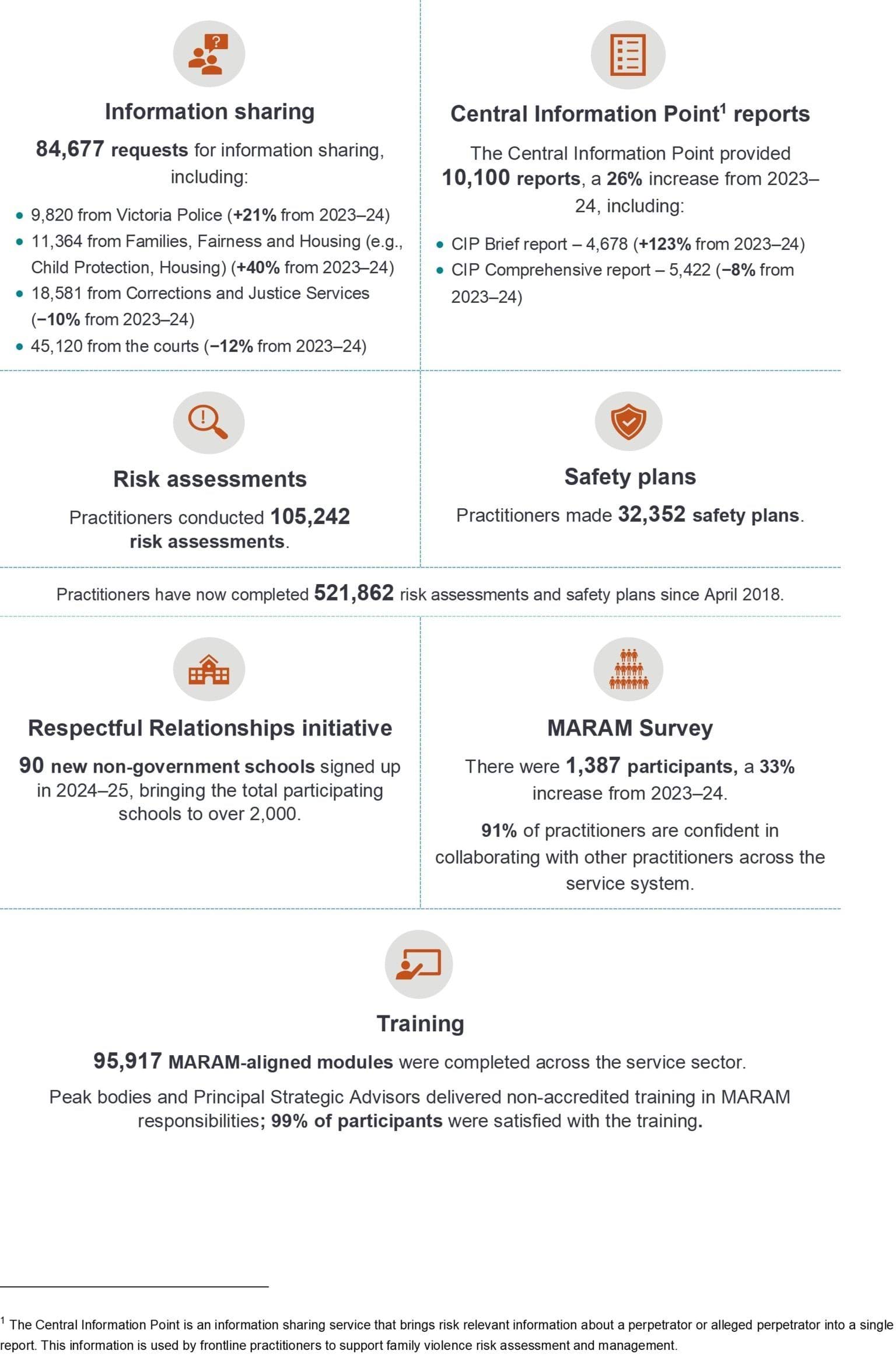
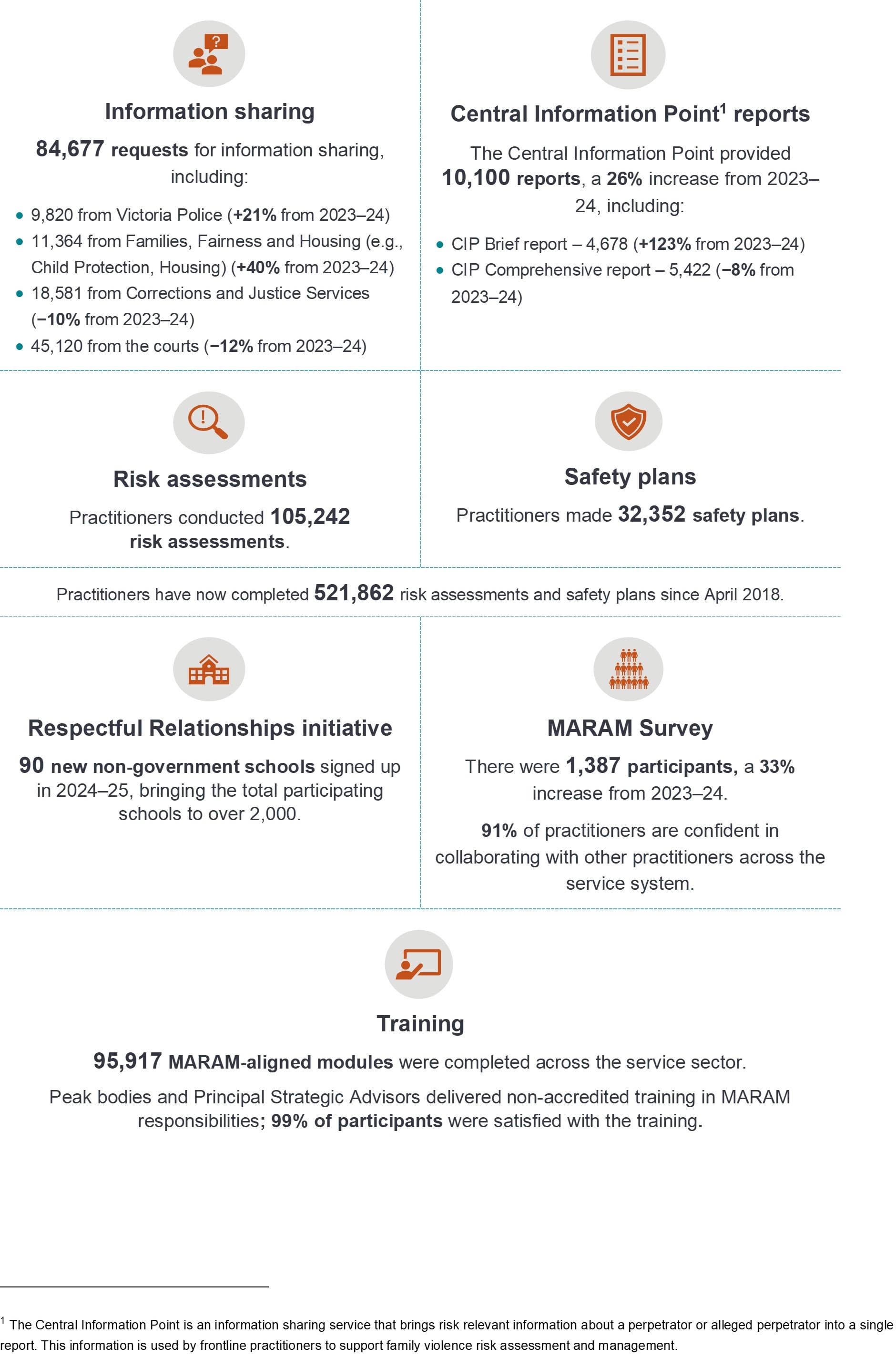
Whole of government snapshot
Figure 1: Highlights for 2024-25
Chapter 1: Leadership
Strategic priority 1: Demonstrate clear leadership that cultivates trust across service systems and organisations
Achieving MARAM’s objectives requires clear, consistent leadership. This will drive change in practice across different sectors.
In 2024–25, departments and sector peaks continued to lead Victoria’s shared understanding of family violence. This includes supporting organisations to strengthen their risk assessment practices.
Leadership highlights from 2024-25
The Housing portfolio has continued to enhance pathways within the Victorian Housing Register by supporting the Exit pathways for victim survivors project to support renters from refuge and crisis accommodation. The project helps people retain their priority for social housing under the Victorian Housing Register’s ‘homeless with support’ category. |
Child and young person practice guidance
Children and young people are victim survivors of family violence in their own right. Their needs, and experiences of family violence, differ from adults. This means they need a tailored and dedicated response to identify, assess and manage their individual family violence risk and wellbeing needs.
DFFH is developing child and young person-focused MARAM Practice Guides and tools. These will assist professionals to engage directly with children and young people. DFFH will publish the guides and tools in 2026.
These resources build on current published practice guides developed for working with adult victim survivors and adults using family violence and help professionals who engage directly with:
- children and young people to identify and respond to wellbeing needs
- children and young people who experience family violence from a family member
- young people who experience family violence in intimate partner, dating or casual relationships
- young people using family violence towards a family member or in an intimate, dating or casual relationships.
The guides will help all practitioners feel more confident when engaging with children and young people.
Across government, portfolios are proactively preparing their workforces to implement these Practice Guides. These efforts reflect a system-wide commitment to recognising children and young people as victim survivors and responding appropriately to young people who may be using family violence. This will ensure responses and support are appropriate to their needs.
To develop these resources, DFFH engaged with children and young people with lived/living experience, through a Youth Advisory Group. This collaboration supported the co-design of tailored resources that reflect the voices and needs of young people. In addition, the department worked with the Victorian Aboriginal Child and Community Agency (VACCA) and Yoowinna Wurnalung Aboriginal Healing Service (YWAHS). By partnering with these organisations, the guides will centre cultural safety and strengthen practice when working with Aboriginal people and communities. DFFH partnered with Swinburne University to undertake a study to develop related identification and assessment tools.
DFFH will build related risk assessment and management tools into online systems. These systems include the Tools for Risk Assessment and Management (TRAM) and Specialist Homelessness Information Platforms (SHIP), used by The Orange Door, specialist family violence services and housing and homelessness services.
The tools in online systems will allow the department to collect data to better understand the risks facing children and young people and how we can best respond to them.
The department is also developing a modular child and young person safety and wellbeing tool. The tool will be aligned to the Child and Young Person-focused MARAM Practice Guide, will be evidence-based, and incorporate family functioning and parenting capacity.
MARAM Annual Survey: leadership insights
The MARAM Annual Survey helps DFFH understand the progress of framework organisations and information sharing entities in understanding and using the reforms. Survey respondents come from a range of workforces, primarily within the human services and health sectors.
Most organisational and policy leaders who participated in the survey (90%) were aware it is a legislative requirement to align to MARAM.
Most (90%) said their workforce had the tools, resources, and training needed to meet their MARAM obligations. This is up from 77% the previous year.
More than half (58%) of leaders indicated their organisation had carried out some or all of their actions from their MARAM implementation plan.
However, there is room for improvement:
- There was a decrease in organisational leaders rating alignment to MARAM as a medium or high priority – down from 94% in 2023–24 to 73% in 2024–25.
- 55% of leaders are unsure or do not know if their organisation has or is adapting a change management plan to implement MARAM.
As in previous years, participants highlighted high workloads and a lack of time as a key barrier to implementing MARAM in their organisations.
Leadership plans for 2025–26
The Health portfolio will support truth-telling and justice initiatives. It will:
- respond to Yoorrook Justice Commission outcomes
- strengthen partnerships under Dhelk Dja
- advance the Balit Murrup framework.
This work aligns with the MARAM Framework’s focus on cultural safety, trauma-informed practice and workforce development. It ensures services meet the needs of Aboriginal communities.
Courts will work with DFFH to clarify how information sharing relates to the courts. DFFH is currently leading a review of the Family violence information sharing ministerial guidelines. These will include guidance and provide clarity of information sharing responsibilities for the courts.
DFFH will lead presentations and events to increase engagement with MARAM. This will boost shared understandings of family violence. This work includes:
- presenting at diversity networks across the Department of Families, Fairness and Housing
- delivering department-wide webinars
- 16 Days of Activism campaign against gender-based violence
- MARAMIS Week 2025 (held in November 2025).
Chapter 2: Collaboration
Strategic priority 2: Facilitate consistent and collaborative practice
Framework organisations must collaborate to keep victim survivors safe and hold perpetrators in view. This includes sharing information to better understand and act on family violence risk. Information sharing helps practitioners make better practice decisions and provide the right support to people experiencing family violence.
Collaboration highlights from 2024-25
|
Collaboration case study: mental health and alcohol and other drugs Mental health and alcohol and other drugs (AOD) services across Victoria nominated specialist family violence advisers (SFVAs) to represent their member agencies on Risk Assessment and Management Panels (RAMPs). This was made possible through collaboration between DFFH, SFVA statewide coordinators, the Centre for Mental Health Learning, the Victorian Alcohol and Drug Association (VAADA), the SFVA leadership group, and the Department of Health. This work involved:
This initiative supported RAMPS to draw on SFVA expertise in high-risk cases. |
Collaboration by the numbers
Practitioners need access to timely and relevant information to assess and manage risk and plan for victim survivor safety.
Table 1: Collaboration and information sharing
| In 2024–25, there were: | The aim was to: |
| 105,242 MARAM risk assessments conducted using MARAM tools available on the platforms TRAM and SHIP | Identify and assess the level of risk experienced by victim survivors. This includes their risk of experiencing further family violence |
| 32,352 safety plans made using MARAM tools available on the platforms TRAM and SHIP | Enhance the safety of people experiencing family violence. Practitioners tailor plans to victim survivors’ needs and circumstances. This includes setting out practical steps they can take to protect themselves and children |
| 5,422 CIP comprehensive reports delivered | Provide consolidated risk-relevant information actions. This supports risk assessment and management |
| 4,678 CIP brief reports delivered | Provide practitioners with a subset of critical risk-relevant information for immediate decision making |
| 84,677 instances of information sharing under FVISS and CISS by centralised information sharing teams within government | Provide Information Sharing Entities with information to assess family violence risk and support safety planning |
Data source: Department of Families Fairness and Housing.
Note: Above figures reflect data captured through specific reporting platforms such as Client Records Management (CRM), TRAM and SHIP. They do not represent all information sharing, risk assessments and safety plans completed across the system.
MARAM Annual Survey: collaboration insights
Most frontline workers (92%) who responded to the survey were confident or very confident to collaborate with other practitioners across the service system.
However, results show there is more we need to do to support organisations to optimise their collaborative work in managing risk.
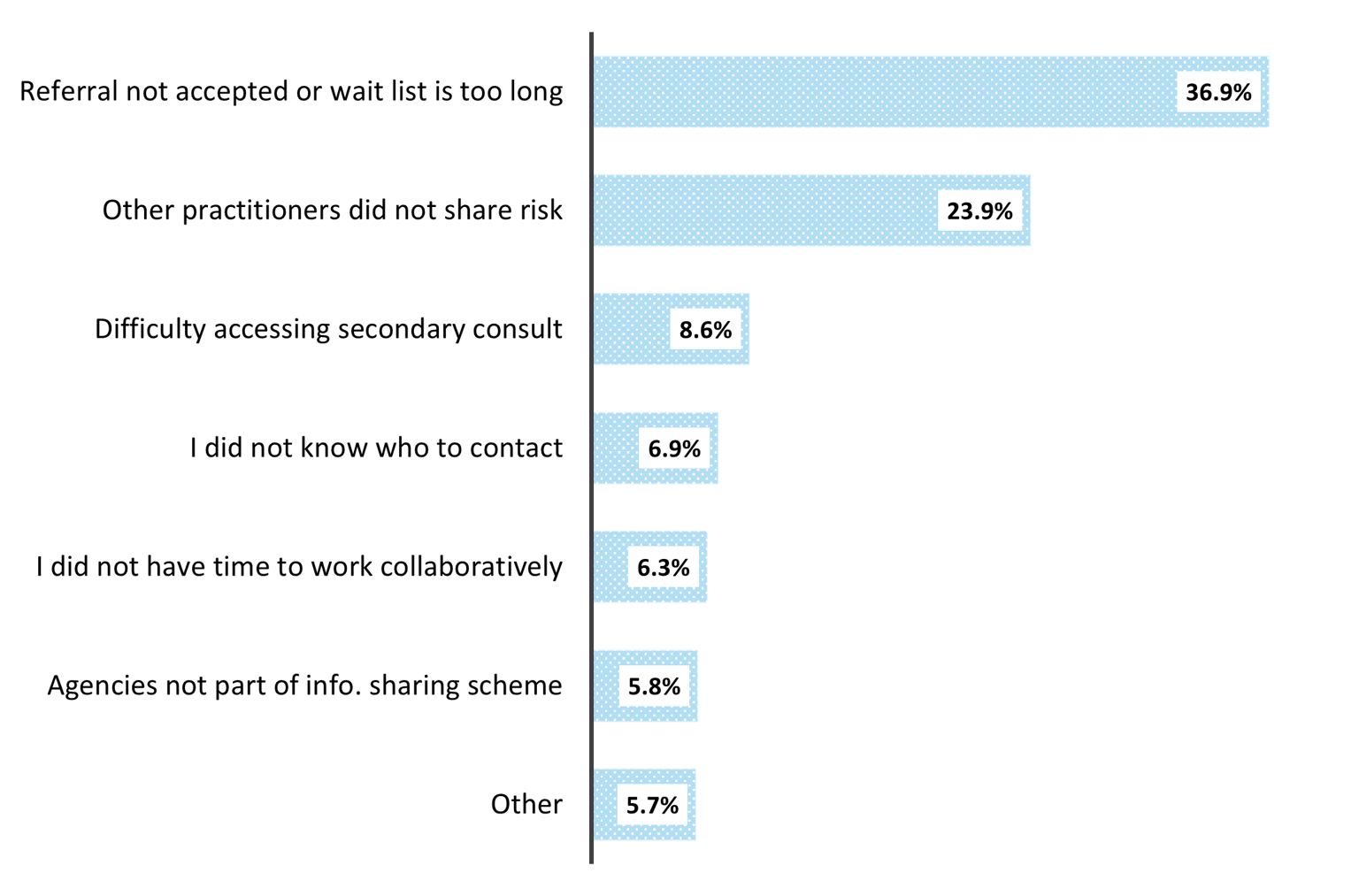
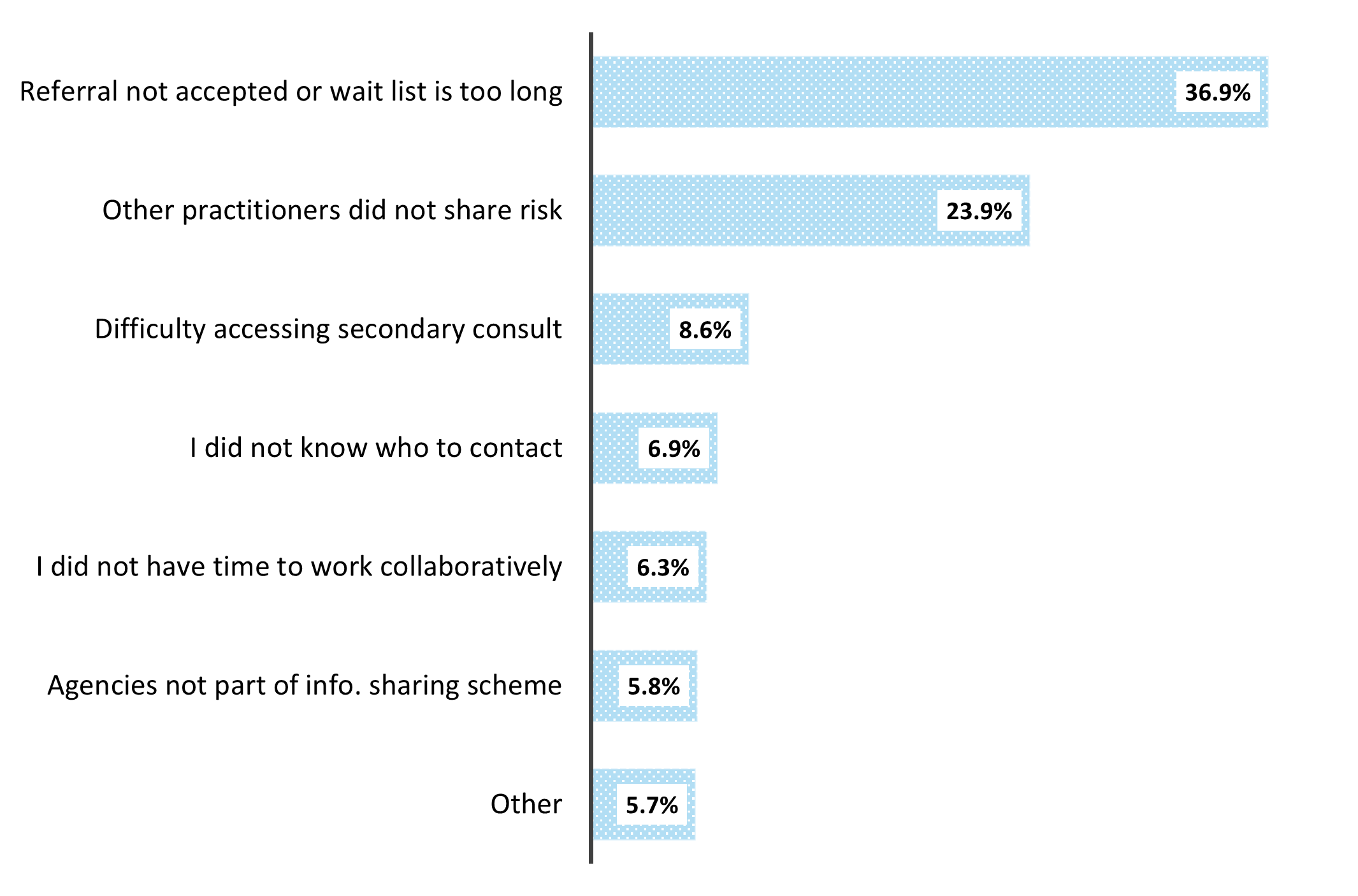
More than a third of participants stated that long waiting lists and referrals being rejected are barriers to collaboration with other agencies. Figure 2 sets this out.
Figure 2: Barriers to collaboration
Survey results show that most frontline workers are aware of FVISS and how it applies to their work (91%). They continue to use it to support their clients:
- consistent with 2023–24, 26% of participants shared information under FVISS more than once a week, with 29% sharing at least once week to once a month
- more than half of participants said they proactively shared information for either every client (16%) or most clients (36%) where family violence is identified
- 57% of participants said they always or often use risk-relevant information from other organisations to support clients.
However, almost one-third (30.7%) of participants said they rarely request or share information under FVISS. In addition, 14% said they had never used the scheme to share information. This was more pronounced in universal services. For example, in the health sector, almost a quarter of participants had never shared under FVISS. For comparison, just 10% in the human services sector had never shared under FVISS.
The biggest barrier to sharing information was delays in receiving information under the schemes (24%), with response times likely to be impacted by the growing demand for information requests and current resourcing to support this function. A lack of cross-sector understanding was also highlighted as a barrier (17%).
Case study: Collaborative information sharing practice Tracey is a case worker in a therapeutic program supporting adult victim survivors. She was allocated Maria, a mother of 2 children, Ava and Oscar. Maria had recently ended her relationship with Anthony and there was an active exclusionary Intervention Order in place protecting her and the children. Recognising the need to tailor her therapeutic approach in line with the family’s lived experiences, Tracey identified that understanding the children’s history with Child Protection would be important in shaping her work. With Maria’s support, Tracey submitted a request to obtain a summary of past involvement relating to Ava and Oscar and information about Anthony, the children’s biological father. Upon review, the team identified that Anthony had two other children from a previous relationship. He also had an extensive history of using family violence towards partners and children and had previously participated in a Men’s Behaviour Change Program (MBCP). This information was shared with Tracey to inform her family violence risk assessment and support a holistic understanding of the family’s circumstances. Tracey also contacted the MBCP, who confirmed that Anthony remained engaged with the program. This created an opportunity for collaborative case coordination, ensuring services were aligned in their approach to safety and accountability. Drawing on the shared information, Tracey worked with Maria, Ava and Oscar to develop a strengths-based safety and support plan, incorporating both immediate safety strategies and longer-term therapeutic interventions to promote recovery and wellbeing. Note: Names have been changed. |
Collaboration plans for 2025–26
- In the Health portfolio, the Royal Women’s Hospital will develop the Trauma and Violence Informed Workplace project. The project will be evaluated by the University of Melbourne, to be scalable after 18 months to all public health services. Safer Care Victoria will support the Department of Health to develop new service and funding models for Gamblers Help services. This will ensure future community health organisations are ready to align with MARAM and information sharing reforms.
- The Corrections and Justice Services portfolio will work with Technology Solutions to enhance their IT family violence solution that was implemented in April 2025. This comprehensive platform is used for recording and storing FV information, tracking MARAM processes and uploading of risk assessments and other documentation. Once fully implemented across both Community Correctional Services and Corrections Victoria, the system will work as a mechanism for internal information sharing.
Chapter 3: Capability
Strategic priority 3: Build workforce and staff capability
MARAM’s long-term success relies on building workforce capability through training on MARAM and information sharing. Quality training supports professionals across the family violence system to better assess and manage family violence risk.
In 2024–25, we continued to roll out training to support professionals to work safely with adults using family violence.
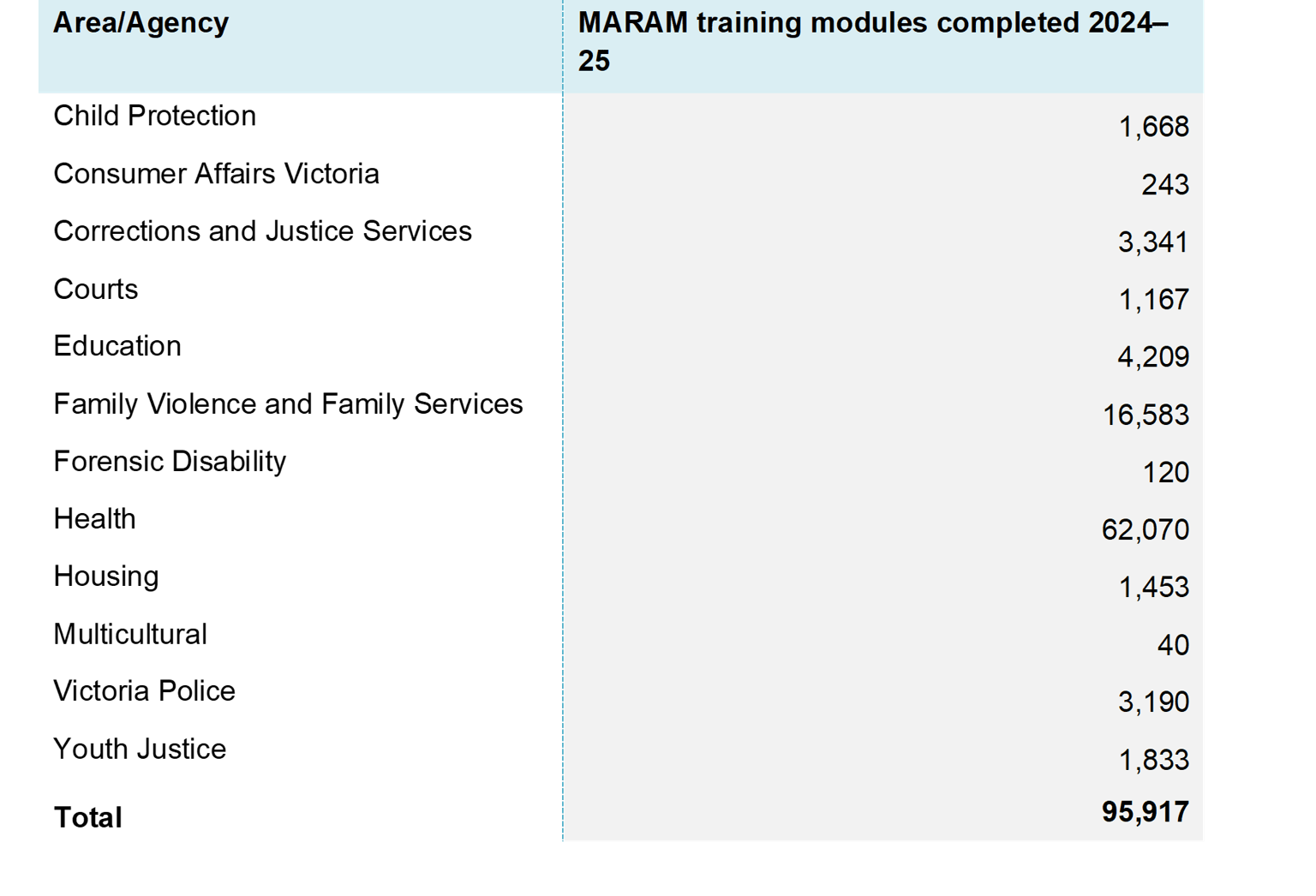
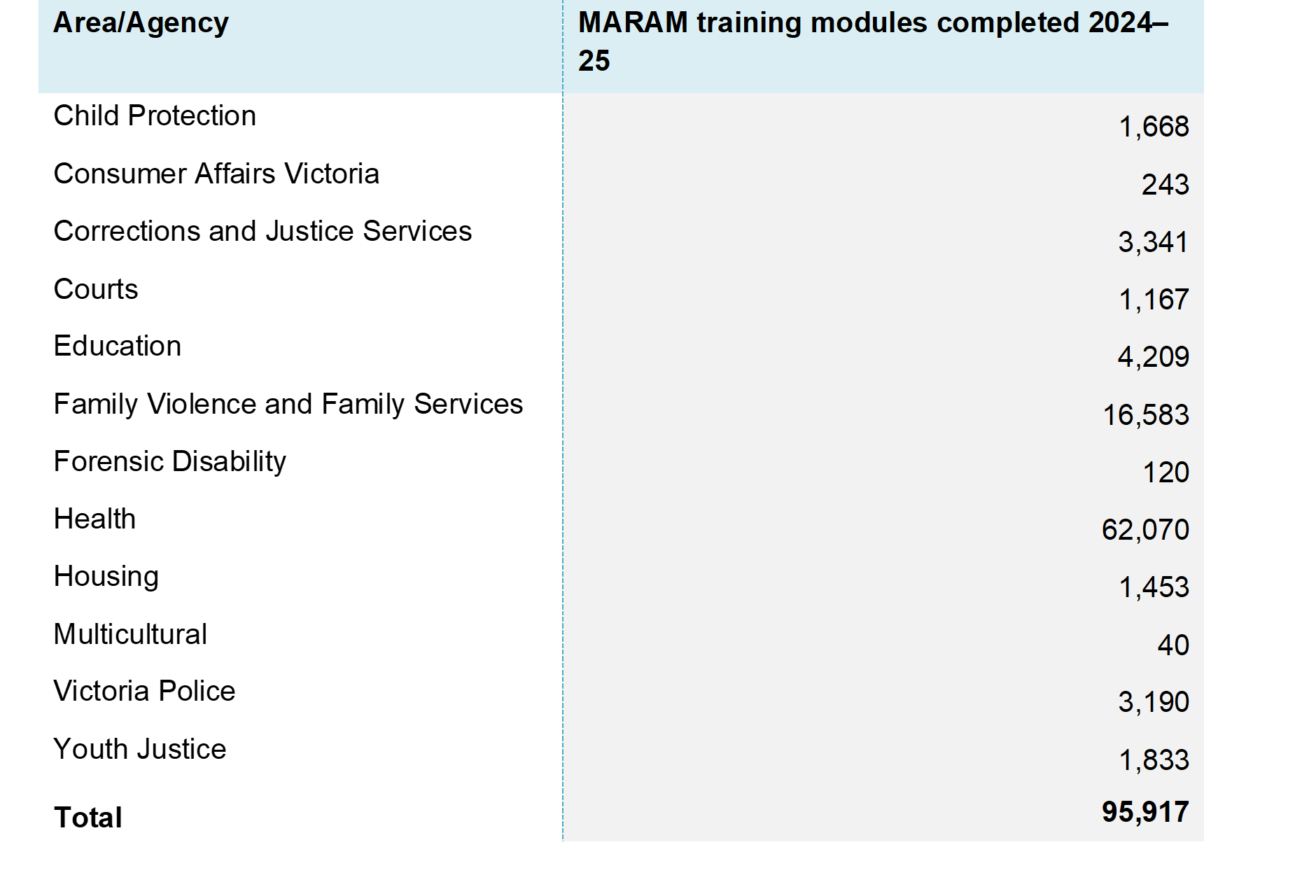
Table 2 provides a summary of completed training.
Capability highlights from 2024–25
|
Capability building case study – cultural competencyMulticultural Affairs – training Ballarat Regional Multicultural Council delivered cultural competency training to 40 family violence service providers across the Central Highlands and Wimmera. The training strengthened culturally sensitive responses to family violence. It covered:
Participants gave positive feedback, with one noting: “the lived experience perspectives shared by the trainers illuminated blind spots in our practice that no textbook could have revealed. We’ve completely reconsidered how we approach our work with diverse communities”. In addition to the training, the council delivered 2 family violence information sessions. These brought together 57 participants from service providers and multicultural communities to discuss family violence concerns and services available for support. |
Sector MARAM-aligned training
During 2024–25, prescribed workforces participated in MARAM-aligned accredited and non-accredited training. This was delivered through interactive eLearns, in-house sessions and expert-led workshops. Table 2 illustrates the number of MARAM training modules completed across portfolios during 2024–25.
Table 2: MARAM training modules completed in 2024–25
MARAM Annual Survey: capability insights
The annual survey showed that 90% of frontline staff had accessed training on MARAM or information sharing in 2024–25.
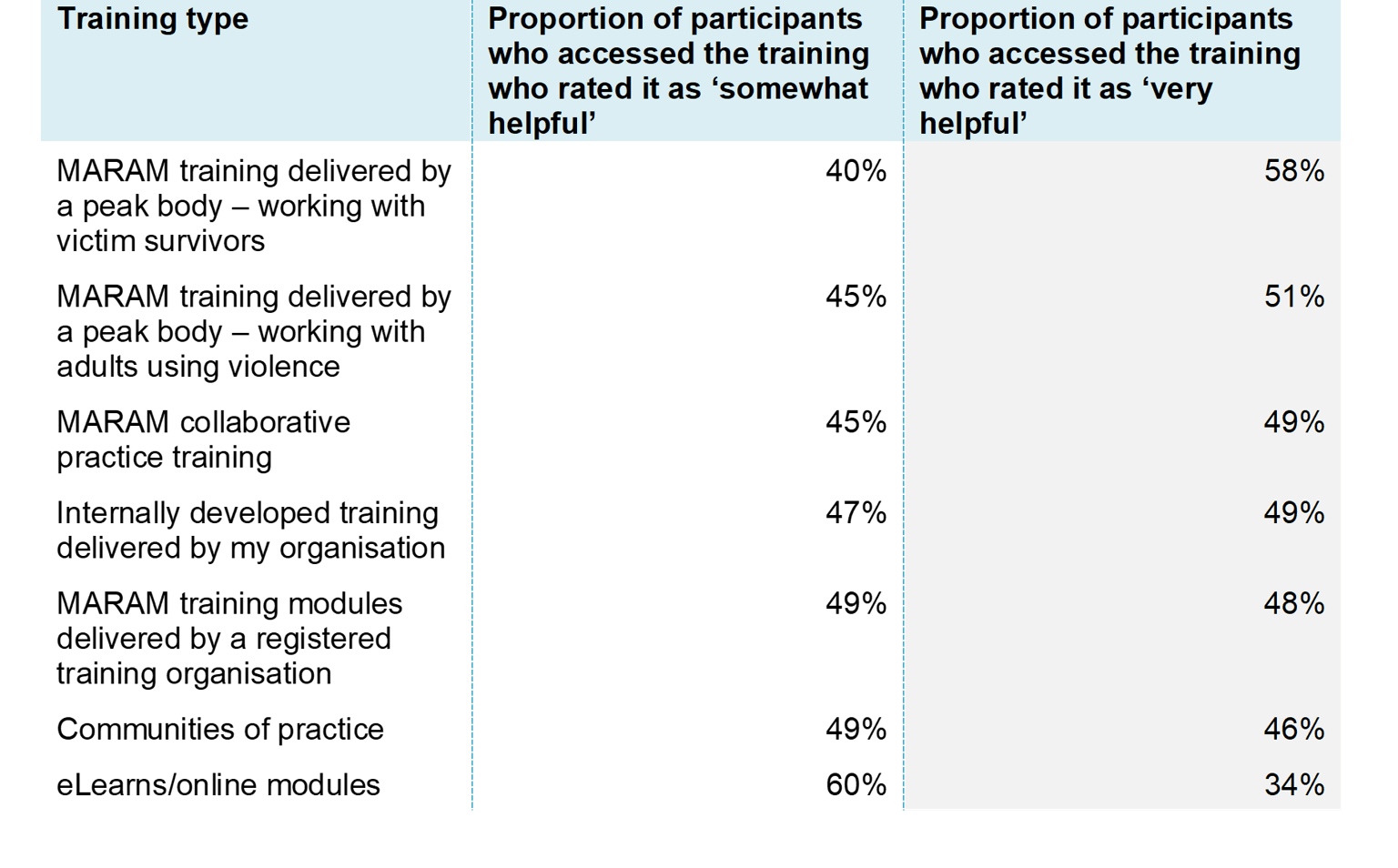
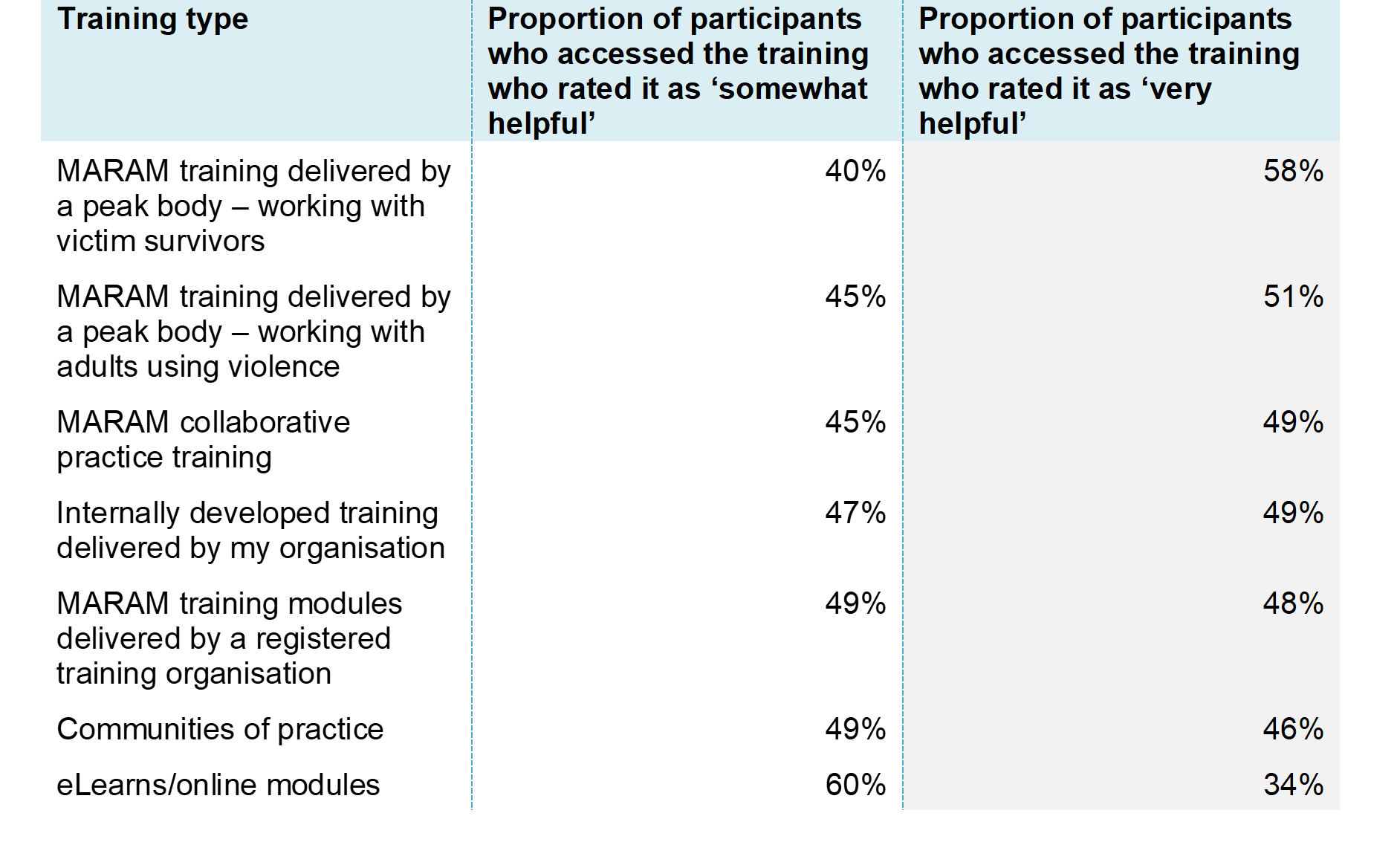
eLearns were the most-accessed training type. Participants said that facilitated sessions were the most helpful (Table 3).
Table 3: Usefulness of training by type
Survey results show that MARAM risk assessment tools help frontline workers to assess and manage family violence risk. Ninety per cent of participants stated the MARAM tools they used were very or somewhat helpful.
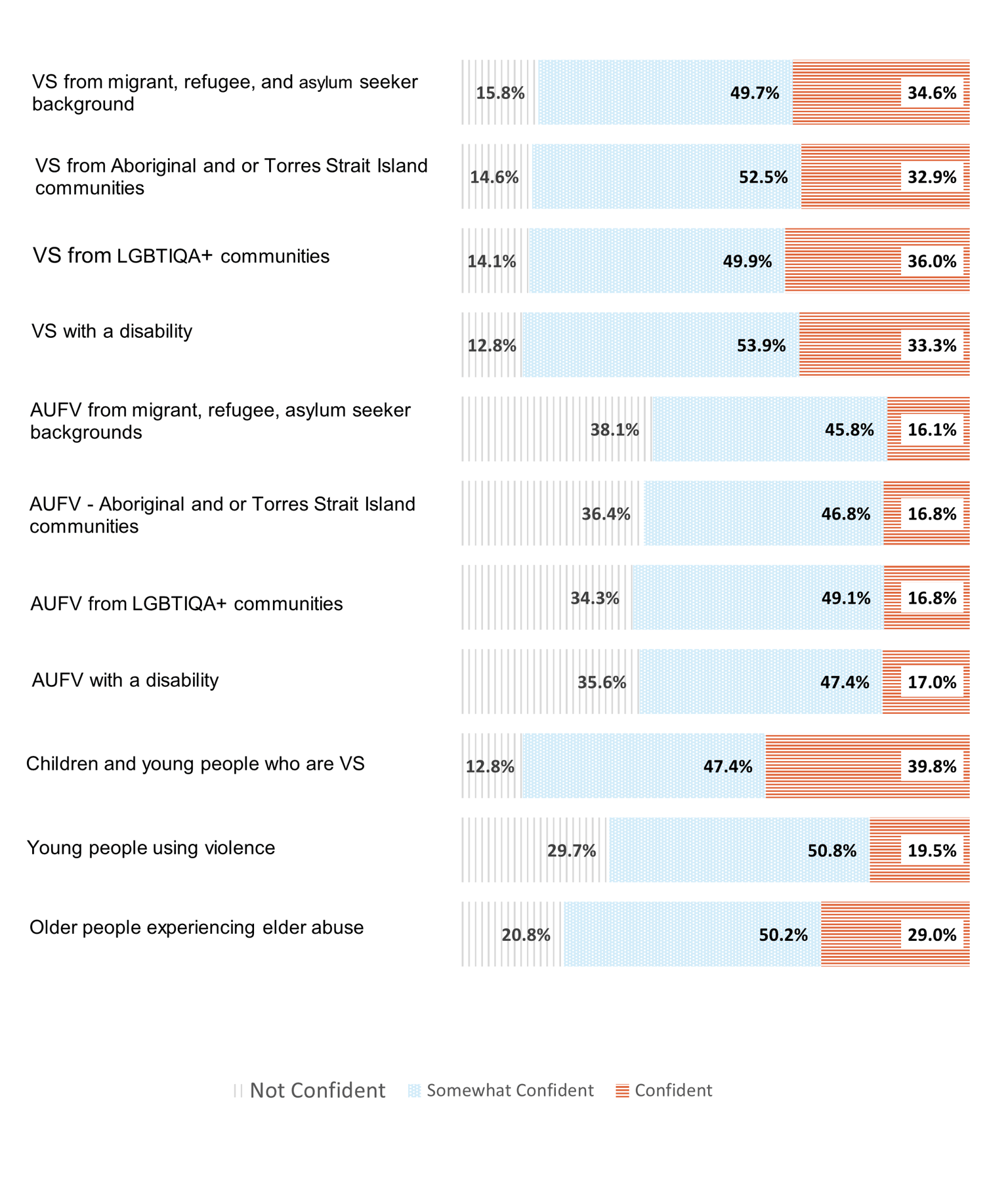
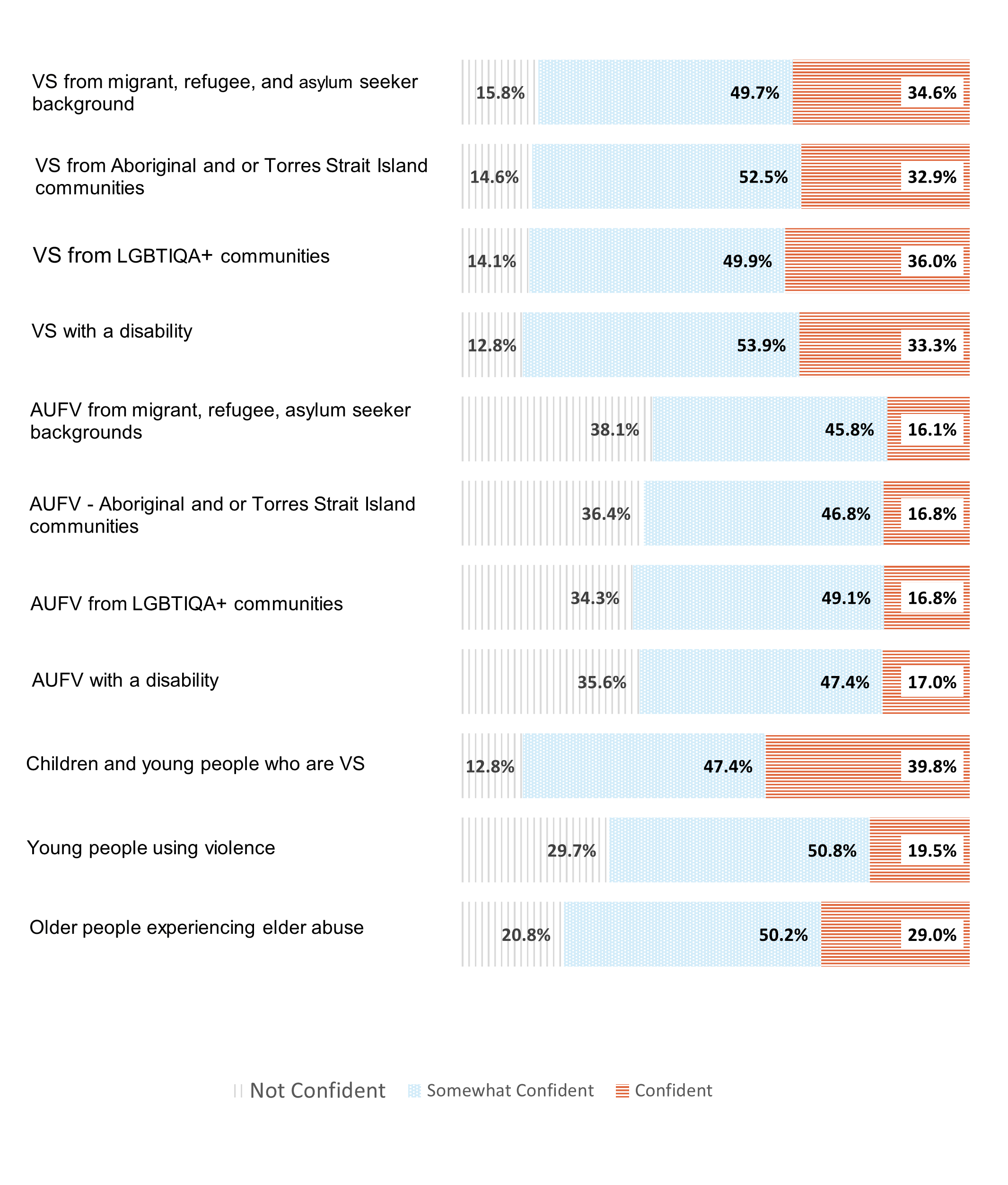
Figure 3 below shows there is a need to continue to build frontline workers’ skills and confidence to engage with people from priority groups across the board. However, it also highlights a clear gap in confidence to work with people using family violence, particularly those from priority groups. Continuing to provide training in the Adults Using Family Violence Practice Guides will help to address this gap.
Figure 3: How confident are you in using these tools to support clients from the following cohorts?
Capability plans for 2025–26
In the Children’s portfolio:
- Hurstbridge Farm and Secure Care Services will include mandated MARAM training in the workforce 2025–26 performance development plan
- The Information Sharing Team will work with Hurstbridge Farm, Secure Care Services and After Hours to map information sharing processes and develop resources to support staff in information sharing under the CISS & FVISS. The Information Sharing Team will also provide practice uplift to After Hours, in the form of an information session, which covers use of the Information Sharing Schemes in a crisis setting.
- The Information Sharing Team will also work with Aboriginal Community-Controlled Organisations (ACCOs) to better understand their challenges with information sharing and will help develop tailored guidance that supports a self-determined approach.
The Housing portfolio will support the Information Sharing Implementation Project to:
- train staff to appropriately store sensitive client and family violence-related information within the Housing Integrated Information Program IT system
- promote MARAM practice through the quarterly Housing practice newsletter and other communication channels
- train staff to know when and how to share information, including how it relates to MARAM identification.
The Courts portfolio will start implementing adults using family violence practice and guidance. This will include the family violence practitioner workforce and workforces in specialist courts and programs such as Drug Court, Court Support and Diversion, and the Assessment and Referral Court.
Ambulance Victoria will embed the Safeguarding education module into the induction program for employees and volunteers by December 2025. This module provides guidance on how to respond to incidents of non-fatal strangulation.
DFFH will tailor content for the department’s workforces. This work will boost capability in relation to misidentification of the predominant aggressor, and children and young people practice guidance. The department will deliver targeted presentations and forums to strengthen leadership confidence in MARAM.
Chapter 4: Continuous Improvement
Strategic priority 4: Recognition of good practice and commitment to continuous improvement
MARAM is an evolving reform. We are continually working to improve it.
A key part of any reform is making sure professionals understand change and how to apply it in practice.
To support this, we regularly publish updated practice guidance to help professionals apply MARAM effectively in their work.
Continuous improvement highlights from 2024–25
|
Actions from the MARAM Legislative and Evidence reviews
The Legislative review of family violence information sharing and risk management: reviewing the effectiveness of Parts 5A and 11 of the Family Violence Protection Act 2008 (Vic)[1] (the Legislative Review), and the Victorian Family Violence Multi-Agency Risk Assessment and Management Framework 5-year Evidence Review[2] (the MARAM Evidence Review), recommended improvements.
This included changes to practice guidance, legislation and ministerial guidelines to strengthen understanding of the reforms and accountability of framework organisations.
Actions in 2024–25 to address recommendations included:
- updates to child-and-young-person focused practice guidance began responding to recommendations on the experiences of children and people and Aboriginal and diverse communities. DFFH will release this new guidance in 2026
- work commenced on a refresh of the Family violence information sharing ministerial guidelines to make them clearer and easier to use
- DFFH, in partnership with Safe and Equal, commenced a refresh of the 5 original non-accredited MARAM training packages.
In addition, in 2024–25, work on the model of alignment policy included:
- a one-year improvement cycle. This supports framework organisations with sustainable, continuous improvement. It relates to policies, procedures, practice guidance and tools
- maturity and self-assessment tools. These establish a common language about MARAM alignment. They allow organisations to identify their progress and areas for improvement
- redeveloping resources, such as the Organisational embedding guide. This supports framework organisations to apply the new model of alignment.
The policy is due for completion and release in 2026. DFFH is consulting with peak bodies, principal strategic advisers, Aboriginal Community-Controlled Organisations and government departments.
Continuous improvement case study – Victoria PoliceVictoria Police Interagency Information Sharing Services (IISS) engaged with stakeholders across the sector. This work improved capabilities and the quality of information requests from Information Sharing Entities (ISEs). In 2024–25, the team launched an automation project. This extracts risk data directly into report compilation. It reduces manual handling for team members. Since the project commenced, productivity has increased by approximately 10%. This is a significant gain, given IISS processed nearly 10,000 FVISS and CISS reports in 2024–25. This year, the team also published a video for external ISEs. It supports them to request information from Victoria Police under FVISS and CISS. You can view the video on YouTube: Request information from Victoria Police under the Family Violence Child Information Sharing Schemes |
Continuous improvement plans for 2025–26
The Prevention of Family Violence portfolio will:
- conduct an internal evaluation of the effectiveness of Central Information Point brief reports
- release the Child and young person practice and Family Violence Information Sharing guidelines
- release the Identification and Intermediate adults using family violence risk assessment tools in SHIP
- deliver the MARAM predominant aggressor Identification tool across The Orange Door network.
The Housing portfolio will launch an intranet site. This will consolidate information sharing resources, the MARAM Practice Guide and other materials in one central location. The portfolio will share an adapted MARAM eLearn training to the Community Housing Industry Association Victoria’s eLearn platform for member access.
Ambulance Victoria will roll out the mandatory Clinical Information System data fields alongside staff training in culturally safe care. This will ensure patient care is inclusive, visible and respectful.
The Courts portfolio will use the information sharing portal to analyse data trends and demand. It will share insights with reform leads, DFFH and the Department of Education.
Appendix 1: Legislation and regulations
The Family Violence Protection Act 2008 (Victoria) provides a legal framework to protect individuals from family violence. It defines abusive behaviours broadly. It also enables intervention orders to ensure victim safety and perpetrator accountability.
Family Violence Protection Act 2008
The Family Violence Multi-Agency Risk Assessment and Management Framework (MARAM) reporting process is legislated in the Act. It has 2 stages:
- Under section 192 of the Act, portfolio ministers prepare an annual report for the Minister for the Prevention of Family Violence on the prescribed matters relating to the implementation and operation of MARAM by 30 September (MARAM portfolio reports).
- Under section 193 of the Act, the Minister for the Prevention of Family Violence must prepare a consolidated annual report of the prescribed matters to be tabled within 6 sitting dates after 1 January, in the financial year immediately following the financial year to which the report relates (MARAM consolidated report).
Family Violence Protection (Information Sharing and Risk Management) Regulations 2018
The prescribed matters are:
(a) actions taken by a public entity or a public service body to support framework organisations and section 191 agencies, in relation to the implementation and operation of the approved framework
(b) a summary of the progress of implementation of the approved framework by framework organisations and section 191 agencies
(c) proposed future actions to be undertaken by public entities or public service bodies, to support ongoing implementation and operation by framework organisations and s. 191 agencies with the approved framework.
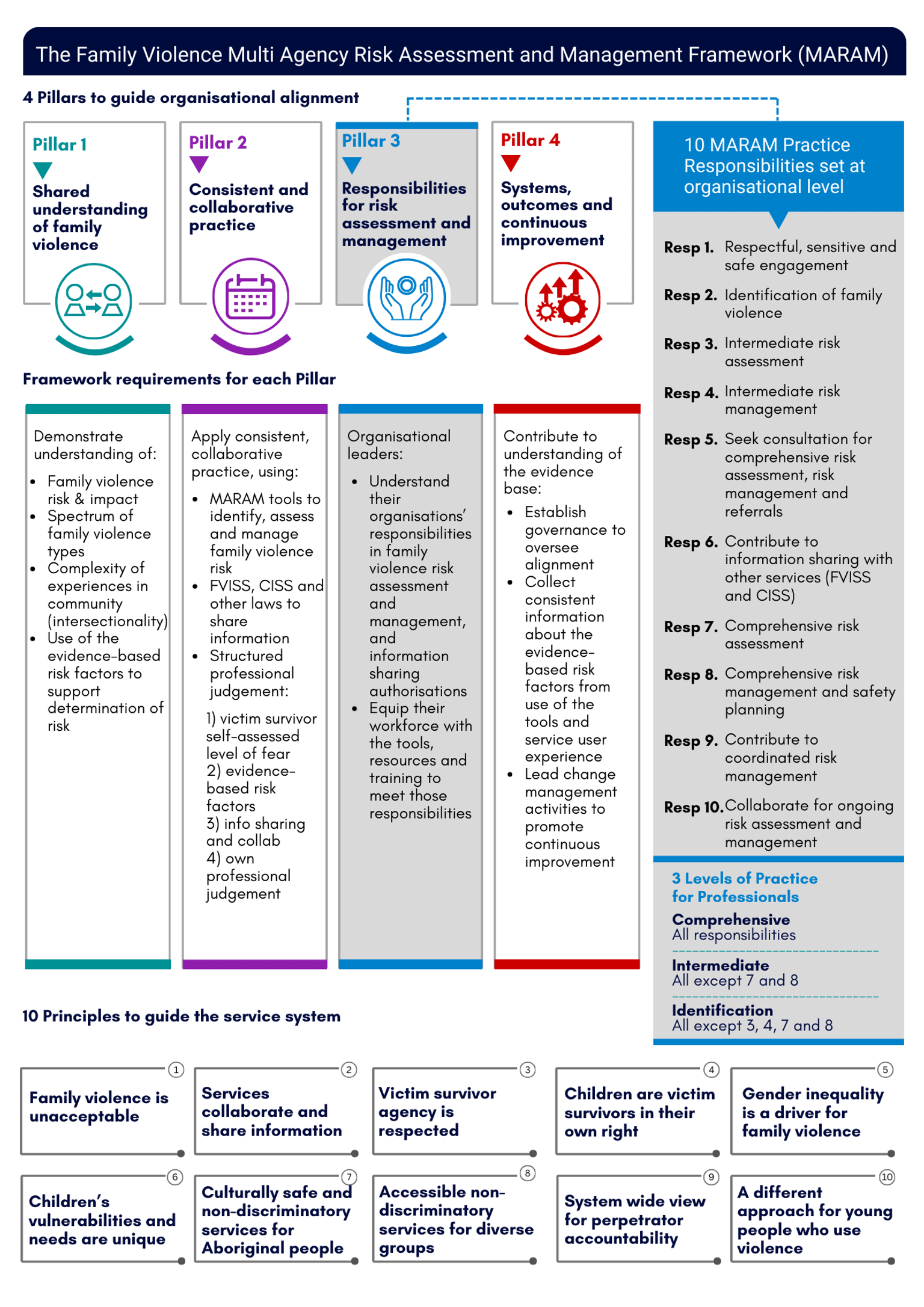
Appendix 2: MARAM Framework on a page
The MARAM Framework is Victoria’s legislated policy for best practice of family violence risk assessment and management.
It ensures consistent, collaborative and evidence-based responses across service sectors.
It supports professionals and organisations to identify, assess and manage family violence risk.
This improves safety and wellbeing for victim survivors, including children and young people. It also promotes accountability for perpetrators.
Figure 4: MARAM Framework on a page
Appendix 3: MARAM Change Management Strategic Priorities
The MARAM change management strategic priorities guide the implementation of the MARAM Framework across sectors. They are for the Victorian Government and departments, and sector peak bodies.
Strategic Priority 1: Demonstrate clear leadership that cultivates trust across service systems and organisations
The Victorian Government, departments and sector peak bodies will provide clear and consistent leadership that encourages a shared understanding of risk, respects sector expertise and cultivates trust across organisations.
Strategic Priority 2: Facilitate consistent and collaborative practice
The Victorian Government, departments and sector peak bodies ensure service systems have operational procedures that enable the timely identification of risk, information sharing, and consistent and collaborative practice.
Strategic Priority 3: Build workforce and staff capability
The Victorian Government, departments and sector peak bodies ensure staff across sectors will be supported to build their capacity, skills and practice knowledge to identify and manage risks, and share information effectively, in line with their roles and expertise.
Strategic Priority 4: Recognition of good practice and commitment to continuous improvement
The Victorian Government, departments and sector peak bodies ensure mechanisms for sharing lessons learned across sectors are in place to reinforce good practice.
Appendix 4: List of portfolios reporting
The following ministerial portfolios contributed to the development of this report.
| Minister | Portfolio | Responsibilities |
|---|---|---|
| Ingrid Stitt MP | Minister for the Prevention of Family Violence Minister for Mental Health Minister for Multicultural Affairs Minister for Ageing
|
|
| The Hon. Danny Pearson MP | Minister for Government Services |
|
| The Hon. Ben Carroll MP | Minister for Education Deputy Premier |
|
| The Hon. Lizzie Blandthorn MLC | Minister for Children Minister for Disability |
|
| The Hon. Anthony Carbines MP | Minister for Police Minister for Victims Minister for Community Safety |
|
| The Hon. Enver Erdogan MLC | Minister for Corrections Minister for Youth Justice |
|
| The Hon. Sonya Kilkenny MP | Attorney-General
|
|
| The Hon. Harriet Shing MLC | Minister for Housing and Building |
|
| The Hon. Nick Staikos MP | Minister for Consumer Affairs |
|
| The Hon. Mary-Anne Thomas MLC | Minister for Health Minister for Ambulance Services |
|
Appendix 5: Family Violence Risk Assessment and Management Survey
The key purposes of the Family Violence Risk Assessment and Management Survey is to assess the understanding, track progress and implementation of the MARAM Framework. Identify challenges, inform future training and support strategies, and monitor annual improvements.
This year, DFFH designed the survey with the Family Violence Principal Strategic Advisers. This aimed to reduce the number of surveys in the field and gather consistent and comparable data across regions and sectors.
The survey targeted frontline practitioners, organisational leaders, and policy leads from all sectors prescribed under the MARAM Framework who identify, assess, and manage family violence risk in Victoria.
Across sectors
The survey received 1,387 responses, a 33% increase from 2023–24.
Participants
Participants included:
- 1,024 (73.8%) professional or frontline staff who identify, assess or manage family violence risk in their day-to-day work
- 242 (17.4%) leaders or executives who set organisational policies, procedures, practice guidance and tools for assessing family violence risk
- 113 (8.1%) who are not leaders or executives, but whose role involves developing organisational policies, procedures, practice or program guidance and tools relevant to family violence risk.
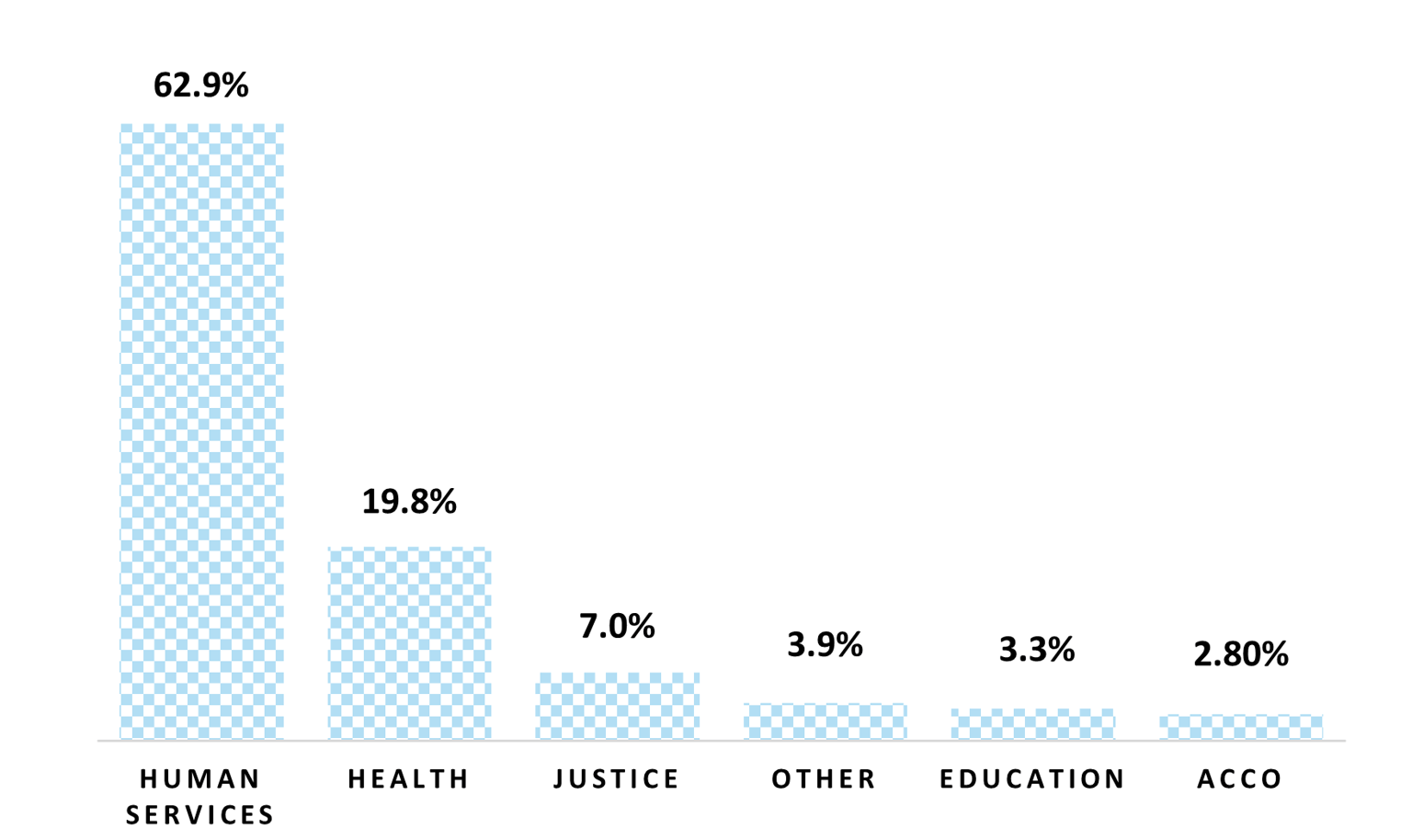
Most participants were employed in human services (62.9%) and health (19.8%). Figure 5 sets this out.
Figure 5: Survey responses by sector
Limitations
We received 1,387 responses to the survey. This includes 233 incomplete surveys from participants who did not complete all questions available to them. We have included them on the basis that they did complete a significant portion of the survey.
Although survey data is one of the best available sources available for understanding MARAM alignment across the state, response rates limit the survey:
- There are more than 6,700 Victorian organisations prescribed to align with MARAM, representing an estimated 407,500 employees. This gives our survey an overall response rate of approximately 0.34% .
- Response rates varied significantly across sectors. While some sectors had low and unrepresentative response rates, others were significantly higher.
- There was no limit on the number of participants who could complete the survey per organisation. Some organisations may be overrepresented in the results due to uneven response rates.
Appendix 6: Description of graphs
Figure 2: Practitioners responses to barriers to collaboration
| Barrier to collaboration | Survey responses |
| Referral not accepted or wait list is too long | 36.9% |
| Other practitioners did not share risk | 23.9% |
| Difficulty accessing secondary consult | 8.6% |
| I did not know who to contact | 6.9% |
| I did not have time to work collaboratively | 6.3% |
| Agencies not part of info. sharing scheme | 5.8% |
| Other | 5.7% |
Figure 3: How confident are you in using these tools to support clients from the following cohorts?
| Tools | Not Confident | Somewhat Confident | Confident |
| VS from migrant, refugee, and asylum seeker back grounds | 15.80% | 49.70% | 34.60% |
| VS from Aboriginal and or Torres Strait Islander communities | 14.60% | 52.50% | 32.90% |
| VS from LGBTIQA+ communities | 14.10% | 49.90% | 36.00% |
| VS with a disability | 12.80% | 53.90% | 33.30% |
| AUFV from migrant, refugee, asylum seeker back grounds | 38.10% | 45.80% | 16.10% |
| AUFV – Aboriginal and or Torres Strait Islander communities | 36.40% | 46.80% | 16.80% |
| AUFV from LGBTIQA+ communities | 34.30% | 49.10% | 16.80% |
| AUFV with a disability | 35.60% | 47.40% | 17.00% |
| Children and young people who are VS | 12.80% | 47.40% | 39.80% |
| Young people using violence | 29.70% | 50.80% | 19.50% |
| Older people experiencing elder abuse | 20.80% | 50.20% | 29.00% |
Figure 5: Survey responses by sector
| Sector | Survey responses |
| Human Services | 63% |
| Health | 20% |
| Justice | 7% |
| Other | 4% |
| Education | 3% |
| ACCO | 3% |
Appendix 7: Abbreviations
| Abbreviation | Meaning |
|---|---|
| ACCO | Aboriginal Community-Controlled Organisation |
| AOD | Alcohol and other drugs |
| AUFV | Adult using family violence |
| CCS | Community Correctional Services |
| CIP | Central Information Point |
| CISS | Child Information Sharing Scheme |
| DFFH | Department of Families, Fairness and Housing |
| DJCS | Department of Justice and Community Safety |
| FSV | Family Safety Victoria |
| FV | Family Violence |
| FVISS | Family Violence Information Sharing Scheme |
| ISE | Information Sharing Entities |
| LGBTIQA+ | Lesbian, gay, bisexual, transgender, queer, asexual, plus (other gender identities) |
| MACNI | Multiple And Complex Needs Initiative |
| MARAM Framework | Family Violence Multi-Agency Risk Assessment and Management Framework |
| MARAMIS | MARAM and Information Sharing |
| RAMP | Risk Assessment and Management Panel |
| SFVA | Specialist family violence advisers |
| SHIP | Specialist Homelessness Information Platform |
| TRAM | Tools for Risk Assessment and Management |
| VAADA | Victorian Alcohol and Drug Association |
| VACCA | Victorian Aboriginal Child and Community Agency |
| VS | Victim survivor |