Strategic priority 3: Build workforce and staff capability
MARAM’s long-term success relies on building workforce capability through training on MARAM and information sharing. Quality training supports professionals across the family violence system to better assess and manage family violence risk.
In 2024–25, we continued to roll out training to support professionals to work safely with adults using family violence.
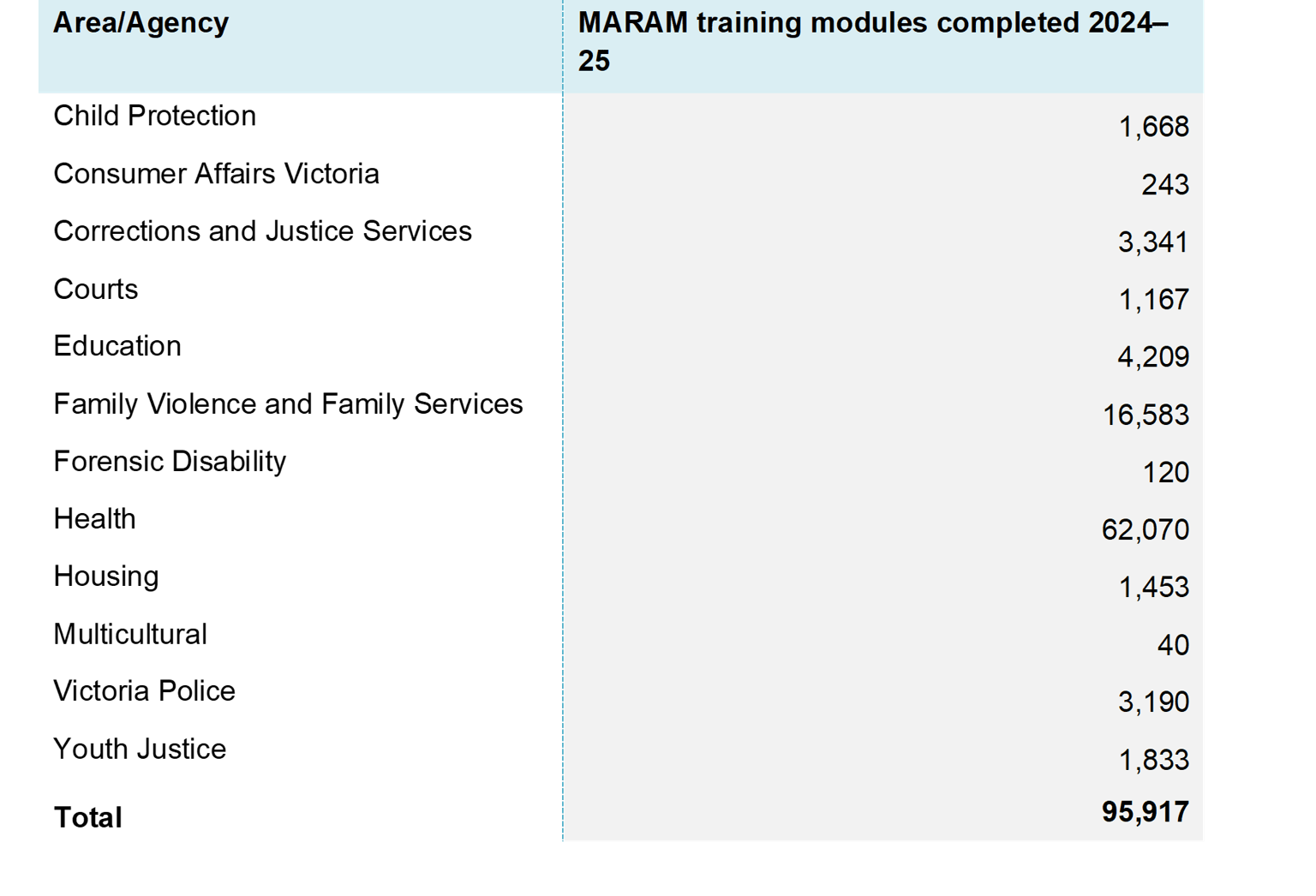
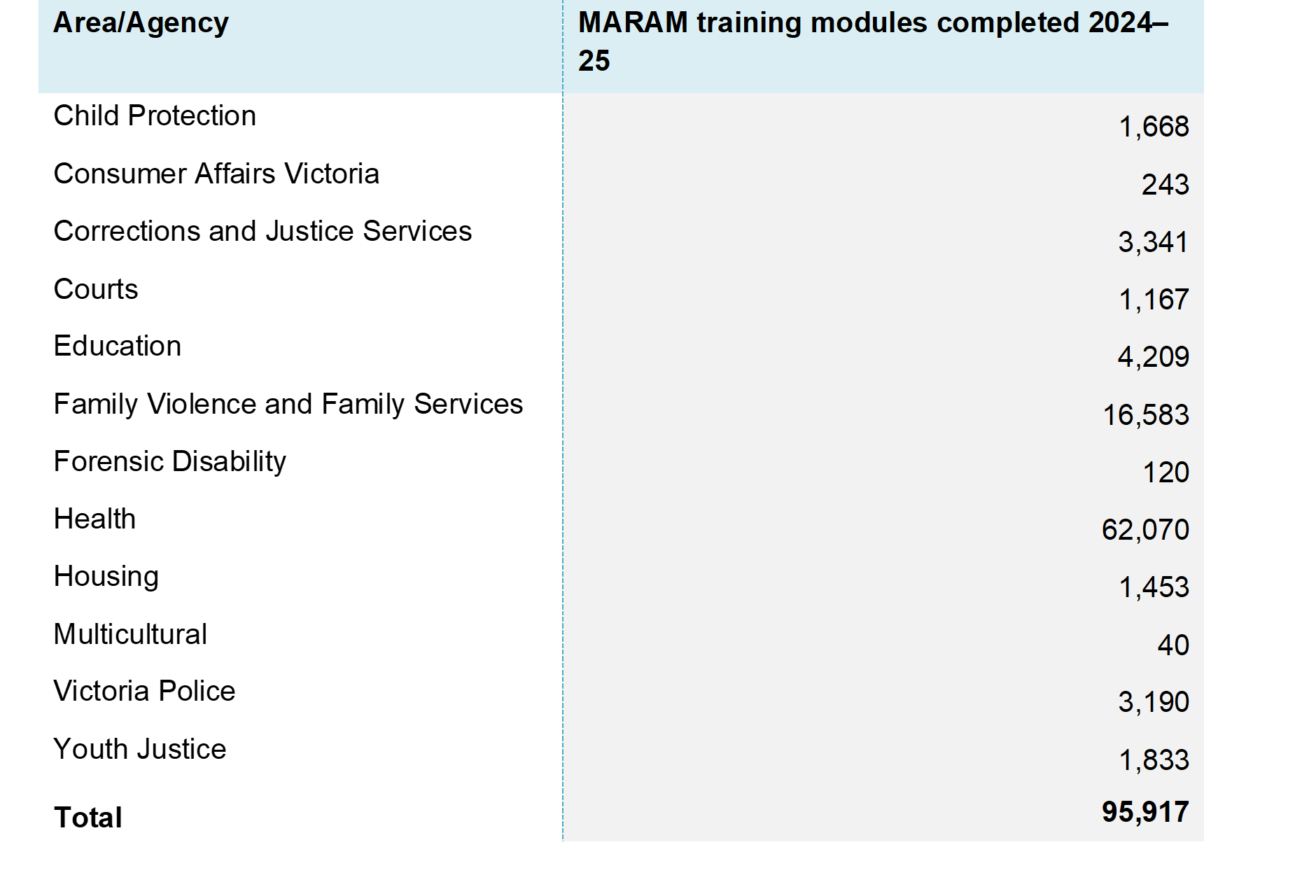
Table 2 provides a summary of completed training.
Capability highlights from 2024–25
|
Capability building case study – cultural competencyMulticultural Affairs – training Ballarat Regional Multicultural Council delivered cultural competency training to 40 family violence service providers across the Central Highlands and Wimmera. The training strengthened culturally sensitive responses to family violence. It covered:
Participants gave positive feedback, with one noting: “the lived experience perspectives shared by the trainers illuminated blind spots in our practice that no textbook could have revealed. We’ve completely reconsidered how we approach our work with diverse communities”. In addition to the training, the council delivered 2 family violence information sessions. These brought together 57 participants from service providers and multicultural communities to discuss family violence concerns and services available for support. |
Sector MARAM-aligned training
During 2024–25, prescribed workforces participated in MARAM-aligned accredited and non-accredited training. This was delivered through interactive eLearns, in-house sessions and expert-led workshops. Table 2 illustrates the number of MARAM training modules completed across portfolios during 2024–25.
Table 2: MARAM training modules completed in 2024–25
MARAM Annual Survey: capability insights
The annual survey showed that 90% of frontline staff had accessed training on MARAM or information sharing in 2024–25.
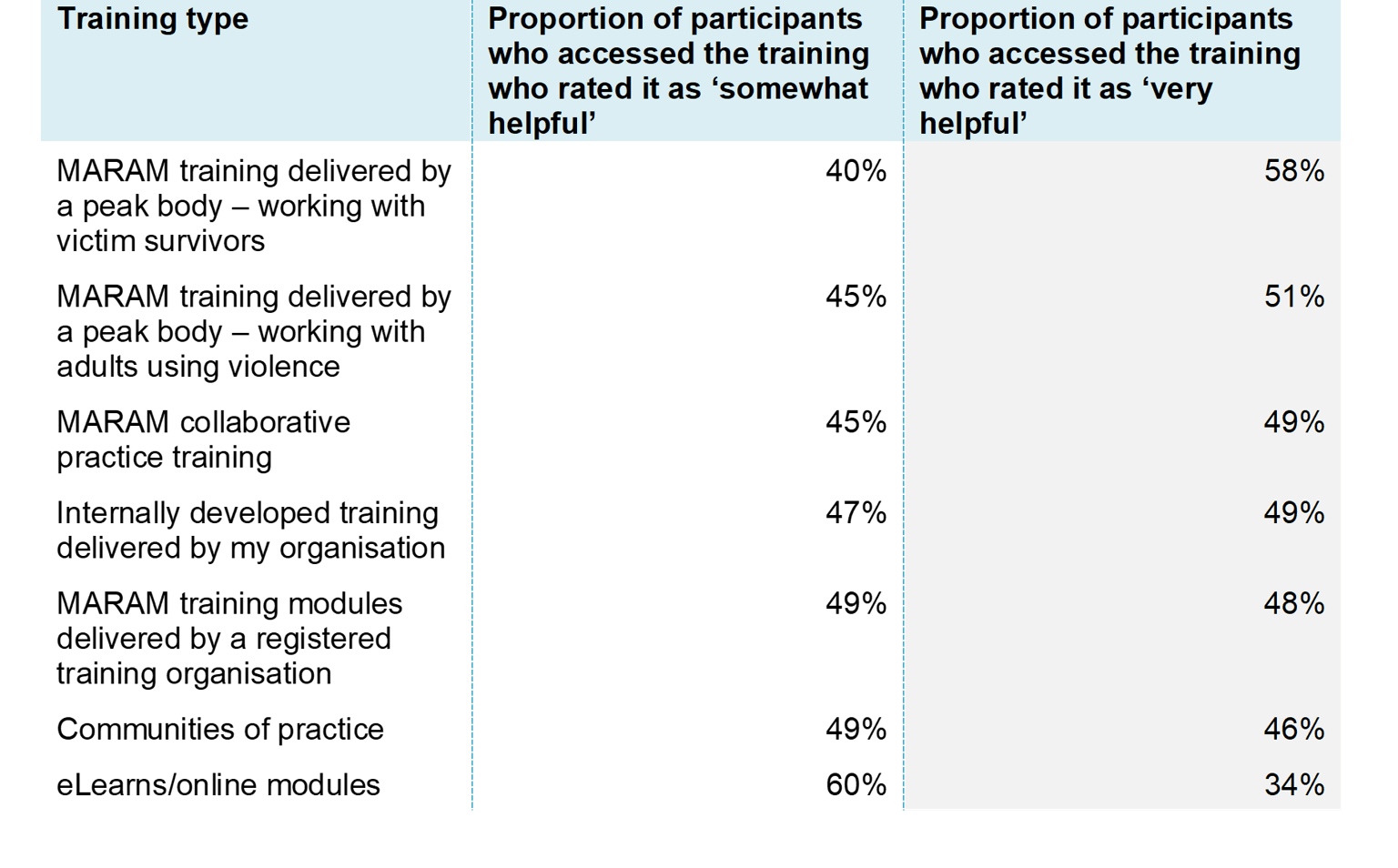
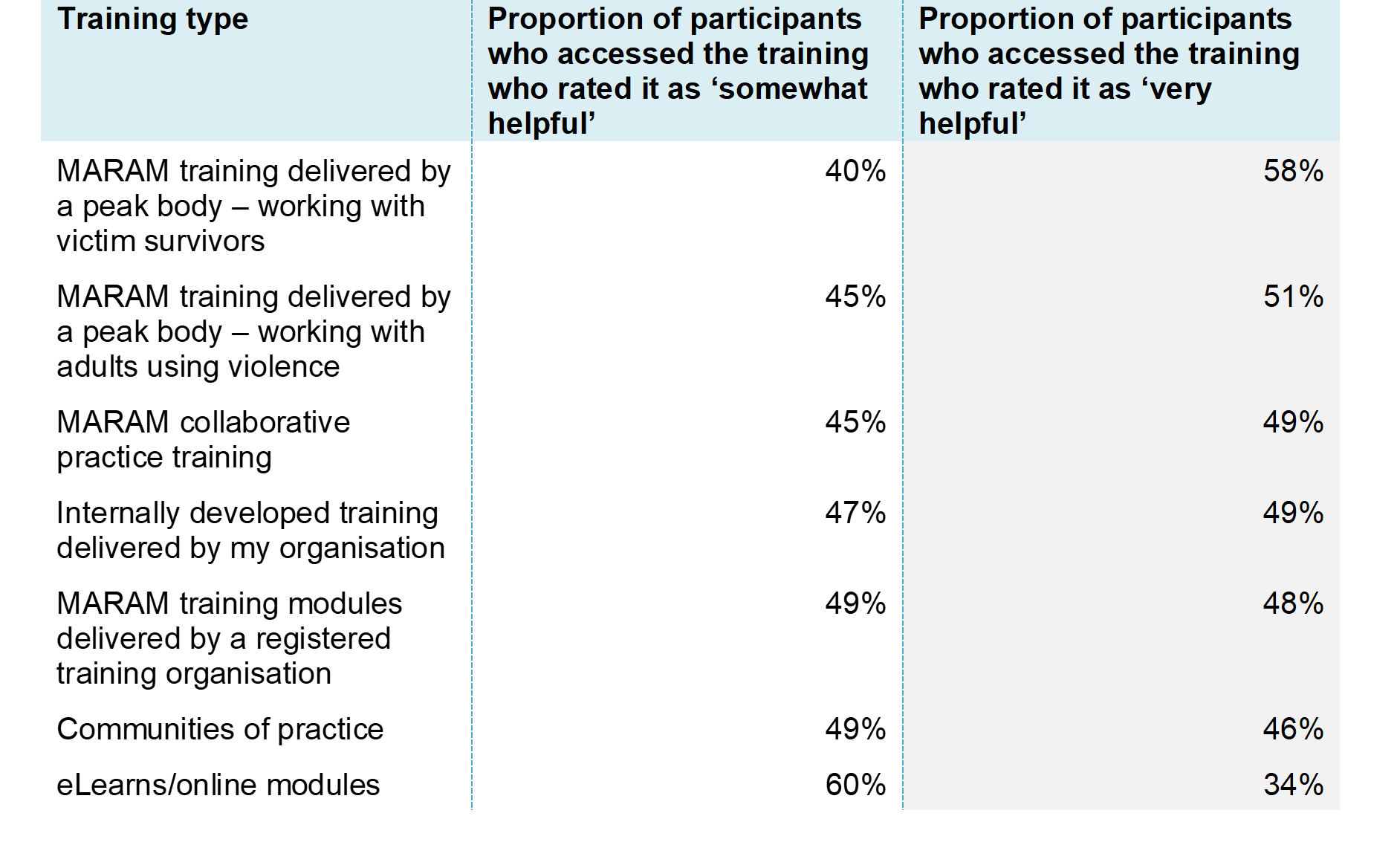
eLearns were the most-accessed training type. Participants said that facilitated sessions were the most helpful (Table 3).
Table 3: Usefulness of training by type
Survey results show that MARAM risk assessment tools help frontline workers to assess and manage family violence risk. Ninety per cent of participants stated the MARAM tools they used were very or somewhat helpful.
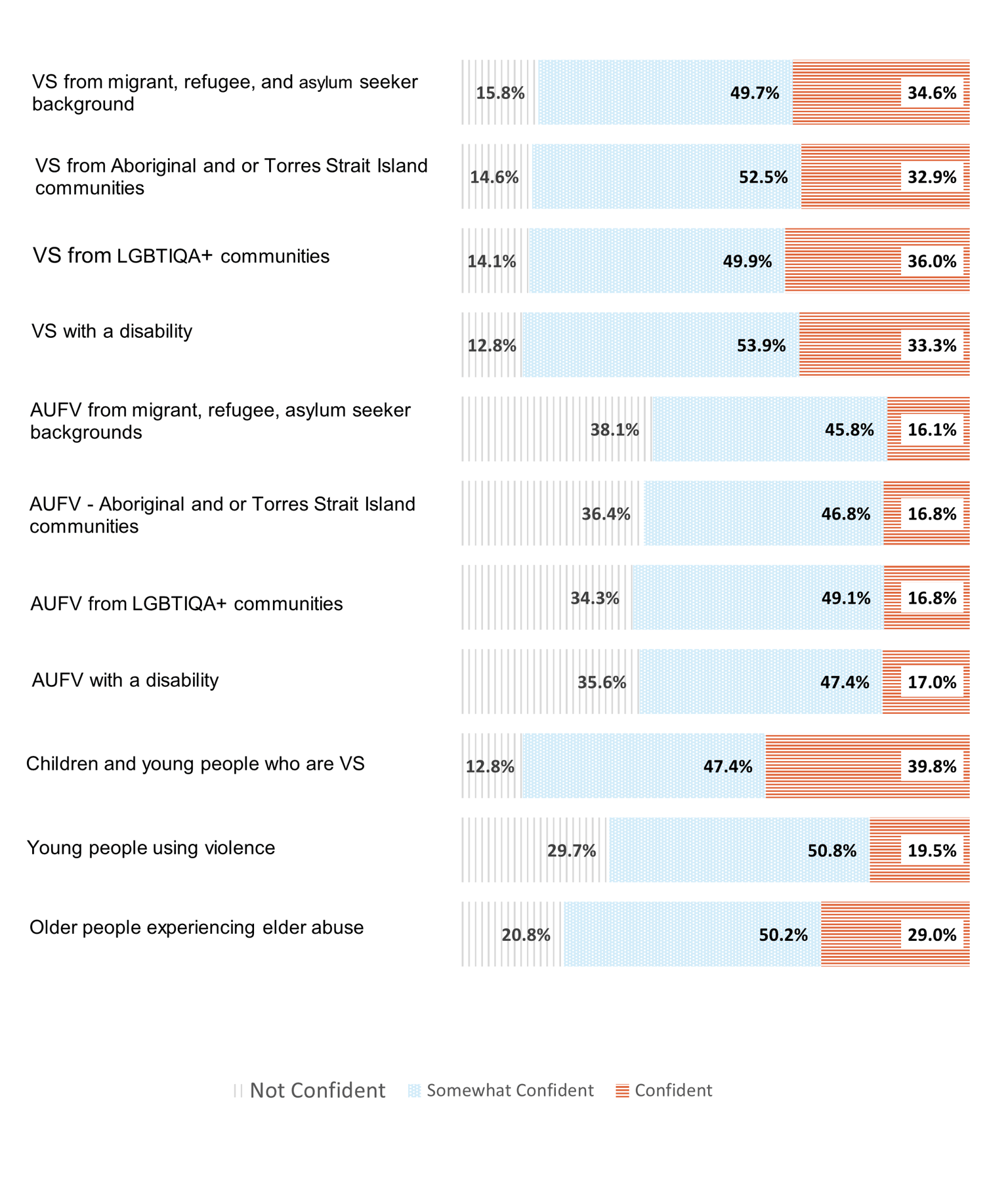
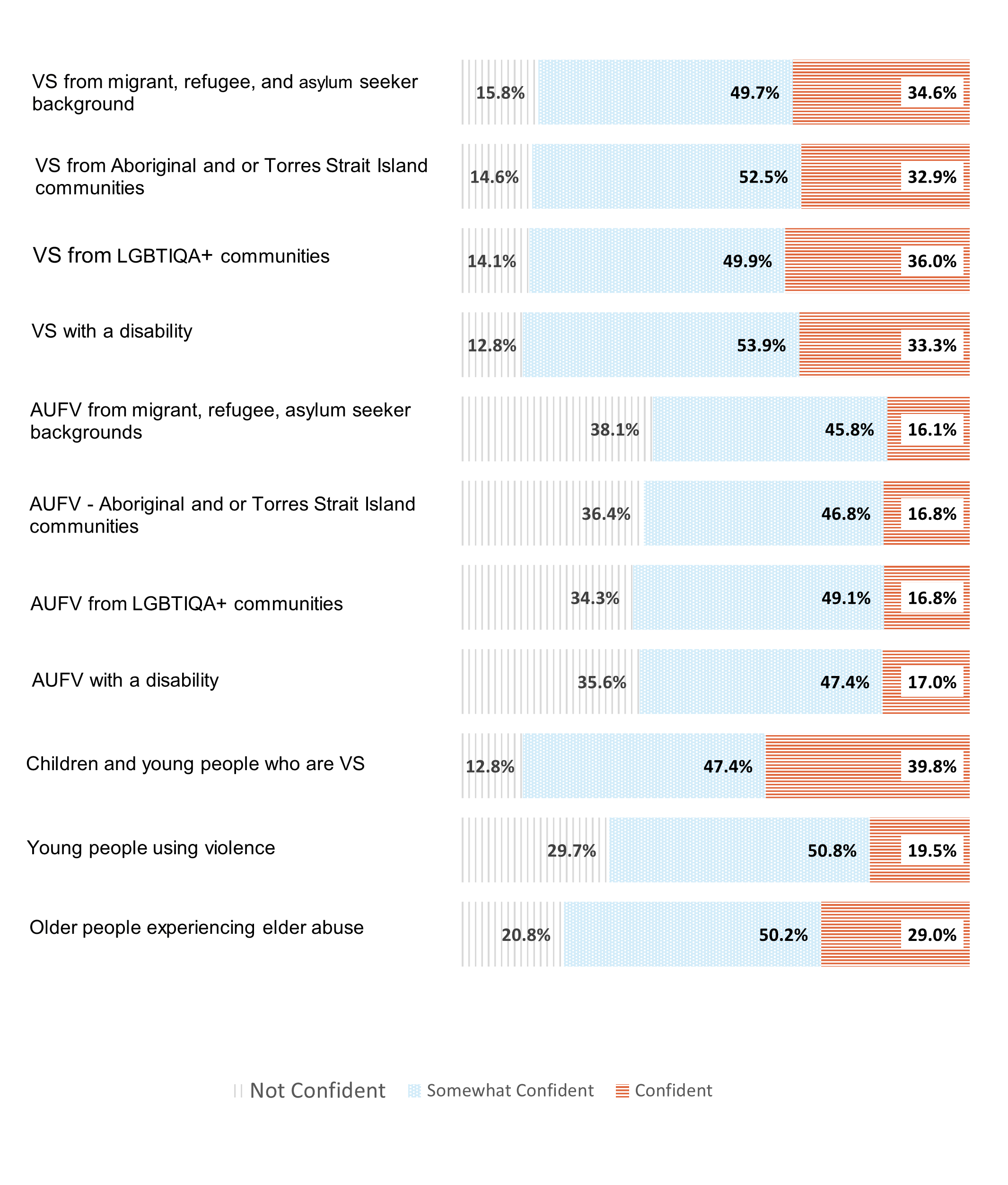
Figure 3 below shows there is a need to continue to build frontline workers’ skills and confidence to engage with people from priority groups across the board. However, it also highlights a clear gap in confidence to work with people using family violence, particularly those from priority groups. Continuing to provide training in the Adults Using Family Violence Practice Guides will help to address this gap.
Figure 3: How confident are you in using these tools to support clients from the following cohorts?
Capability plans for 2025–26
In the Children’s portfolio:
- Hurstbridge Farm and Secure Care Services will include mandated MARAM training in the workforce 2025–26 performance development plan
- The Information Sharing Team will work with Hurstbridge Farm, Secure Care Services and After Hours to map information sharing processes and develop resources to support staff in information sharing under the CISS & FVISS. The Information Sharing Team will also provide practice uplift to After Hours, in the form of an information session, which covers use of the Information Sharing Schemes in a crisis setting.
- The Information Sharing Team will also work with Aboriginal Community-Controlled Organisations (ACCOs) to better understand their challenges with information sharing and will help develop tailored guidance that supports a self-determined approach.
The Housing portfolio will support the Information Sharing Implementation Project to:
- train staff to appropriately store sensitive client and family violence-related information within the Housing Integrated Information Program IT system
- promote MARAM practice through the quarterly Housing practice newsletter and other communication channels
- train staff to know when and how to share information, including how it relates to MARAM identification.
The Courts portfolio will start implementing adults using family violence practice and guidance. This will include the family violence practitioner workforce and workforces in specialist courts and programs such as Drug Court, Court Support and Diversion, and the Assessment and Referral Court.
Ambulance Victoria will embed the Safeguarding education module into the induction program for employees and volunteers by December 2025. This module provides guidance on how to respond to incidents of non-fatal strangulation.
DFFH will tailor content for the department’s workforces. This work will boost capability in relation to misidentification of the predominant aggressor, and children and young people practice guidance. The department will deliver targeted presentations and forums to strengthen leadership confidence in MARAM.
Updated