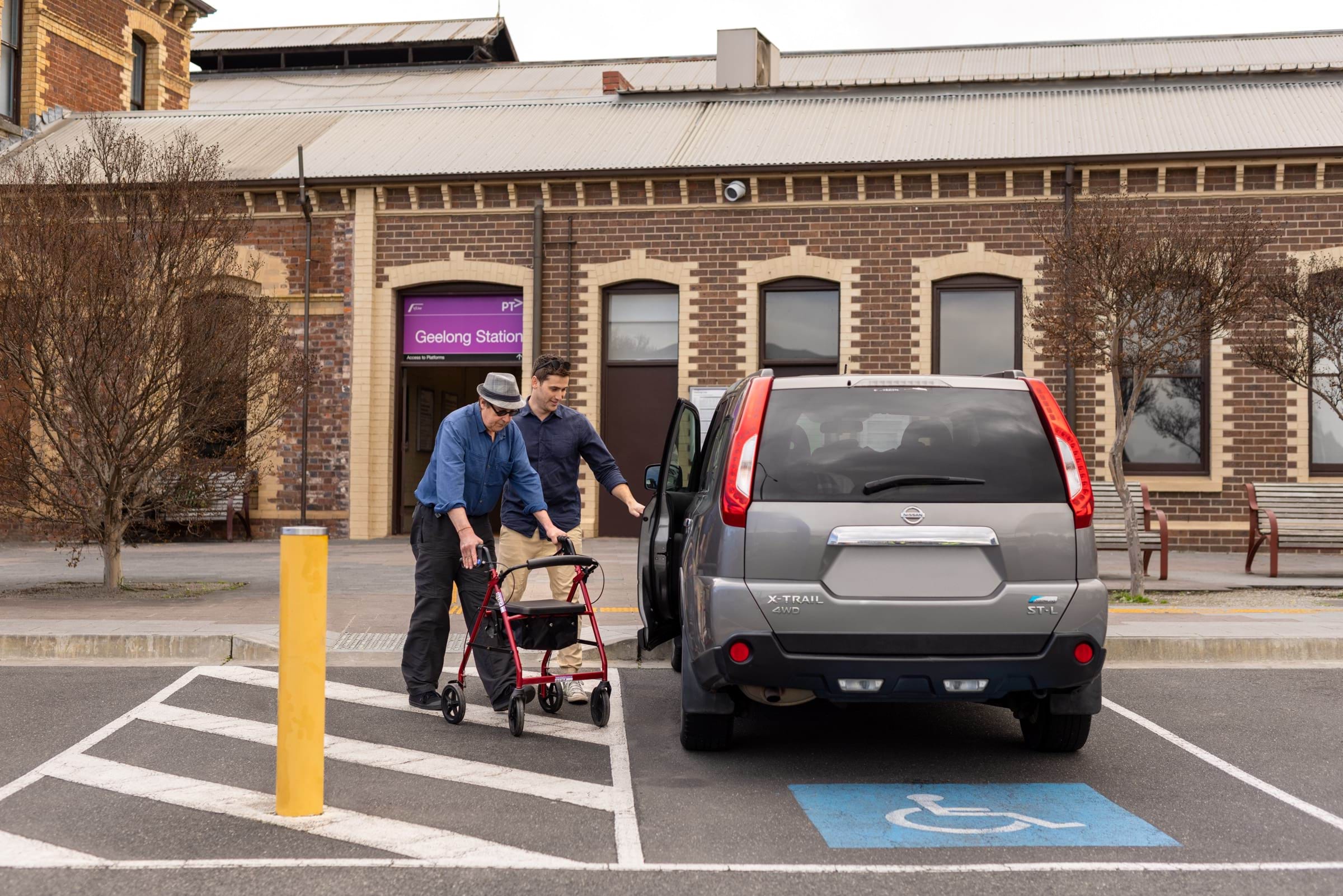
Thriving places and connected communities
The Department of Transport and Planning (DTP) brings together key transport, planning, land, precinct, and policy functions to create thriving places and connected communities for all Victorians.
Together with our portfolio agencies, we are responsible for planning, building, operating, and maintaining Victoria’s transport, planning and land services for use by all.
While Victoria recognises the rights of all people to access all forms of transport, planning and land services and has invested heavily in new and upgraded rolling stock, infrastructure, systems and services, accessibility gaps remain.
Key barriers include the age of existing rolling stock, infrastructure and systems, the size of the network, and the high cost of upgrades or replacements.
A coordinated approach
Ensuring there is a consistent and coordinated approach when considering and prioritising accessibility improvements when undertaking transport, service and infrastructure planning is critical.
By using the Strategic Framework to inform this Action Plan, DTP demonstrates a commitment to considering accessibility from the start, when planning, designing and delivering assets, services and policies.
Designed for everyone
The Action Plan identifies opportunities to improve accessibility so that people with accessibility needs are confident, respected and understood, and that our systems and infrastructure are comfortable, easy to use, and designed for everyone.
These priorities were identified in consultation with people with disability as part of the development the Strategic Framework.
By improving accessibility across our assets, journeys, systems and services, organisation culture and public behaviour, and information and innovation, we will acquit our action plan obligations under disability legislation.
Accessible content
The Action Plan is available in a variety of formats in addition to this publication, including:
- Summary document in word (access through the right-hand sidebar at the top of this page)
- Easy Read document in PDF and Word (access through the right-hand sidebar at the top of this page)
- Easy Read in HTML(opens in a new window)
- Auslan video(opens in a new window)
- Braille Master: please email transport.accessibility@ptv.vic.gov.au to organise a copy.
Acknowledgement
We proudly acknowledge the First Peoples of Victoria.
Strengths of First Peoples of Victoria
We acknowledge the First Peoples of Victoria's ongoing strength in practising the world’s oldest living culture. We acknowledge the Traditional Owners’ lands, waters, and skies on which we live and pay respects to their Elders past and present.
We recognise that there are long-lasting, far-reaching and intergenerational consequences of colonisation. Colonisation established Victoria with the intent of excluding First Peoples. This included their laws, cultures, customs and traditions. The development of Victorian laws, policies, systems and structures excluded First Peoples. This has resulted in entrenched systemic and structural racism.
We acknowledge that the impact and structures of colonisation still exist today. We have a responsibility to transform our systems and services so that First Peoples can hold decision-making power over matters that affect their lives.
We acknowledge the distinct accessibility challenges experienced by First Peoples in Victoria.
First Peoples and transport and planning
As we integrate our transport and planning systems to create thriving places and connected communities, we acknowledge the use of songlines as an integral part of Aboriginal culture which allowed First Peoples to easily connect their journeys across the nation.
We recognise the cultural significance of songlines as trade routes and ceremonial paths, and that some of the transport and planning networks and assets we use today are on those traditional songline routes.
Our language
We work with people with disability to understand community preferences and good practice in the language used to describe disability.
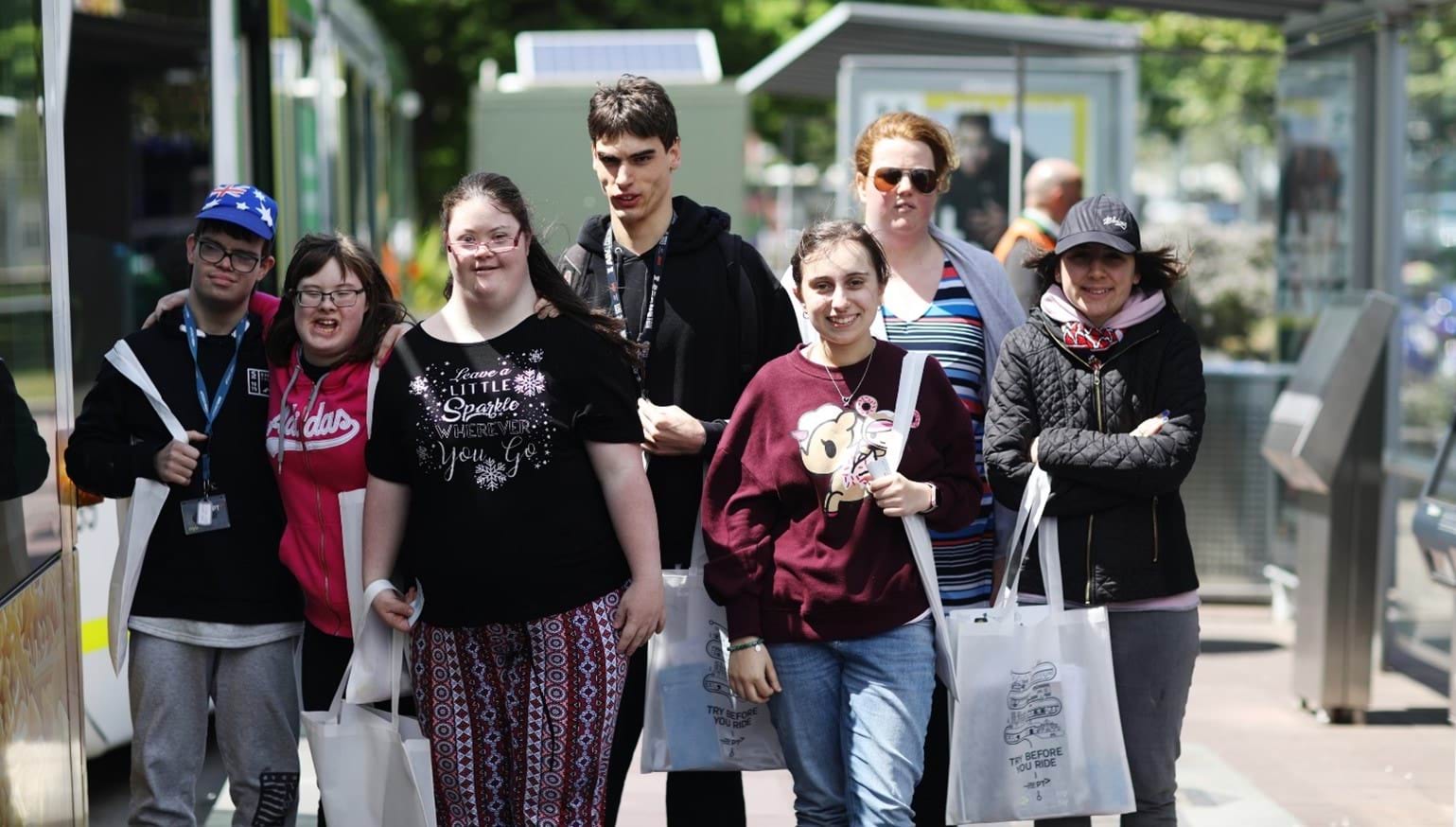
The Victorian Government has committed, through Inclusive Victoria: State Disability Plan 2022-26, to working with people with disability to understand community preferences and good practice in the language used to describe disability.
Language continues to change and evolve over time and has different meaning for different people. We recognise that people with disability have different preferences about how they describe their disability.
People’s different preferences about how language is used reflects the variety of ways people perceive their identity, experience of disability, and views of the community.
Person first language
In this Action Plan, we use person-first language to emphasise individuals beyond their disability, recognising diverse language preferences and committing to inclusive practices. This language puts the person before their disability, for example, ‘person with disability’.
Person-first language emphasises a person’s right to an identity beyond their disability as a way of addressing ableism. This approach is an important part of reflecting many people’s identities, particularly those with cognitive disability and self-advocates.
Identity first language
While we have chosen to use person-first language in the Action Plan, we recognise that person-first language may not be the preferred language of the whole community and that many people with disability prefer to use ‘identity-first’ language.
This approach puts a person’s disability identity before the person – for example, ‘disabled person.’ We recognise that identity-first language is important to many people with disability, including neurodiverse people and many in the Deaf community.
United Nations Convention on the Rights of Persons with Disabilities
The Action Plan uses the United Nations Convention on the Rights of Persons with Disabilities definition of disability, which describes people with disability as people who have long-term physical, mental, intellectual, or sensory differences that, when interacting with inaccessible communities and environments, prevent full and equal community participation.
This is often called the social model of disability. Under this approach, communities, services, and spaces that are not accessible or inclusive cause disability.
Visible and non-visible disability
The Action Plan is inclusive of both visible and non-visible disabilities and acknowledges that non-visible disabilities may also impact a person’s full and equal community participation.
Recognising both visible and non-visible disabilities in the Action Plan is essential for fostering inclusion, promoting accessibility, and ensuring equal rights and opportunities for all individuals.
Messages
Messages from the Minister for Public and Active Transport, DTP Secretary, the Accessible Transport Advisory Committee (ATAC) Chair and DTP Chief Accessibility Advocate (CAA).
Minister for Public and Active Transport's Message
Improving accessibility benefits all Victorians. It makes it easier for people to take public transport when and where they choose, and access our planning, building and housing services and infrastructure.
The Victorian Government is committed to investing in accessible outcomes for our communities. We have delivered significant accessibility upgrades across the train, tram and bus networks that improve the safety and amenity for all.
However, we know that accessibility is not just about infrastructure, it extends to our systems, services, information and organisational culture. This includes ensuring our people and partners are disability confident, our websites and apps can be used by all, and our signage and wayfinding is intuitive.
Secretary's Message
Victoria is the fastest-growing state in Australia and is expected to reach a population of more than 10 million by 2050. Planning for this growth, while ensuring we retain our lifestyle, is a key reason that transport, planning, land, precinct, and policy functions have been united within our department.
The Department of Transport and Planning (DTP) is committed to creating an inclusive and accessible public transport and planning system for all Victorians.
Our built in, not bolted on approach builds accessibility into Victoria’s major infrastructure upgrade programs. This is done in close consultation with accessibility advocates, community groups, public transport operators, and government agencies.
Accessible Transport Advisory Committee Message
The Accessible Transport Advisory Committee (ATAC), previously known as the Public Transport Advisory Committee, was established in 2016 to provide independent advice to the Minister for Public and Active Transport and DTP on issues related to transport accessibility.
ATAC provides a direct, informed consumer and community voice for inclusive and accessible public transport, advocating for and advising on the needs of people with disability, the ageing population, and vulnerable groups.
Currently, ATAC is made up of myself as the Chair, and six individual members, Martin Stewart, Melissa Hale, Chris Edwards, Daniel Giles OAM, Julie Postma, and Karen Fankhauser.
Chief Accessibility Advocate Message
I commenced as the Chief Accessibility Advocate in November 2021 for the former DoT to amplify the voices of people with disability and improve public transport accessibility in Victoria. My role has since expanded with machinery of government changes to include planning to reflect the remit of DTP.
As an independent voice to DTP, my role drives accountability when delivering improved accessible outcomes. I also facilitate collaborative relationships between people with disabilities and DTP staff so that solutions meet the needs of all Victorians.
Victoria is leading the way on consultation and co-design with people with disability when building trains and trams. I’ve visited mock-ups of the X’Trapolis 2.0 and Next Generation Tram and facilitated conversations and learnings between the project delivery teams and people with disability. The design of these conveyances demonstrates an inclusive and iterative approach to delivering public transport.
Policy context for access and inclusion
This Action Plan is guided by International, Commonwealth and State laws and policies.
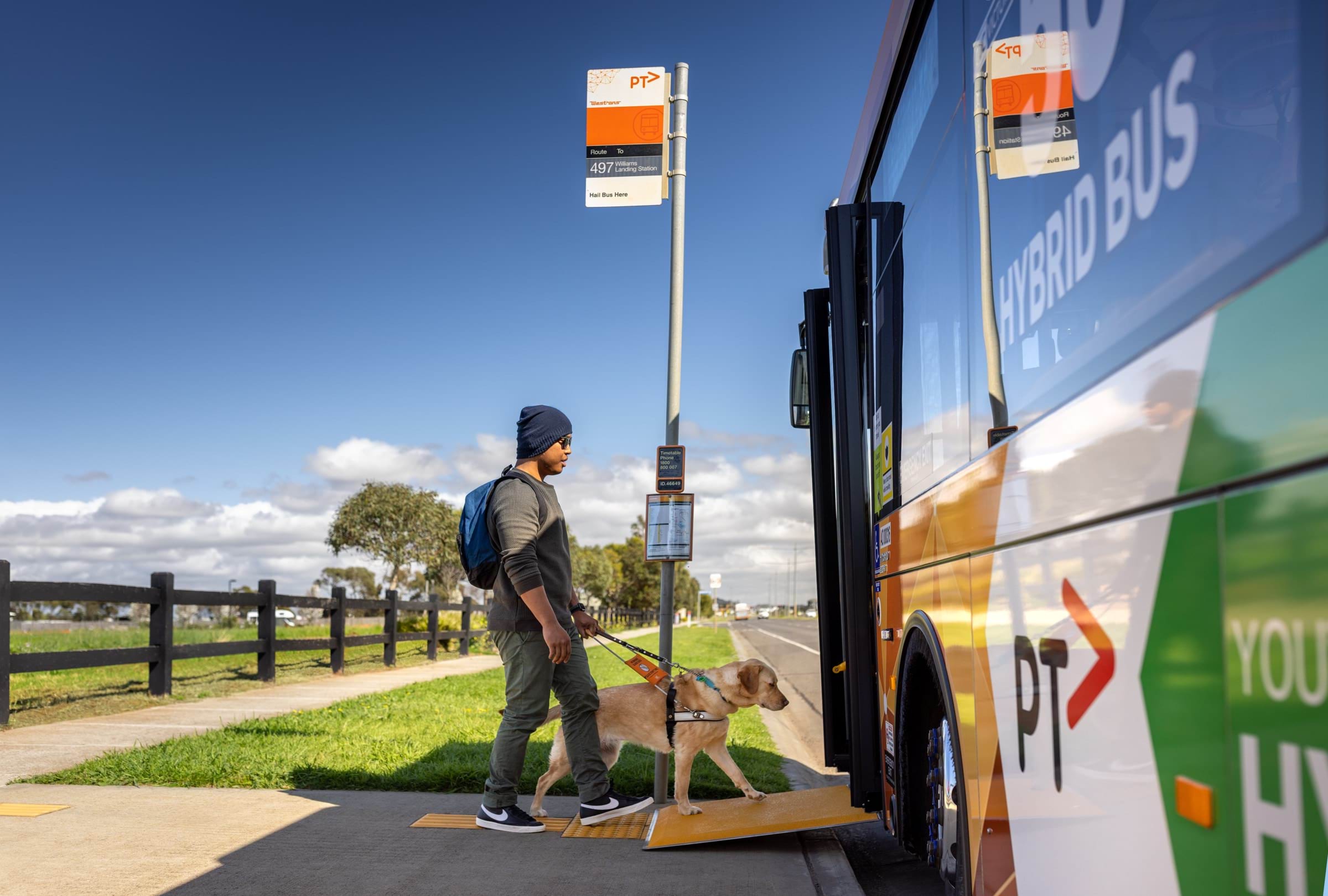
In Victoria, people with disability are protected against discrimination under the Equal Opportunity Act 2010 (Victoria) and the Disability Discrimination Act 1992 (Commonwealth) (DDA).
These Acts set out that it is unlawful to discriminate on the basis of disability when providing goods and services and in relation to the access or use of public premises.
Disability standards and legislation
Two sets of disability standards have been made under the DDA that are relevant to DTP:
- Disability Standards for Accessible Public Transport 2002 (DSAPT) – establishes minimum accessibility requirements that public transport operators and providers to make their services and infrastructure accessible.
- Disability (Access to Premises – Buildings) Standards 2010 (the Premises Standards) – specifies how public buildings must provide access for people with disability.
The Disability Act 2006 (Victoria) requires all public sector bodies to prepare a disability action plan and report on implementation through an annual report (section 38). The purpose of a disability action plan is to:
- Reduce barriers to persons with a disability accessing goods, services and facilities,
- Reduce barriers to persons with a disability obtaining and maintaining employment,
- Promote inclusion and participation in the community of persons with a disability, and
- Achieve tangible changes in attitudes and practices which discriminate against persons with a disability.
The DDA also provides for parties that are subject to the Act to prepare action plans. The DDA specifies that disability action plans should include programs, goals and targets, and evaluation mechanisms to achieve the objects of the Act (section 61).
Developing this Action Plan acquits DTP’s obligations under both pieces of legislation and reflects a commitment to reducing and eliminating barriers for people with disability across the transport and planning portfolios.
A copy of this Action Plan has been provided to the Australian Human Rights Commission.
Additional legislation
Other relevant legislation that has been considered as part of this Action Plan includes the United Nations Convention on the Rights of Persons with Disabilities, the Charter of Human Rights and Responsibilities Act 2006 (Victoria), and the Transport Integration Act 2010 (Victoria).
State Disability Plan
The Action Plan supports Inclusive Victoria: State Disability Plan 2022-2026, the Victorian Government’s overarching framework to support all services and environments to improve the lives of Victorians with disability.
It includes a commitment to work across government to embed universal design principles in all elements of the design and delivery of infrastructure. Actions developed by DTP sit within the following pillars of the State Disability Plan:
- Pillar One - Inclusive Communities: sets a range of outcomes to improve transport accessibility, and
- Pillar Two - Health, Housing and Wellbeing: considers affordable, stable and secure, and suitable housing.
DTP’s work also supports the six systemic reforms commitments in the State Disability Plan, with many actions in this Plan supporting co-design with people with disability, and accessible communications and universal design.
DTP Strategies
The Action Plan is aligned with the strategic priorities and focus areas contained in:
- DTP’s Strategic Plan 2024-2028,
- Inclusion and Diversity Strategy 2020-2024, and
- the internal facing Accessibility Action Plan 2020-2024 (separate to the Accessible Public Transport Action Plan 2020-2024).
These strategies outline DTP’s commitment to advancing an inclusive workplace culture where staff are safe, diverse, engaged, valued and high performing. Along with this Action Plan, DTP’s internal and external focused accessibility activities are captured.
The Action Plan also sits alongside DTP’s commitment to self-determination and reform and to create a culturally safe and inclusive workplace for First Peoples staff, through the:
- Transport and Planning Portfolio First Peoples Self Determination and Reform Plan 2025 – 2029
- Yani Bangal Transport and Planning Portfolio First Peoples Careers Strategy 2023 - 2028
- Transport and Planning Portfolio First Peoples Cultural Safety Framework: DTP Action Plan 2024-2028
- Wurrek-al Transport and Planning Portfolio First Peoples Engagement Framework
Transport Accessibility Strategic Framework
The Transport Accessibility Strategic Framework has been used as a guide to shape this Action Plan.
The Transport Accessibility Strategic Framework(opens in a new window) (the Strategic Framework) identifies the approach DTP will take to address accessibility gaps and improve the end to end user experience for all by:
- Setting out a prioritisation framework to help identify and focus efforts on the biggest challenges to accessibility
- Providing an input to planning and investment decisions
- Helping inform Government on how to achieve better value for money, cost efficiencies and reduce community disruption, and
- Taking a whole-of-system view, centred on outcomes and drawing on innovative thinking.
Whilst it was developed in a transport context, it can be applied across all of DTP’s work, and is relevant to the planning, housing, building and land delivery systems.
Strategic Framework objectives
To support achieving these objectives, the Strategic Framework identified a series of strategic directions that outline key approaches that can be taken to improve accessibility. These are grouped into four categories and support how actions are structured in this document.
Assets
With our infrastructure and rolling stock, we aim to:
- Ensure priorities for the most critical and beneficial improvements are considered as funding becomes available.
- Make it easier for DTP, transport and planning agencies and local governments to embed and achieve accessibility outcomes.
- Avoid the need for costly rethinking of approaches by considering accessibility at all stages of decision making rather than as an afterthought.
Journeys, systems and services
Expanded to include systems and services, we can enhance accessibility and flexibility by integrating services, exploring diverse delivery models and improving infrastructure and support provisions to:
- Explore opportunities to bridge the gaps between the limited options currently available so it is easier for a wider range of people to use transport and access our planning, housing, building and land delivery systems and services.
- Better align available services through information coordination, tools and contractual arrangements.
- Help provide greater flexibility for people to take journeys and access systems and services when and where they wish.
Organisation culture and public behaviour
A good experience relies on more than accessible infrastructure, rolling stock, systems and services, it also relies on positive interactions along the way, including:
- Staff training for frontline and other staff, drawing on lived experiences of disability.
- Employing people with disability and diverse backgrounds.
- Sharing stories and images or running campaigns that demonstrate equitable access for people with disability accessing transport and planning services.
Information and innovation
Having accessible and reliable information is one of the most important requirements for inclusive transport and planning, we aim to:
- Fill data gaps
- Make information available so that people with disability can plan their journeys more easily and use our planning, housing, building and land delivery systems and services both when the system is operating normally and when it is disrupted.
- Ensure information is accessible.
About this Action Plan
DTP brings together key transport, planning, land, precinct, and policy functions to create thriving places and connected communities for all Victorians.
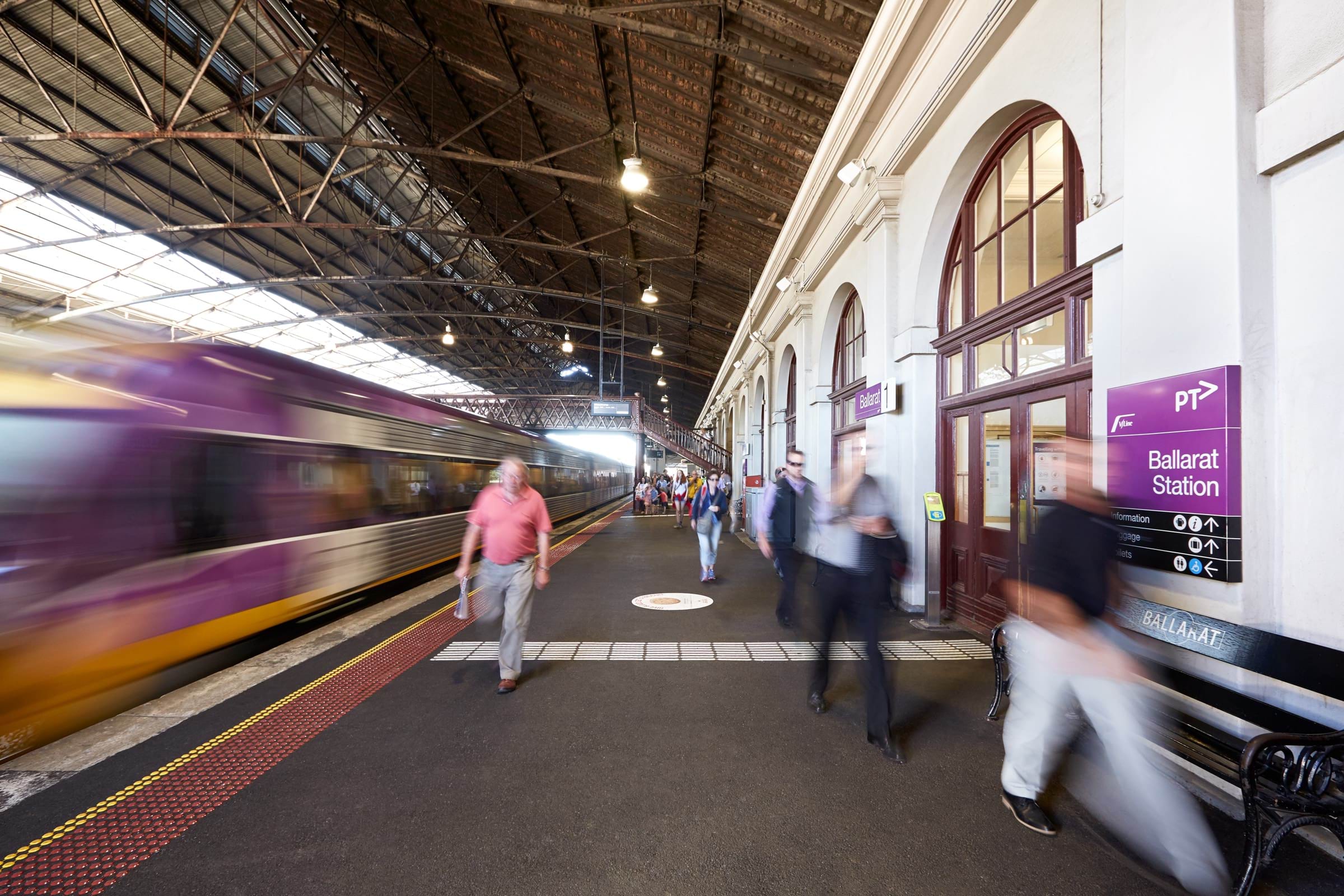
Together with the DTP portfolio agencies, we are responsible for planning, building, operating, and maintaining Victoria’s transport, planning and land services for use by all.
While Victoria recognises the rights of all people to access all forms of transport, planning and land services and has invested heavily in new and upgraded rolling stock, infrastructure, systems and services, accessibility gaps remain.
Key barriers include the age of existing rolling stock, infrastructure and systems, the size of the network, and the high cost of upgrades or replacements.
Ensuring there is a consistent and coordinated approach when considering and prioritising accessibility improvements when undertaking transport, service and infrastructure planning is critical.
By using the Strategic Framework to inform this Action Plan, DTP demonstrates a commitment to considering accessibility from the start, when planning, designing and delivering assets, services and policies.
The Action Plan identifies opportunities to improve accessibility so that people with accessibility needs are confident, respected and understood, and that our systems and infrastructure are comfortable, easy to use, and designed for everyone.
These priorities were identified in consultation with people with disability as part of the development the Strategic Framework.
By improving accessibility across our assets, journeys, systems and services, organisation culture and public behaviour, and information and innovation, we will acquit our action plan obligations under disability legislation. The table below links these priorities to the requirements in section 38 of the Disability Act 2006 (Victoria).
Action Plan priorities and disability legislative requirements
| Priority | Legislative Requirements |
| Assets |
|
| Journeys, Systems and Services |
|
| Organisation culture and public behaviour |
|
| Information and Innovation |
|
The Action Plan takes a systems approach to accessibility.
We recognise that people with disability who identify as female, who are Aboriginal and/or Torres Strait Islander Australians, Lesbian, Gay, Bisexual, Trans, Intersex, Queer, and Asexual + people, and/or from culturally and linguistically diverse backgrounds face additional barriers due to the intersection of multiple marginalisations.
We also acknowledge that people with non-visible disability often experience additional barriers.
Experiences of people interacting with the transport and planning spheres differs between regional Victoria and metropolitan Melbourne. We understand the differences and impacts on regional areas and aim to further increase accessibility to benefit the whole community.
We have considered how initiatives captured in this Action Plan can reflect an intersectional approach to improving accessibility.
Who we spoke to

We developed the Action Plan by engaging extensively with a wide range of stakeholders both within and external to DTP.
We leveraged the priorities of people with disability captured through the Strategic Framework co-design process to shape initial discussions on where to target our efforts. This included extensive engagement with:
- People with disability, including people with low vision or blindness, people who are deaf or hard of hearing, people with reduced mobility, people with cognitive disability, people with complex communication needs, people with non-visible disabilities
- People with disability who have intersectional experiences, such as First Peoples, and/or people who are culturally and racially marginalised
- Members of various disability advisory committees
- Carers, and
- Older Victorians.
Chief Accessibility Advocate and ATAC
DTP’s Chief Accessibility Advocate and ATAC were involved in each stage of developing this Action Plan.
They reviewed and provided feedback on draft actions, identified areas of uplift, and ensured that consultation with people with disability is embedded across the breadth of work represented in actions.
Their work was critical to finalise this Action Plan and will form an important part of implementing and evaluating its success.
Our operators, transport, planning and accessibility partners
We met with our major public transport operators, including:
- V/Line,
- Metro Trains Melbourne,
- Yarra Trams, and Kinetic,
as well as transport, planning and accessibility partners, including:
- Travellers Aid,
- Public Transport Ombudsman,
- Safe Transport Victoria,
- Municipal Association of Victoria, and
- Major infrastructure delivery authorities.
Through the major public transport operators, we also briefed their accessibility reference groups ahead of the Plan’s public release.
This engagement has ensured that the Action Plan complements existing and emerging work on accessibility by DTP partners, including the following major public transport operator action plans:
- V/Line Accessibility Action Plan 2025-2028(opens in a new window)
- Metro Trains Melbourne Accessibility Action Plan 2025-27 (opens in a new window)
- Yarra Trams Accessibility Action Plan 2024-2027(opens in a new window)
- Kinetic Accessibility Action Plan 2024-2026(opens in a new window)
Ongoing
We will continue to work with people with disability, our Chief Accessibility Advocate, ATAC, public transport operator accessibility reference groups and external accessibility stakeholders to implement actions in this Plan.
Actions in this Plan
This Action Plan contains 60 actions for DTP to ensure that we deliver accessible and safe integrated transport, planning, housing, building and land use outcomes.
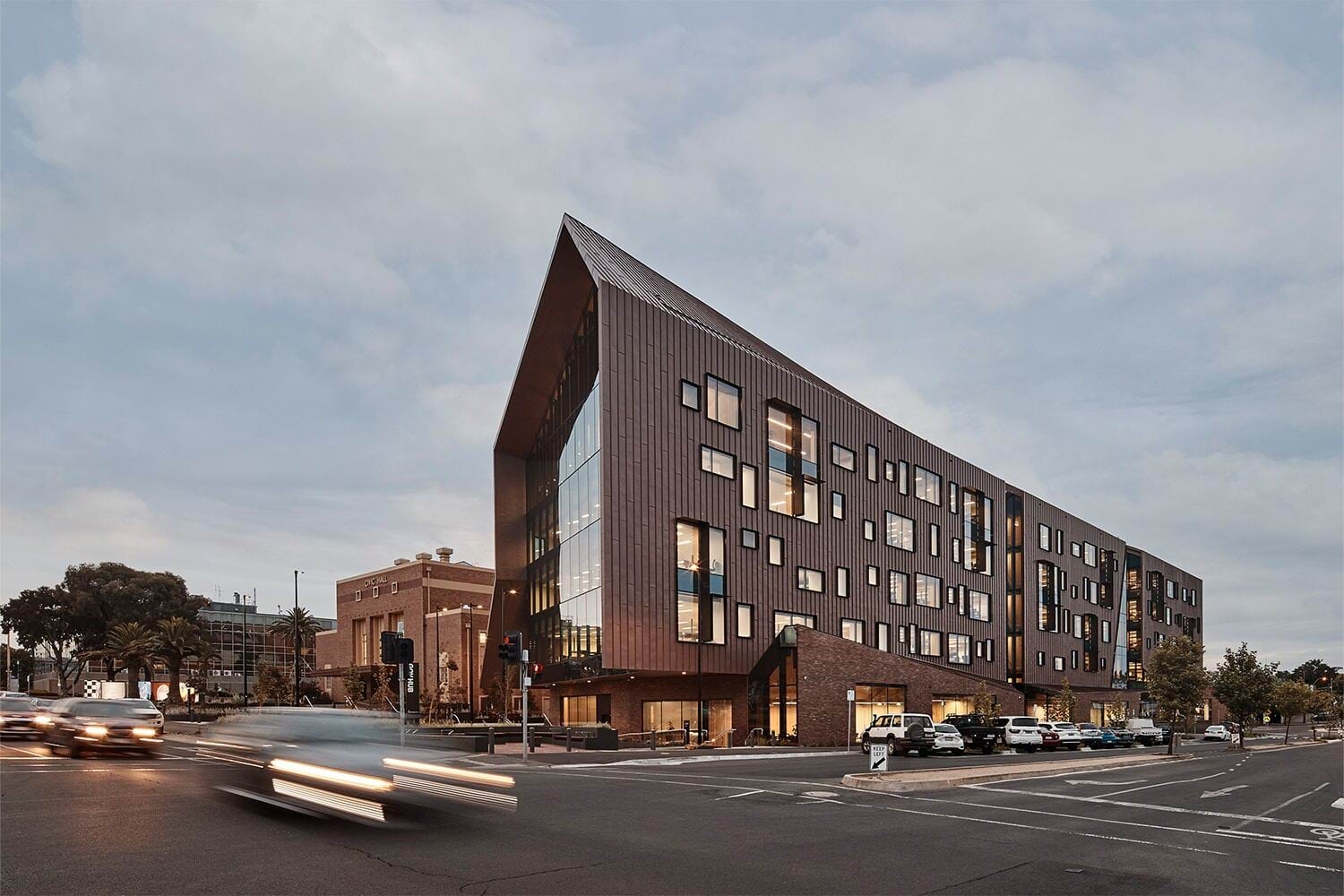
This Action Plan contains 60 actions for DTP to ensure that we deliver accessible and safe integrated transport, planning, housing, building and land use outcomes. Each action is tied to a delivery timeframe, where:
- Year 1 reflects delivery to the middle of 2026.
- Year 2 to the middle of 2027.
- Year 3 to the middle of 2028.
- Year 4 to the middle of 2029 (end of this Action Plan).
- Ongoing, which includes work that is delivered throughout the life of this Action Plan. For example, it may be a program that is run multiple times per year, or a plan for infrastructure works that is updated throughout this Plan.
We also intend to undertake a mid-way refresh of this Action Plan in late 2027, which will be informed by the new State Disability Plan that is due to be released in 2027.
Key Actions
Four key actions have been highlighted as focus areas for DTP to deliver in this Action Plan.
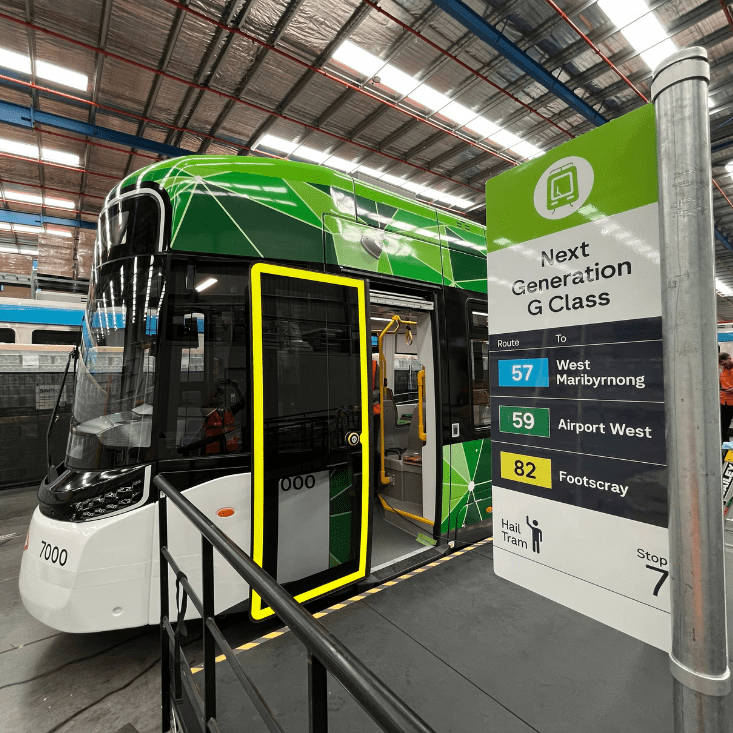
Four key actions have been identified as focus areas for DTP to deliver in this Action Plan.

Scope of the Accessible Transport Advisory Committee advice
The Accessible Transport Advisory Committee (ATAC) provides independent advice across transport policy and projects to create a more inclusive and accessible transport system in Victoria.
It is critical that what DTP delivers to the public is accessible and informed by the lived experience of people with disability to meet community expectations.
With the integration of transport and planning portfolios within DTP, there is an opportunity to consider whether ATAC could advise on planning, housing, building, precinct and land use issues, in addition to early and ongoing engagement with public transport matters.
Action: Support ATAC to amplify the lived experience of people with disability by:
- Facilitating early engagement across a range of projects,
- Supporting identification of systemic issues, and
- Exploring opportunities to advise whole of departmental strategies and initiatives.
Outcome: ATAC is sought out by project teams to provide expertise throughout the project lifecycle.
Measure: Earlier and increased consultation with people with disability.
Timeframe: Year 1, Ongoing.

Transport Accessibility Strategic Framework review
The Transport Accessibility Strategic Framework sets DTP’s approach to address accessibility gaps and improve the end to end user experience for all.
Ensuring there is a consistent and coordinated approach when considering and prioritising accessibility improvements when undertaking transport, service and infrastructure planning is critical.
The Strategic Framework was developed in the transport context. A consistent and coordinated approach to accessibility across transport, planning, housing, and building contexts will deliver more accessible outcomes for all Victorians.
Action: Explore options to refresh the Strategic Framework to consider how we approach accessibility for our planning, housing and building systems.
Outcome: Consistent and coordinated approach to accessibility across our transport, planning, housing and building systems.
Measure: Strategic Framework updated to consider all DTP work.
Timeframe: Year 2.

Addressing assistance animal handler refusals
Assistance animals provide critical support to people with disabilities or health conditions.
Victoria’s Transport (Compliance and Miscellaneous) (Conduct on Public Transport) Regulations 2015 permit guide dogs, hearing dogs and other assistance animals to travel on all public transport services.
The Disability Discrimination Act 1992 (Commonwealth) also makes it unlawful to discriminate against a person who needs the use of an assistance animal.
Complaint data collected by DTP reflects ongoing issues with assistance animal handlers being refused access to public transport services and commercial passenger vehicles.
Refusals have persisted despite previous targeted interventions, suggesting that a suite of collaborative initiatives may be needed.
Action: Collaborate with relevant stakeholders and all industry partners to assess a range of legislative and policy options to reduce refusals of assistance animal handlers.
Outcome: Decrease in refusals of assistance animal handlers.
Measure: Number of refusals reported across different modes. Number of complaints made to bodies who accept complaints.
Timeframe: Year 3.

Accessibility service delivery and Parkville Station pilot
DTP supports Travellers Aid Australia to deliver a range of accessibility related services at Flinders Street and Southern Cross Stations, including mobility support, personal guidance, buggy services, toileting and showering facilities.
These services are used frequently by a range of travellers with different support needs.
With the five Metro Tunnel Stations opening, there are additional locations where passengers are likely to require extra support to complete their journey.
Parkville Station is located in a unique precinct, with several state significant medical and educational facilities.
Action: Deliver accessibility services for passengers travelling in the Parkville precinct through a pilot program with Travellers Aid Australia.
Outcome: Passengers provided with accessibility services in Parkville precinct.
Measure: Pilot program delivered.
Timeframe: Year 1.
Priority One: Assets
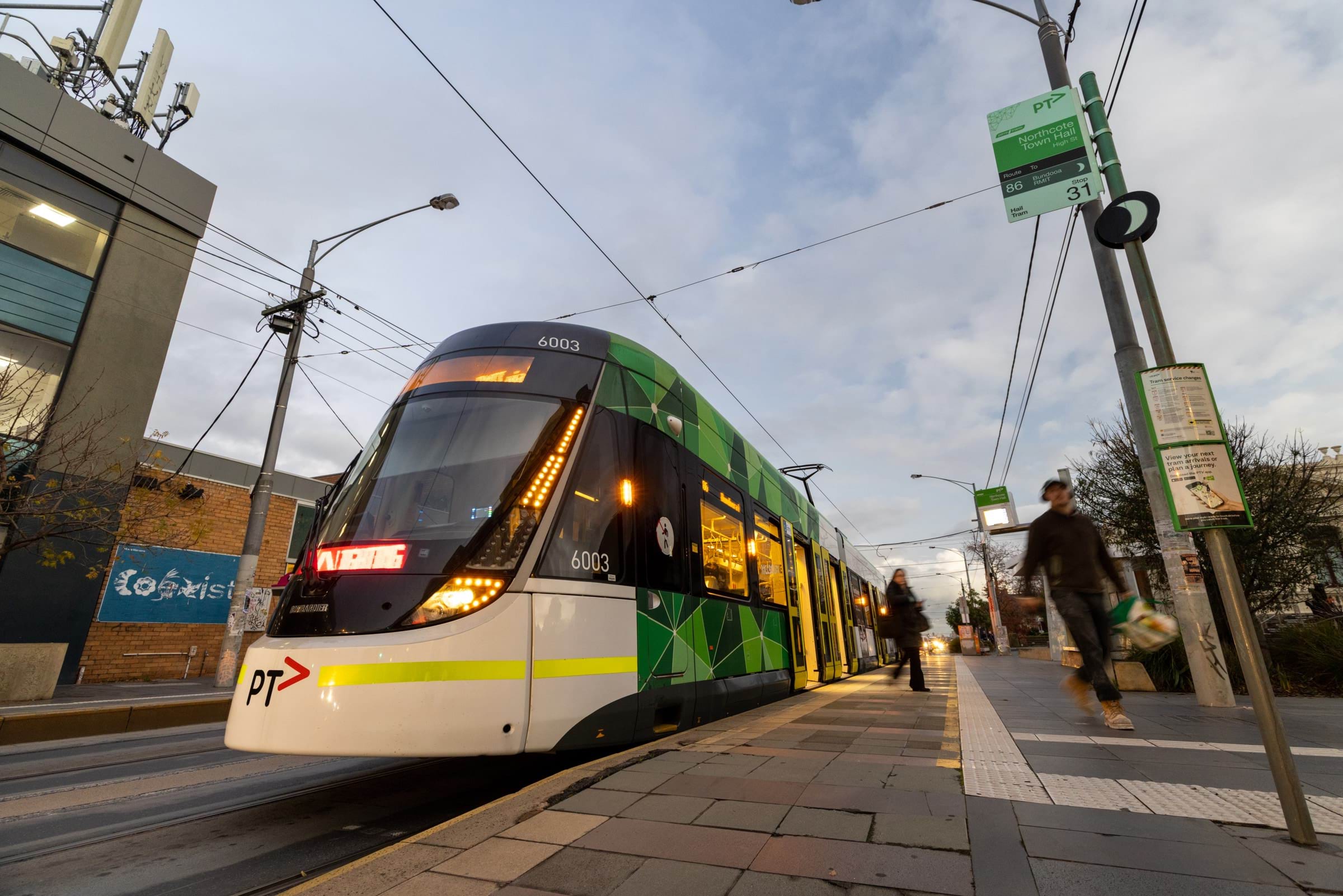
With our infrastructure and rolling stock, we aim to:
- Ensure priorities for the most critical and beneficial improvements are considered as funding becomes available.
- Make it easier for DTP staff, transport and planning agencies and local governments to embed and achieve accessibility outcomes.
- Avoid the need for costly rethinking of approaches by considering accessibility at all stages of decision making rather than as an afterthought.
Trams and tram stops
Train stations
Bus stops
Heritage infrastructure
Precincts
Case Study 1: X'Trapolis 2.0 Train
Targeted engagement
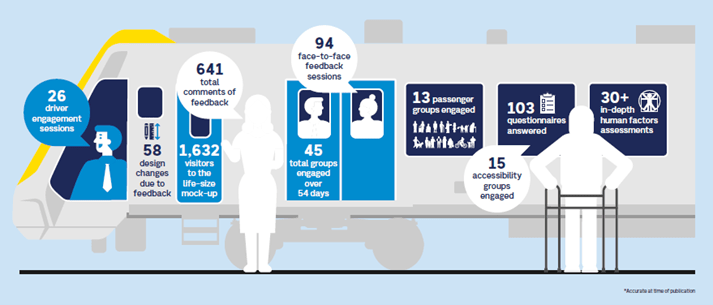
Through a targeted engagement program, hundreds of Victorians were given the chance to influence the design of Melbourne’s new X’Trapolis 2.0 train.
The four-phased engagement program ran from April 2022 to July 2023, and involved consultation with train drivers, accessibility groups and passenger representatives on early concept designs, followed by virtual reality tools and a life-size mock-up, to help inform the final design of the train.
During the final engagement phase, 1,632 diverse visitors experienced and provided feedback on a mock-up of one-and-a-half train carriages.
The mock-up
The mock-up featured life-like passenger features, allowing participants to experience passenger displays, seats, grab poles, accessibility spaces, and many other key elements of the design. We received 641 individual pieces of feedback, which resulted in 58 important design changes, including:
- improvements to the semi-automatic wheelchair ramp to make it easier for mobility aid users to get on and off the train, and make deployment of the ramp easier for drivers
- additional braille and tactile markings to priority seats
- lowered help point buttons to make calling for assistance easier
- increased space under companion seats to make it easier for guide dogs and support animals to fit
- installation of flashing lights on the doors and additional audio tones to signal doors opening and closing
- additional high-visibility markers on internal and external doors to improve accessibility.

Co-design
Co-design is vital to ensuring our new trains and trams are being built for all Victorians right from the beginning. By actively involving key stakeholder groups in the design process, we gain valuable insights into accessibility challenges and have been able to identify issues and opportunities for improvements before our new trains and trams start taking passengers.
These changes improve passenger and driver experience, making journeys more comfortable and accessible.
“Seeing some of the feedback included in the final design is a testament to the way the teams at DTP and Alstom, along with our partners, are working together to listen to the community and come up with the best possible product.”
Tricia Malowney, DTP Chief Accessibility Advocate
Victorians can expect to see the first X’Trapolis 2.0 trains testing on the network from 2025. These trains will be gradually introduced on the Craigieburn, Upfield and Frankston lines as we retire our long-serving Comeng Fleet.
Priority Two: Journeys, Systems and Services
We can enhance accessibility and flexibility by integrating services, exploring diverse delivery models and improving infrastructure and support provisions and:
- Explore opportunities to bridge the gaps between the limited options currently available so it is easier for a wider range of people to use transport and access our planning, housing, building and land delivery services and systems.
- Better align available services through information coordination, tools and contractual arrangements.
- Help provide greater flexibility for people to take journeys and access systems and services when and where they wish.
Digital
Transport planning and coordination
Research, policy and implementation
Public transport ticketing
Case Study 2: VicTraffic Website Accessibility
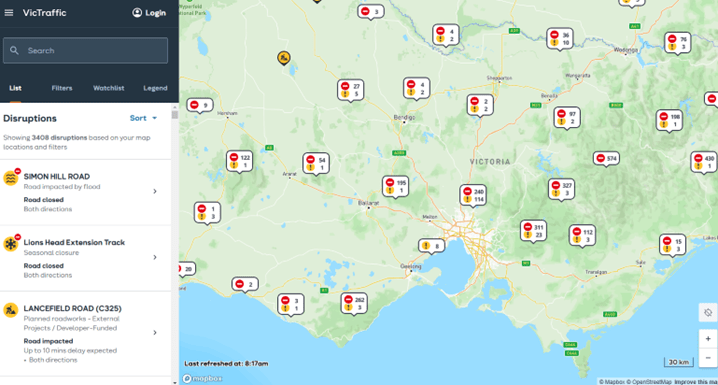
VicTraffic has been an essential tool in supporting transport users, emergency response units, and the public, ensuring safe and informed movement across Victoria's road network, particularly during emergencies.
However, the platform lacked key accessibility features in line with standards in the World Wide Web Consortium’s latest Web Content Accessibility Guidelines (WCAG 2.1).
This significantly limited its usability for people with disability, users who relied on assistive technologies or had difficulty navigating the website, especially during high-stress situations such as bushfires and floods.
Accessibility improvements and fixes
Recognising these shortcomings, we undertook a comprehensive programme of accessibility improvements as part of the VicTraffic re-platform project.
We ensured a more user-centred approach was adopted, ensuring accessibility considerations were embedded from the outset.
Maps have always posed unique difficulties for users with visual impairments or colour deficiencies. To make them more accessible and ensure that all users, regardless of visual ability can engage effectively with the map content, we:
- Ensured that all information displayed on the map is also available in a text-based format, enabling screen readers to interpret the data easily.
- Introduced a toggle feature that allows users with colour vision deficiencies to distinguish between lines, routes, and disruptions using glyphs and patterns, rather than relying solely on colour.
- Enhanced the contrast of colours for better readability.
- Ensured all interactive elements were navigable via keyboard.
- Implemented clear, concise alt text for all images and buttons.
- Followed best practices for form labels, error handling, and dynamic content updates to ensure the site was fully compatible with screen readers.
Challenges faced
Accessibility criteria had not been well-defined in past projects and basic principles of accessibility were not well understood by internal teams.
As a result, we undertook an activity to deliver education resources on accessibility best practices, which helped uplift the overall skillset and improved our ability to deliver accessible solutions.
Another challenge encountered was the understanding that there is no single, uniform response from accessibility criteria. For example, when selecting a button, one screen reader might announce, "Button Name - Selected," while another might say, "Name - Button Selected."
These discrepancies can cause issues during testing if the criteria are too prescriptive and testers do not receive the expected output, leading them to incorrectly mark the feature as a fail.
This issue was also addressed through further education, helping teams understand that while the actual output may differ between screen readers, if accessibility best practices and patterns are followed, the variance in output does not constitute a failure.
Outcomes of testing and fixes
As a result of these efforts, VicTraffic’s accessibility has significantly improved. Key accessibility metrics, including tab indexing, colour contrast ratios, and screen reader compatibility, all saw substantial enhancements.
We reduced the number of blockers from four to zero, inhibitors from eight to zero, and WCAG 2.1 essential issues from 20 to just a few minor issues.
This means that the platform is now accessible to a much wider audience, including those with visual, auditory, and cognitive impairments, ensuring that everyone can access real-time road information, particularly in emergencies.
Supporting the community
These changes had a positive impact on the Victorian community, especially during emergencies when timely and accurate road disruption information is vital.
By ensuring that VicTraffic is accessible, we are supporting vulnerable groups such as the elderly, people with disabilities, and those in remote or regional areas who may face additional challenges during emergencies like bushfires and floods.
The accessibility improvements ensure that all users can confidently navigate road closures, incidents, and disruptions, thus improving safety and inclusivity across the entire community.
Priority Three: Organisation culture and public behaviour
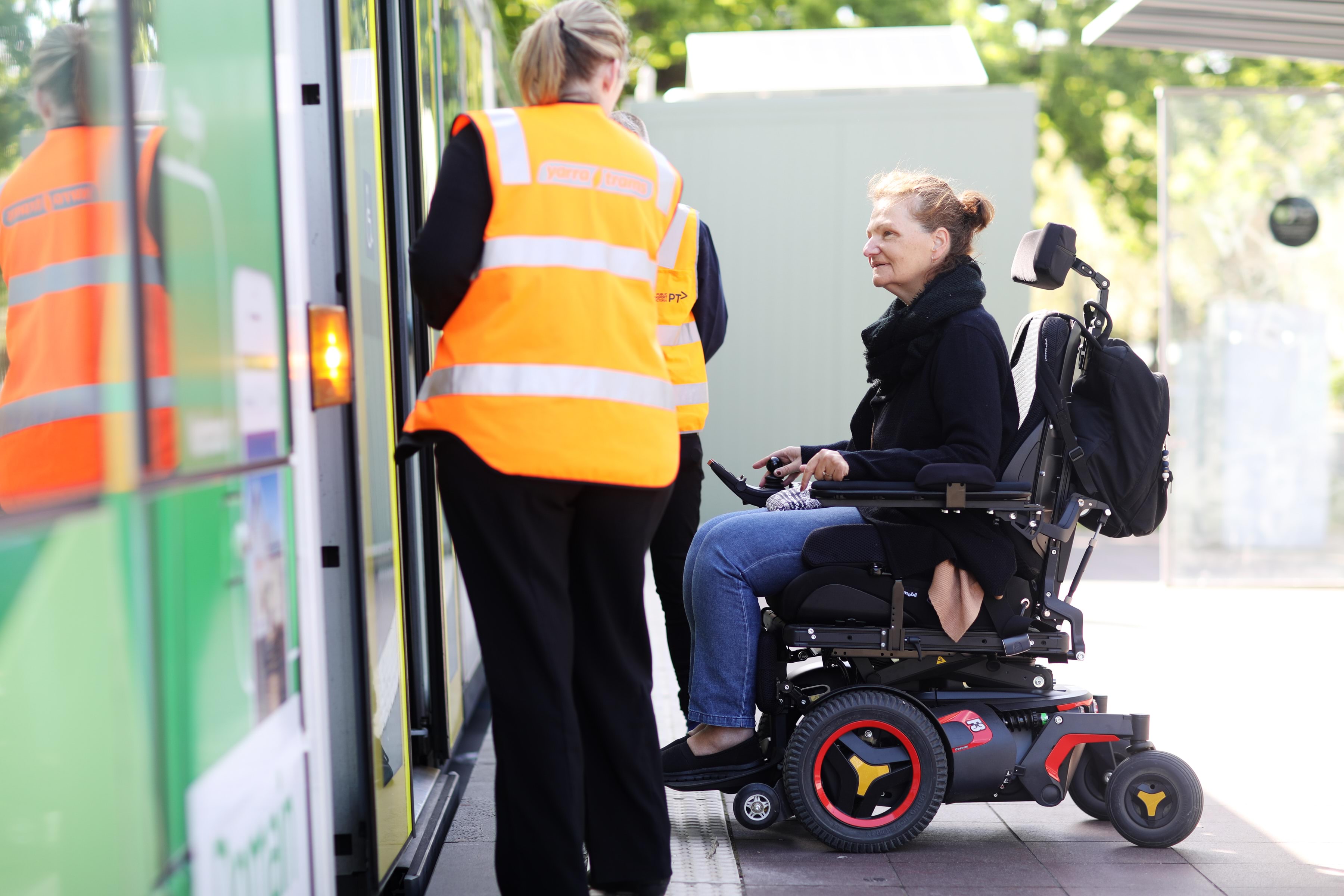
A good experience relies on more than accessible infrastructure, rolling stock, systems and services, it also relies on positive interactions along the way.
- Staff training for frontline and other staff, drawing on lived experiences of disability.
- Employing people with disability and diverse backgrounds.
- Sharing stories and images or running campaigns that demonstrate equitable access for people with disability accessing transport and planning services.
Co-design, consultation and engagement
Employment
Disability confidence
Case Study 3: Try Before You Ride
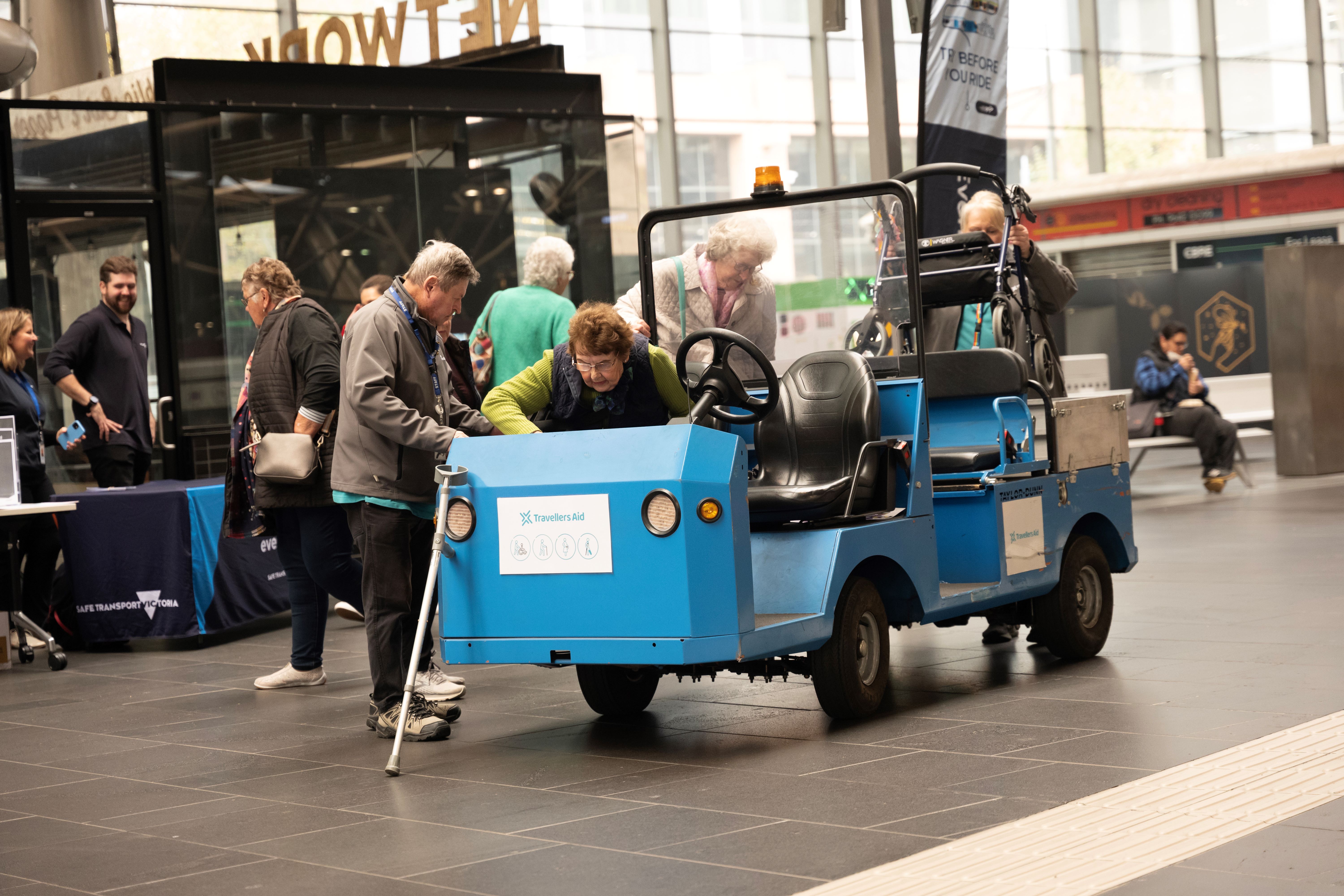
Try Before You Ride is an initiative designed to help individuals of all abilities gain confidence in using Victoria’s public transport system.
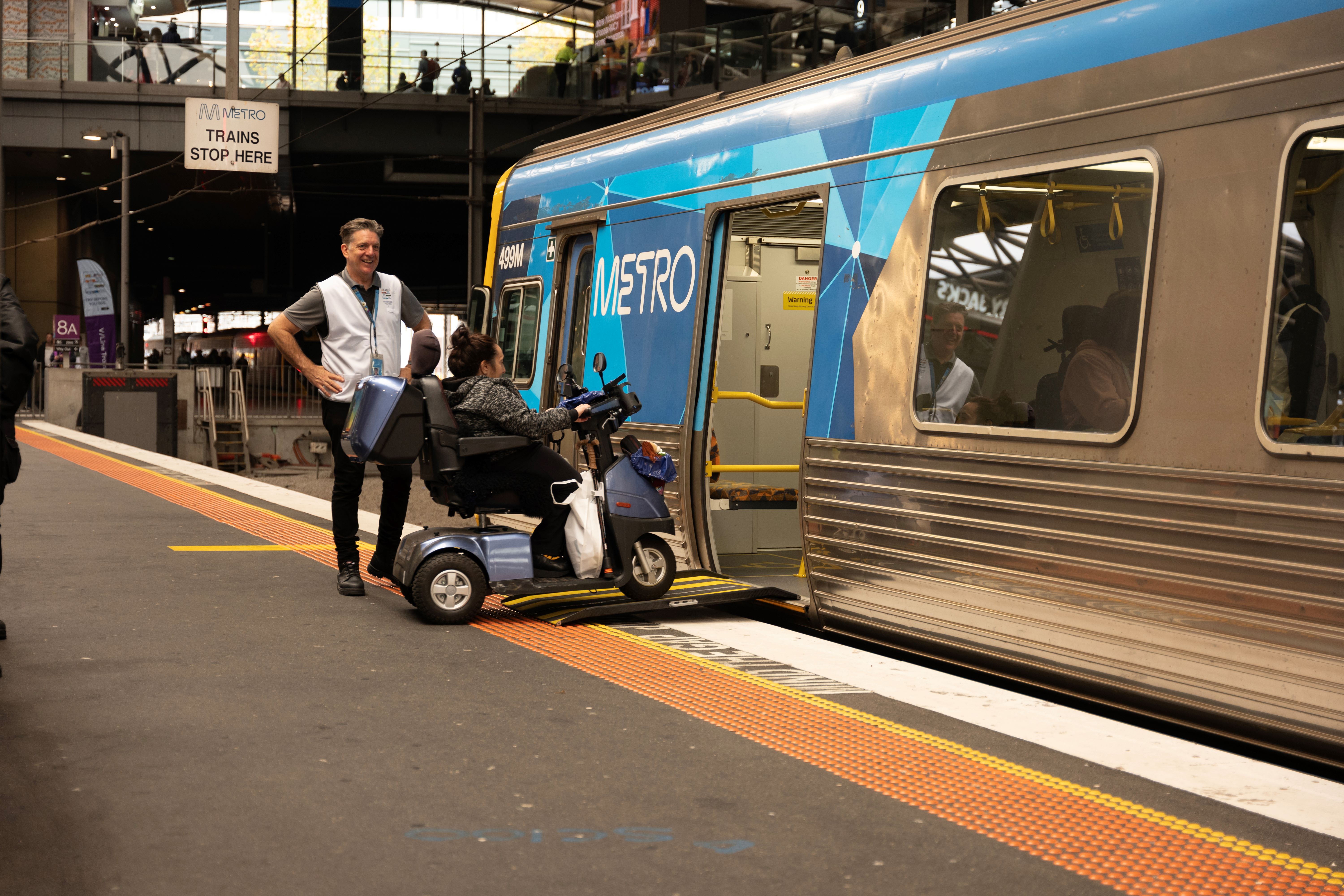
Held in May 2024 at Southern Cross Station, the event was attended by over 130 participants to explore various modes of transport, providing hands-on experience with accessibility features in real-world settings.
Participant Experience
The event enabled participants to:
- Board and disembark stationary Metro and V/Line buses, coaches, and taxis.
- Take guided tram trips to familiarise themselves with different transport modes.
- Engage directly with public transport staff to learn about accessibility features, safety protocols, and available support services.
Stakeholder collaboration
The success of the Try Before You Ride event was a result of collaboration between many stakeholders and DTP, including:
- Public transport operators – Metro Trains, V/Line, Yarra Trams and Kinetic, and
- Transport and accessibility organisations – Travellers Aid, Safe Transport Victoria and the Hidden Disabilities Sunflower Network.
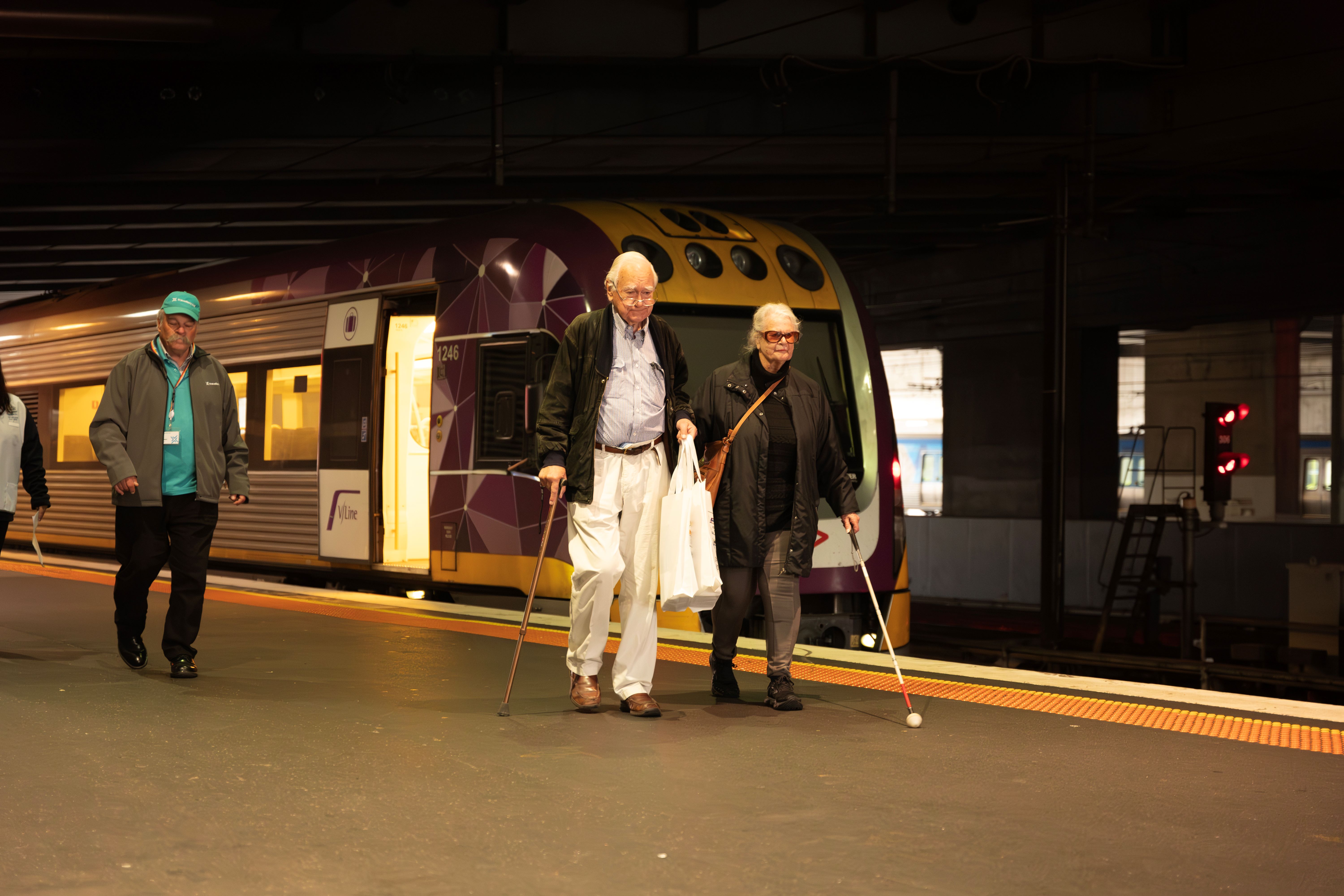
These organisations worked together to ensure the event catered to a diverse range of accessibility needs, such as people using wheelchairs, parents with young children and older Victorians.
Feedback and impact
Participant feedback was crucial to understanding how accessibility features function and what improvements may be needed. Key takeaways included:
- Increased confidence to use the public transport system independently.
- Better understanding of accessibility features and how to access support if needed.
- Insights that will inform future accessibility improvements across the network.
Going forward
Following the event’s success, Try Before You Ride has expanded further. In partnership with the City of Greater Bendigo, V/Line hosted additional events as part of the Victorian Seniors Festival in October 2024.
Priority Four: Information and Innovation
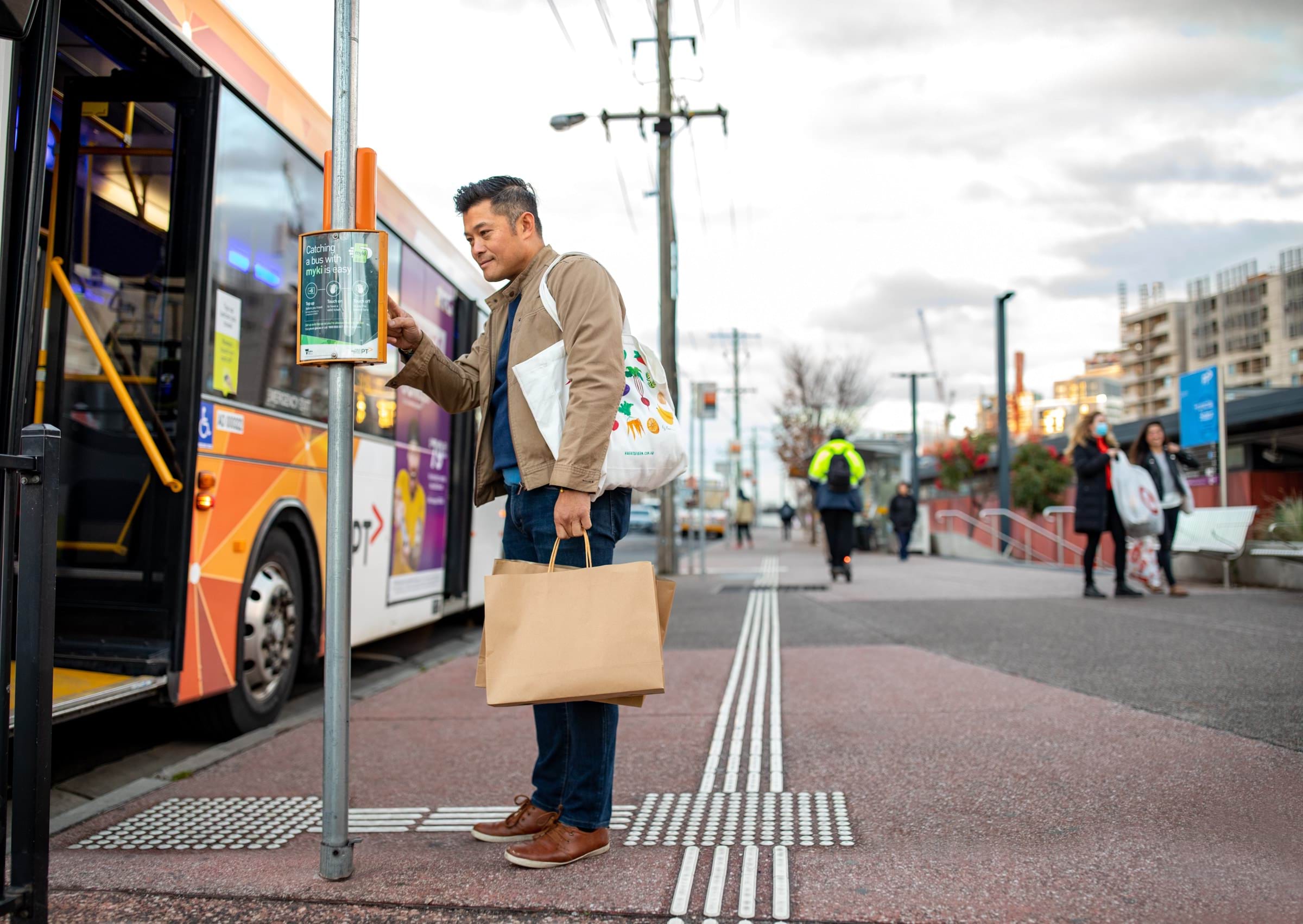
Having accessible and reliable information is one of the most important requirements for inclusive transport and planning. We aim to:
- Fill data gaps
- Make information available so that people with disability can plan their journeys more easily, and use our planning, housing, building and land delivery systems and services both when the system is operating normally and when it is disrupted.
- Ensure information is accessible.
Wayfinding and signage
Advice, guidance and engagement
Public transport ticketing
Digital
Case Study 4: Public Transport Data Program - Improved accessibility outcomes
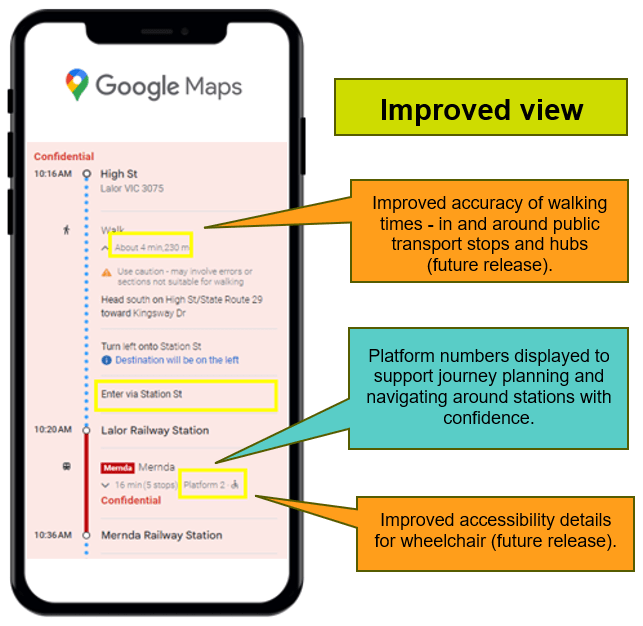
The Public Transport Data Program is releasing better accessibility information to the open data community.
This will help provide improved travel information and options for all users so they can confidently plan their journeys, regardless of ability level or journey planning tool they use.
The open data community includes application providers but also allows for research and innovation. Improvements are being made through a range of projects:
Updated public transport network information for the open data community
Public transport network information including vital accessibility features will be mapped and made available in the open data market.
Improved accessibility information and digital navigation
- More detailed information about accessible features and facilities will be mapped, with locations of lifts and ramps, entrances and exits, and footpaths and walkways.
- Facilitate smoother interchanges between different transport modes.
- Support journey planning by considering the time required to walk between essential features such as platforms, entry/exit points, car parks and drop-off zones.
Improved accuracy of walking times
Walking times in and around public transport stops and hubs will be mapped to provide more accurate information that will help users with mobility needs to:
- Facilitate smoother interchanges between different transport modes.
- Support journey planning by considering the time required to walk between essential features such as platforms, entry/exit points, car parks and drop-off zones.
Improved timetable data and transfer information
Timetable trip data will be enriched to incorporate additional accessibility details, including:
- Improved accessibility details for wheelchair users.
- Improved tram accessibility information in PTV journey planning app.
Improved accessible trip information
- Third-party journey planning tools will have more consistent and accurate accessibility information enabling users of all abilities to better plan and navigate their journeys seamlessly.
Improved real-time and disruptions information
The new systems, processes and data feeds needed to provide real-time public transport information for all modes will be set up and made available in the open data market.
This will support better accessibility outcomes by setting the foundations to expand real-time data to include status updates on key accessibility features such as when a lift or escalator is out of order and when it is up-and-running again.
Case Study 5: Planning.vic.gov.au - the benefits of accessibility for our community
Designing with accessibility in mind is critical to ensuring that our websites can be used by all. When creating and publishing content, we have worked to ensure that:
- Stakeholders are educated so they understand the importance of consistently providing information in accessible formats.
- All content is converted to HTML to improve accessibility, particularly for mobile users.
- Developers create code for websites with key controls activated to improve navigation and support effective functionality of screen readers.
- All systems and data meet web accessibility and Victorian Government guidelines, with text descriptions, colour contrasts, video content supported by captions and transcripts.
- Where possible, external audits are undertaken to capture and address further accessibility improvements.
Example: 20 Minute Neighbourhoods
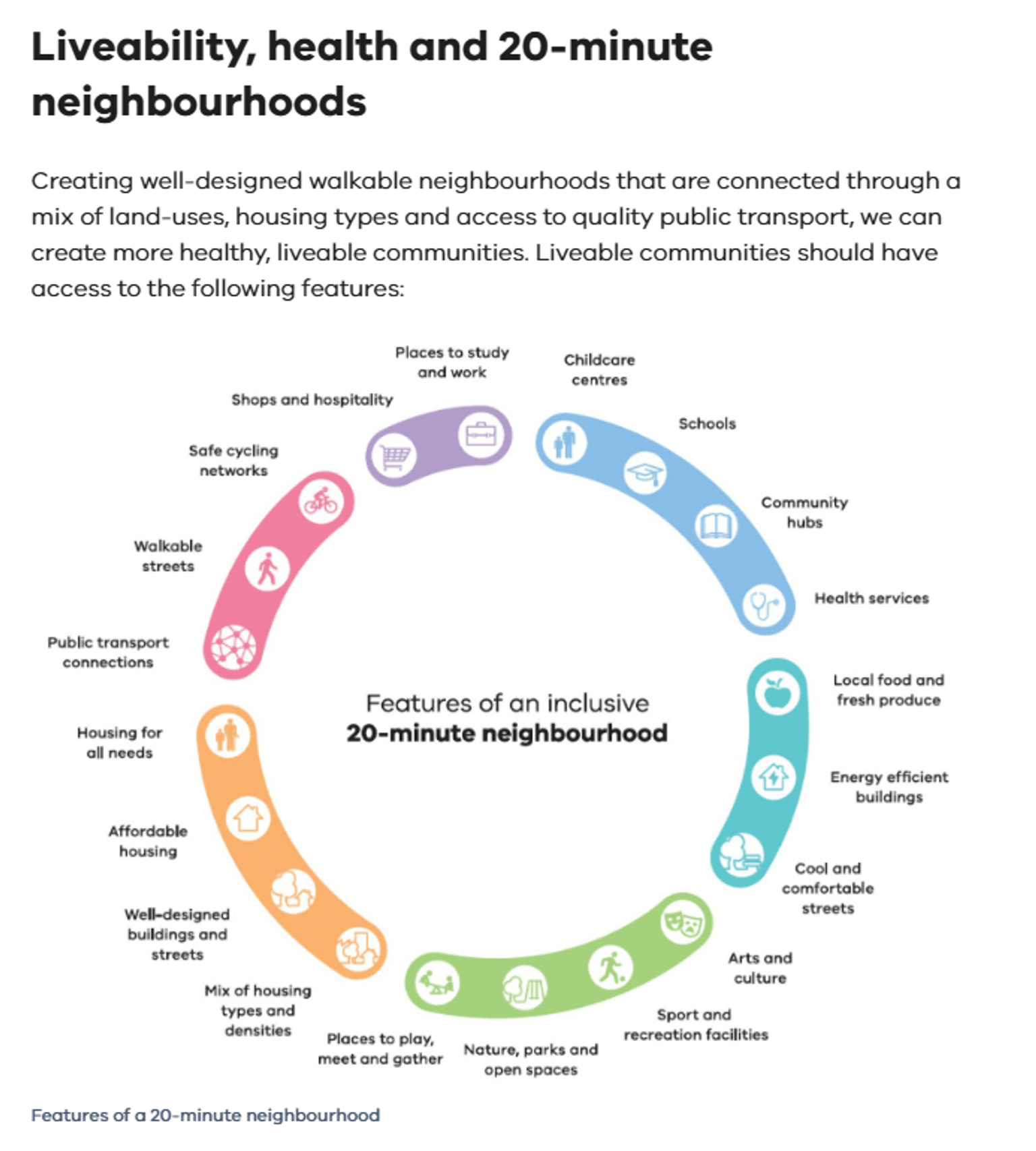
Alongside infographics, information is also provided in text so that all users experience website content equally.
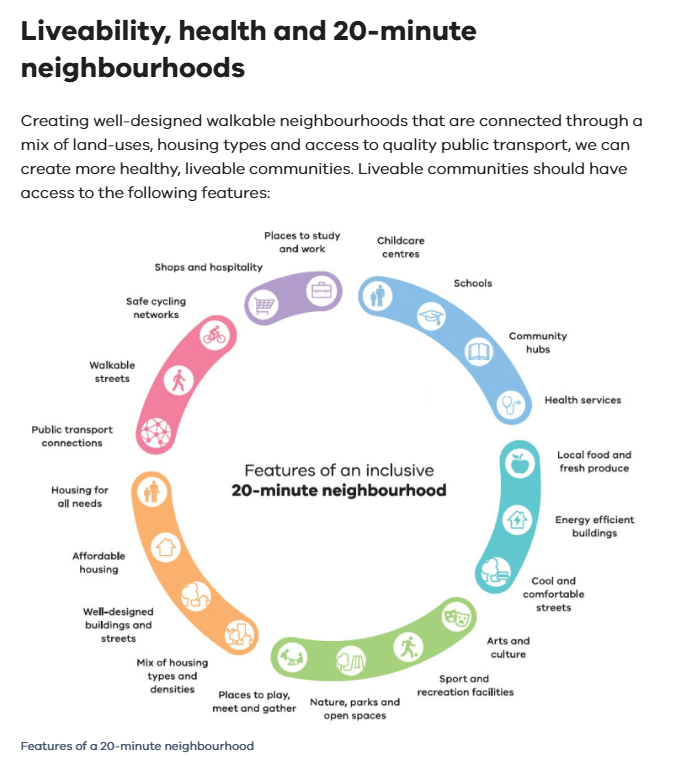
The image below shows a diagram of the features of an inclusive 20-minute neighbourhood. A text description can be expanded and viewed at full screen or alternatively, downloaded to the user's desktop.
Liveability, health and 20-minute neighbourhoods
Implementing the Action Plan
We are creating change for people with disability to enable equitable and dignified access to public transport, planning, housing, building and land delivery areas across Victoria.
Implementation
All areas of DTP are responsible for progressing this Action Plan. Each action has an implementation plan that includes further detail on how we will progress work, including how responsibilities are allocated and key milestones.
This will help us to understand how actions will promote access and inclusion across our transport network and planning systems.
Tracking
We will track progress of actions throughout the lifetime of this Action Plan. We will provide annual progress updates through DTP’s Annual Report, on this webpage, and other reporting mechanisms, as appropriate.
Consultation
Over the four year life of the plan, we will consult with people with disability, the Chief Accessibility Advocate, ATAC, public transport operator accessibility reference groups and external accessibility stakeholders.
What we learn through consultation will be used to review and evaluate the policies and programs within the Action Plan. This will include a mid-way refresh of the Action Plan to respond to any changing priorities for DTP and people with disability.
Publication
The Action Plan has been communicated to departmental executives and staff through internal communication channels. It has been published on our webpage in a range of accessible formats for our external stakeholders and the broader community, including:
- Summary document in word (access through the right-hand sidebar at the top of this page)
- Easy Read document in PDF and Word (access through the right-hand sidebar at the top of this page)
- Easy Read in HTML(opens in a new window)
- Auslan video(opens in a new window)
- Braille Master: please email transport.accessibility@ptv.vic.gov.au to organise a copy.
Please contact us to request the Braille Master and any additional formats at transport.accessibility@ptv.vic.gov.au.
Outcomes from the Accessible Public Transport in Victoria Action Plan 2020-2024
The information below outlines the progress made on accessibility across the four-year period of the 2020-2024 Action Plan. It does not include information related to actions from the planning portfolio, which joined the department on 1 January 2023.
Priority One: Customer, community and engagement
People with disability have equitable, dignified, and responsive access to customer service and are provided the opportunity to interact and engage to identify continuous improvement.
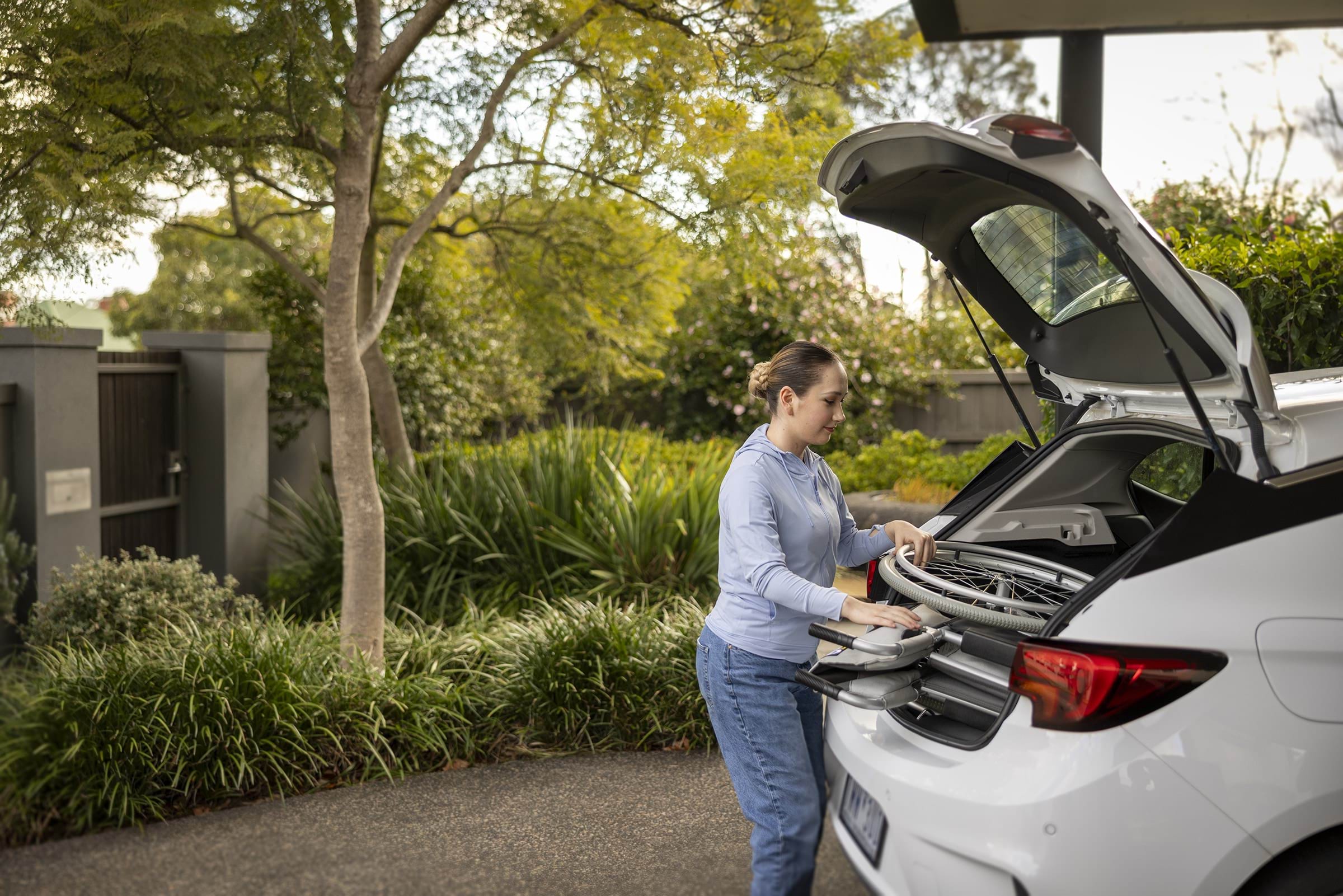
We have worked to ensure that DTP and operator staff are equipped with the tools and resources to assist users with disability. We require frontline staff for our major operators to undertake disability awareness training as a part of contractual arrangements.
Our major operators continue to work closely with their accessibility reference groups to embed inclusion across the transport network. Their customer service charters address the importance of access to transport for people with disability and highlight accessible information initiatives.
Priority Two: Access to public transport services
People with disability will have increased access to train, tram, bus, coach, ferry and commercial passenger vehicle services, including responsive and timely information on disruptions, cancellations and major events.
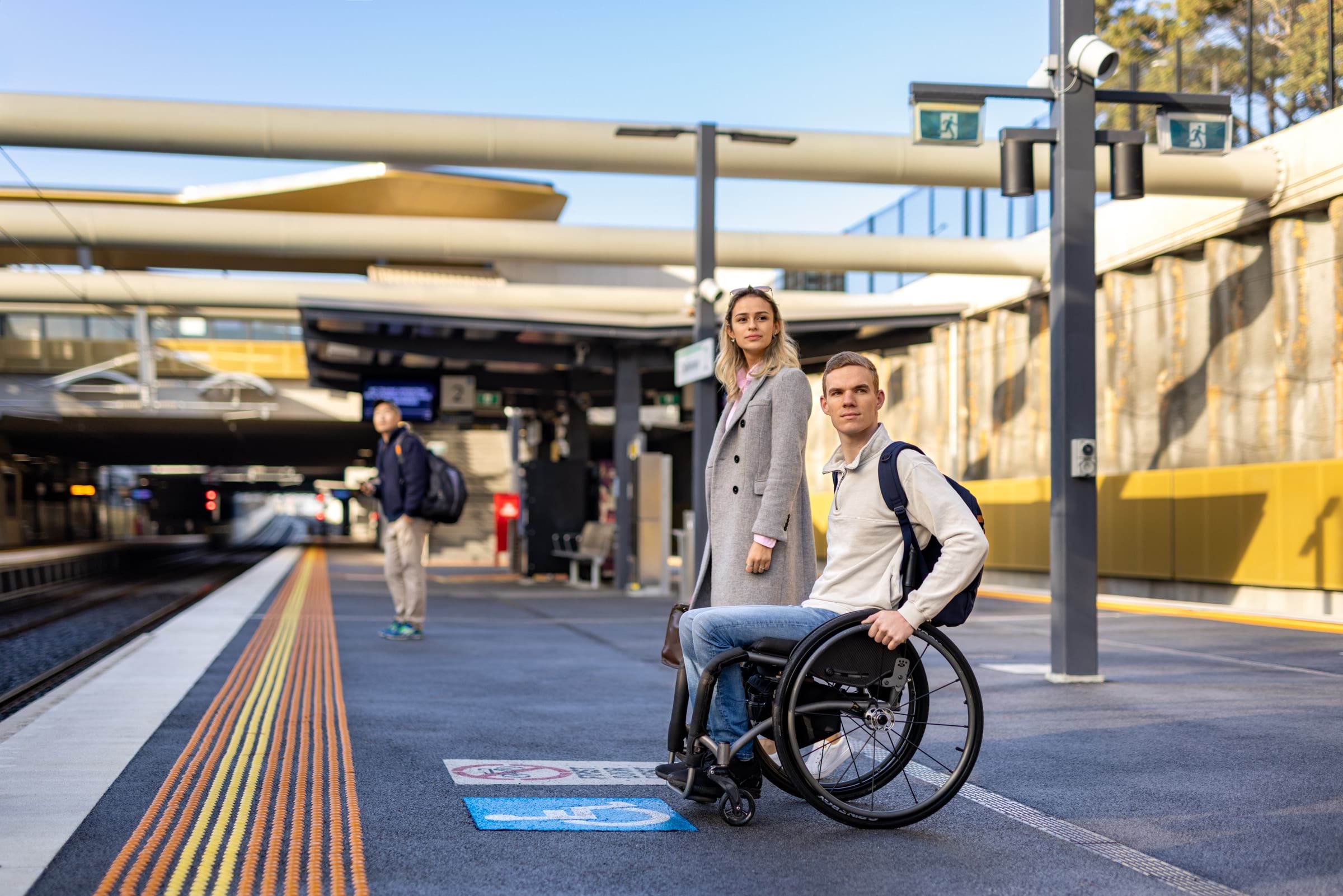
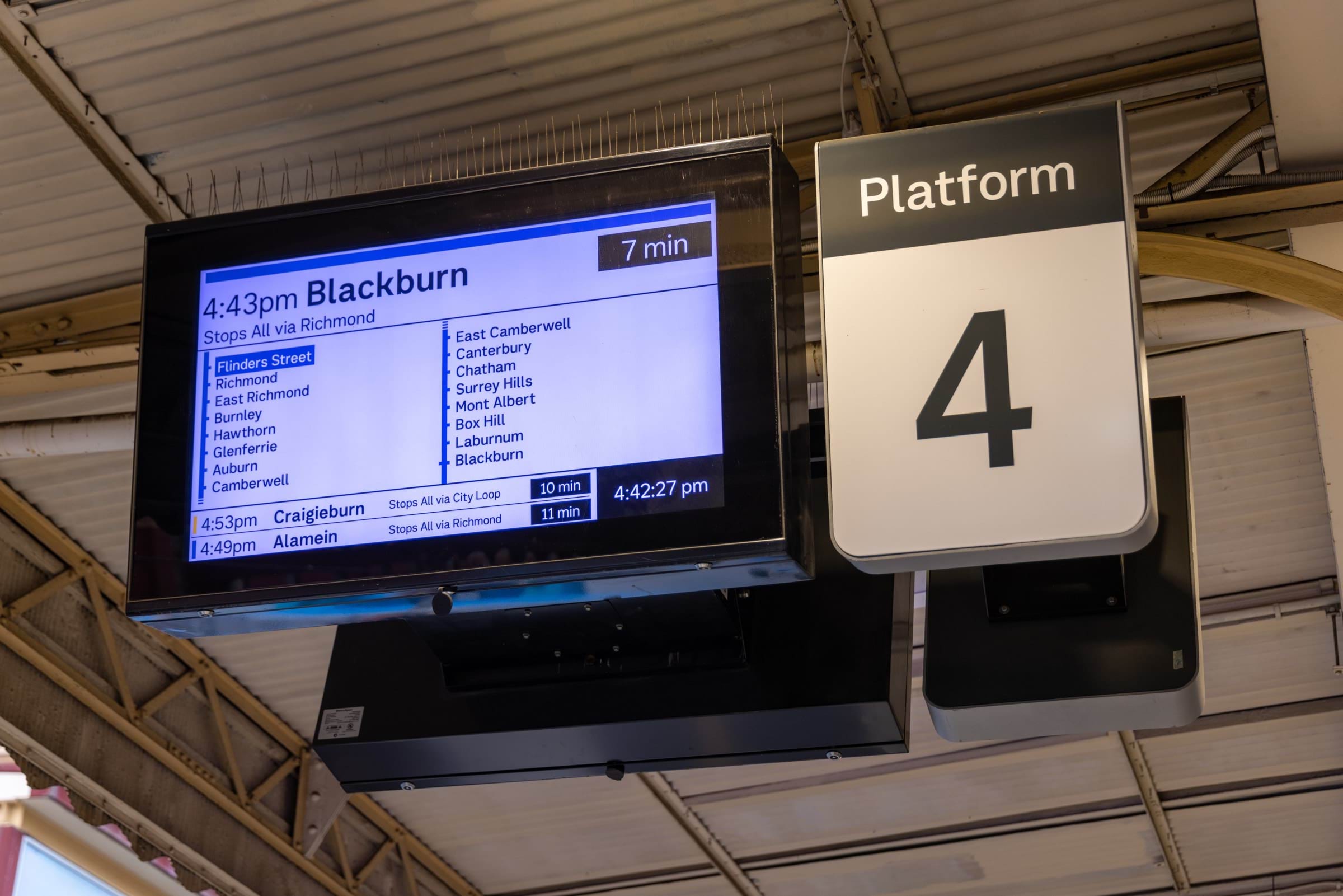
We have made significant improvements to the Public Transport Victoria website based on stakeholder feedback, such as improvements to keyboard navigation and screen reader functionality.
To enable users with accessibility requirements to confidently plan their journey, information on accessible services, stops, stations and conveyances is available through the journey planner tool.
Functionality has also been added to enable users to access real-time information on the accessibility of trams on different routes.
Priority Three: Accessible processes and systems
People with disability will benefit from inclusive and accessible processes and systems.
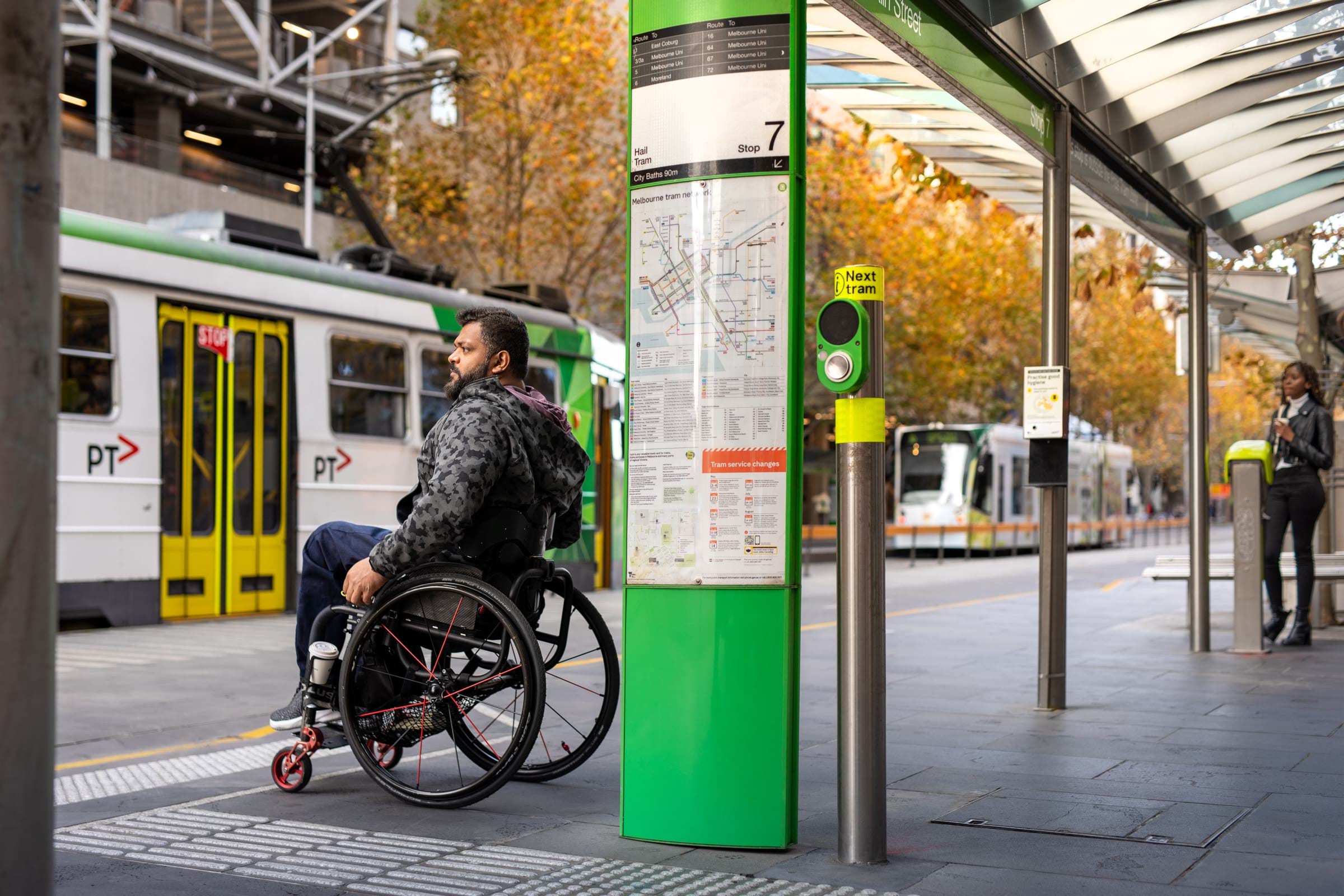
We have inclusive policies and processes that support and promote accessibility and will continue to build accessibility into our systems.
We have developed a set of Guidelines for Social Procurement that outlines how goods, works and services can be purchased to generate social value and benefit all Victorians.
These guidelines have been applied to major projects to ensure that accessibility is a key consideration in procurement, including for the design of the X’Trapolis 2.0 trains and Next Generation Trams, as well as part of the new tram franchise agreement.
Priority Four: Access to facilities
Universal design principles and dignified access to buildings and public transport infrastructure will be included in network expansions and upgrades.
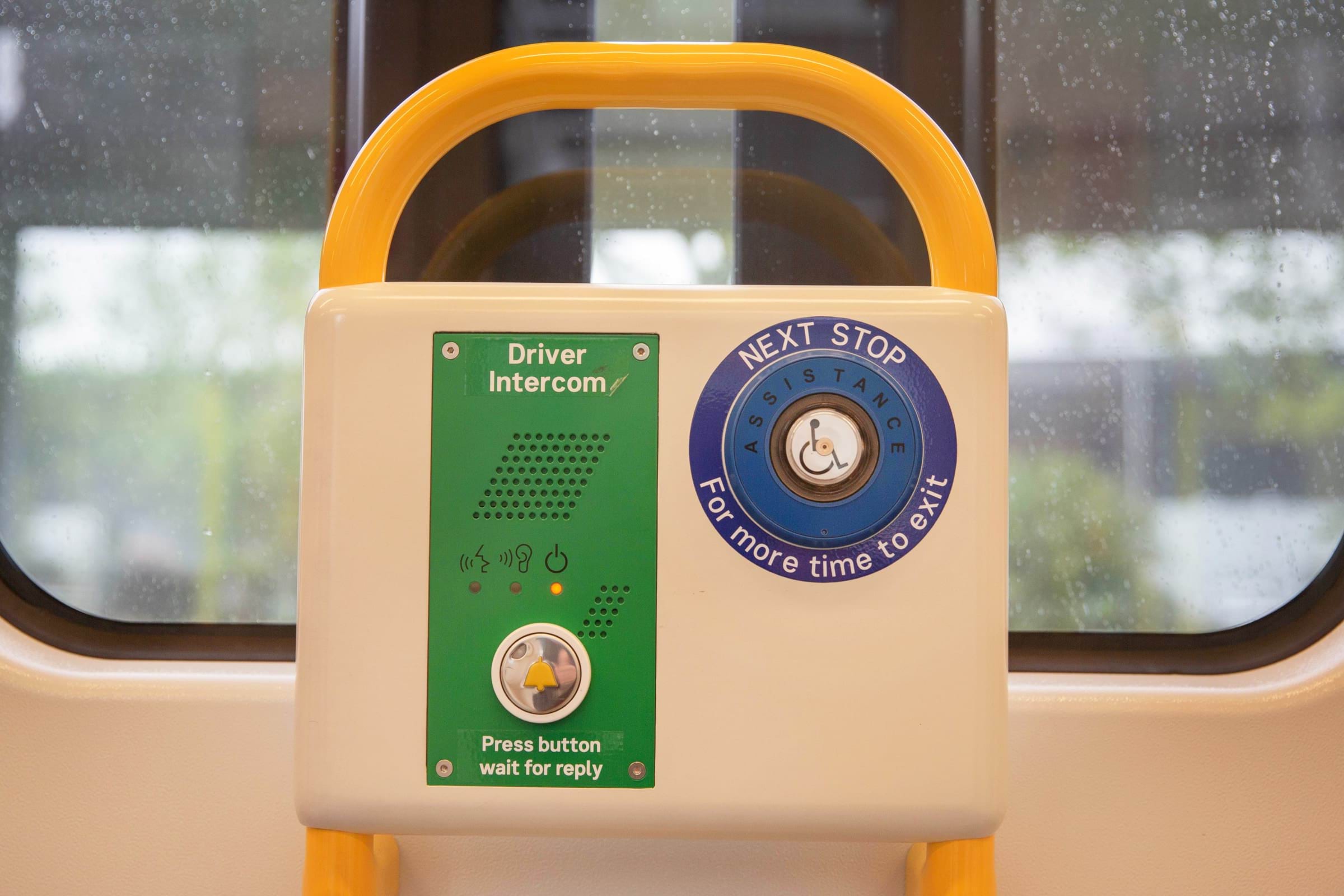
We continue to prioritise facilities for upgrade or redevelopment across the public transport network and build in accessibility outcomes.
The Transport Accessibility Strategic Framework’s prioritisation method seeks to identify the upgrades that will have the greatest impact for people with disability.
The prioritisation method draws on data held by the department for public transport infrastructure, for example, from station and stop audits. Work to embed the prioritisation method in departmental processes is reflected in this Action Plan.
Priority Five: Workplace accessibility
Inclusive practices for employment of people with disability will create accessible work environments.
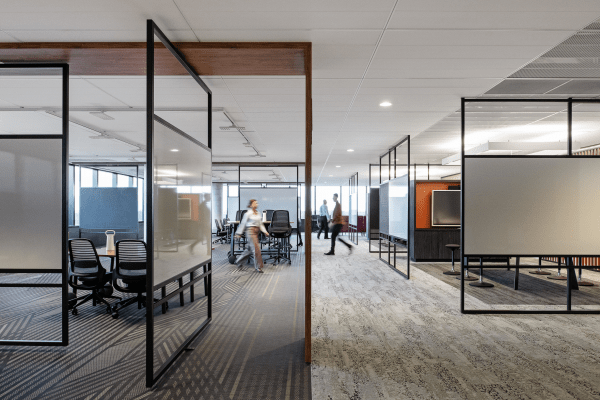
The Action Plan aims to position accessibility and inclusion as fundamental values where our employees at every level embrace the inclusion of people with disability.