With our infrastructure and rolling stock, we aim to:
- Ensure priorities for the most critical and beneficial improvements are considered as funding becomes available.
- Make it easier for DTP staff, transport and planning agencies and local governments to embed and achieve accessibility outcomes.
- Avoid the need for costly rethinking of approaches by considering accessibility at all stages of decision making rather than as an afterthought.
Trams and tram stops
Action: Deliver Hearing Loops as a standard feature on all G Class trams.
Outcome: Improved access to audible announcements and information updates for people who use hearing aids.
Measure: Improved travel confidence for people who are deaf or hard of hearings, and people who use hearing aids.
Timeframe: Year 1.
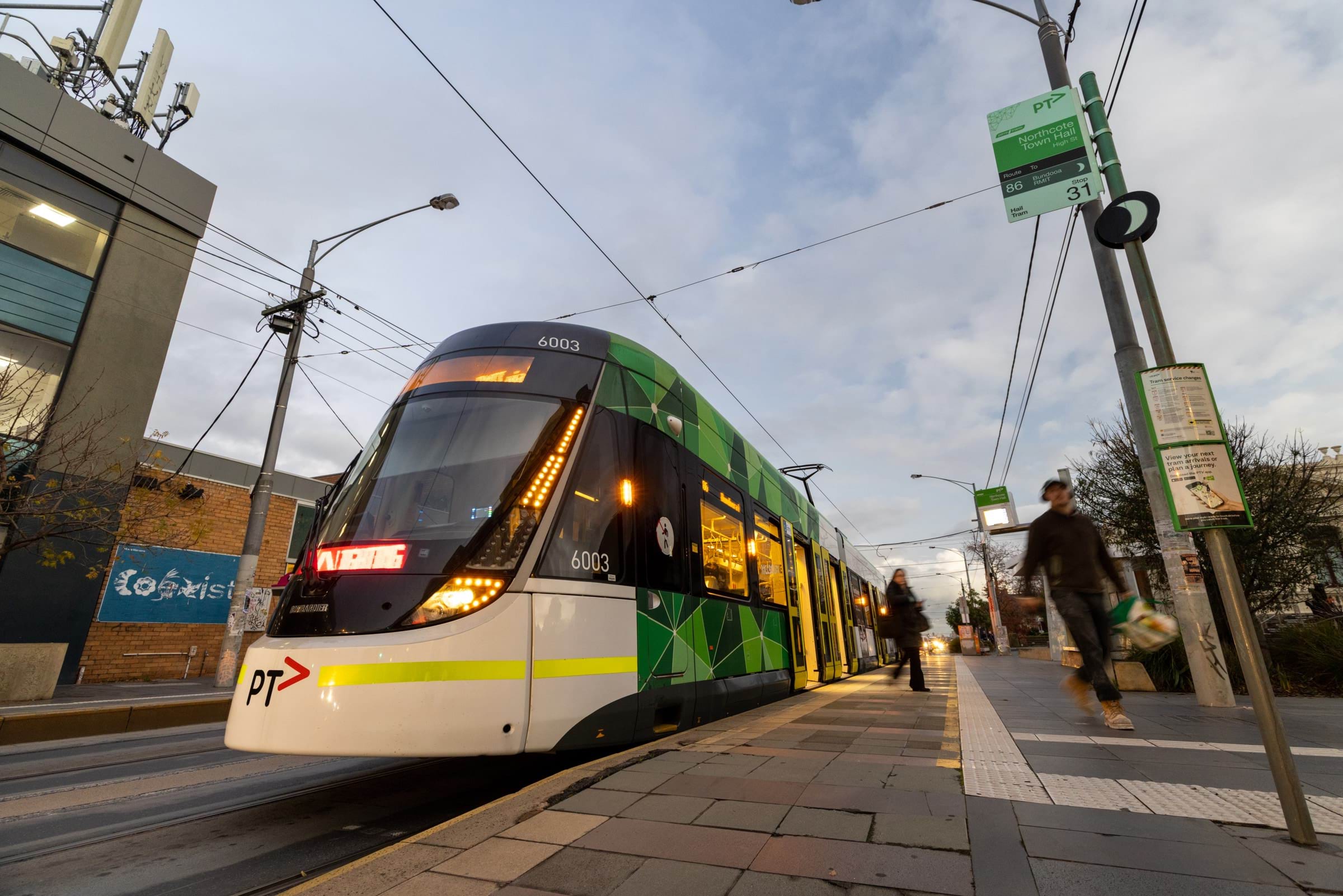
Action: Replace high floor trams with 100 to 280 new low floor trams across the network.
Outcome: Increased access to low floor trams on the network on priority routes.
Measure: Number of low floor trams operating on the network.
Timeframe: Year 4, Ongoing.
Action: Identify opportunities for tram stop and safety upgrades.
Outcome: Improved accessibility and safety at tram stops.
Measure: An updated pipeline of planned level access tram stop and safety upgrades to inform future funding decisions.
Timeframe: Ongoing.
Train stations
Action: Identify opportunities for accessibility and safety upgrades at train stations.
Outcome: Improved accessibility and safety at train stations.
Measure: Number of train stations upgraded to mitigate accessibility and safety barriers.
Timeframe: Ongoing.
Action: Deliver accessibility upgrades in partnership with Metro Trains Melbourne and V/Line.
Outcome: Improved accessibility and safety at train stations.
Measure: Number of train stations upgraded to improve accessibility and safety.
Timeframe: Ongoing.
Bus stops
Action: Leverage tender documents and contracts to deliver accessible bus stop infrastructure.
Outcome: More accessible bus stops. Bus stop design responds to legislative and policy change.
Measure: Accessibility requirements included in contracts to deliver bus stops.
Timeframe: Ongoing.
Action: When designing and building new bus stops and shelters validate the accessibility and manage site limitations before accepting the stop or shelter for ongoing maintenance.
Outcome: More accessible bus stops and shelters. Reduction in modification works post bus stop and shelter build.
Measure: Decisions about stop and shelter designs and limitations are recorded and accepted when built.
Timeframe: Ongoing.
Heritage infrastructure
Action: Develop guidance for disability access to heritage listed railway stations and other transport infrastructure using best practice examples.
Outcome: New works and approvals for transport infrastructure provide improved disability access and positive heritage outcomes.
Measure: Guidance for disability access to heritage listed railway stations and other transport infrastructure developed.
Timeframe: Year 4.
Precincts
Action: Engage expert accessibility advice early in the project design and development phases to ensure improved accessibility outcomes for the Sunshine and Albion stations.
Outcome: Improved understanding of the accessibility challenges for Sunshine and Albion stations.
Measure: Accessibility outcomes form components of project scope. Accessibility outcomes not built out or excluded from future complementary projects.
Timeframe: Ongoing.
Action: Consider accessibility in the design of public realm spaces in the Arden precinct and include accessibility in the performance requirements for the request for proposal process for activating Arden central.
Outcome: Planning for accessibility supports all members of the public benefiting from the use of government-owned land in the Arden precinct.
Measure: Public realm spaces in the Arden precinct are accessible.
Timeframe: Year 4.
Updated